

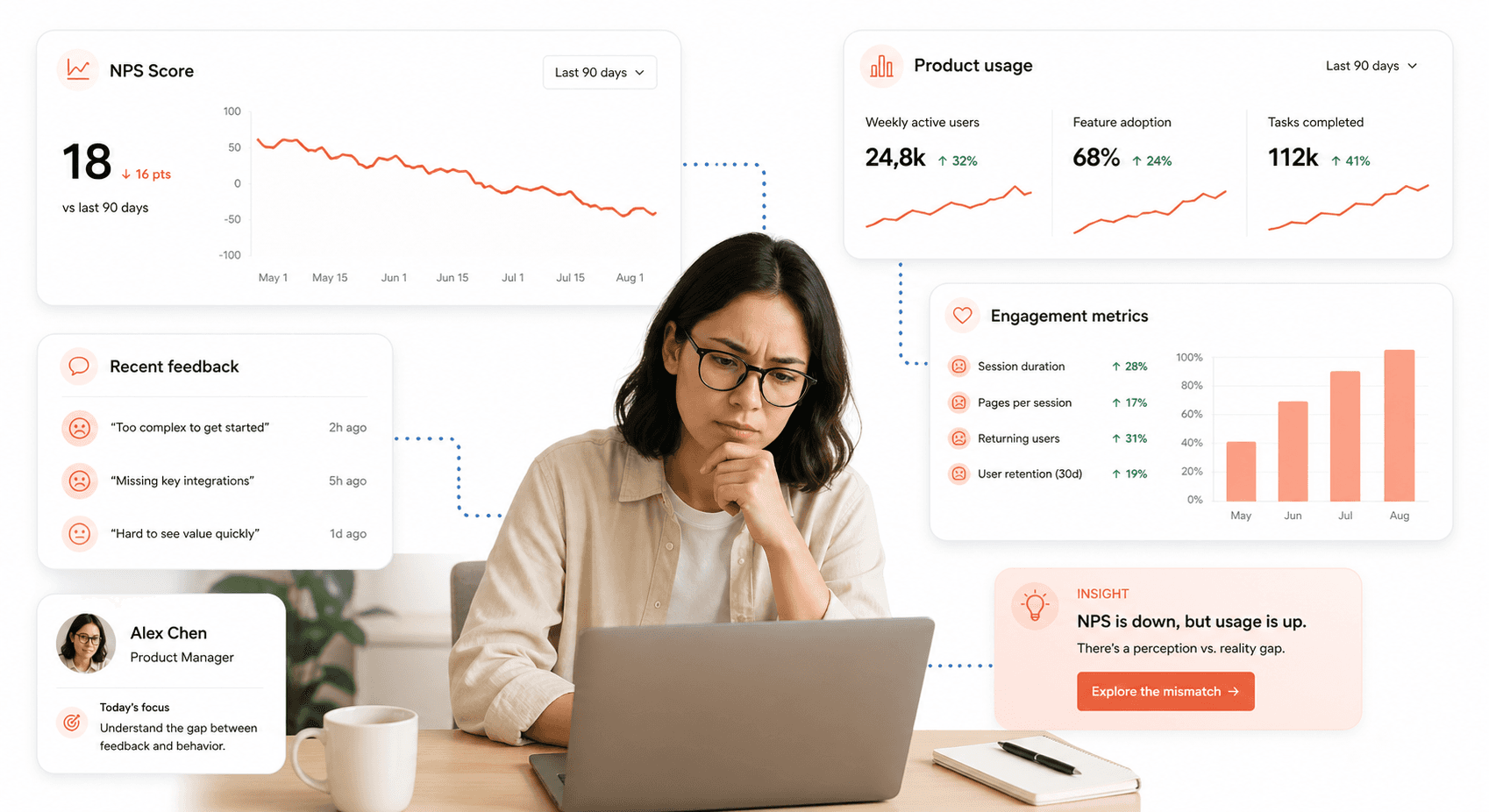
You're not alone if your NPS score keeps dropping even though you're shipping new features every sprint. Product teams across industries face this frustrating puzzle – customer satisfaction metrics decline while development teams work overtime to deliver value.
This disconnect signals deeper issues with how you're measuring customer sentiment, not necessarily problems with your product itself. Traditional NPS surveys miss the mark in today's survey-fatigued world, where response rates hover around 6% and the customers who do respond often represent the extremes rather than your silent majority.
We'll explore why traditional NPS surveys are failing your business and examine the hidden problems that make NPS scores misleading. You'll discover better ways to understand customer sentiment through behavioral data and interaction patterns that cover 100% of your customer base. Finally, we'll outline strategic actions to address declining customer loyalty and build continuous customer intelligence systems that provide real-time insights into what your customers actually think and feel.
Why Traditional NPS Surveys Are Failing Your Business
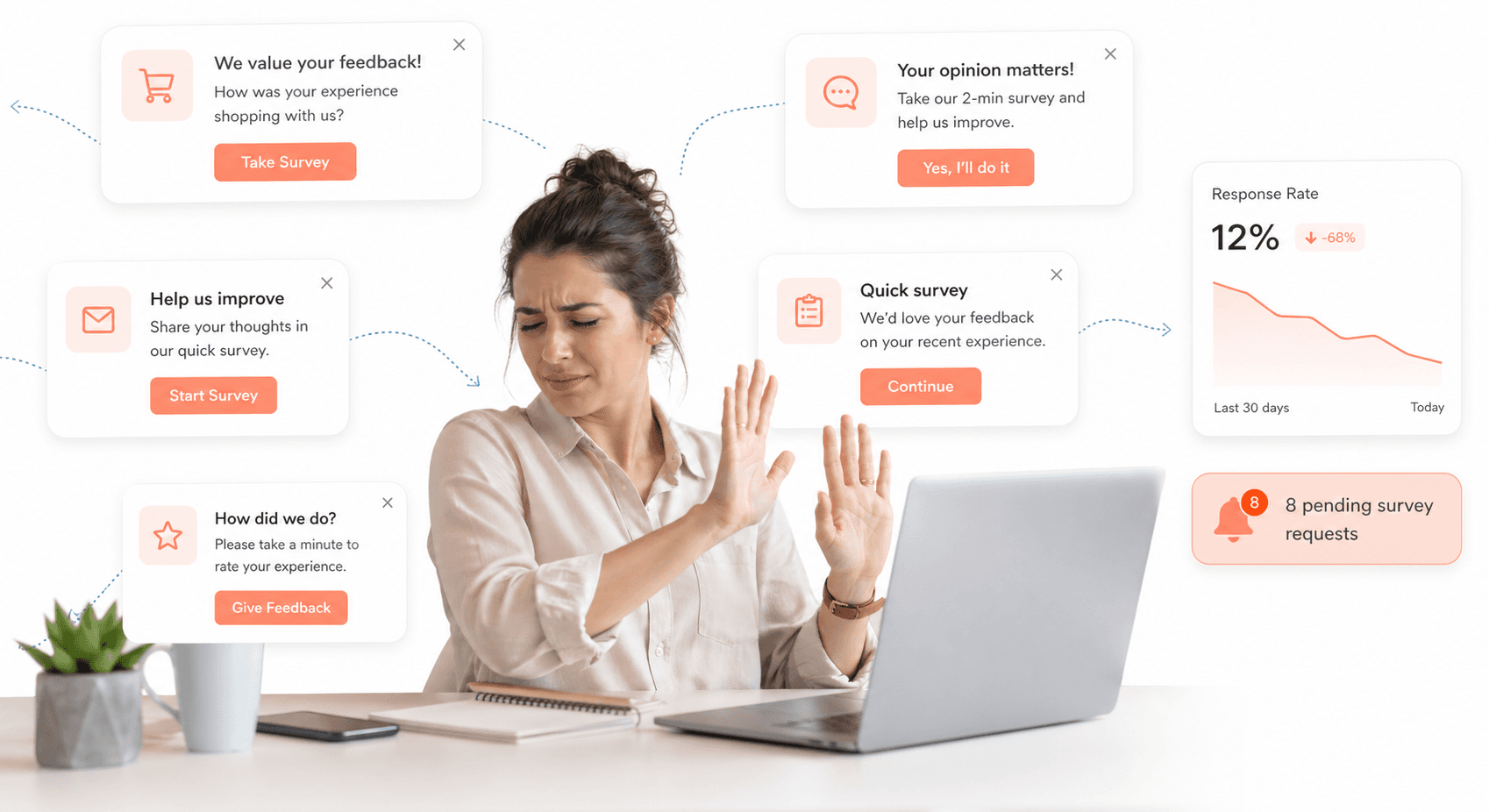
Declining Response Rates and Survey Fatigue Among Customers
Your customers are exhausted from constant survey bombardment, and this fatigue is decimating your NPS data quality. Survey fatigue has reached epidemic proportions across all industries, with participation rates plummeting dramatically over the past two decades. Public opinion surveys, which serve as a benchmark for response behavior, experienced a catastrophic decline from 36% participation in 1997 to just 6% by 2018. This trend reflects a fundamental shift in customer behavior that directly impacts your Net Promoter Score programs.
Even the most sophisticated B2C NPS programs struggle against this tide of customer disengagement. The best-performing NPS initiatives achieve only about 40% response rates, representing the ceiling for what's possible with traditional survey approaches. Most companies fall well below this threshold, often experiencing response rates in the single digits or low teens.
This declining participation creates a compounding problem for your customer satisfaction metrics. When customers habitually delete survey requests on sight, you're left with increasingly smaller sample sizes that fail to represent your actual customer base. The customers who do respond become an ever-shrinking minority, making it impossible to gauge true customer sentiment across your entire user base.
Skewed Data from Non-Representative Respondents
The small group of customers who still engage with your NPS surveys creates a dangerous illusion of customer sentiment accuracy. Your survey respondents represent a fundamentally skewed sample that distorts your understanding of customer loyalty and satisfaction levels.
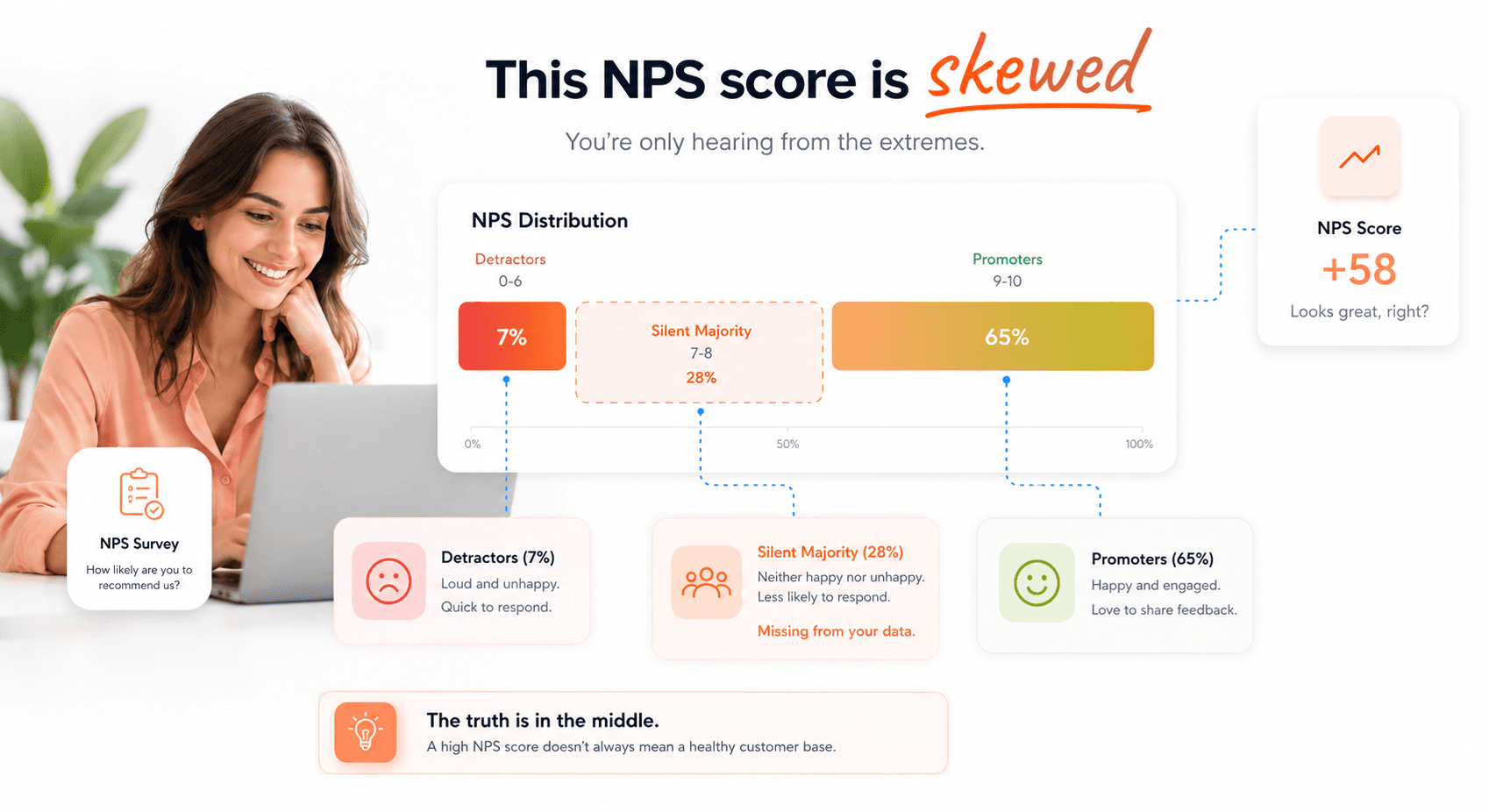
Promoters demonstrate the highest likelihood of survey participation, creating an artificial inflation of positive responses in your NPS score calculations. These enthusiastic customers actively seek opportunities to share their positive experiences, making them overrepresented in your survey data. Conversely, detractors show the lowest response rates, often choosing to express their dissatisfaction through actions rather than surveys – such as canceling subscriptions or switching to competitors.
This response pattern creates a sample that over-represents extremes while missing the crucial middle ground of customer opinion. Your NPS data becomes artificially weighted toward happy customers, painting an unrealistically optimistic picture of customer sentiment. This skewed representation explains why your NPS score declining trends might seem disconnected from other business metrics like churn rates or revenue performance.
The mathematical implications of this bias are severe. When your survey sample overemphasizes promoters and underrepresents detractors, your calculated NPS score bears little resemblance to the actual distribution of customer sentiment across your entire customer base.
Missing Insights from Your Most Valuable Quiet Customers
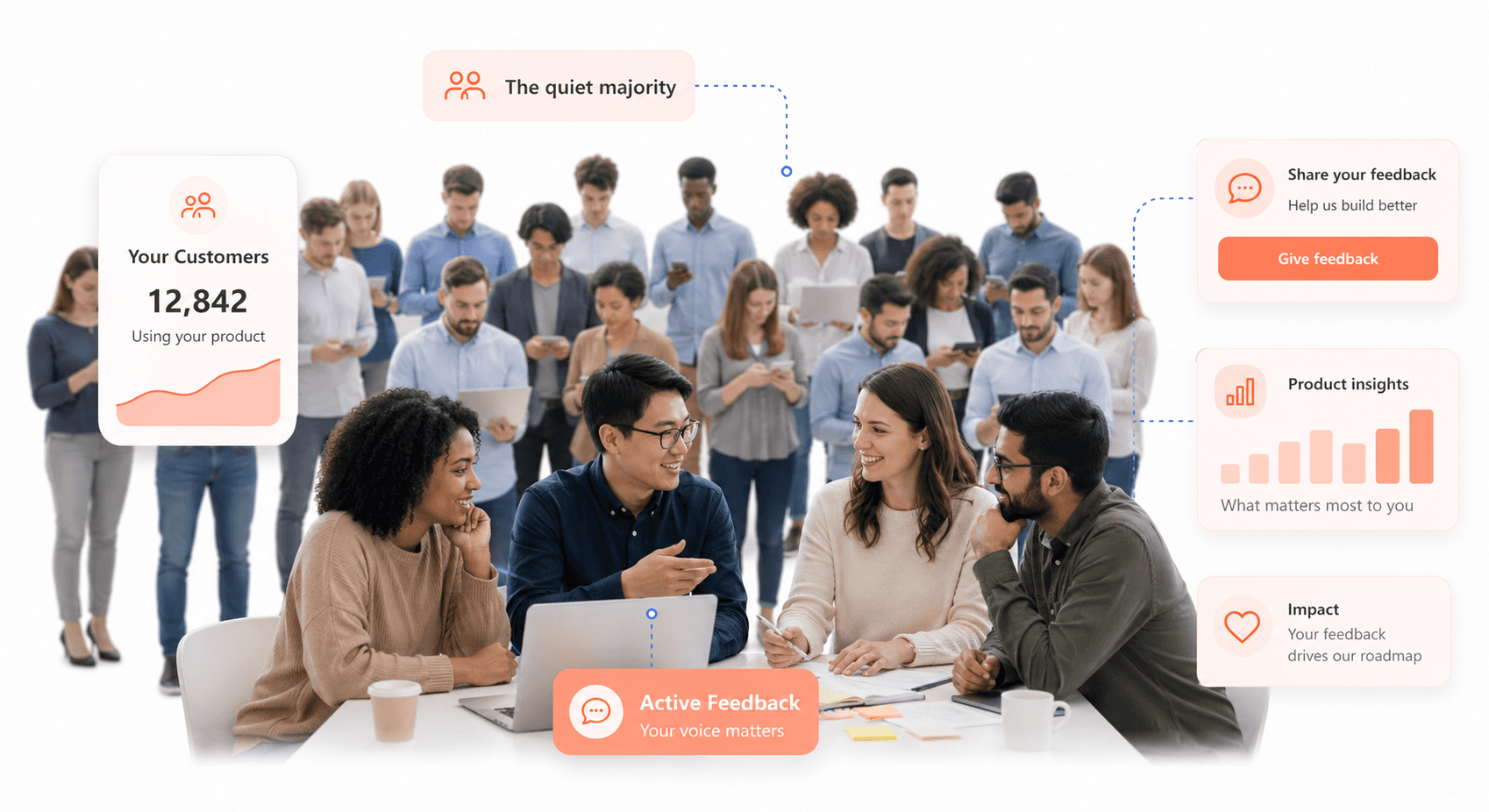
Your traditional NPS approach systematically excludes the very customers whose opinions matter most to your business success. The quiet majority of your customer base – those who neither enthusiastically promote nor actively complain – represents a vast reservoir of untapped insights that your current survey methodology completely misses.
These silent customers often constitute your most stable and valuable segment, yet their voices remain absent from your customer feedback analysis. They continue using your product, generating revenue, and forming the backbone of your business model, but their satisfaction levels and loyalty drivers remain invisible in your NPS score improvement efforts.
The absence of these quiet customers from your survey data creates critical blind spots in your customer sentiment measurement strategies. You're making product decisions and customer experience investments based on feedback from the vocal minority while completely ignoring the preferences and pain points of your revenue-generating majority.
This gap in customer intelligence becomes particularly dangerous when these quiet customers begin experiencing dissatisfaction. Without early warning signals from this group, your first indication of problems often comes through churn metrics or revenue declines – reactive indicators that arrive too late for preventive action.
Hidden Problems That Make NPS Scores Misleading
Poor product-customer fit masking as low satisfaction
Your declining NPS score might not reflect actual product deficiencies, but rather a fundamental misalignment between your offering and your audience. When you're attracting the wrong customers, even the most innovative features won't drive satisfaction or loyalty. This disconnect often stems from marketing campaigns that overpromise or fail to accurately represent what your product delivers.
If your customer acquisition strategy lacks sufficient research into your ideal customer profile, you're likely drawing in users whose needs don't align with your product's core value proposition. These mismatched customers will inevitably express dissatisfaction through low NPS scores, regardless of how many features you add or how polished your product becomes.
Consider whether your marketing messages are creating unrealistic expectations about what your product can accomplish. When customers sign up expecting one thing but encounter something entirely different, their disappointment translates directly into negative sentiment. This isn't necessarily a reflection of poor product quality—it's evidence that you're targeting the wrong market segment or communicating your value proposition ineffectively.
The challenge with this hidden problem is that it masks the real issue behind declining customer loyalty. Instead of focusing on feature development, you need to examine whether you're attracting customers who can genuinely benefit from what you offer.
Lack of in-app guidance preventing user success
Your customers cannot intuitively predict which actions will lead to success within your product. Without continuous guidance through strategic in-app help systems, even the most feature-rich platform will fail to create promoters among your user base.
Effective in-app guidance encompasses multiple touchpoints throughout the customer journey. You need to implement prompts that appear at crucial decision points, contextual messages that explain complex features, tooltips that provide instant clarification, comprehensive checklists that guide users through multi-step processes, and interactive walkthroughs that demonstrate best practices.
When users struggle to understand how to achieve their goals using your product, their frustration builds regardless of how powerful your underlying functionality might be. This confusion directly impacts your NPS score improvement efforts because confused customers rarely become advocates for your solution.
The absence of proper guidance creates a significant barrier between your customers and the value your product provides. Users who cannot successfully navigate your interface or understand how to leverage your features will express their frustration through negative feedback, even when your product theoretically meets their needs.
Your declining customer satisfaction metrics often reflect this guidance gap rather than fundamental product limitations. By implementing comprehensive in-app support systems, you create clear pathways for users to discover value and achieve success.
Inadequate customer service destroying product value
Poor customer service can completely undermine an otherwise excellent product experience. When your support system is characterized by long wait times, generic responses, and endless email exchanges, you're actively destroying the value that your product creates.
Your customers expect quick, personalized answers to their questions and concerns. When they encounter outdated call center systems or support processes that feel impersonal and inefficient, their overall perception of your brand suffers dramatically. This negative service experience can generate more detractors than any product limitation ever could.
The impact of inadequate customer service extends far beyond individual support interactions. When users know they cannot rely on timely, helpful assistance, they become hesitant to fully adopt your product or recommend it to others. This reluctance directly contributes to declining Net Promoter Score problems and reduced customer loyalty.
Your support quality becomes especially critical when customers encounter difficulties with new features or complex functionality. If they cannot get the help they need quickly and effectively, their initial enthusiasm transforms into frustration and eventual churn.
Modern customers have been conditioned to expect immediate, knowledgeable support across multiple channels. When your customer service falls short of these expectations, it creates a disconnect that no amount of feature development can overcome.
Better Ways to Understand Customer Sentiment
Analyzing Support Tickets for Tone and Urgency Signals
Every support ticket that lands in your inbox carries far more valuable information than just the surface-level issue being reported. When your NPS score declining becomes a concerning pattern, you need to look beyond traditional surveys and dive into the goldmine of sentiment data hidden within your customer service interactions.
Your support tickets contain tone and urgency signals that provide invaluable insights into customer sentiment. These signals often reveal the true emotional state of your customers before they even participate in formal feedback processes. When customers reach out for help, their choice of words, the frequency of their communications, and the urgency they express all paint a detailed picture of their satisfaction levels.
By systematically analyzing the language patterns in your support tickets, you can identify early warning signs of customer dissatisfaction. Frustrated customers tend to use specific language markers - increased use of negative adjectives, shorter sentences, or repeated escalation attempts. These patterns often emerge weeks or even months before customers would typically receive and respond to an NPS survey, giving you crucial lead time to address issues proactively.
The urgency signals embedded in support tickets also correlate strongly with customer loyalty trends. When customers mark tickets as "urgent" more frequently, or when they follow up repeatedly on the same issue, you're witnessing behavioral indicators that traditional customer satisfaction metrics might miss entirely.
Using Behavioral Data from Product Usage Patterns
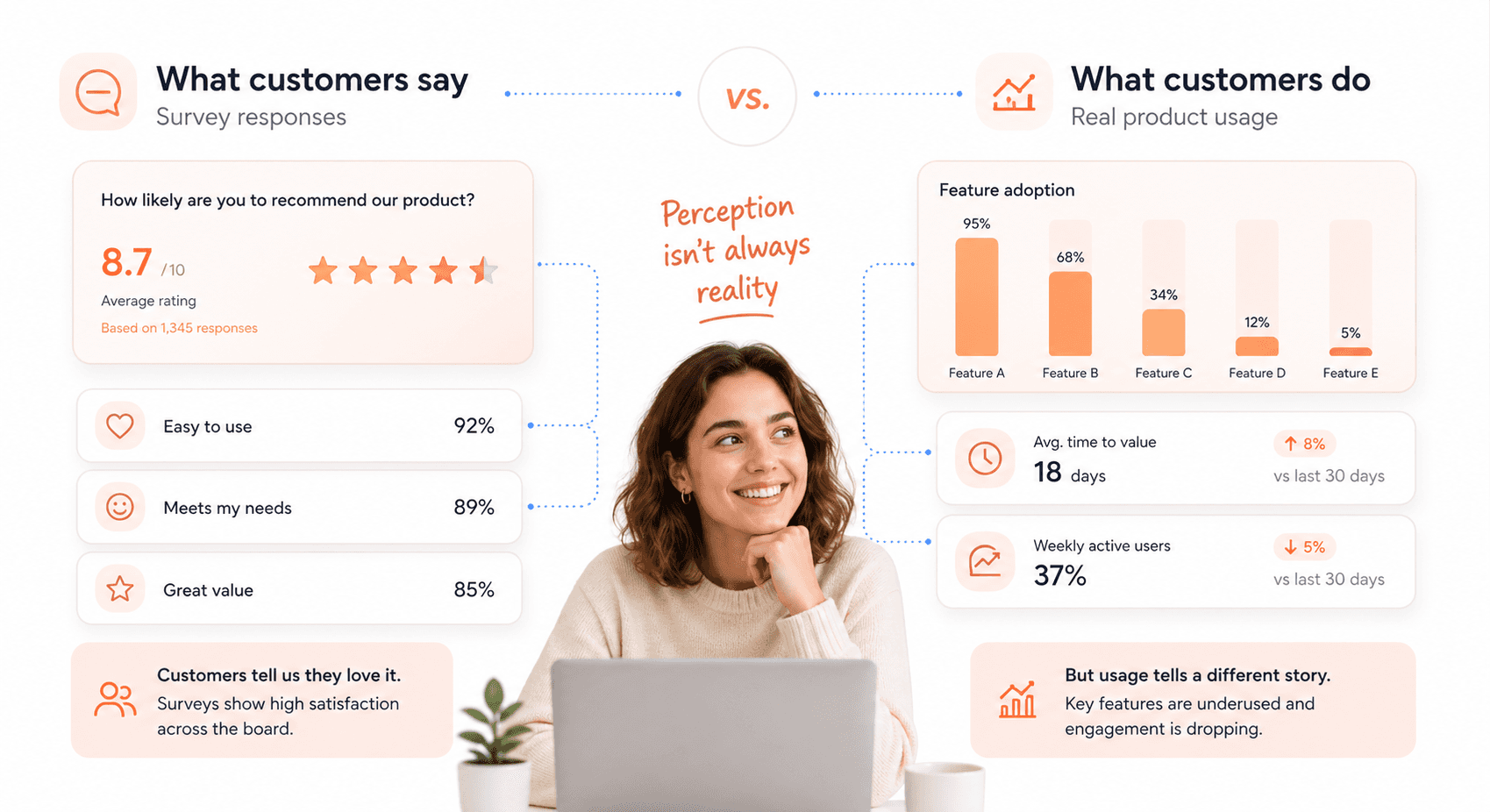
Now that we've covered how support interactions reveal sentiment, your behavioral data from product usage patterns offers an even more comprehensive view of customer health. This approach to customer sentiment measurement goes far beyond asking customers how they feel - it observes what they actually do.
Your billing patterns reveal friction or comfort in ways that surveys simply cannot capture. When customers downgrade their plans, delay payments, or frequently change their subscription levels, these behaviors signal underlying satisfaction issues that might not surface in traditional feedback collection. Similarly, when customers expand their usage or upgrade their accounts, you're seeing positive sentiment expressed through actions rather than words.
Product usage data shows engagement or drift with remarkable precision. Declining login frequencies, reduced feature adoption, or shortened session durations all indicate potential sentiment issues before they manifest in formal complaints or negative NPS responses. This behavioral scoring approach covers 100% of your customer base, offering a more complete picture than surveys that typically see response rates of 10-30%.
The power of this approach becomes especially apparent when you cross-reference NPS scores with product usage analytics. This combination helps identify root causes of declining customer loyalty by examining detractor behavior patterns. You might discover that customers who rate you poorly also show specific usage patterns - perhaps they struggle with certain features or never fully onboard to key functionality.
Leveraging AI-Powered Sentiment Analysis Across All Touchpoints
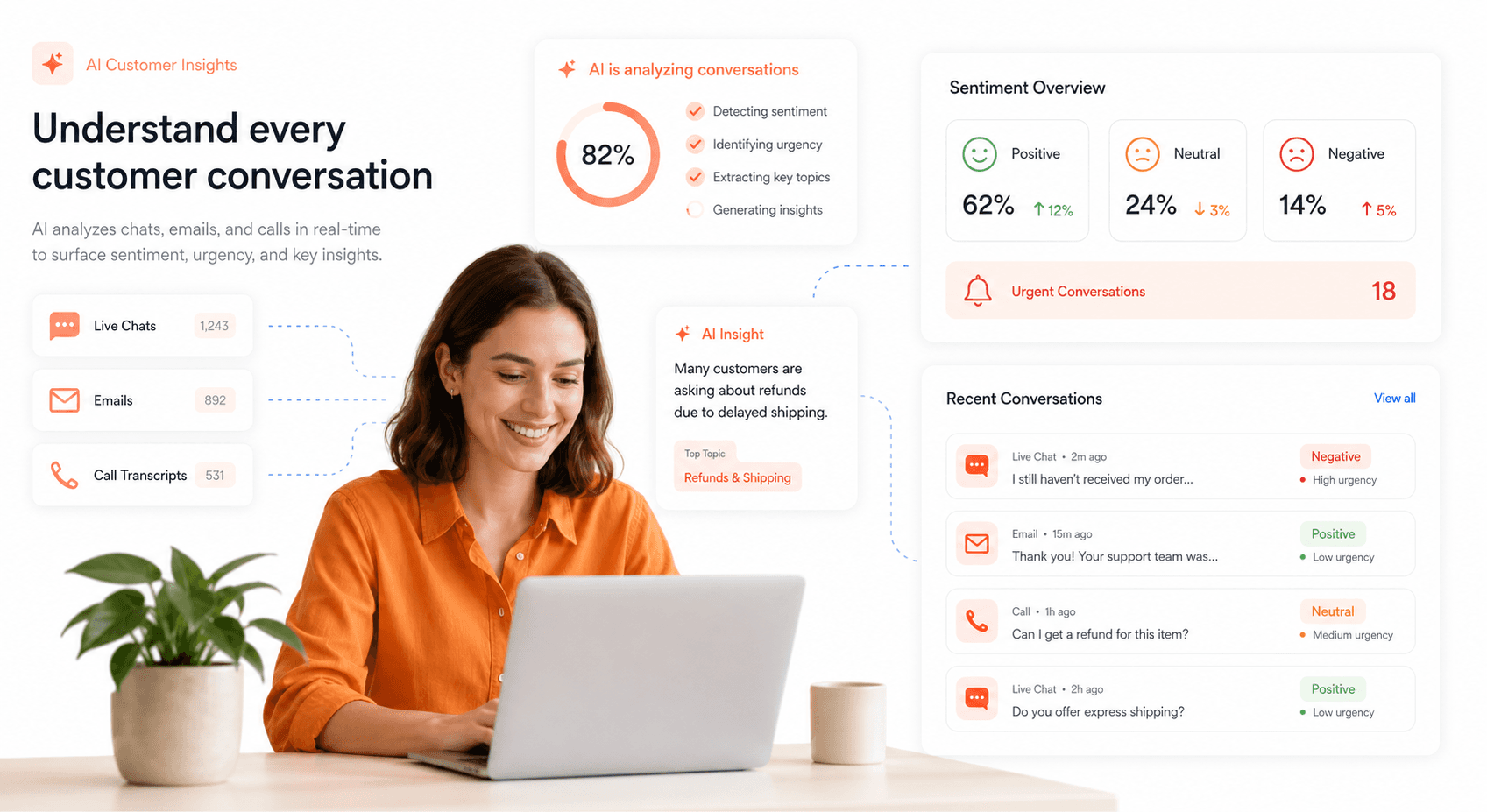
With behavioral data providing the foundation, AI-powered sentiment analysis across all touchpoints transforms how you understand customer sentiment at scale. Modern AI tools make it practical and affordable to analyze sentiment from every customer interaction, creating a comprehensive view that was previously impossible to achieve manually.
Your AI sentiment analysis can process speech-to-text on call recordings, extracting emotional indicators from voice interactions that traditional surveys would never capture. The subtle changes in tone, pace, and language choice during phone conversations often reveal customer sentiment more accurately than structured survey responses. When customers sound frustrated or confused during calls, AI can flag these interactions for immediate attention.
Similarly, sentiment analysis on support interactions provides real-time insights into customer mood and satisfaction. Every email, chat message, and support ticket becomes a data point in your broader customer intelligence system. AI can identify patterns across thousands of interactions, highlighting trends that individual agents might miss.
This comprehensive approach addresses the fundamental limitations of traditional NPS surveys by creating multiple sentiment touchpoints throughout the customer journey. Instead of relying on periodic snapshots of customer opinion, you're building a continuous stream of sentiment intelligence that captures the full spectrum of customer emotions and experiences across every interaction with your brand.
Strategic Actions to Address Declining NPS Scores
Segment Users Properly Before Sending Surveys
Your NPS score declining might stem from surveying the wrong users at the wrong times. To ensure accurate data collection and meaningful feedback, you need to segment your users strategically before triggering any NPS surveys.
Start by categorizing your users based on their product usage patterns. Heavy users who actively engage with your platform daily will provide different insights compared to occasional users who log in monthly. Your in-app behavior data reveals crucial patterns about user engagement levels, feature adoption, and satisfaction indicators that should inform your survey targeting.
Consider where each user stands in their customer journey when determining survey timing. New users still learning your product may respond negatively simply due to unfamiliarity, while long-term customers might have different expectations and pain points. You'll get more actionable feedback by aligning your survey timing with specific journey milestones.
Avoid targeting inactive users who haven't engaged with your product recently. Their feedback often reflects outdated experiences rather than current product state, skewing your NPS data toward negativity. Similarly, don't overwhelm your most active users with frequent survey requests, as this can create survey fatigue and reduce response quality.
Your segmentation strategy should also account for different user personas and use cases. Enterprise customers face different challenges than individual users, and their satisfaction drivers vary significantly. By creating targeted segments, you'll capture more nuanced feedback that helps identify specific areas for NPS score improvement.
Respond Personally to Detractors and Offer Solutions
Now that we've covered proper user segmentation, addressing negative feedback becomes your next critical action for improving customer satisfaction metrics. Every detractor represents both a risk and an opportunity that requires immediate personal attention.
When you receive negative NPS feedback, always respond promptly to acknowledge their concerns. Taking responsibility for their poor experience demonstrates accountability and shows you value their input. This personal touch prevents detractors from spreading negative word-of-mouth or leaving damaging reviews that could impact your brand reputation.
Focus particularly on high-scoring detractors who gave extremely low ratings. These users often have specific, actionable grievances that you can address directly. Reach out with personalized messages that demonstrate you've read and understood their feedback. Ask clarifying questions to uncover the root causes of their dissatisfaction.
Your response strategy should go beyond acknowledgment to offer concrete solutions. Whether their complaint involves product functionality, customer service experiences, or billing issues, present clear steps you're taking to resolve their concerns. This proactive approach can transform detractors into promoters by showing your commitment to customer success.
Track your detractor outreach efforts and their outcomes. Monitor whether personalized responses lead to improved follow-up scores or increased engagement. This data helps you refine your response strategy and identify patterns in customer complaints that require systematic product improvements.
Create Self-Service Support Options to Reduce Friction
With this in mind, next, we'll see how reducing customer friction through self-service options directly impacts your Net Promoter Score. Many customers prefer finding answers independently rather than waiting for customer support responses, making self-service capabilities essential for customer experience metrics.
Build a comprehensive self-serve knowledge base that addresses your most common customer questions and issues. Your support team's ticket data reveals recurring problems that customers face, providing a roadmap for knowledge base content. Organize this information logically with clear navigation and search functionality.
Your knowledge base should include step-by-step guides, video tutorials, troubleshooting workflows, and frequently asked questions. Make this content easily discoverable within your product interface, so users can access help without leaving their current workflow. This immediate access to solutions prevents frustration that leads to declining customer loyalty.
Implement proactive support features that anticipate customer needs before problems occur. Use in-app messaging to guide users through complex processes, provide contextual help tooltips, and offer relevant documentation based on user behavior patterns. This proactive approach removes friction points that typically generate negative feedback.
Monitor how customers use your self-service resources to identify gaps in your support coverage. Track search queries that return no results, popular help articles that need updates, and common pathways through your knowledge base. This usage data helps you continuously improve your self-service offerings and reduce the burden on your customer support team.
Remember that effective self-service options don't replace human support entirely but rather handle routine inquiries efficiently, freeing your support team to focus on complex issues that truly require personal attention. This balanced approach improves overall customer satisfaction while reducing operational costs.
Building Continuous Customer Intelligence Systems
Implement contextual in-app guidance and education
Your declining NPS score improvement strategy must include comprehensive in-app guidance that educates users throughout their journey. You need to provide continuous support through strategically placed messages and contextual help elements that ensure users can succeed with your product. This approach involves implementing tooltips, modals, checklists, and walkthroughs that guide users at critical moments when they might otherwise struggle or abandon features.
When you integrate contextual guidance into your product experience, you're essentially handholding users through their journey, preventing the frustration that leads to poor NPS scores. These educational touchpoints should appear exactly when users need them most, offering relevant information without interrupting their workflow. Your tooltip system should highlight key features users might overlook, while modal windows can provide deeper explanations for complex functionalities.
Checklists serve as powerful tools for onboarding and feature adoption, helping users understand what steps they need to complete to achieve success. Meanwhile, interactive walkthroughs can demonstrate new features or guide users through processes they haven't attempted before. By implementing these educational elements, you're proactively addressing potential confusion or dissatisfaction before it impacts your customer sentiment measurement.
Cross-reference NPS data with product usage analytics
Now that we have covered the importance of in-app guidance, you must establish a systematic approach to understanding why your NPS score declining trend persists. Your next critical step involves segmenting detractors and examining their specific product usage patterns to identify root causes behind negative scores.
You should analyze how detractors interact with your product compared to promoters, looking for significant behavioral differences. This analysis can reveal whether users skipped crucial onboarding steps, ignored key features, or struggled with specific functionalities. When you cross-reference this usage data with NPS feedback, patterns often emerge that explain the disconnect between feature additions and customer satisfaction metrics.
Your investigation might uncover that detractors consistently bypass onboarding sequences, miss essential features, or encounter friction points that promoters successfully navigate. Once you identify these patterns, you can implement targeted interventions such as personalized in-app tooltips for users who haven't engaged with certain features, or automated email sequences that guide users back to incomplete onboarding steps.
This data-driven approach to customer feedback analysis ensures your improvements address actual user behavior rather than assumptions about what causes dissatisfaction. You'll discover specific moments where users disengage or struggle, allowing you to deploy contextual help precisely where it's needed most.
Establish regular monitoring without overwhelming users
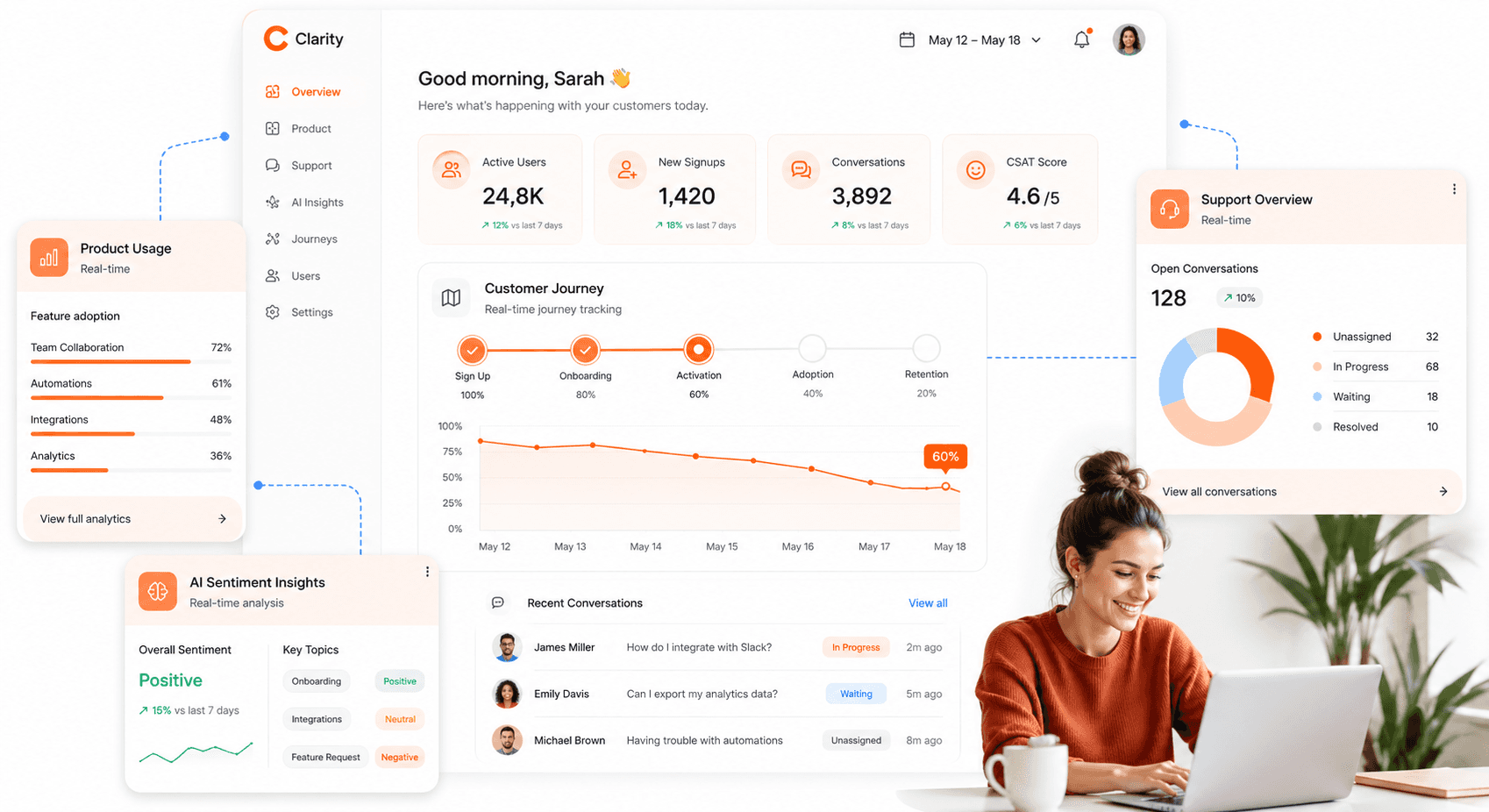
With this in mind, next, you'll need to create a sustainable monitoring system that tracks your progress without creating survey fatigue. Your NPS best practices should include running regular checks to evaluate improvements in customer experience metrics over time, while being mindful of user tolerance for feedback requests.
You should set your NPS survey frequency to every 3-6 months to maintain valuable insights without overwhelming users. This timeframe allows sufficient opportunity for users to experience your improvements while preventing the survey fatigue that can actually harm customer satisfaction. Your monitoring schedule should be consistent enough to track meaningful trends but spaced appropriately to respect users' time and attention.
Your continuous customer intelligence system should also incorporate automated triggers based on user behavior, such as surveying users after they complete key milestones or experience significant product interactions. This approach ensures you capture sentiment at meaningful moments while maintaining the recommended frequency guidelines.
When you establish this regular monitoring rhythm, you create opportunities to measure the impact of your contextual guidance implementations and usage pattern interventions. Your system should track not just NPS scores but also the correlation between guided user experiences and improved sentiment, helping you refine your customer experience metrics strategy over time.
Conclusion
Your declining NPS scores aren't necessarily a reflection of poor product development they're likely symptomatic of a fundamentally flawed measurement system. Traditional NPS surveys suffer from plummeting response rates, with most programs capturing feedback from only a small fraction of customers while missing the critical "quiet middle" who are weighing whether to stay or leave. The customers who do respond often represent the extremes, creating a skewed picture that over-emphasizes happy customers while underrepresenting those at risk of churning.
The solution lies in building continuous customer intelligence systems that leverage the wealth of interaction data you already possess. Every support ticket, billing pattern, product usage metric, and behavioral signal contains valuable sentiment insights that cover 100% of your customer base, not just the small percentage willing to complete surveys. By implementing AI-powered sentiment analysis on support interactions, behavioral scoring from usage patterns, and comprehensive data analysis, you can identify retention risks earlier and make decisions based on real-time customer behavior rather than outdated survey responses. This shift from periodic polling to continuous intelligence will give you the complete story your business needs to truly understand and improve customer satisfaction.




About the author
I’m the founder of Hashbyt, an AI-first frontend and UI/UX SaaS partner helping 200+ SaaS companies scale faster through intelligent, growth-driven design. My work focuses on building modern frontend systems, design frameworks, and product modernization strategies that boost revenue, improve user adoption, and help SaaS founders turn their UI into a true growth engine.
Is a clunky UI holding back your growth?
Is a clunky UI holding back your growth?
▶︎
Transform slow, frustrating dashboards into intuitive interfaces that ensure effortless user adoption.
▶︎
Transform slow, frustrating dashboards into intuitive interfaces that ensure effortless user adoption.
