

Your SaaS product is bleeding users to competitors, and you might not even realize why.
If you're a SaaS founder, product manager, or growth leader watching your churn rate climb while competitors steal your hard-won customers, you're not alone. Most SaaS products don't fail because they start with a bad idea they fail because users don't stick around long enough to see real value.
The brutal truth? Your users are leaving because your product stops solving their problems over time. While you're focused on acquiring new customers, existing users quietly slip away when your product no longer matches their evolving needs. This guide breaks down the hidden costs eating away at your revenue growth and reveals the top reasons your SaaS product is losing users to competitors who better understand what customers actually want.
We'll walk through why products lose relevance as user needs change, then show you proven strategies to keep users engaged long-term. You'll also discover the essential tools and systems that prevent customer loss before it happens, plus the key metrics that tell you whether your retention efforts are actually working.
The Hidden Cost of User Churn in SaaS Businesses
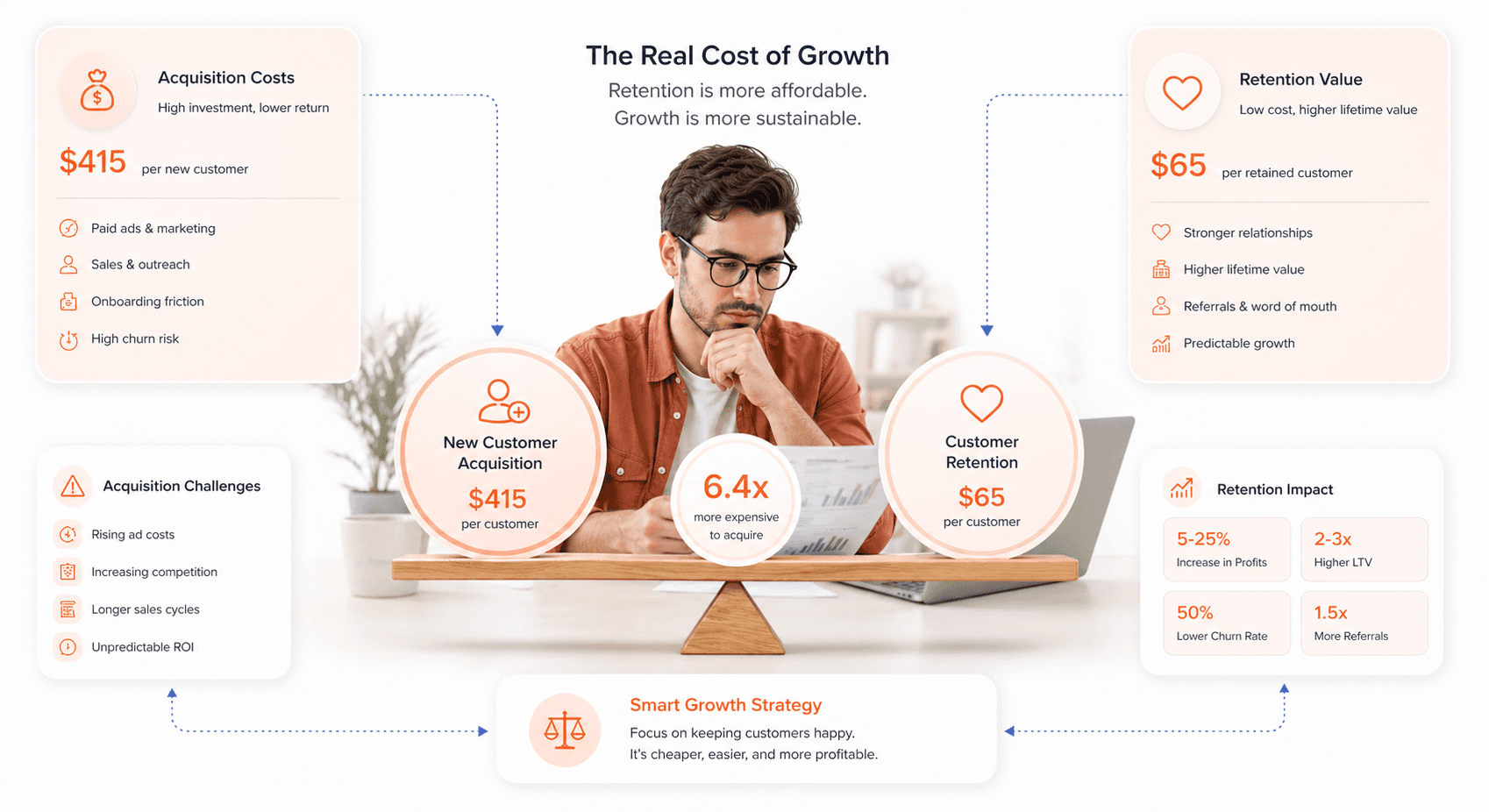
Why Acquiring New Customers Costs 5-7x More Than Retention
Your SaaS business faces a critical financial reality that many overlook: acquiring a new customer costs 5-7 times more than retaining an existing one. This stark difference creates a revolving door effect where you're continuously pouring marketing and advertising dollars into replacing users who've already experienced your product's value.
When you focus heavily on customer acquisition while neglecting retention, you're essentially building your revenue on a foundation of sand. Every lost user represents not just the immediate revenue loss, but also the wasted investment in bringing them to your platform in the first place. Your customer acquisition cost (CAC) includes everything from paid advertising and content marketing to sales team salaries and onboarding resources.
The mathematics of this imbalance become even more striking when you consider that your existing customers already understand your product, have established workflows, and require minimal additional investment to maintain their subscription. They've moved past the initial learning curve and friction points that new users encounter. By allowing these valuable customers to churn to competitors, you're forcing yourself to repeatedly invest in replacing knowledge and relationships that already existed within your user base.
Your marketing budget becomes significantly more efficient when you redirect even a portion of acquisition spending toward retention initiatives. The customers you already have represent proven demand for your solution and demonstrated willingness to pay for your value proposition.
How Poor Retention Destroys Revenue Growth and Customer Lifetime Value
Poor SaaS user retention creates a devastating ripple effect throughout your entire revenue model, fundamentally undermining your business's growth potential and financial stability. When your customer lifetime value (LTV) suffers due to high churn rates, you lose the predictable, recurring revenue that makes SaaS businesses attractive to investors and sustainable for long-term growth.
Your customer lifetime value directly correlates with how long users remain engaged with your product. Every month a customer stays subscribed multiplies their total value to your business. When retention falters, you're cutting short these revenue relationships just as they're becoming most profitable. The customers who churn early often leave before you've even recovered your acquisition costs, creating negative unit economics that can cripple your growth trajectory.
Studies demonstrate that improving user retention by as little as 5% can lead to outsized results of a 25% or more profit increase. This dramatic impact occurs because retained customers typically expand their usage over time, upgrade to higher-tier plans, and require proportionally less support as they become more proficient with your platform.
The compounding effect of poor retention extends beyond immediate revenue loss. When your LTV decreases, your ability to invest in product development, customer success initiatives, and competitive features diminishes. You become trapped in a cycle where reduced investment leads to a less competitive product, which further accelerates churn.
Your financial projections become unreliable without strong retention metrics, making it difficult to secure investment, plan for growth, or demonstrate sustainable business value to stakeholders.
The Competitive Disadvantage of Losing Loyal User Advocates
When you lose loyal users to competitors, you're not just losing revenue you're surrendering some of your most powerful competitive advantages in the market. These loyal users serve as invaluable evangelists who contribute to organic growth by actively promoting your product within their networks and industries.
Your loyal customers become authentic advocates who strengthen your market position in ways that paid advertising simply cannot replicate. They provide genuine testimonials, refer new customers, and create word-of-mouth marketing that carries significantly more weight than traditional promotional efforts. When these advocates switch to competing solutions, they often become promoters for your competitors instead.
The loss of user advocates makes it substantially harder to defend your market position against competitive threats. Loyal users typically resist switching costs and competitive offers because they've invested time and energy into mastering your platform. They understand the nuances of your solution and have built workflows around your specific features and capabilities.
When you allow loyal users to churn, you're essentially training future advocates for your competitors while simultaneously weakening your own organic growth engine. These users take their knowledge, enthusiasm, and network influence with them, potentially accelerating your competitors' growth while stunting your own.
Your competitive disadvantage compounds as former loyal users share their negative experiences or reasons for switching, potentially influencing others in their professional circles to avoid your solution. The reputation damage from losing engaged, vocal customers can persist long after the initial churn event, continuing to impact your acquisition efforts and market perception.
Top Reasons Your SaaS Product is Bleeding Users
Clunky Onboarding That Loses 75% of Users Within the First Week
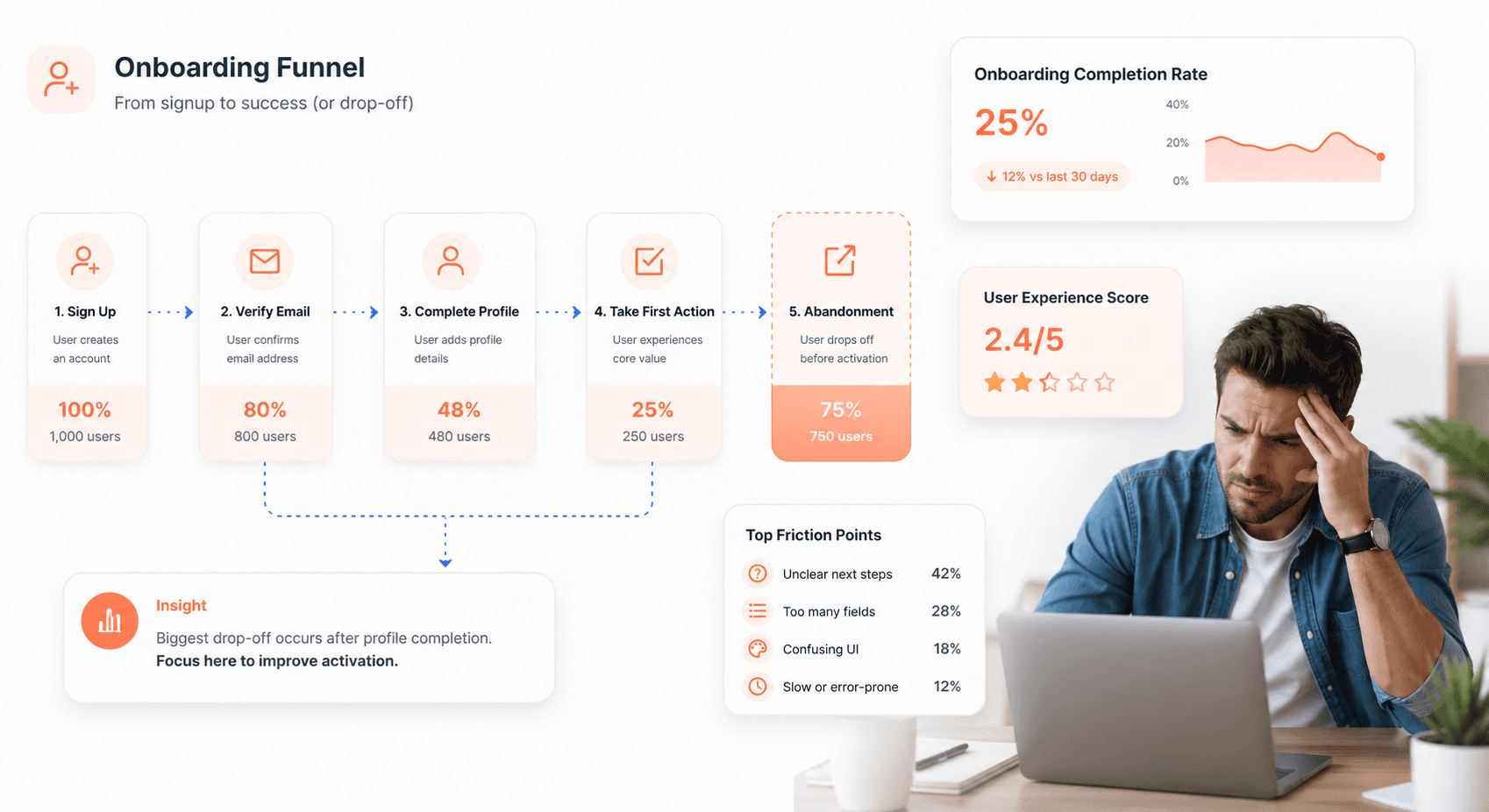
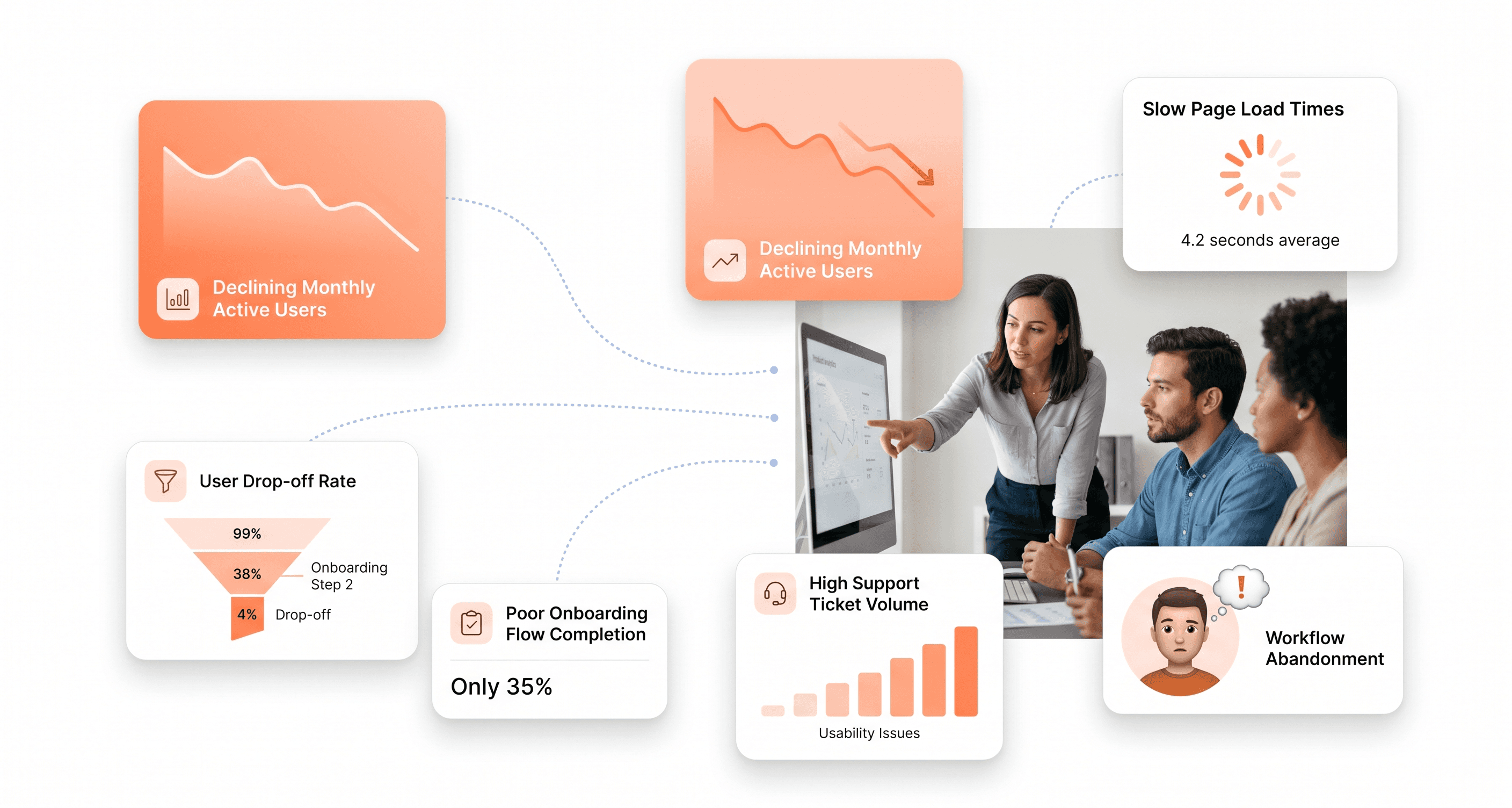
Your onboarding process is the make-or-break moment for your SaaS product, yet clunky onboarding leads to 75% of users abandoning your product within the first week. This staggering statistic reveals how friction in those critical initial moments can devastate your user retention rates before you even have a chance to demonstrate your product's true value.
When your onboarding creates unnecessary barriers or fails to quickly show users why they should stick around, you're essentially pushing potential customers straight into your competitors' arms. Products that fail to demonstrate value quickly become victims of user impatience in today's fast-paced digital landscape. Your users don't have time to figure out complex interfaces or navigate through confusing setup processes – they want immediate results and clear pathways to success.
The friction you create during onboarding compounds rapidly, turning what should be an exciting first impression into a frustrating experience that users won't tolerate. Every additional step, unclear instruction, or technical hiccup increases the likelihood that users will abandon your product before experiencing its core benefits.
Stagnant Product Development That Fails to Evolve With User Needs
Stagnant product development represents one of the most damaging factors contributing to SaaS user churn. When your development team fails to release updates or new features consistently, your product becomes increasingly less useful over time, ultimately failing to evolve with your users' changing needs and expectations.
Your users' requirements don't remain static – they grow, change, and become more sophisticated as their businesses evolve. If your product remains unchanged while your users' needs advance, you create a widening gap between what you offer and what they actually require. This disconnect pushes users to actively seek alternatives that better align with their current situation.
The lack of visible progress in your product sends a clear message to users that innovation has stopped. When competitors continue advancing their offerings with regular feature releases and improvements, your stagnant product appears outdated by comparison. Users interpret this lack of development as a sign that your company may be struggling or losing focus, making them question the long-term viability of continuing their investment in your solution.
Poor UX/UI Design That Frustrates Users and Drives Them Away
Poor UX/UI design creates an immediate barrier between your users and the value your product promises to deliver. Frustrating interfaces, confusing navigation, and poor performance directly drive users away because they have little patience for design issues that impede their productivity and workflow efficiency.
Your interface serves as the primary touchpoint between users and your product's functionality. When navigation feels unintuitive or when users struggle to complete basic tasks, every interaction becomes a source of frustration rather than value creation. Users expect seamless, intuitive experiences that allow them to focus on their work rather than fighting with your software.
Performance issues compound these UX problems exponentially. Slow loading times, unresponsive elements, and buggy features create additional friction that pushes users toward competitors offering smoother, more reliable experiences. In competitive markets, users won't tolerate poor performance when alternative solutions provide better usability.
Pricing Models That Don't Match Perceived Value
Pricing misalignment occurs when your product's price doesn't match its perceived value in the minds of your users, creating a fundamental disconnect that pushes users to seek alternatives that offer better value propositions. This mismatch between cost and perceived benefit becomes a primary driver for users to explore competitive options.
Flexible pricing models like pay-as-you-go options often prove more appealing to users because they align costs directly with usage and received value. When your pricing structure feels rigid or doesn't scale appropriately with user needs, you create unnecessary barriers that competitors can exploit by offering more attractive pricing alternatives.
Ignoring User Feedback and Missing Critical Improvement Signals
Ignoring user feedback and suggestions sends a clear message to your users that you don't care about their needs or experiences with your product. This negligence leads to higher churn rates as users feel unheard and undervalued, ultimately seeking providers who demonstrate genuine interest in user satisfaction.
User feedback represents invaluable intelligence about your product's performance and areas needing improvement. When you fail to act on these critical improvement signals, you miss opportunities to address issues before they escalate into reasons for users to leave your platform entirely.
Understanding Value Decline: Why Products Lose Relevance Over Time
How Unaddressed Jobs-to-Be-Done Create Value Gaps
When your SaaS product only completes 80% of a task your users need to accomplish, you're creating a value gap that competitors can easily exploit. Value decline occurs when your product delivers less value over time by failing to address evolving user needs and their core jobs-to-be-done.
These unaddressed jobs manifest in several critical ways within your SaaS user retention strategy. Your users hire your product to complete specific tasks, but when they're forced to cobble together multiple solutions or perform manual workarounds for that remaining 20%, frustration builds. This incomplete value delivery becomes a breeding ground for SaaS user churn as users seek more comprehensive solutions.
Sometimes, you might make a conscious decision not to expand features to avoid product bloat. While this intention seems reasonable, it can inadvertently create opportunities for competitors to swoop in and capture your users. When you refuse to address these gaps, your users begin looking elsewhere for complete solutions, directly impacting your customer retention strategies.
The most dangerous aspect of value gaps is that they compound over time. What starts as a minor inconvenience evolves into a significant pain point that drives users to evaluate alternatives, making your SaaS competition analysis reveal vulnerable areas where rivals can gain ground.
Market Forces That Change Customer Expectations and Product Context
Market and world forces can dramatically reshape your product's relevance overnight, requiring continuous adaptation to maintain value. Consider how COVID-19 fundamentally altered workplace dynamics, or how AI advancements have raised user expectations across all software categories.
These external forces don't just influence user preferences—they completely reframe the context in which your SaaS product operates. When remote work became the norm, products that didn't quickly adapt their collaboration features found themselves losing users to more agile competitors. Similarly, as AI capabilities became mainstream, users began expecting intelligent automation features that many established SaaS products struggled to implement quickly.
Your preventing customer loss strategy must account for these macro-level shifts. When market forces change customer expectations, your product's static feature set suddenly appears outdated, regardless of how well it previously served users. This contextual shift creates an environment where competitors can position themselves as more modern, relevant solutions.
The challenge lies in anticipating these changes and adapting your product roadmap accordingly. Companies that remain rigid in their approach to product development often find themselves scrambling to catch up after market forces have already shifted user expectations beyond their current capabilities.
Competitive Pressures That Make Your Product Less Attractive
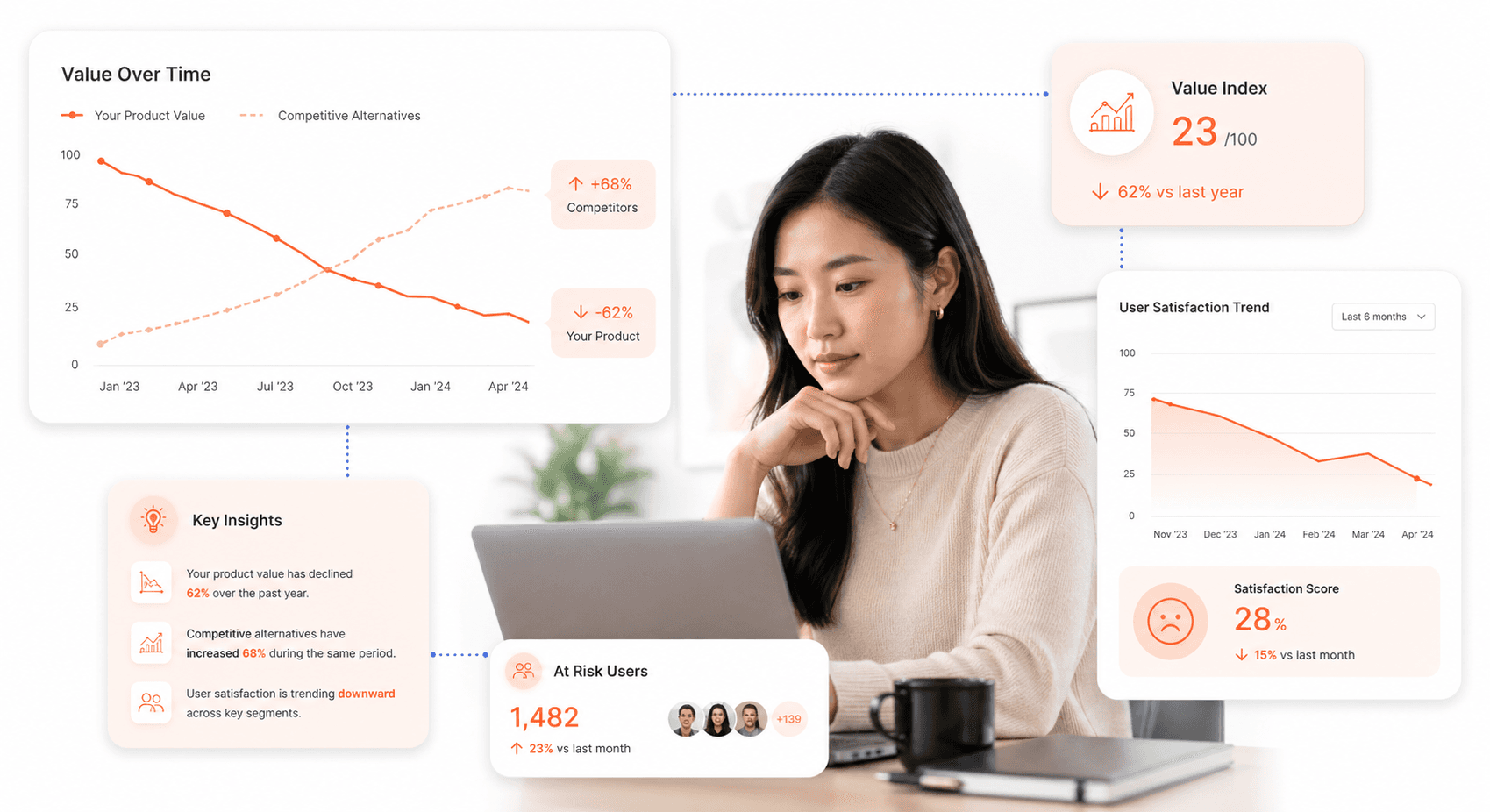
Competitive pressures manifest in three primary ways that can erode your product's market position. First, when rivals ship new features that address jobs your product doesn't complete, they're directly targeting the value gaps in your offering. These feature additions don't need to be revolutionary they simply need to solve problems your users face daily.
Second, competitors can undercut your pricing strategy, making your product appear overpriced for the value delivered. This pricing pressure becomes particularly acute when combined with feature gaps, as users begin questioning why they're paying premium rates for incomplete solutions.
Third, competitors offering integrated experiences pose the most significant threat to your SaaS user retention. When a rival provides a unified solution that eliminates the need for multiple tools, they're addressing the fundamental job-to-be-done more completely than your standalone product.
These competitive dynamics create a downward spiral effect on your user engagement strategies. As competitors gain features, lower prices, or offer better integration, your product becomes relatively less attractive, accelerating user churn and making retention increasingly difficult.
The Three Preventable Causes of Value Decline in Growing SaaS Companies
Now that we've covered external pressures, let's examine the internal factors you can control. Three preventable causes consistently drive value decline in growing SaaS companies, each representing missed opportunities to strengthen your SaaS customer retention metrics.
Incomplete Understanding of User Jobs
The first preventable cause stems from not understanding the full job users want to accomplish with your product. You might believe your product solves a specific problem, but users often have broader objectives that extend beyond your current scope. When you fail to grasp this complete picture, you're essentially building a solution for a fragment of the actual job, leaving room for more comprehensive competitors.
Shortsighted User Need Analysis
The second cause involves not understanding your users' long-term needs with your product. Your initial solution might perfectly address immediate pain points, but as users mature in their usage, their requirements evolve. Companies that focus solely on current user needs without anticipating future requirements find their products becoming less relevant over time.
Growth Sabotage Through Development Reluctance
The third preventable cause is self-sabotaging growth by being reluctant to invest in development to avoid "bloat." While feature bloat is a legitimate concern, using it as an excuse to avoid necessary product evolution creates competitive vulnerabilities. This reluctance to invest in meaningful improvements leaves your product stagnant while users' expectations and market standards continue advancing.
These three causes are entirely within your control, making them the most critical aspects of your reducing customer churn strategy. By addressing incomplete job understanding, expanding your view of user needs, and committing to strategic product development, you can prevent the value decline that drives users toward competitors.
Proven Strategies to Keep Users Engaged Long-Term
Creating Seamless Onboarding With Interactive Tutorials and Progress Tracking
Your onboarding process serves as the first impression users have of your SaaS product, making it critical for long-term SaaS user retention. You need to hone this process carefully to ensure new users feel empowered and confident from their very first interaction.
Interactive tutorials form the backbone of effective onboarding, guiding users through key features step-by-step rather than overwhelming them with information. When you implement these tutorials, focus on showing users how to achieve their goals quickly and efficiently. This hands-on approach helps users understand your product's value immediately.
UI elements like progress trackers and checklists transform your onboarding into a clear, structured journey. Progress trackers visually show users how far they've come and what remains, reducing the likelihood they'll abandon the process midway. Checklists break down complex setup tasks into manageable steps, creating a sense of accomplishment as users check off completed items.
Gamification elements, exemplified by platforms like Duolingo, can significantly boost user engagement during onboarding. When you incorporate point systems, badges, or achievement unlocks, you tap into users' natural desire for progress and recognition. This approach transforms potentially tedious setup processes into engaging experiences that users want to complete.
Continuously Delivering Value Through User-Driven Product Updates
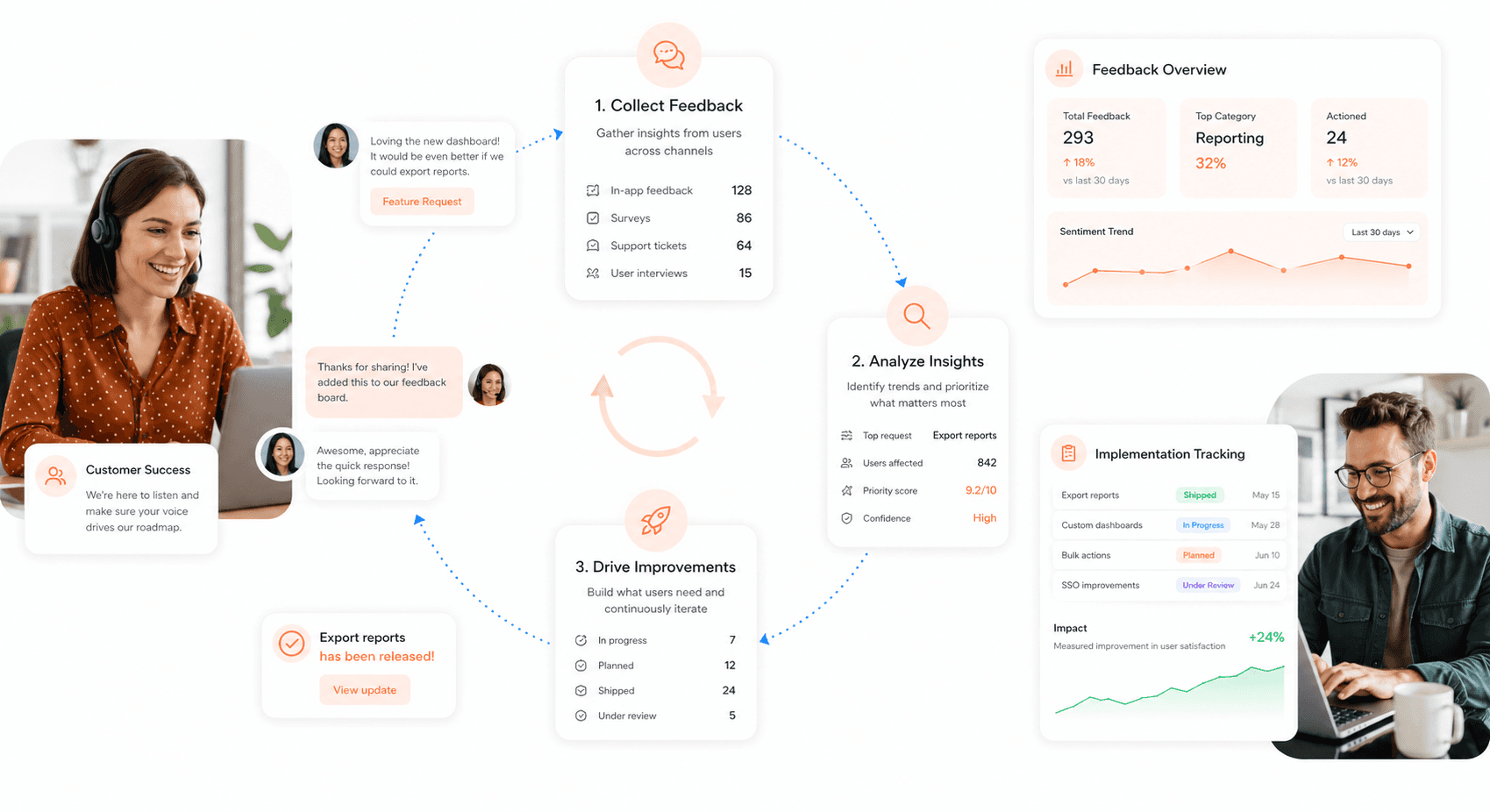
Your product's evolution should be driven by your users' actual needs rather than assumptions about what they want. This customer retention strategy requires establishing strong feedback loops that capture user input consistently and systematically.
You must constantly improve and iterate based on user feedback, treating every piece of input as valuable intelligence about your product's performance. This means actively soliciting feedback through multiple channels and responding to it with meaningful product enhancements.
Communication plays a crucial role in this process. When you make changes based on user feedback, inform your users through email notifications and in-app announcements. This transparency demonstrates that you're listening to their needs and actively working to address them, fostering stronger loyalty and reducing SaaS user churn.
Optimizing User Experience Design Through Real User Testing
Your user experience design directly impacts how users perceive and interact with your product. Prioritizing simple workflows ensures users can accomplish their goals without unnecessary complexity or confusion.
Responsive and clean interfaces reduce friction and make your product accessible across different devices and screen sizes. When users encounter a cluttered or slow interface, they're more likely to seek alternatives from your competitors.
Testing your designs with real users provides invaluable insights that you simply cannot obtain through internal assumptions. Real user testing reveals actual pain points that users experience, allowing you to address specific usability issues before they drive users away. This proactive approach to UX optimization is essential for preventing customer loss.
Personalizing Experiences Using Behavioral Data and Targeted Recommendations
Your ability to personalize user experiences significantly impacts long-term user engagement strategies. By leveraging behavioral data, you can understand how individual users interact with your product and what features they value most.
Targeted recommendations and tips, similar to Netflix's approach, create relevant moments that resonate with specific users. When you deliver personalized content at the right time, you demonstrate understanding of each user's unique needs and preferences.
This personalization builds loyalty by making users feel that your product is specifically designed for them. Timely and relevant recommendations show users features they might have missed while helping them maximize the value they receive from your subscription.
Proactively Identifying and Addressing Churn Risk Before It's Too Late
Your retention efforts must include monitoring user behavior for early warning signals that indicate potential churn risk. Reduced login frequency and shorter session durations are key indicators that users are becoming disengaged with your product.
When you identify at-risk users through these behavioral signals, implement immediate intervention strategies. Re-engagement emails that highlight unused features or offer personalized tips can rekindle interest. Incentives such as extended trials, feature upgrades, or one-on-one support sessions can address specific concerns before users decide to leave.
Re-engagement campaigns also serve to reactivate dormant users who may have stopped using your product but haven't formally canceled their subscriptions. These targeted efforts can recover users who might otherwise contribute to your churn rate, making them essential components of comprehensive SaaS retention tools.
Essential Tools and Systems for SaaS User Retention
Customer Feedback Platforms for Gathering and Acting on User Input
Your ability to retain users depends heavily on understanding their needs, frustrations, and expectations. Customer feedback platforms serve as your direct line to user insights, enabling you to collect valuable input and transform it into actionable improvements for your SaaS product.
Typeform stands out as a powerful tool for creating engaging surveys and feedback forms that your users will actually want to complete. Unlike traditional survey tools, Typeform's conversational interface increases response rates and helps you gather more detailed insights about why users might consider leaving your platform. You can use it to conduct exit interviews, satisfaction surveys, and feature request polls that directly inform your SaaS user retention strategies.
Intercom revolutionizes how you interact with your users by combining messaging, feedback collection, and support into one seamless platform. Through Intercom, you can proactively reach out to users showing signs of disengagement, collect real-time feedback during critical user journeys, and provide instant support when users encounter obstacles. This immediate response capability is crucial for preventing customer churn before it occurs.
Hotjar provides you with visual feedback through heatmaps, session recordings, and feedback polls that reveal exactly how users interact with your product. By watching user sessions and analyzing click patterns, you can identify friction points that might be driving users to competitors. The platform's feedback widgets allow you to capture user sentiment at specific moments in their journey, giving you context-rich insights that traditional analytics tools might miss.
When implementing these customer feedback platforms, focus on creating multiple touchpoints throughout your user experience. Deploy feedback widgets at key conversion points, send targeted surveys to users who haven't logged in recently, and use exit-intent surveys to understand why users are considering leaving your platform.
Analytics Tools for Monitoring User Behavior and Retention Trends
Now that we've covered feedback collection, monitoring user behavior through analytics becomes your next critical step in reducing customer churn. These tools provide the quantitative backbone for your SaaS user retention efforts by revealing patterns and trends that might not be immediately visible through feedback alone.
Mixpanel excels at event-based analytics, allowing you to track specific actions users take within your SaaS product. You can monitor user engagement levels, identify which features correlate with higher retention rates, and spot early warning signs of churn. By setting up cohort analyses and funnel tracking, you'll gain insights into how different user segments behave over time and which actions predict long-term retention.
Amplitude offers advanced user behavior analytics with powerful segmentation capabilities that help you understand your SaaS customer retention metrics in granular detail. The platform enables you to create behavioral cohorts, track user journeys across multiple sessions, and identify the key moments where users either commit to your product or begin to disengage. Its predictive analytics features can help you identify users at risk of churning before they actually leave.
Google Analytics, while more general-purpose, provides essential baseline metrics for understanding user acquisition, engagement, and retention patterns. You can track user flow through your application, monitor session duration and frequency, and identify which traffic sources bring in the most retained users. The platform's goal tracking and conversion funnels help you understand how user engagement strategies impact overall retention.
These analytics tools work best when you establish clear retention benchmarks and regularly monitor key behavioral indicators. Track metrics like daily and monthly active users, feature adoption rates, and session frequency to build a comprehensive picture of user engagement patterns.
Specialized Retention Platforms for Churn Prevention and User Personalization
With comprehensive feedback and analytics systems in place, specialized retention platforms take your efforts to the next level by providing dedicated tools for churn prevention and user personalization. These SaaS retention tools are specifically designed to help you proactively manage customer relationships and prevent user loss.
ChurnZero focuses exclusively on customer success and churn prevention, providing you with automated workflows that trigger based on user behavior patterns. The platform helps you identify at-risk customers through its predictive scoring algorithms and enables you to create targeted intervention campaigns. You can set up automated email sequences for users showing declining engagement, schedule check-in calls for high-value customers, and track the success of your retention efforts through detailed reporting dashboards.
Gainsight offers comprehensive customer success management capabilities that go beyond simple churn prevention. The platform provides health scoring systems that evaluate customer relationships based on multiple data points, enabling you to prioritize your retention efforts effectively. Through Gainsight, you can create personalized user experiences, automate success milestones, and measure the impact of your customer success initiatives on overall retention rates.
Both platforms integrate seamlessly with your existing analytics and feedback tools, creating a unified system for managing customer relationships. They enable you to move from reactive customer service to proactive user engagement strategies, helping you address potential issues before they lead to churn.
When implementing these specialized platforms, focus on creating automated workflows that complement your manual outreach efforts. Use the platforms' segmentation capabilities to deliver personalized experiences that demonstrate ongoing value to different user types, ultimately strengthening your position against competitors who may be targeting your users with alternative solutions.
Key Metrics to Track Your Retention Success
Customer Retention Rate and Monthly Recurring Revenue Churn
Your Customer Retention Rate (CRR) serves as the foundational metric for understanding how well your SaaS product retains users over time. This percentage-based measurement reveals the proportion of customers who remain with your service during a specific period, giving you direct insight into your product's stickiness and value proposition effectiveness.
To calculate your CRR effectively, you'll need to establish clear time boundaries whether monthly, quarterly, or annually and track the percentage of users who continue their subscriptions throughout that period. This metric becomes particularly valuable when you segment it by customer cohorts, acquisition channels, or user personas, as these breakdowns can reveal specific patterns in your SaaS user retention performance.
Monthly Recurring Revenue (MRR) churn provides a complementary financial perspective to your retention analysis. Unlike simple user count metrics, MRR churn captures the revenue impact of customer losses, including both complete cancellations and downgrades. This dual approach to measuring churn gives you a comprehensive view of how customer departures affect your business both numerically and financially.
When monitoring MRR churn, you'll discover that not all customer losses carry equal weight. A single enterprise client downgrading their plan might impact your revenue more significantly than several smaller customers canceling entirely. This revenue-focused lens helps you prioritize your retention efforts and identify which customer segments deserve immediate attention in your SaaS customer retention metrics strategy.
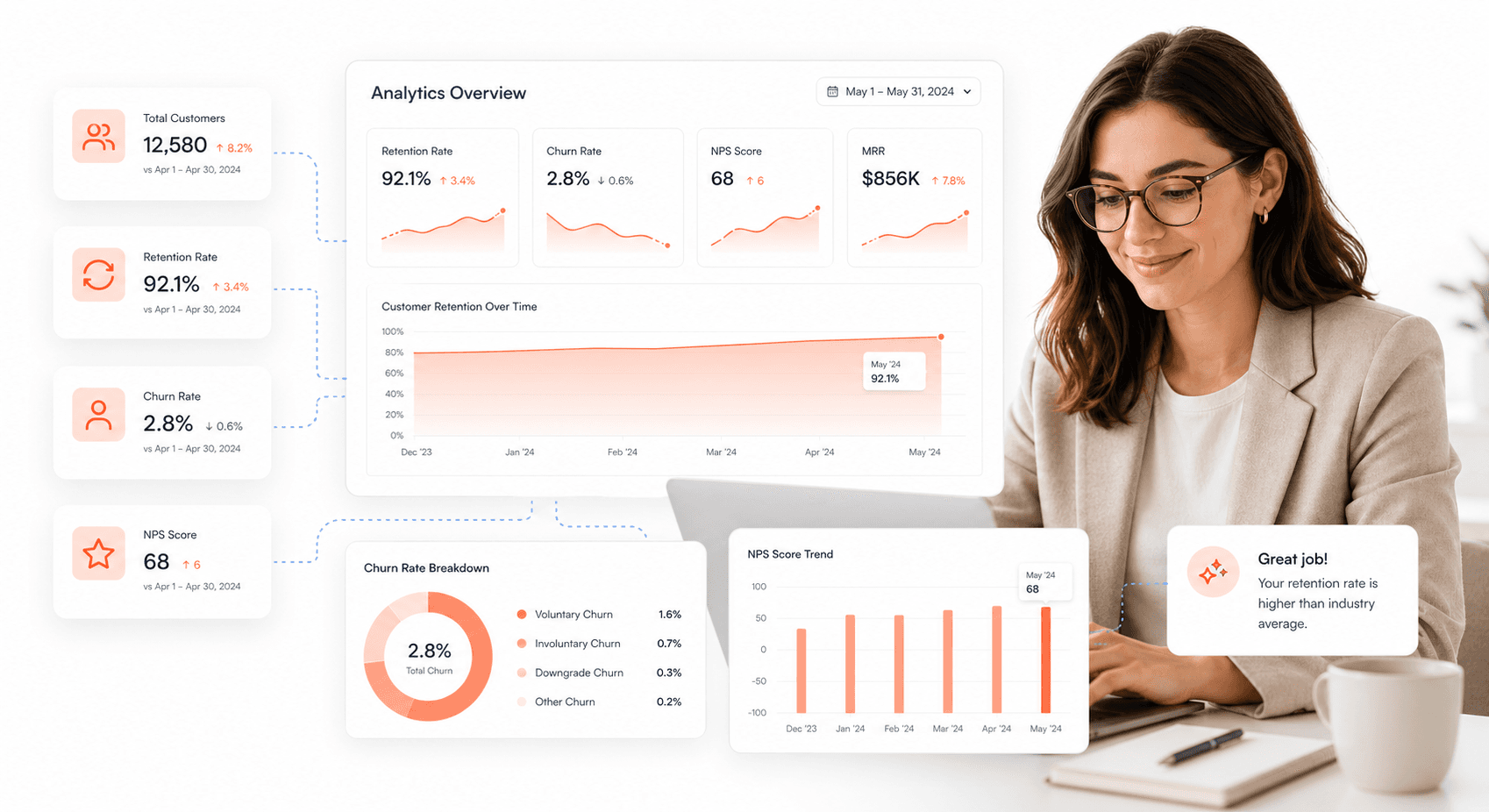
Net Promoter Score as an Early Warning System
Your Net Promoter Score (NPS) functions as a predictive indicator of customer satisfaction and future retention challenges. This metric measures your customers' likelihood to recommend your product to others, but more importantly for retention purposes, it signals brewing dissatisfaction before customers actually churn.
NPS operates on a scale where customers rating your product 9-10 become promoters, 7-8 are passive, and 0-6 are detractors. The beauty of this system lies in its ability to identify at-risk customers before they reach the cancellation point. When you notice declining NPS scores or an increase in detractors, you're receiving an early warning that your value proposition may be weakening.
Implementing regular NPS surveys allows you to track satisfaction trends and correlate them with retention patterns. Customers who transition from promoters to passive or from passive to detractors often precede actual churn by several weeks or months. This advance notice gives you crucial time to implement targeted retention strategies and address underlying issues before losing valuable customers.
Net Revenue Retention as Your Most Honest Business Health Indicator
Net Revenue Retention (NRR) stands out as the most transparent metric for assessing your SaaS business's overall health and growth potential. Unlike other metrics that might mask underlying problems, NRR provides an unvarnished view of whether your existing customer base is expanding, contracting, or stagnating in terms of revenue contribution.
Your NRR calculation incorporates expansion revenue from upsells and cross-sells alongside contraction revenue from downgrades and churn. This comprehensive approach reveals whether you're successfully growing revenue from your existing customer base or experiencing value decline. A healthy SaaS business typically maintains an NRR above 100%, indicating that expansion revenue from satisfied customers more than compensates for losses from churned accounts.
When your NRR stagnates or declines such as remaining stuck at 70% at the 12-month mark this signals significant value decline within your customer base. This scenario indicates that your product isn't delivering increasing value over time, and customers aren't finding reasons to expand their usage or upgrade their plans. Such patterns often precede accelerated churn rates and represent critical inflection points where immediate action becomes necessary.
Monitoring NRR trends helps you understand whether your retention challenges stem from competitive pressures, feature gaps, or fundamental value proposition misalignment. A declining NRR serves as your most reliable early warning system for broader business health issues that extend beyond simple customer satisfaction metrics.
Building a Discovery Process That Prevents Customer Loss
Sprint-Based Deep Dives into Long-Term Customer Journeys
Your SaaS customer retention strategy needs a systematic approach to understanding how users interact with your product over time. Sprint-based deep dives offer a structured method for preventing customer loss through quarterly periods dedicated to comprehensive customer research. During these focused timeframes, you should direct your teams to engage directly with customers, moving beyond surface-level feedback to gain meaningful insights into their actual experiences.
These quarterly deep dives require you to critically observe how customers use your product in their real working environments, not just how you think they should use it. Your teams need to step outside the office and witness firsthand how your SaaS product fits into your customers' daily workflows, what friction points they encounter, and where your solution either enhances or hinders their productivity.
The cornerstone of effective sprint-based discovery involves mapping the complete customer journey from initial onboarding through long-term usage patterns. You must identify every touchpoint, interaction, and decision moment that influences whether users continue with your service or eventually churn to competitors. This comprehensive mapping reveals gaps and opportunities that might otherwise remain invisible when you're focused solely on product metrics and usage data.
Continuous Discovery Habits for Ongoing Opportunity Identification
While quarterly sprints provide intensive research periods, preventing customer loss requires you to establish continuous discovery habits that operate year-round. This ongoing process ensures you're consistently identifying opportunities and problems before they escalate into user churn situations. Your approach must contrast sharply with teams that focus exclusively on building solutions without conducting proper discovery research first.
Continuous discovery habits mean embedding regular customer conversations, feedback collection, and behavioral analysis into your weekly routines rather than treating research as a separate, occasional activity. You should create systems where product teams naturally engage with users, monitor usage patterns, and identify emerging needs as part of their standard workflow.
This strategic approach requires you to define solutions based on discovered problems rather than assumptions about what customers need. Your teams must resist the temptation to jump immediately into feature development without understanding the underlying issues driving user dissatisfaction or competitive migration. Continuous discovery prevents the common mistake of building products in isolation from actual customer experiences.
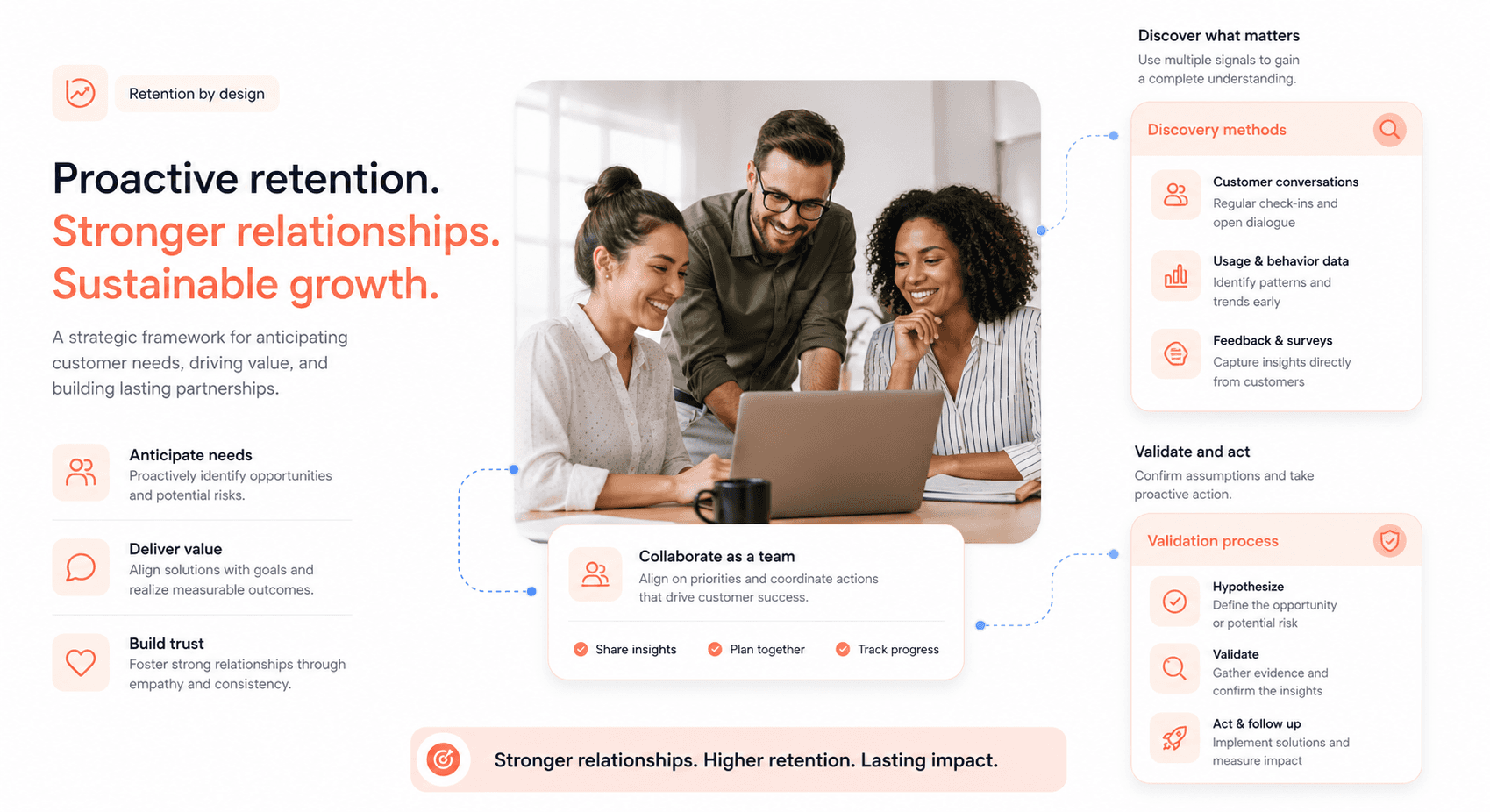
Validation Methods to Test Solutions Before Full Development
Before committing resources to full product development, you need robust validation methods that test your proposed solutions against real user needs. This approach acknowledges that your initial ideas may require significant revision or complete abandonment if they fail to address genuine customer problems effectively.
Your validation process should accept that ideas will be invalidated and that this outcome represents success rather than failure in your discovery process. Testing solutions early prevents the costly mistake of building features that don't reduce SaaS user churn or improve customer retention strategies. You must create a culture where teams feel comfortable discarding concepts that don't meet validation criteria.
Proper validation methods help you avoid the pitfalls of making assumptions about user behavior or building solutions without adequate research foundation. Your approach should include prototype testing, user interviews, and small-scale pilots that provide concrete evidence about whether proposed solutions will actually prevent customer loss. This methodology ensures that when you do commit to full development, you're investing in features and improvements that genuinely enhance user retention and competitive positioning.
Conclusion
User retention isn't just about keeping subscribers, it's about building a sustainable business that thrives long-term. When you understand why users leave and implement proven strategies to keep them engaged, you transform your SaaS from a leaky bucket into a growth engine. The companies that win focus on delivering continuous value, optimizing their user experience, and proactively addressing churn before it happens.
Your retention metrics tell the real story of your product's health. Whether it's improving onboarding, personalizing experiences, or building robust discovery processes to understand evolving user needs, the time to act is now. Don't let value decline silently erode your business while you focus solely on acquisition. Start measuring what matters, listen to your users, and invest in the systems that keep them coming back. Your future growth depends on the users you already have.




About the author
I’m the founder of Hashbyt, an AI-first frontend and UI/UX SaaS partner helping 200+ SaaS companies scale faster through intelligent, growth-driven design. My work focuses on building modern frontend systems, design frameworks, and product modernization strategies that boost revenue, improve user adoption, and help SaaS founders turn their UI into a true growth engine.
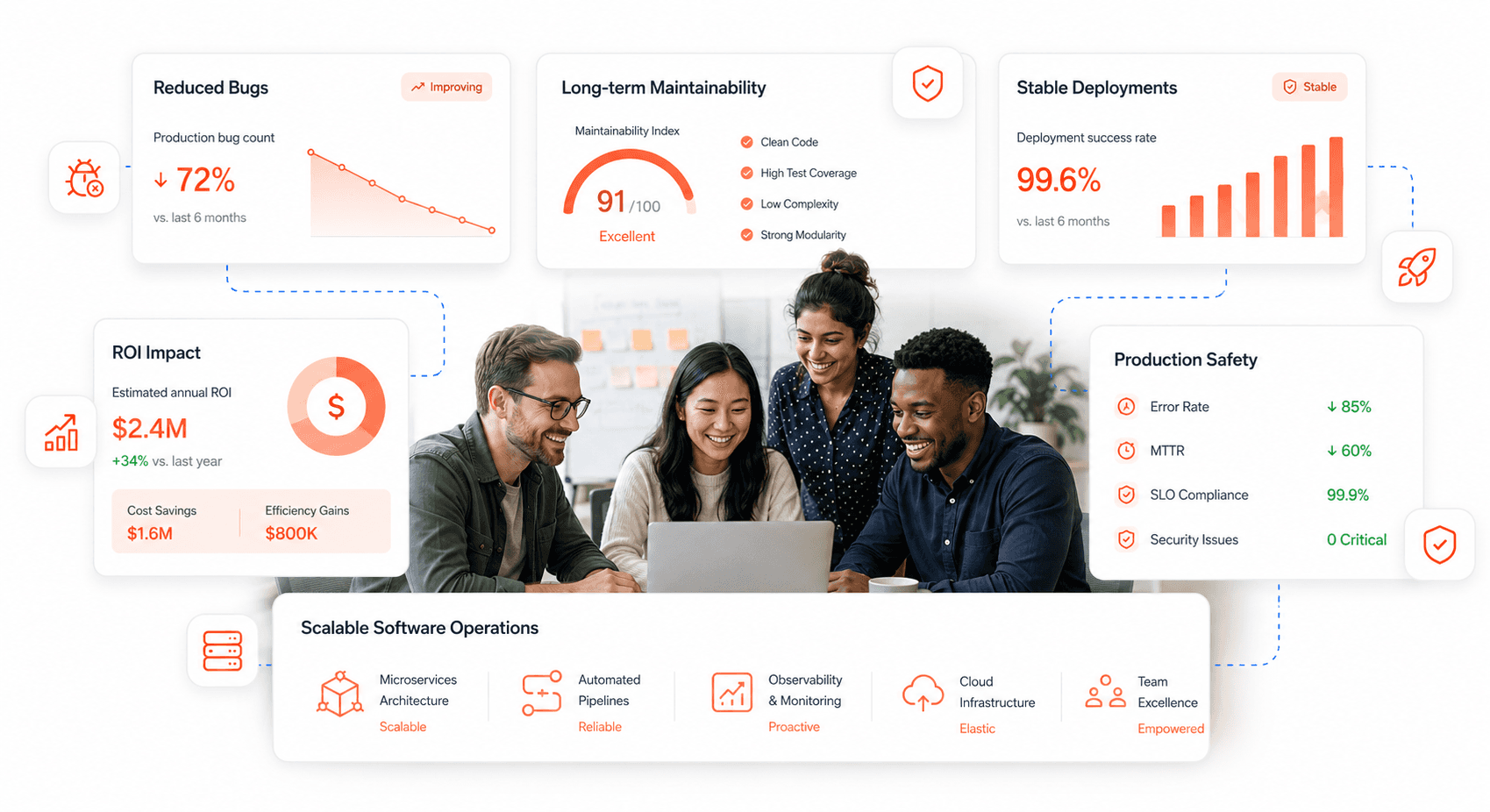
Is a clunky UI holding back your growth?
Is a clunky UI holding back your growth?
▶︎
Transform slow, frustrating dashboards into intuitive interfaces that ensure effortless user adoption.
▶︎
Transform slow, frustrating dashboards into intuitive interfaces that ensure effortless user adoption.
