


Missing deadlines has become so common in software development that most business owners just expect it now. You're a project manager, startup founder, or business owner who's watched promising launches turn into endless delays, and you're tired of hearing "it'll be ready next week" for the third month running.
Development teams miss deadlines for specific, fixable reasons that have nothing to do with lazy developers or unrealistic expectations. After working on hundreds of projects, the patterns are clear: poor planning collides with hidden complexity, communication breaks down between technical and non-technical team members, and small changes snowball into major timeline disruptions.
This guide covers the three biggest deadline killers and actionable solutions that actually work. You'll learn why the design-first approach prevents months of expensive rewrites, how scope creep destroys even well-planned projects, and which team structure problems guarantee missed deadlines. More importantly, you'll get specific tools and processes that successful development teams use to hit their targets consistently.
Whether you're managing your first development project or trying to fix a team that can't seem to deliver on time, these aren't theoretical concepts, they're battle-tested strategies that turn deadline chaos into predictable, successful launches.
The Hidden Complexity Behind Software Development
Why Development Takes Longer Than Expected
Software development consistently exceeds time estimates due to various complexity factors that teams often underestimate or fail to anticipate. Technical complexity emerges from complicated architecture, intricate data flow, and complex interactions between software components that require careful coordination and testing. When systems grow in size and functionality, they become increasingly challenging to manage due to interconnected dependencies and the need to support varied user needs.
Essential complexity represents the inherent difficulty of the problem the software aims to solve. Applications handling scientific computations, real-time video processing, or large-scale simulations naturally carry high essential complexity due to the challenging nature of these tasks. This unavoidable complexity requires sophisticated algorithms and data structures, extending development timelines beyond initial estimates.
Meanwhile, accidental complexity adds unnecessary delays through poor technology choices, inefficient libraries, or lack of standard practices. These limitations in development tools, programming languages, and frameworks create additional hurdles that weren't factored into original timelines. The cognitive load increases when developers must work around these limitations rather than focusing on core functionality.
Cyclomatic complexity measures the number of linearly independent paths through a program's source code, directly correlating with testing requirements and maintenance difficulty. High cyclomatic complexity indicates numerous conditional branches, making thorough testing exponentially more time-consuming than anticipated.
The Reality of Technical Tasks Beyond Coding
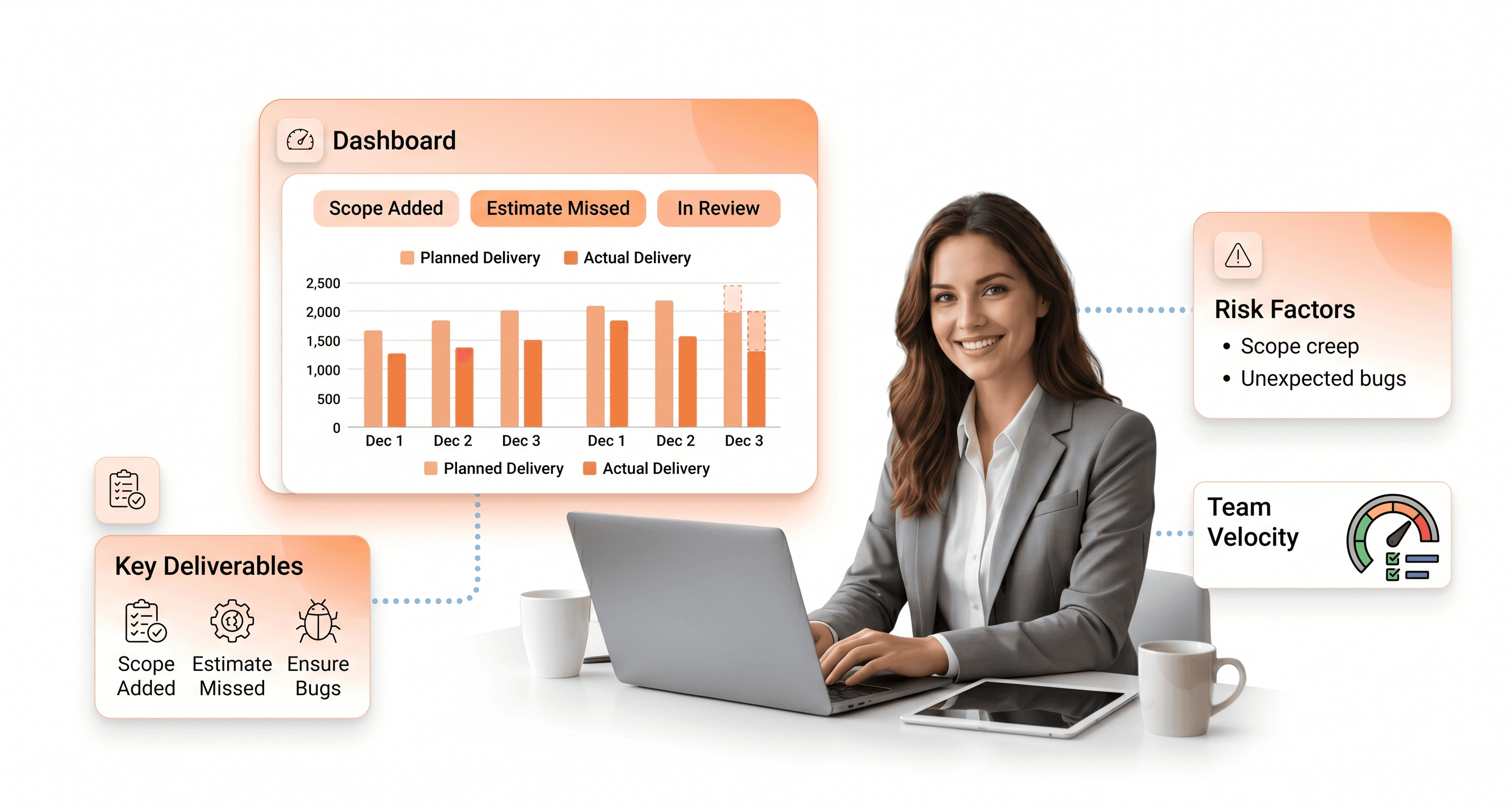
Now that we understand complexity factors, it's crucial to recognize that actual coding represents only a fraction of software development work. Data complexity involves managing intricate data structures and data flow within software systems. When programs have complex data structures with interconnected relationships, developers spend considerable time understanding how data is manipulated and accessed across different modules, affecting readability, debugging, and performance optimization.
Structural complexity pertains to system organization and modularity. Systems with low structural complexity feature clear module boundaries, minimal dependencies, and well-defined hierarchies. However, high structural complexity creates tangled webs of interdependent components, making changes and debugging significantly more challenging and time-consuming than pure coding tasks.
Temporal complexity deals with performance characteristics, specifically how algorithms perform as input size increases. Developers must analyze and optimize these performance aspects using Big O notation, ensuring systems scale appropriately. This analysis and optimization work extends far beyond initial code implementation.
Spatial complexity addresses memory usage requirements, determining how much space is needed to store data and execute programs. Resource-constrained environments require careful memory management and optimization, adding layers of technical work that aren't immediately apparent in project estimates.
Testing complexity multiplies these challenges. Complex codebases are harder to test thoroughly, and automated tests frequently break when code changes occur. Achieving adequate code coverage becomes increasingly difficult, requiring substantial additional time for test design, implementation, and maintenance.
Understanding the Development Process Components
With this complexity landscape in mind, development processes encompass numerous components beyond core programming. Documentation quality and availability directly impacts development velocity. Code that requires extensive documentation or that developers find hard to explain indicates inherent complexity. Without proper documentation, code comprehension suffers dramatically, slowing down current and future development work.
Change frequency tracking reveals which components require frequent modifications due to bugs or feature updates. These frequently-changing components often exhibit higher complexity and consume disproportionate development resources. Managing these changes requires careful coordination and testing to prevent cascading effects throughout the system.
Dependency management represents another critical component. Highly interdependent modules indicate structural complexity where single changes can have cascading effects on other modules. Dependency graphs help visualize relationships between system parts, revealing tightly coupled components that contribute to overall complexity and development time.
Technical debt accumulation includes temporary solutions, workarounds, and postponed refactoring tasks that grow complexity over time. Addressing technical debt becomes an ongoing component of the development process, requiring dedicated time and resources that often aren't accounted for in initial project planning.
Performance bottleneck identification and resolution form essential process components. Monitoring tools that analyze runtime performance and memory usage reveal system parts struggling due to complexity. Addressing these bottlenecks requires specialized analysis and optimization work beyond standard feature development.
Human complexity relates to team dynamics, communication flow, and knowledge transfer between developers, testers, and stakeholders. This interpersonal component significantly impacts development velocity and quality, yet rarely receives adequate attention in project planning and timeline estimation.
Critical Planning and Estimation Failures
Why Developers Consistently Underestimate Timelines
Developers frequently underestimate project timelines due to the inherently unpredictable nature of software development work. Unlike assembly line production where tasks are standardized and time requirements are fixed, software development involves solving novel problems that require reasoning and problem-solving. As one expert noted, "our estimating techniques fallaciously confuse effort with progress, hiding the assumption that men and months are interchangeable."
The complexity stems from multiple variables that developers must navigate simultaneously. Technology itself presents countless unknowns - a seemingly simple five-minute library upgrade can spiral into two days of work when compatibility issues emerge with other system components. These cascade effects are nearly impossible to predict during initial planning phases.
Human factors also contribute significantly to estimation failures. Developers aren't equally productive machines - productivity fluctuates based on fatigue, frustration, health, and interruptions. Estimates typically assume constant productivity levels, which rarely reflects real-world conditions. Additionally, the collaborative nature of development means time is often spent helping colleagues, which benefits the team but impacts individual timelines.
Requirements uncertainty adds another layer of complexity. When developers discover ambiguous requirements during implementation, they must seek clarification. If the relevant stakeholder is unavailable due to meetings or leave, wait time can completely invalidate original estimates. This demonstrates how a single unclear requirement can derail an entire project timeline.
Common Estimation Mistakes That Derail Projects
Several critical mistakes consistently plague software project estimation efforts, leading to missed deadlines and budget overruns. The first major error is the absence of cross-review of task requirements. When team members working on different platforms - backend, iOS, Android - fail to communicate their interdependencies, false estimations become inevitable. For instance, a backend developer might complete their work only to discover the iOS developer needs entirely different functionality, forcing the entire task through another development cycle.
Another devastating mistake is proceeding without adequate research time. When teams encounter entirely new tasks, project managers face a critical choice: demand immediate estimates based on pure guesswork, or allocate proper investigation time. Rushing to estimation without research dramatically increases the risk of false estimates and may even reveal that project priorities should be reconsidered based on business value versus required resources.
Failing to prioritize tasks represents another estimation killer. Without clear priorities after task decomposition, teams waste valuable time on less important features while critical functionality remains incomplete. This becomes especially problematic when working within limited timeframes before release dates.
The failure to decompose features and stories into manageable components severely hampers estimation accuracy. While decomposition may seem like it slows initial estimation, it's essential for specifying requirements, breaking down tasks, and clarifying risks. Teams that skip this step lack clear development roadmaps and consistently underestimate complexity.
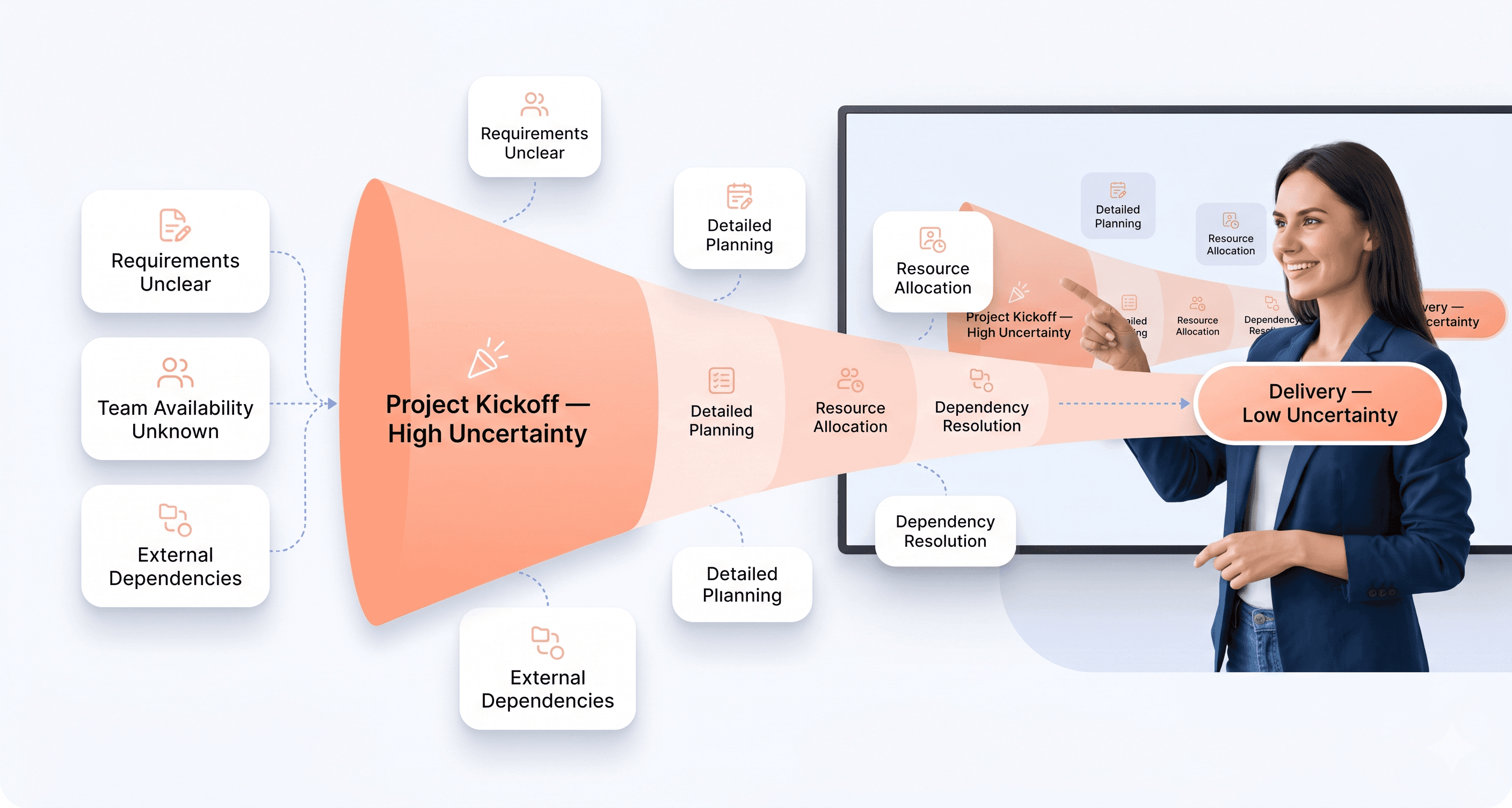
Perhaps most dangerously, teams often mistake estimates as final values rather than assumptions based on incomplete information. Software development exists in a realm of high uncertainty, as demonstrated by the classic "Cone of Uncertainty" problem, where uncertainty levels change throughout project lifecycles.
The Importance of Building Adequate Buffer Time
Building adequate buffer time into project estimates is crucial for managing the inherent uncertainty of software development. Estimation is inherently full of uncertainty, but by identifying "known unknowns" during the planning process, budgets can be planned with flexibility to support different future development scenarios.
Modern estimation approaches recognize that flexibility is a strength, not a weakness, when budgeting for software projects. Teams that treat cost estimation as a living process, grounded in transparency, collaboration, and adaptation, are better equipped to manage uncertainty and deliver value without surprises. This represents a significant evolution from traditional static estimates created at project kickoff, which are no longer sufficient for modern development environments.
Buffer time should account for multiple risk factors including technology complications, team productivity variations, requirements clarification delays, and external dependency issues. External dependencies are particularly challenging to control - API dependencies introduce multiple points of failure including server issues, network problems, and vendor SLA constraints that can cause unexpected delays.
The key is understanding that software development work is often not divisible like manufacturing processes. Adding more developers doesn't proportionally reduce timelines; instead, it introduces communication overhead that can actually slow progress. Therefore, buffer time must account for the reality that "nine women cannot make a baby in a month."
Effective buffer planning involves continuous discovery, incremental planning, and incorporating real-time delivery data to improve estimation accuracy over time. This includes feedback from QA, DevOps, and data analytics to better anticipate cost drivers and dependencies.
Team Structure Problems That Kill Deadlines
Hiring the Wrong People for Critical Roles
Most teams fail because they focus on filling seats instead of solving problems. When companies decide to build something, they post generic job listings and hire developers without understanding what specific skills their project actually needs. The result is a team full of talented individuals who aren't equipped for the challenges ahead.
Before building your team, list every function the project needs: backend, frontend, QA, DevOps, design, security. Then assign a name to each one. One person can own multiple functions — that's fine. The danger is when a function is owned by nobody. Too many teams hire developers and forget everything else, only to discover three months later that there's no test coverage because nobody owns QA, deployments are manual and terrifying because nobody set up CI/CD, and the UI looks like it was designed by a database administrator.
The developers who matter aren't the ones who reverse a linked list in 30 seconds. They're the ones who ask "why are we building this?" before they start coding. Interviews should focus on two conversations: one technical, one cultural. Give them a real problem, not a LeetCode puzzle. Watch how they think, not how fast they type.
The Product Owner vs CEO Confusion
One of the most destructive patterns in development teams is when nobody owns the outcome. Companies decide to build something, hire people, and developers show up on Monday asking "So... what am I building?" There's no 90-day delivery goal, no defined MVP scope, no clear answer to "what does success look like by the end of this quarter?"
This confusion often stems from unclear product ownership. When the CEO tries to act as the product owner while managing other responsibilities, or when multiple stakeholders compete for product direction, teams end up building what they think is important rather than what the business actually needs. The frontend developer polishes the UI, the backend developer over-architects the database, and the DevOps person sets up a Kubernetes cluster for an app with zero users.
The fix is embarrassingly simple: before hiring anyone, write down what the team needs to deliver in 90 days. One page. Bullet points. If you can't do that, you're not ready to hire. Clear product ownership prevents teams from spinning their wheels on impressive technical work that doesn't move the business forward.
Why You Need Specialized Roles Not Generic Developers
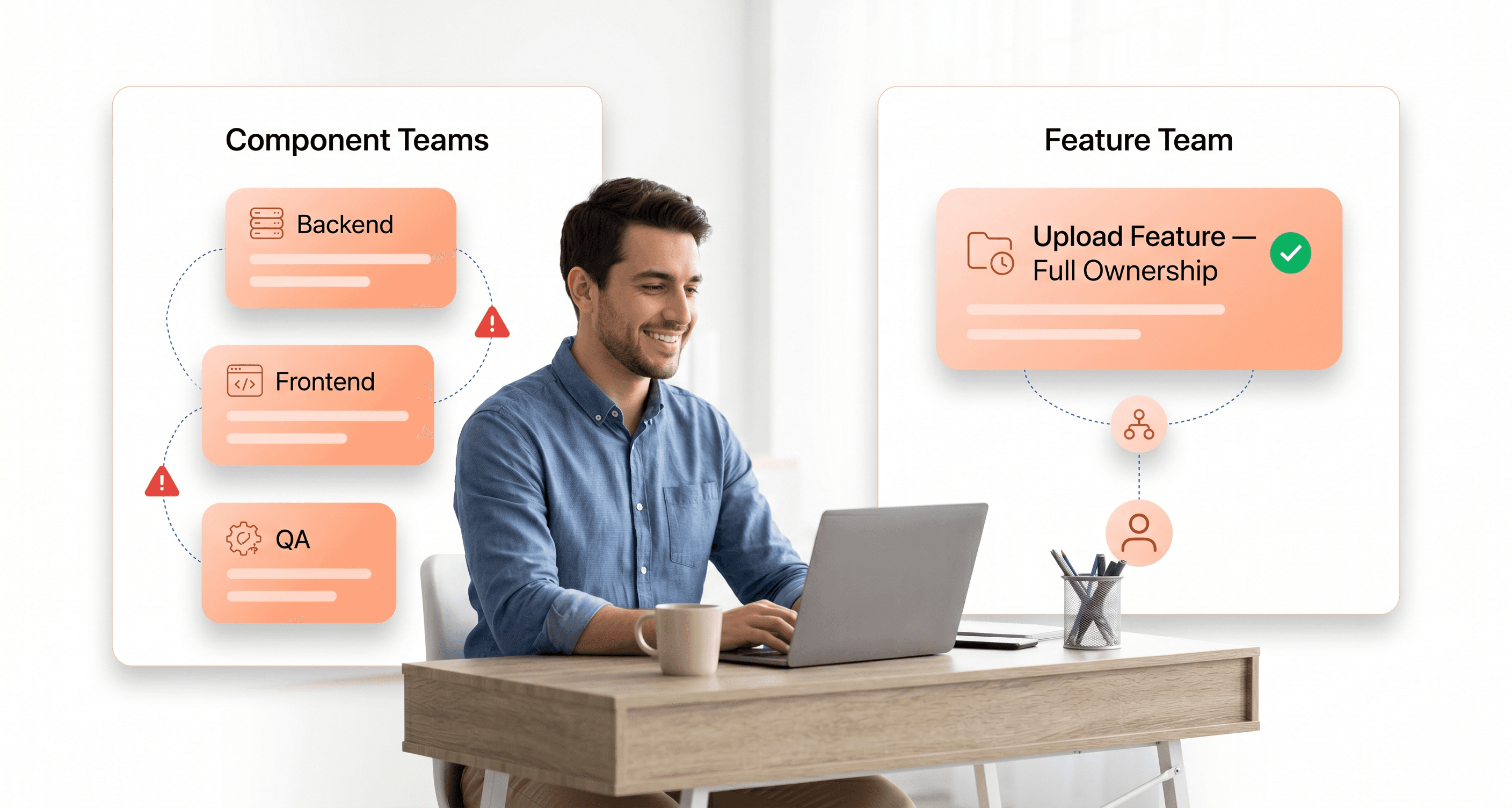
The component team structure that many companies default to creates a false sense of specialization while actually destroying accountability. When teams are organized around technical components rather than business outcomes, everyone becomes responsible for everything, which means nobody is truly responsible for anything.
Research across hundreds of software projects consistently shows that 3 to 7 people is where teams are most productive. A 5-person team has 10 communication paths, while a 10-person team has 45. Every additional path is a chance for something to get lost, duplicated, or argued about in meetings that should have been emails. Adding developer #8 doesn't give you 14% more output, it gives you 14% more Slack threads.
The most effective teams organize around features, not components. Instead of having separate teams for uploads, search, and frontend display, successful teams assign complete features to individual teams. This eliminates the finger-pointing and coordination overhead that kills deadlines. When a production issue occurs, there's one team that owns the entire feature from database to user interface, dramatically reducing the time spent redirecting problems between component specialists.
Specialized roles within feature teams mean each person has deep expertise in their domain while maintaining shared ownership of the business outcome. This structure ensures that critical functions like security, performance, and user experience have dedicated advocates who can make decisions quickly without endless coordination meetings.
The Design-First Approach That Prevents Delays
Why Design Must Come Before Development
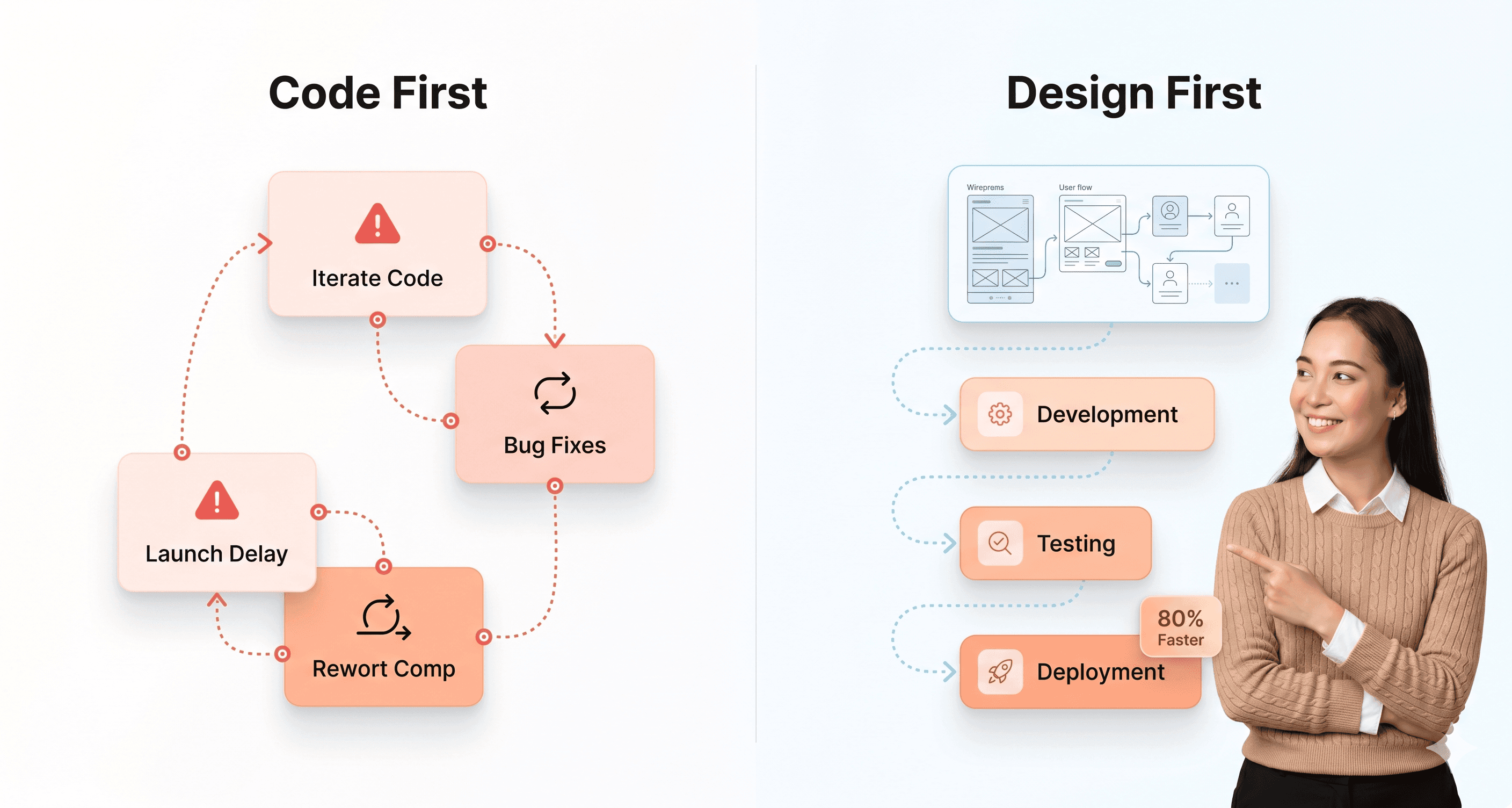
When building APIs and software systems, the most successful masterpieces throughout history share one critical element: they were built with design first in mind. Just as you can't build a house without a blueprint and DaVinci didn't wing it on the Mona Lisa, creating APIs without proper design leads to predictable failures.
The fundamental problem with a code-first approach is that even well-designed APIs developed this way are destined to fail because API success depends on adoption by users who aren't technically-minded developers. If an API isn't intuitive and applicable to their context, the average person simply won't use it.
A design-first approach fundamentally means any API effort starts with a design process where APIs are defined in an iterative way that both humans and computers can understand - before any code is written. The goal ensures every team speaks the same language, and every tool they use leverages the same API design. This process begins with both technical and non-technical individuals from each function participating in writing a contract that defines the API's purpose and function.
API contracts serve as foundational agreements defining behavior between different software components. These formal contracts, created using specifications like OpenAPI, dictate the API's behavior ahead of implementation. Creating an API contract requires extensive design considerations and collaboration among stakeholders before developers start coding, acting as a blueprint that provides clear guidance on building each component.
The ROI of Proper UX Design Planning
The financial benefits of implementing a design-first approach are substantial and measurable. Transact, a campus services technology company, cut 80% of their API development time by adopting the design-first approach to their API program. This dramatic time reduction translates directly into cost savings and faster time-to-market for new features.
When quality components are developed and maintained using a design-first approach, they can be reused for future APIs. You only need to build each component once, saving significant time and money for your technology team. This reusability allows for substantial cost savings in development time while getting new APIs to market faster.
The approach also delivers improved developer experience by preventing the nightmare of fixing poorly written APIs. Without intentional design, the development process becomes chaotic, clunky, and disjointed, creating disconnects between developers, security, governance, and documentation teams. The end result is vast pressure on developers to push APIs through to completion.
By taking a design-first approach, API specifications, governance, design, development, and documentation start from the same page and are developed simultaneously. This built-in coordination keeps developers focused on developing solutions rather than slowing down due to API cleanup work, ultimately leading to happier developers and a more successful API program.
How Design Changes Save Time and Money
Design-first methodology prevents costly architectural inconsistencies and issues by involving stakeholders early in the process. Early feedback is crucial for detecting potential problems before they become expensive to fix later in the development cycle. Tools that verify API implementation against the API contract help catch errors earlier, ensuring reliability and performance while saving developers from time-consuming troubleshooting.
The approach enables rapid prototyping and API mocking, allowing developers to simulate real API behavior and test applications without real data even before the actual API is ready. This practice accelerates development cycles, provides immediate feedback, and allows for systematic validation, resulting in financial efficiency through cost savings.
Better coordination among internal teams represents another significant cost-saving benefit. Large and cross-functional teams are notoriously difficult to coordinate, and bringing additional stakeholders midstream while keeping everyone aligned is even more challenging. With design-first, relevant stakeholders are involved from the outset and can build their input into API development, ensuring the API meets all possible needs without costly redesigns.
The methodology also improves API security by ensuring security is built into your API strategy from the ground up. Without proper design, exposed API endpoints can be easily exploited by hackers, leading to potentially devastating security breaches and associated costs. Intentional design prevents these vulnerabilities before they become expensive problems.
Communication Breakdowns That Destroy Timelines
The Gap Between Client Requests and Technical Requirements
Previously, I've outlined how planning failures create deadline disasters, but now we need to address an even more fundamental issue: the communication breakdown between what clients request and what developers actually need to build it. This gap represents one of the most insidious threats to project timelines.
The core problem lies in what experts call "The Trap of Guess What I Mean." Stakeholders assume their internal business context is universal, forgetting that the development team doesn't live inside their sales funnel or finance department. When a client says they need "a simple user dashboard," they're operating from years of industry knowledge and internal processes that the development team simply doesn't possess.
This communication breakdown follows a predictable pattern: there's always a message being communicated, the sender who communicates it, and the receiver who decodes and understands it. Several critical failures can occur in this process. The message might not be accurately articulated by the sender due to lack of technical knowledge, or it could be transmitted through the wrong channel - verbally instead of in writing. Most dangerously, the receiver might understand something completely different from what the sender intended and fail to provide feedback to confirm understanding.
The symptom is devastating: teams deliver something that is technically perfect but completely misses the business objective. This leads directly to rework, scope creep, and blown deadlines. The solution requires always asking "why." Understanding the underlying business value makes it much easier to generate follow-up questions that allow teams to fully grasp stakeholder requirements.
When Simple Features Become Complex Projects
With this communication gap in mind, next we'll see how seemingly straightforward requests transform into timeline-destroying monsters. The "Different Vocabularies" trap amplifies this problem exponentially. It doesn't matter if both teams speak the same language - different industries and companies use entirely different vocabularies.
Developers operate with their technical jargon: "microservices," "latency," "API endpoints," and "database normalization." Meanwhile, business stakeholders communicate using terms like "customer journey," "conversion rates," "user experience," and "market penetration." These teams are essentially using different dictionaries, and meaning gets completely lost in translation.
The result is endless circular debates where everyone thinks they agree, only to realize weeks later they meant completely different things. What seemed like a simple feature request - "add a reporting function" - becomes a complex project involving data warehousing, real-time analytics, custom visualization tools, and integration with third-party systems.
Cultural differences compound this vocabulary misalignment. Some companies have hierarchical structures that actively discourage asking questions. In these environments, misunderstandings cannot be corrected because clarification is viewed as incompetence or insubordination.
The solution requires enforcing a simple, single shared glossary between teams for every core concept. This isn't just documentation - it's active vocabulary alignment that prevents simple requests from morphing into complex, deadline-killing projects.
Establishing Clear Documentation and Change Processes
Now that we've covered the vocabulary trap, we must address "The Only Bob Knows" problem - the failure of centralized knowledge that destroys timelines when critical information disappears. This represents one of the most dangerous communication breakdowns in software development.
Critical project information - specific business rules, architectural decisions, legacy workarounds, integration requirements - often resides in one person's head, one personal folder, or one buried Slack thread. When that person takes vacation or leaves the organization, projects stop cold. This creates crippling burnout for the "expert" and exposes projects to the terrifying bus factor: how many team members can be removed before the project becomes vulnerable to failure.
Many engineers hesitate to take time off because they feel their presence determines project success. This puts them at risk for burnout while simultaneously putting the project at risk of slower velocity. When teammates try to work with incomplete information, they unknowingly break things or make decisions that derail timelines.
The solution requires positioning documentation as risk mitigation and a first-class project deliverable. While the agile manifesto prioritizes working software over comprehensive documentation, this doesn't mean having no documentation. Effective change processes must include:
Shared knowledge repositories where architectural decisions and business rules are documented
Clear change request workflows that capture the "why" behind every modification
Regular knowledge transfer sessions to prevent information silos
Documentation standards that make critical information discoverable and actionable
These processes transform communication from a "soft skill" into a core engineering discipline, preventing the clarity breakdowns that consistently destroy project timelines.
Scope Creep and Feature Addition Disasters
How Small Changes Create Major Timeline Impacts
What appears as a simple "quick addition" to stakeholders often transforms into a development nightmare that derails entire project timelines. According to the Project Management Institute, scope creep affects approximately 52% of projects, and these seemingly harmless initial additions tend to expand through a domino effect. The unchecked propagation of minor additional features and scheduling demands produces significant delays and budget increases in most projects.
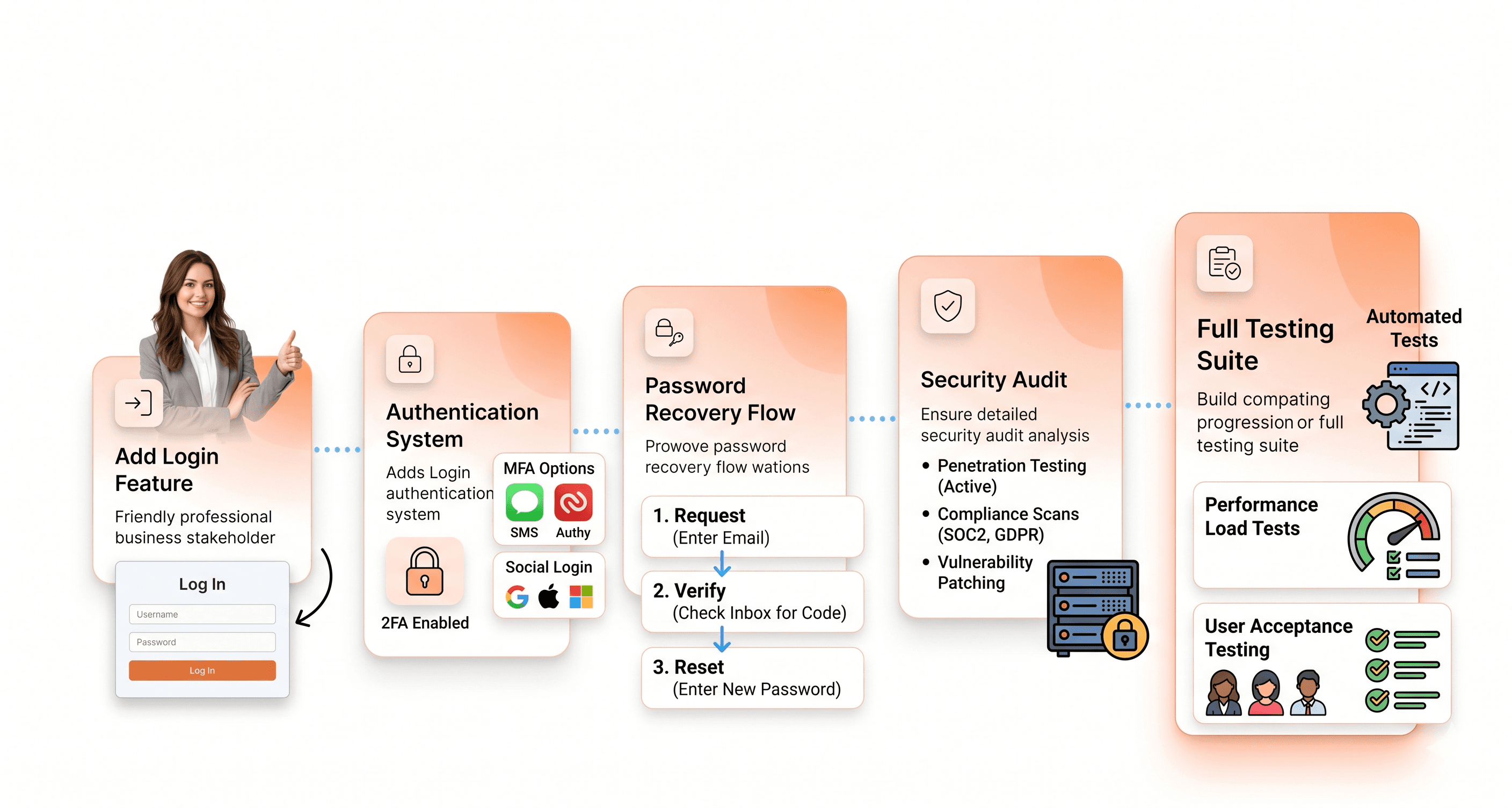
The deceptive nature of scope creep lies in how stakeholders perceive the effort required. A client might request adding a "simple" login feature to an existing application, viewing it as a straightforward enhancement. However, this single request cascades into authentication systems, user management databases, password recovery mechanisms, security protocols, and extensive testing procedures. What was initially estimated as a few hours of work suddenly demands weeks of development time.
Documentation from software development experts reveals that inadequate requirement analysis serves as a leading cause of scope creep, often resulting in inflated project budgets. When project deliverables remain unclear, people develop different understandings about project scope, inviting continuous add-ons that compound exponentially. Each small change creates dependencies that weren't initially considered, forcing developers to revisit and modify existing code structures.
The Ripple Effect of New Feature Requests
New feature requests create a cascading impact throughout software development projects that extends far beyond the immediate functionality being added. When stakeholders request additional elements during development, the effects multiply across multiple project dimensions, creating what industry professionals recognize as the ripple effect.
Technical dependencies represent the most significant source of timeline disruption. A new feature rarely exists in isolation within software architecture. Adding user notifications, for example, requires integration with existing user management systems, database schema modifications, email service configurations, and mobile push notification capabilities. Each of these components demands additional development time, testing protocols, and potential debugging sessions.
The ripple effect becomes particularly destructive when multiple stakeholders attempt active oversight, leading to networked modifications that expand the development work. A project without a designated authority as the decision-maker allows competing direction changes to multiply throughout the scope. Market changes and shifting user requirements in the external environment further compound these issues, as teams struggle to accommodate evolving needs while maintaining original project timelines.
Team members themselves sometimes exacerbate the ripple effect through internal "feature creep" by adding unrequested features or enhancements to improve the product. This practice of "gold-plating" causes unforeseen difficulties, which increase the amount of unfinished work and the prospect of delayed completion. When developers add bonus features without proper change approval, they unknowingly trigger additional quality assurance requirements, documentation updates, and integration testing that weren't factored into original estimates.
Managing Client Expectations Around Project Changes
Successfully managing client expectations requires establishing clear boundaries and formal processes from project inception. The foundation of expectation management begins with producing a functional specification at the outset, written in terms that the customer can understand. A walk-through of the process that the software will support, perhaps illustrated with mocked-up screen shots, helps clarify how the new system will work from the user's point of view.
The functional specification must be agreed and signed by the customer, and should include a Scope Statement. This document states that only the functionality which is explicitly described in the specification is included in the project scope, and that anything not described is "outside scope." When customers subsequently identify additional elements, reference is made to the specification to determine whether the required functionality is described or alluded to.
Effective expectation management involves educating stakeholders about project restrictions as a standard procedure. The client's decision to refuse additions becomes viable when they receive information about deadline extensions or cost increases. Changes are acceptable only for essential needs, yet they require extra time or budget expenditure. This educational approach transforms impulsive requests into thoughtful change requests.
When handling change requests, teams must work out the impact of developing new functionality by determining what extra effort will be required, what effect this will have on overall project duration, and what additional costs will be incurred. If the impact is trivial, it may be agreed to include the new functionality in the existing project, but this should be stated in writing by issuing a revised specification. The danger here is that customers believe a precedent has been set and that further revisions will be made similarly.
More commonly, additional development causes delay and extra cost. Customers need awareness of revision implications in terms of impact on timescales and costs, requiring a specification of additions and changes with its own Scope Statement. The customer must then decide whether they're willing to pay more and accept the revised end date for the project.
Technical Debt and Legacy Code Problems
How Quick Fixes Become Long-Term Roadblocks
Quick fixes are often born from urgent deadlines and mounting pressure to deliver features fast. When developers choose faster, less ideal solutions during the development cycle, they create technical debt that must be addressed later. Like financial debt, this technical debt accrues interest over time, and if ignored, teams pay the price through slower delivery, increased bugs, and mounting frustration.
The rush to hit delivery deadlines creates a cycle where teams consistently choose shortcuts, telling themselves "we'll fix it later." However, these decisions made under pressure rarely get revisited. Instead, they become permanent fixtures in the codebase, creating a foundation of instability that affects every future development effort.
Consider the case of Knight Capital in 2012, where reused outdated code without proper testing led to a software glitch that triggered $7 billion in unauthorized stock trades. The result was a $440 million loss within minutes, and the firm never recovered. This demonstrates how seemingly minor quick fixes can escalate into company-threatening disasters when left unaddressed.
The problem compounds when teams normalize these shortcuts. What starts as a one-time exception becomes standard practice, with each quick fix building upon previous compromises. Soon, developers spend more time working around existing problems than building new features, creating a development environment where progress becomes increasingly difficult and expensive.
Hidden Complexity in Existing Systems
Existing systems often harbor invisible complexity that only surfaces when teams attempt to make changes or add new features. This hidden complexity manifests in various ways that can derail even the most carefully planned development timelines.
Poor documentation represents one of the most common sources of hidden complexity. When documentation is incomplete or outdated, developers spend extra time figuring out how the system works. This knowledge gap significantly extends development cycles and increases the likelihood of introducing bugs when modifying existing functionality.
Legacy code creates another layer of hidden complexity. Systems built years ago using different frameworks, libraries, or architectural patterns may not integrate smoothly with modern development practices. When teams try to extend these systems, they often discover that simple changes require extensive refactoring or workarounds that weren't apparent during initial planning.
The Y2K bug exemplifies how hidden complexity can remain dormant for decades. Developers in the 1960s and 1970s saved memory by storing years as two digits, a seemingly innocuous decision that created widespread issues as the year 2000 approached. The remediation effort cost between $300 billion and $600 billion globally, demonstrating how hidden complexity can scale into massive organizational challenges.
Tangled dependencies and fragile code structures also contribute to hidden complexity. When components are tightly coupled or poorly designed, seemingly minor changes can have cascading effects throughout the system. This interdependency makes it difficult to predict how modifications will impact other parts of the application.
When Technical Architecture Decisions Backfire
Technical architecture decisions made early in a project's lifecycle can have profound long-term consequences that aren't immediately apparent. These decisions, often made with limited information or under time pressure, can create fundamental limitations that become increasingly difficult to address as the system grows.
Nokia's fall from market dominance illustrates how architectural debt can destroy even industry giants. The company failed to modernize its outdated operating system due to years of accumulated technical debt. When smartphones like the iPhone emerged, Nokia couldn't adapt quickly enough, resulting in a loss of market position, eventual sale to Microsoft, and billions of dollars in losses.
Outdated technology choices represent a significant architectural risk. When frameworks, libraries, or tools become obsolete, upgrading feels risky and expensive. Teams often continue using outdated technology far longer than advisable, creating a growing gap between their system and modern best practices. This technology debt impacts scalability, security, and the ability to attract and retain talented developers.
Architectural decisions that prioritize short-term convenience over long-term maintainability frequently backfire. For example, choosing a monolithic architecture for rapid initial development might seem efficient, but it can become a significant bottleneck as the team grows and needs to scale different components independently.
Performance bottlenecks often stem from early architectural choices that didn't anticipate future growth. When systems aren't designed with scalability in mind, teams find themselves constantly firefighting performance issues rather than building new features. This reactive approach consumes development resources and delays feature delivery, ultimately impacting user experience and business objectives.
Resource and Team Management Issues
The Skill Mismatch Problem in Development Teams
One of the most critical challenges facing development teams today stems from the fundamental misalignment between the skills available and the skills actually needed for projects. This skill mismatch problem becomes particularly acute in mature software companies where different types of employees are attracted to the organization compared to the startup phase.
As companies grow beyond their early-stage excitement, they naturally attract more conservative, process-oriented professionals rather than the innovative risk-takers who thrived in the startup environment. This shift in employee demographics creates a dangerous gap where cutting-edge technical skills and innovative thinking become scarce commodities. The result is teams that may be well-structured and process-driven but lack the specialized expertise required for complex development challenges.
The problem is compounded when companies fail to maintain appropriate incentives and authority structures for innovation-focused roles. Without proper compensation packages and decision-making power, the key technical talent that drives growth will inevitably migrate to more dynamic competitors. This brain drain leaves teams with solid but conventional skills while the most challenging development work requires exceptional technical expertise.
How Team Turnover Destroys Project Continuity
Team turnover represents one of the most devastating forces against meeting development deadlines, as the institutional knowledge and project context that walks out the door with departing employees cannot be easily replaced. When key developers leave mid-project, the remaining team faces the enormous challenge of reconstructing not just the technical implementation details, but the reasoning behind critical architectural decisions.
The impact extends far beyond simple knowledge transfer. New team members require significant ramp-up time to understand existing codebases, project requirements, and team dynamics. During this transition period, productivity plummets while experienced team members spend valuable time onboarding replacements instead of focusing on development work. The cumulative effect of these disruptions can add weeks or months to project timelines.
Turnover becomes particularly problematic in mature software companies where the fear and uncertainty surrounding mergers and acquisitions drives talented employees to seek stability elsewhere. When companies undergo organizational changes or bring in new management teams with different cultures, the alienation of existing staff can trigger mass departures that completely derail ongoing projects.
Why More Developers Don't Equal Faster Results
The counterintuitive reality that adding more developers to a project doesn't necessarily accelerate delivery stems from the complex interdependencies and communication overhead inherent in software development. Previously, we've discussed various factors that contribute to missed deadlines, but the resource management challenges present a particularly deceptive trap for project managers.
When development teams grow beyond a certain size, the communication complexity increases exponentially rather than linearly. Each new team member must establish working relationships with existing members, understand the current codebase, and coordinate their work to avoid conflicts. The time spent on coordination, code reviews, and integration testing often exceeds the additional productivity gained from the extra hands.
Furthermore, the onboarding process for new developers creates a temporary productivity drain on the entire team. Experienced developers must shift focus from feature development to mentoring and knowledge transfer activities. The new developers themselves contribute negatively to productivity initially as they make inevitable mistakes while learning the system, requiring additional debugging and rework from the existing team.
The most effective approach involves carefully balancing team size with the complexity of the project, ensuring that any team expansion is accompanied by proper planning for integration and communication overhead. This strategic approach to resource allocation prevents the common mistake of throwing more people at a delayed project, which typically results in even further delays.
Tools and Processes That Actually Prevent Delays
Project Management Systems That Teams Actually Use
The difference between projects that stay on track and those that spiral into delays often comes down to the project management system being used. Modern teams need tools that go beyond simple task tracking to provide automated dependency management and real-time visibility into potential bottlenecks.
Effective project management platforms should automatically flag when dependent tasks are at risk of delay, creating an early warning system that prevents cascade failures in your schedule. Jira's timeline features provide robust tracking of task dependencies and timing, with customizable workflows that monitor lag time effectively while maintaining visibility across the entire project.
The key is implementing systems that build data directly into the construction planning process rather than collecting information in isolation. When a team member logs a delay or resource constraint, the system should automatically notify relevant stakeholders to adjust schedules, orders, and timelines immediately. This organic integration of data within workflows enables teams to not just track information, but use it proactively to prevent delays.
Modern enterprise resource planning systems allow project managers to create custom reports with specific parameters that identify delays based on various data types. Instead of relying on guesstimates, teams can search historical data to understand average delay durations and identify root causes of past problems. This data-driven approach transforms reactive project management into predictive planning.
Daily Communication Rhythms That Catch Problems Early
Establishing consistent communication protocols is essential for identifying and addressing issues before they impact project timelines. The most successful teams implement clear handoff procedures that create standard processes for transferring work between teams or departments, eliminating confusion and preventing unnecessary waiting periods.
Automated notifications play a crucial role in maintaining communication flow. Setting up alerts to notify team members when predecessor tasks are nearing completion gives teams advance notice to prepare for their upcoming work, significantly reducing transition time between activities.
Teams should establish specific communication protocols that define how and when members communicate about task completion and handoffs. These clear protocols prevent delays caused by missing or delayed information, ensuring that everyone knows their role in keeping the project moving forward.
Regular review cycles help teams maintain their communication rhythm. Analyzing lag time patterns monthly allows teams to identify opportunities for process improvements and spot emerging issues before they become major problems. This proactive approach to communication creates a culture where potential delays are surfaced and addressed quickly rather than hidden until they become critical.
Version Control and Code Review Practices
Proper version control and code review practices serve as essential checkpoints that prevent delays caused by technical issues downstream. Teams must implement clear workflows that include automated testing and security scans between code completion and deployment phases.
Effective code review processes should include automated alerts and threshold-based notifications that reveal potential issues as they emerge. This early detection system allows teams to address problems while they're still small, rather than discovering major issues during final testing phases.
The most successful teams establish standardized handoff procedures between development phases, ensuring that code transitions smoothly from development to testing to deployment. These procedures should include automated dependency tracking that monitors relationships between tasks and identifies potential timing conflicts.
Teams should track actual versus planned lag time between code review stages, measuring the gaps between activities and comparing them to initial estimates. This data helps identify problem areas in the development workflow and enables teams to optimize their processes over time. Regular analysis of these patterns leads to more accurate project planning and fewer unexpected delays in future development cycles.
Conclusion
Missing deadlines isn't inevitable, it's the result of specific, fixable problems in how development projects are planned and executed. The most successful teams start with proper design-first approaches, build realistic estimates with adequate buffer time, maintain clear communication channels, and implement formal processes for handling scope changes. They understand that rushing through planning to start coding faster actually creates more delays later through rework, technical debt, and misaligned expectations.
The difference between teams that consistently hit their deadlines and those that don't comes down to treating software development as a collaborative process requiring skilled specialists in each role. Whether you're building a simple mobile app or a complex enterprise system, investing in proper project structure, realistic timeline planning, and clear communication processes will save you significantly more time and money than any shortcut ever could. Start with validation, design thoroughly, develop systematically, and watch your deadlines become promises you can actually keep.




About the author
I’m the founder of Hashbyt, an AI-first frontend and UI/UX SaaS partner helping 200+ SaaS companies scale faster through intelligent, growth-driven design. My work focuses on building modern frontend systems, design frameworks, and product modernization strategies that boost revenue, improve user adoption, and help SaaS founders turn their UI into a true growth engine.
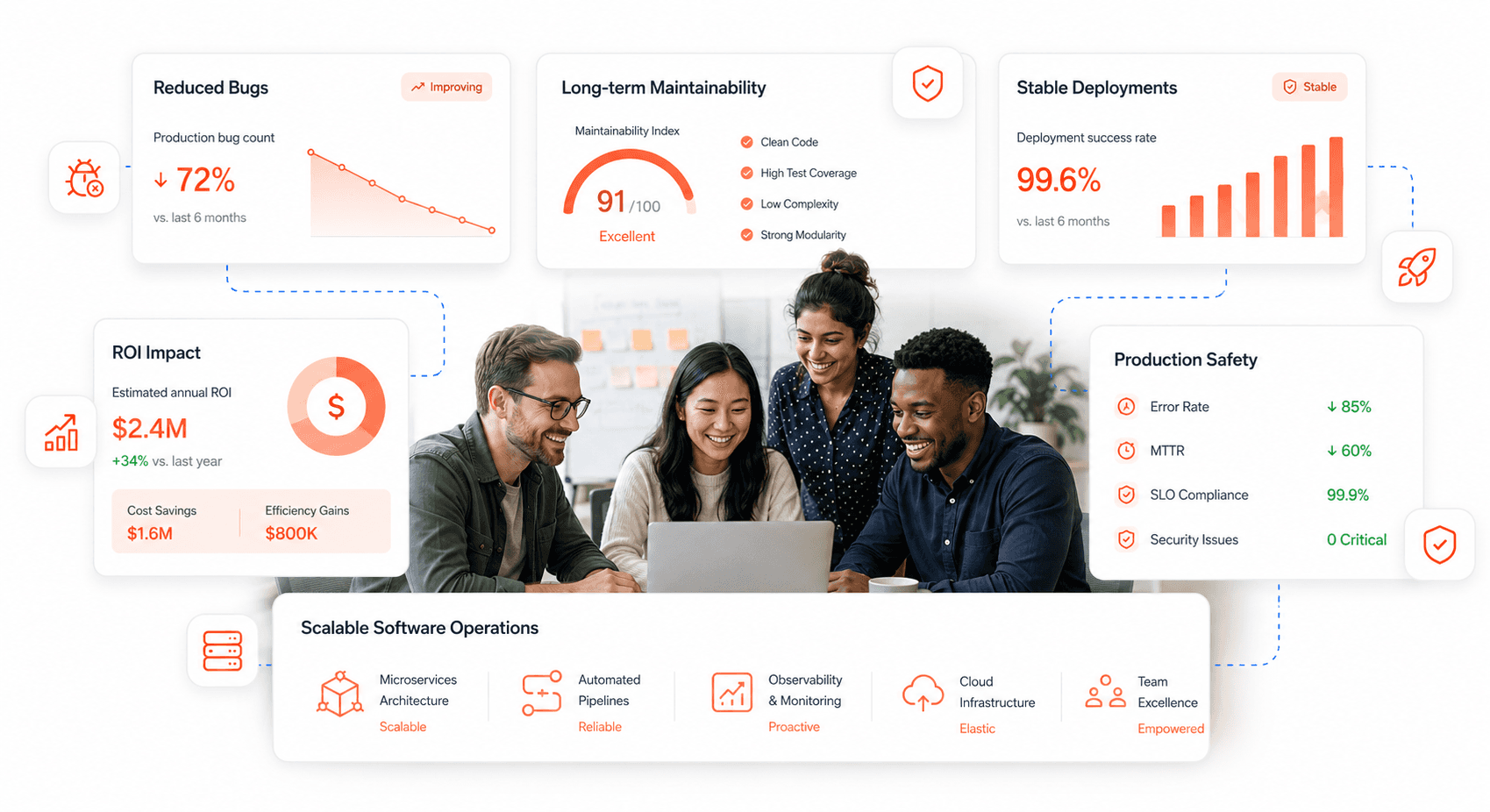
Is a clunky UI holding back your growth?
Is a clunky UI holding back your growth?
▶︎
Transform slow, frustrating dashboards into intuitive interfaces that ensure effortless user adoption.
▶︎
Transform slow, frustrating dashboards into intuitive interfaces that ensure effortless user adoption.
