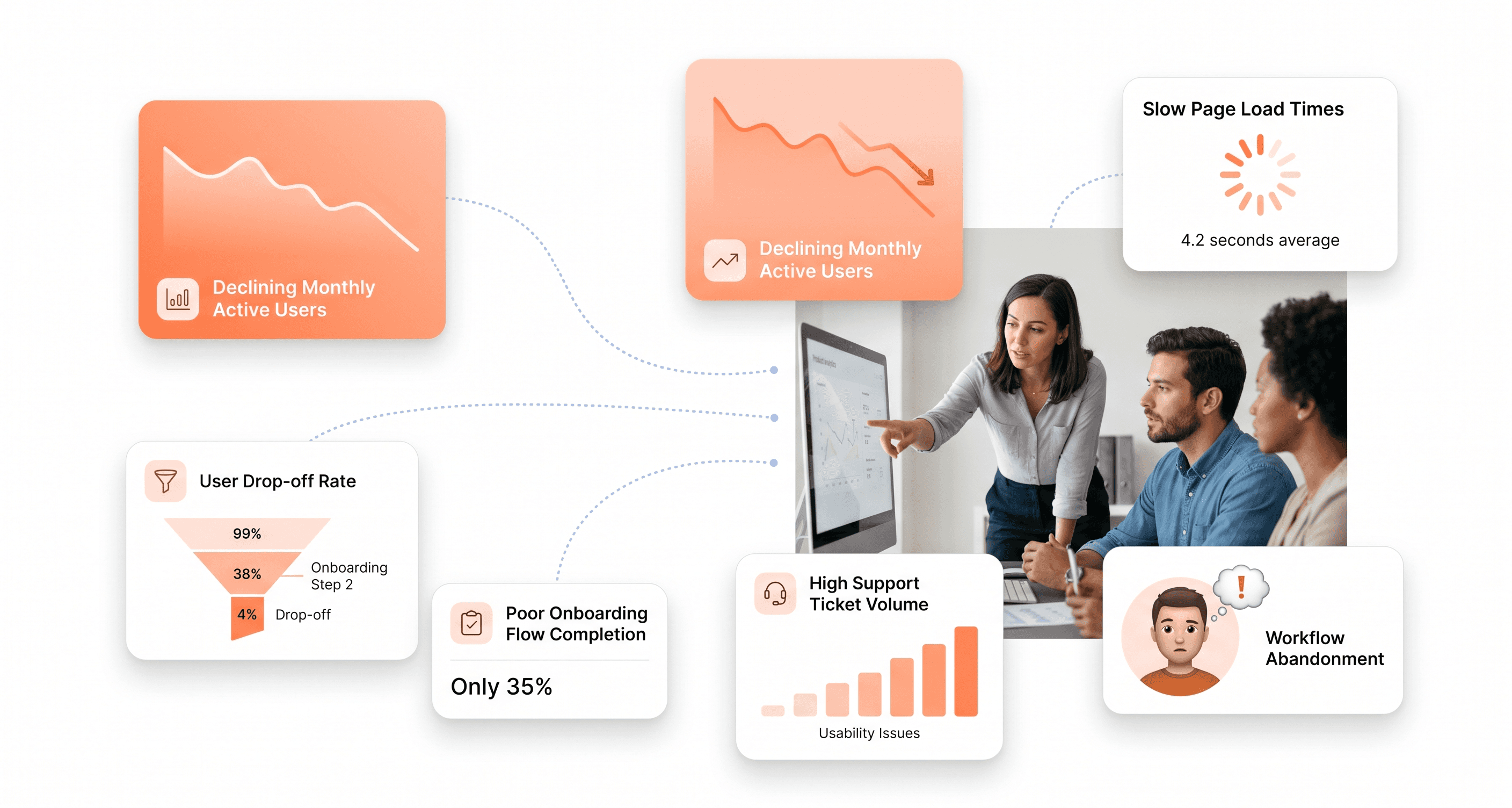

Share

Share

In-House Team vs Specialized Modernization Partner

In-House Team vs Specialized Modernization Partner

Posted on

Frontend Development

Frontend Development

Posted at

Jan 1, 2026

Jan 1, 2026

Min read

10

I hope you found this post valuable. If you’re looking for proven frontend and design expertise to elevate your product, feel free to reach out.

I hope you found this post valuable. If you’re looking for proven frontend and design expertise to elevate your product, feel free to reach out.

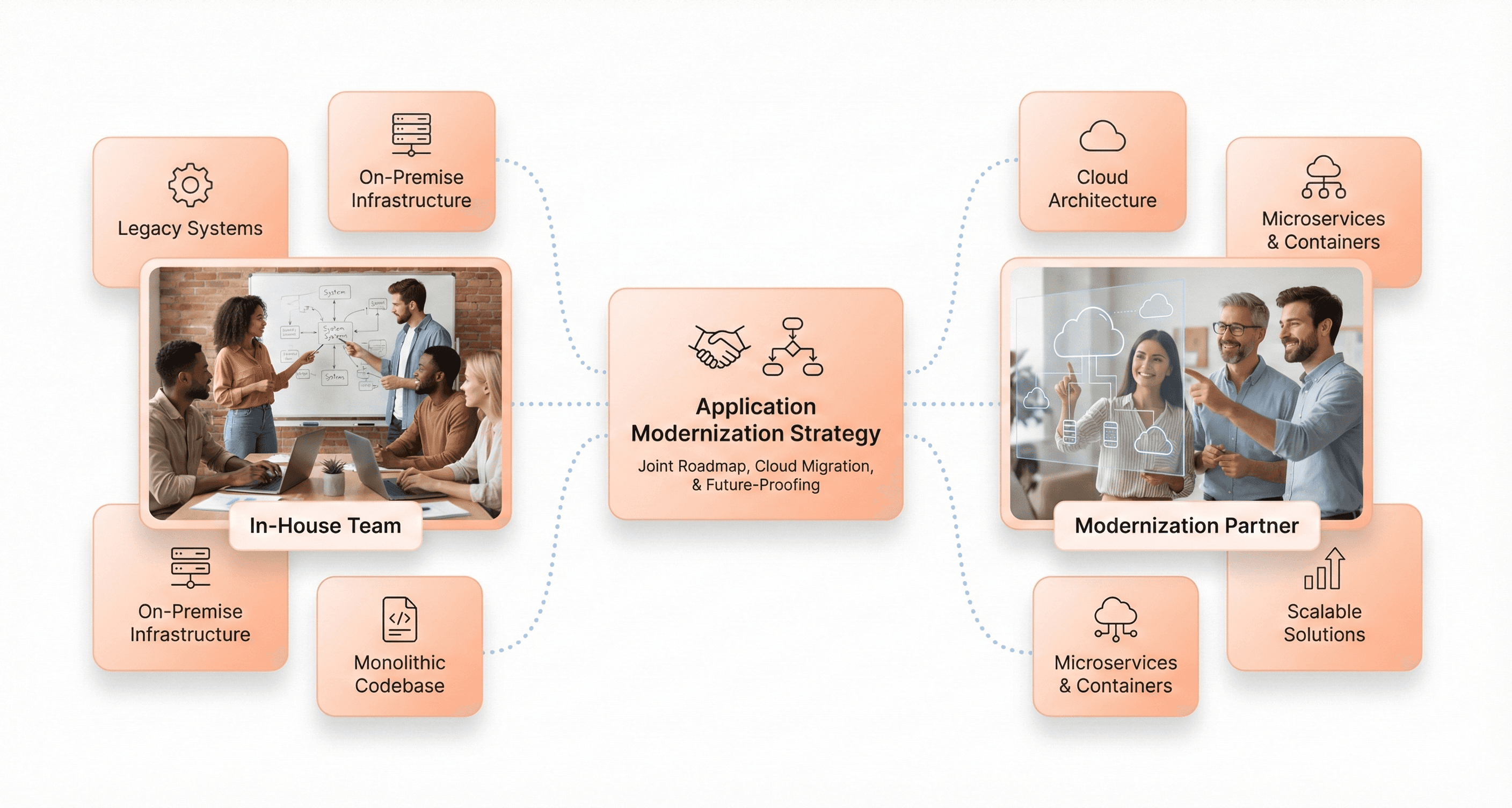
Comparison of in-house development team and specialized modernization partner collaborating on an enterprise application modernization strategy.

A Strategic Guide to Making the Right Legacy Modernization Decision

Modernization is no longer a question of if.
It is a question of how and with whom.

Across industries, organizations are confronting the same uncomfortable reality: systems that once powered growth are now slowing it down. Legacy applications are harder to scale, harder to secure, expensive to maintain, and increasingly incompatible with modern customer expectations.

In response, leadership teams are committing serious budgets to application modernization. But before any cloud migration, refactor, or re-architecture begins, one decision quietly determines the success or failure of the entire effort:

Should you modernize using an in-house team, or partner with a specialized modernization provider?

This is not a purely technical choice. It is a strategic, organizational, and financial decision with long-term consequences.

This guide is written to help you, as a technology leader, engineering manager, product owner, or business stakeholder, make that decision with clarity and confidence. We will explore:

  • What application modernization truly involves

  • Why modernization has become a board-level priority

  • The real strengths and limitations of in-house teams

  • What specialized modernization partners actually bring

  • Cost, speed, risk, and security implications

  • When a hybrid approach makes the most sense

  • How to choose the right path based on your context

No hype. No vendor bias. Just a clear, grounded comparison.

What Application Modernization Really Means Today

Application modernization is often misunderstood as “moving to the cloud.” In reality, it is far broader and more complex.

At its core, application modernization involves updating, transforming, or replacing legacy software systems to align them with modern infrastructure, architectural patterns, security expectations, and business needs.
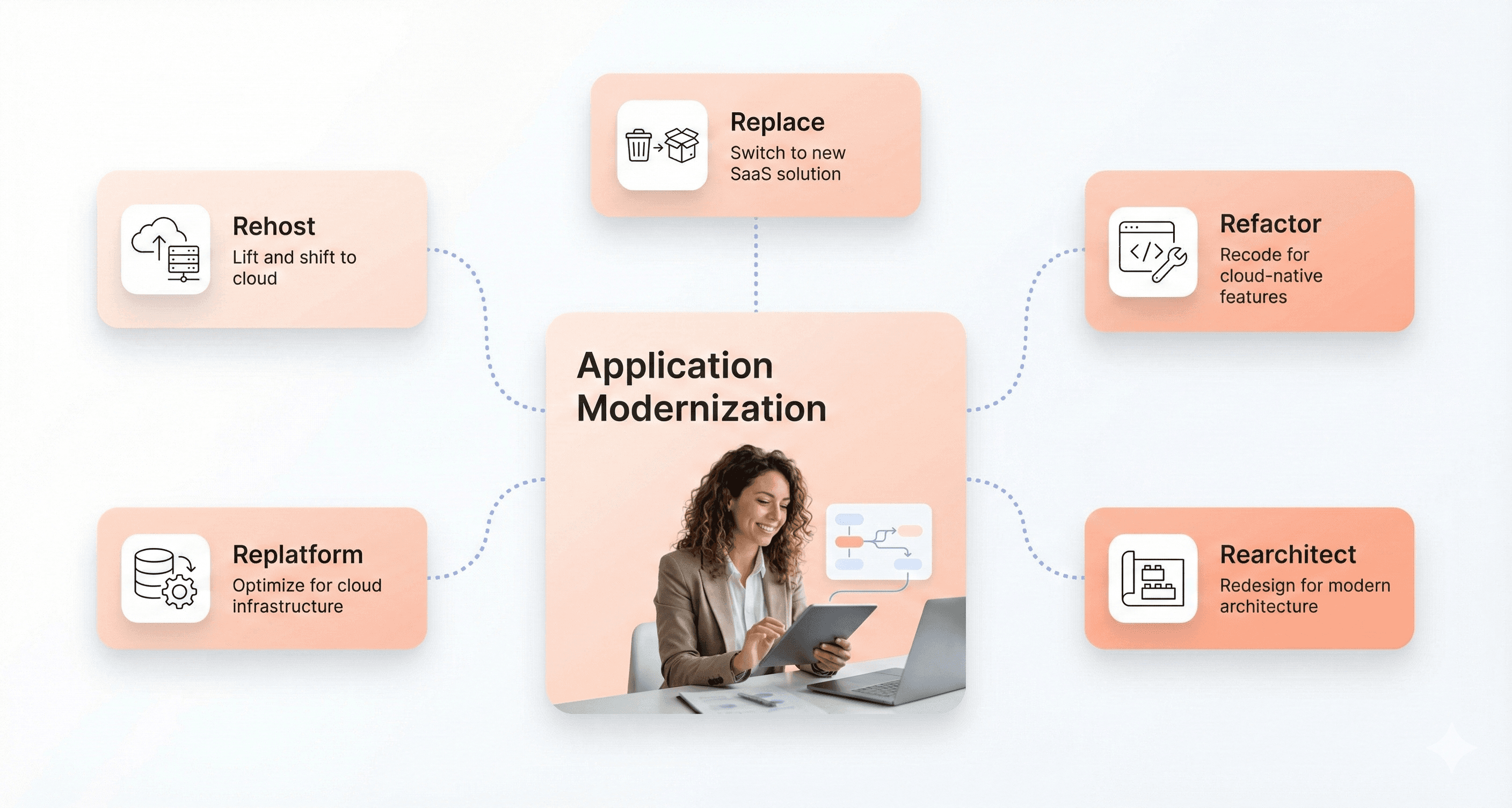
Application modernization approaches including rehosting, refactoring, replatforming, and replacing legacy systems shown through connected SaaS UI cards.

According to Gartner, application modernization services include migrating legacy applications to modern platforms, integrating new functionality, and selecting appropriate modernization strategies based on business risk and value.

Modernization can include:

Crucially, modernization is not a single technical task. It is a portfolio of decisions across applications, data, infrastructure, and operating models.

The “Rs” Framework: How Modernization Decisions Are Actually Made

Most modernization programs rely on a structured decision framework commonly known as the 6 Rs (sometimes expanded to 7).

Microsoft and AWS both publish official guidance around this model, making it one of the most widely adopted approaches in the industry.

The strategies include:

  • Rehost - Move applications “as-is” to the cloud (lift and shift)

  • Replatform - Make minor optimizations without changing core architecture

  • Refactor - Restructure code to better leverage cloud-native capabilities

  • Rearchitect - Redesign the system for scalability, resilience, or performance

  • Rebuild - Rewrite the application from scratch

  • Repurchase - Replace with a SaaS solution

  • Retire or Retain - Decommission or leave unchanged

Why does this matter for your in-house vs partner decision?

Because each strategy requires different skills, risk tolerance, and timelines. Organizations rarely apply the same approach across their entire application portfolio. Managing that complexity is where execution challenges begin.

Why Application Modernization Has Become a Strategic Imperative

Modernization is no longer driven solely by IT ambition. It is driven by business survival.

Independent market research shows explosive growth in modernization investment:

  • The application modernization services market was valued at USD 22.67 billion in 2024 and is projected to reach USD 51.45 billion by 2031, growing at approximately 14.6% CAGR.

  • Another market analysis estimates the legacy modernization market to reach USD 56.87 billion by 2030, growing at nearly 18% CAGR.

This growth reflects a simple truth: maintaining legacy systems is becoming more expensive than modernizing them.

The Real Cost of Legacy Systems and Technical Debt

Technical debt is often discussed abstractly, but its financial impact is very real.

McKinsey describes technical debt as the cumulative cost of shortcuts, outdated systems, and deferred maintenance. In some organizations, McKinsey estimates that technical debt accounts for up to 40% of the total IT balance sheet.

Technical debt manifests as:

  • Slower product delivery

  • Higher incident rates

  • Fragile integrations

  • Security vulnerabilities

  • Difficulty onboarding new engineers

  • Reduced ability to respond to market changes

In a large enterprise survey conducted by Pegasystems in partnership with Savanta, organizations reported hundreds of millions of dollars annually lost due to inefficiencies, delays, and failures caused by legacy systems.

Modernization, therefore, is not an optimization exercise, it is risk mitigation.

Option 1: Modernizing with an In-House Team

For many organizations, building an internal modernization team feels like the safest and most controllable option.

And in the right context, it can be.
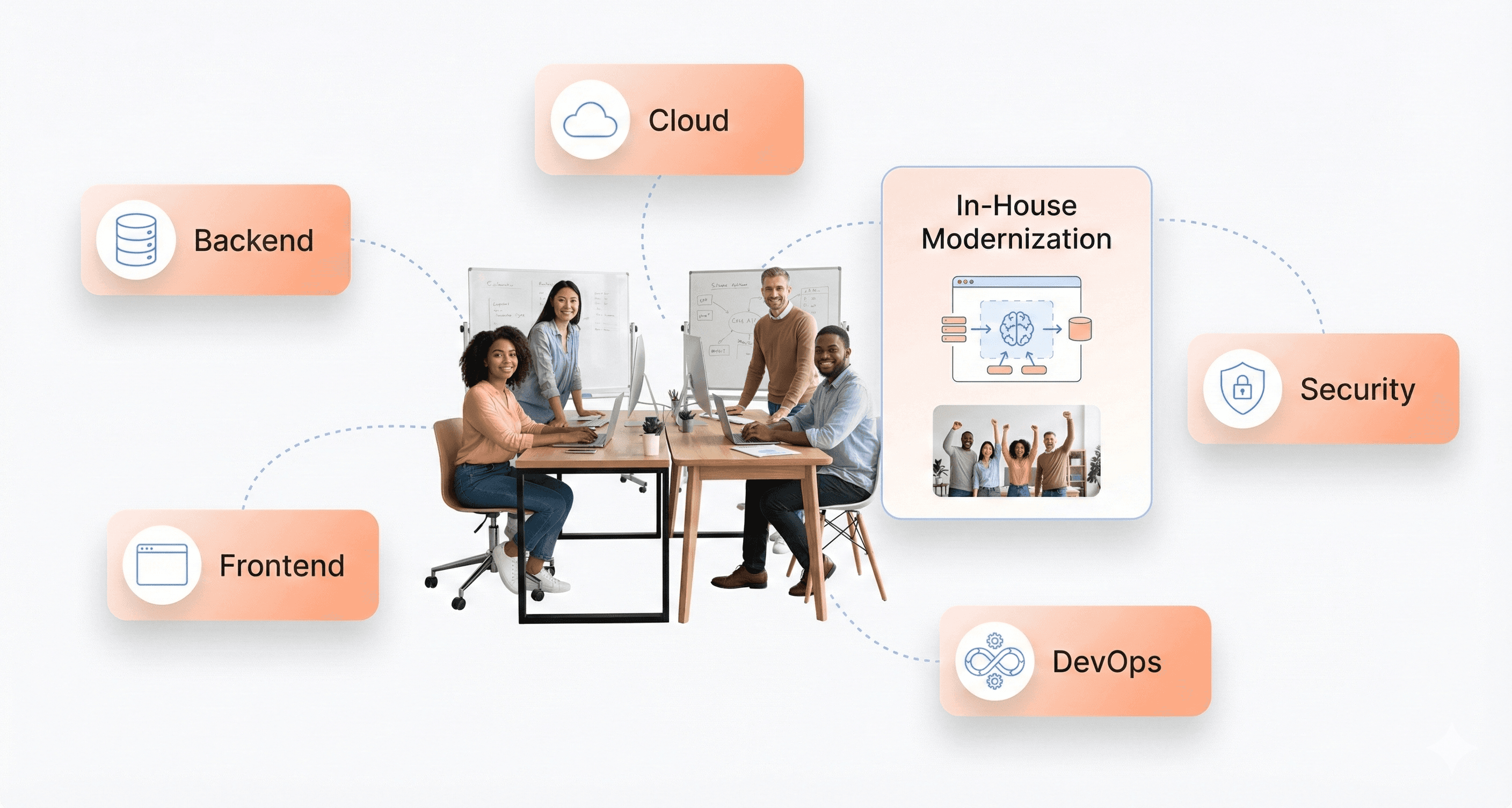
In-house modernization team structure with internal engineers managing cloud, security, and application architecture for legacy modernization.

What an In-House Modernization Team Typically Involves

An internal modernization effort usually requires:

  • Backend and frontend engineers

  • Cloud infrastructure specialists

  • Security and compliance experts

  • Solution architects

  • DevOps and CI/CD engineers

  • QA and testing teams

  • Program and change management

In practice, you are creating a temporary transformation organization alongside your existing delivery teams.

Advantages of an In-House Approach

1. Deep institutional knowledge
Your internal teams understand your business processes, customers, regulatory environment, and historical system decisions better than any external party.

2. Strong ownership and accountability
Decisions stay internal. Trade-offs are aligned directly with business priorities.

3. Long-term capability building
If modernization is an ongoing initiative, investing internally can create durable skills and reduce future reliance on vendors.

4. Cultural alignment
Internal teams already understand how decisions are made, how risk is handled, and how collaboration works inside your organization.

The Less Visible Challenges of In-House Modernization

This is where many modernization programs struggle.

Hiring and ramp-up delays
Recruiting skilled engineers takes time and money. Industry benchmarks show:

  • Average cost per hire is around $4,700

  • Median time-to-hire for technical roles often exceeds 40 days

  • Total employee cost is frequently 1.25× to 1.4× base salary when benefits and overhead are included

Modernization work cannot progress meaningfully until the right team is in place.
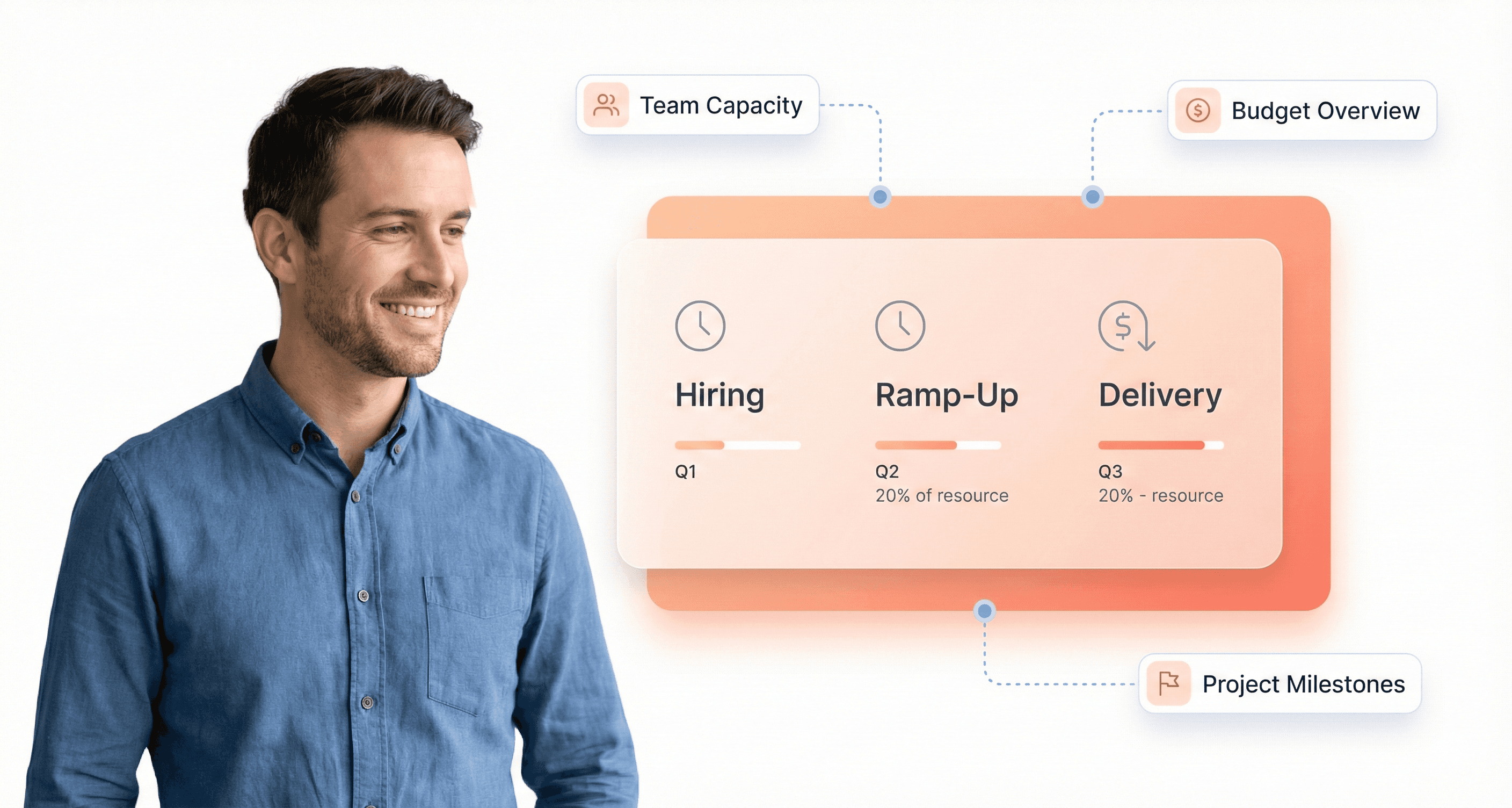
Engineering manager reviewing hiring timelines and delivery constraints highlighting challenges of in-house application modernization.

Skill depth vs skill breadth
Modernization demands expertise across cloud platforms, legacy technologies, security, data migration, and architecture. Building that breadth internally, especially for a one-time initiative, is difficult.

Execution risk
Internal teams modernizing systems for the first time are learning while delivering. That learning curve introduces rework, delays, and architectural missteps.

Opportunity cost
Every engineer assigned to modernization is one fewer engineer delivering customer-facing features or revenue-driving initiatives.

Option 2: Partnering with a Specialized Modernization Provider

A specialized modernization partner is an organization whose core business is modernizing legacy applications across industries and platforms.

These partners bring experience, tooling, and delivery models specifically designed for transformation work.
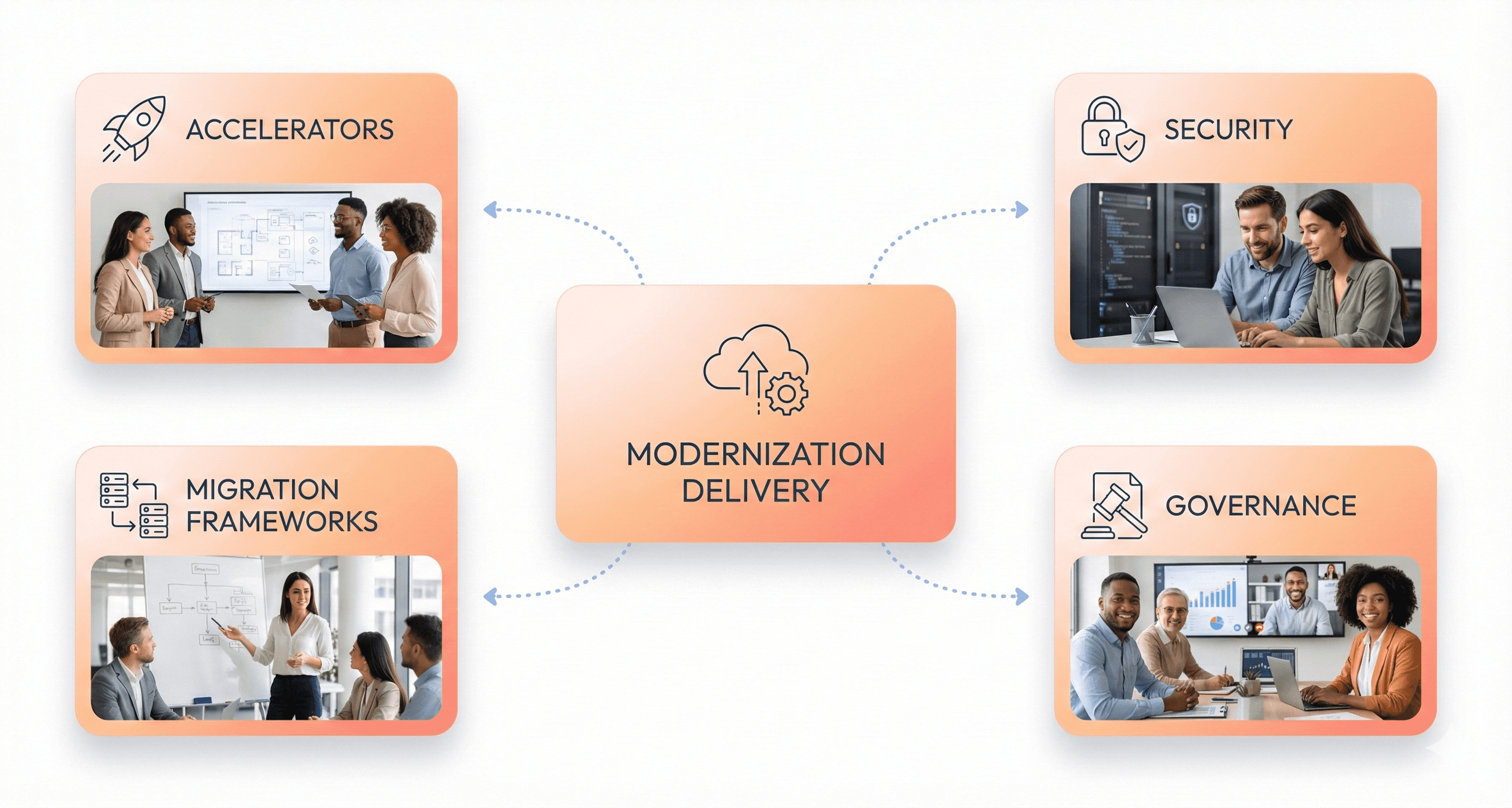
Specialized application modernization partner using cloud frameworks, security expertise, and structured delivery to modernize legacy systems.

What Specialized Modernization Partners Bring to the Table

A capable partner typically offers:

  • Proven modernization frameworks and playbooks

  • Architects experienced in cloud-native design

  • Migration and refactoring tooling

  • Security and compliance expertise

  • Program governance and delivery discipline

  • Teams that have executed similar programs multiple times

This experience matters because modernization failures are rarely caused by technology alone.

Advantages of Working with a Modernization Partner

1. Faster time-to-value
Partners already have trained teams and repeatable processes, eliminating hiring and ramp-up delays.

2. Reduced execution risk
Having navigated similar transformations before, partners are better at identifying hidden dependencies and sequencing work effectively.

3. Access to scarce skills
Expertise in large-scale refactoring, cloud security architecture, and complex data migration is expensive and difficult to retain internally.

4. Structured governance
Partners bring delivery discipline, milestones, reporting, and accountability that large internal programs often struggle to maintain.

5. Focused outcomes
Partners are measured on delivery success, not internal politics or competing priorities.

Trade-Offs to Consider with Partners

Perceived cost
Partner engagements can look expensive upfront. However, comparisons often ignore internal hiring costs, delays, and rework.

Knowledge transfer risk
If not planned deliberately, critical system knowledge can remain with the partner rather than your internal teams.

Vendor dependency
Poorly structured contracts can create long-term reliance instead of capability uplift.

Cultural mismatch
Partners who do not adapt to your organization’s decision-making style can slow progress.

Cost, Speed, and Risk: A Side-by-Side View

Cost

  • In-house: Lower visible cost, higher hidden cost

  • Partner: Higher upfront cost, clearer scope, and predictability

Speed

  • In-house: Slower start, gradual acceleration

  • Partner: Immediate momentum

Risk

  • In-house: Higher learning-curve risk

  • Partner: Lower technical risk, higher vendor-management risk

Capability retention

  • In-house: Stronger long-term ownership

  • Partner: Requires intentional knowledge transfer
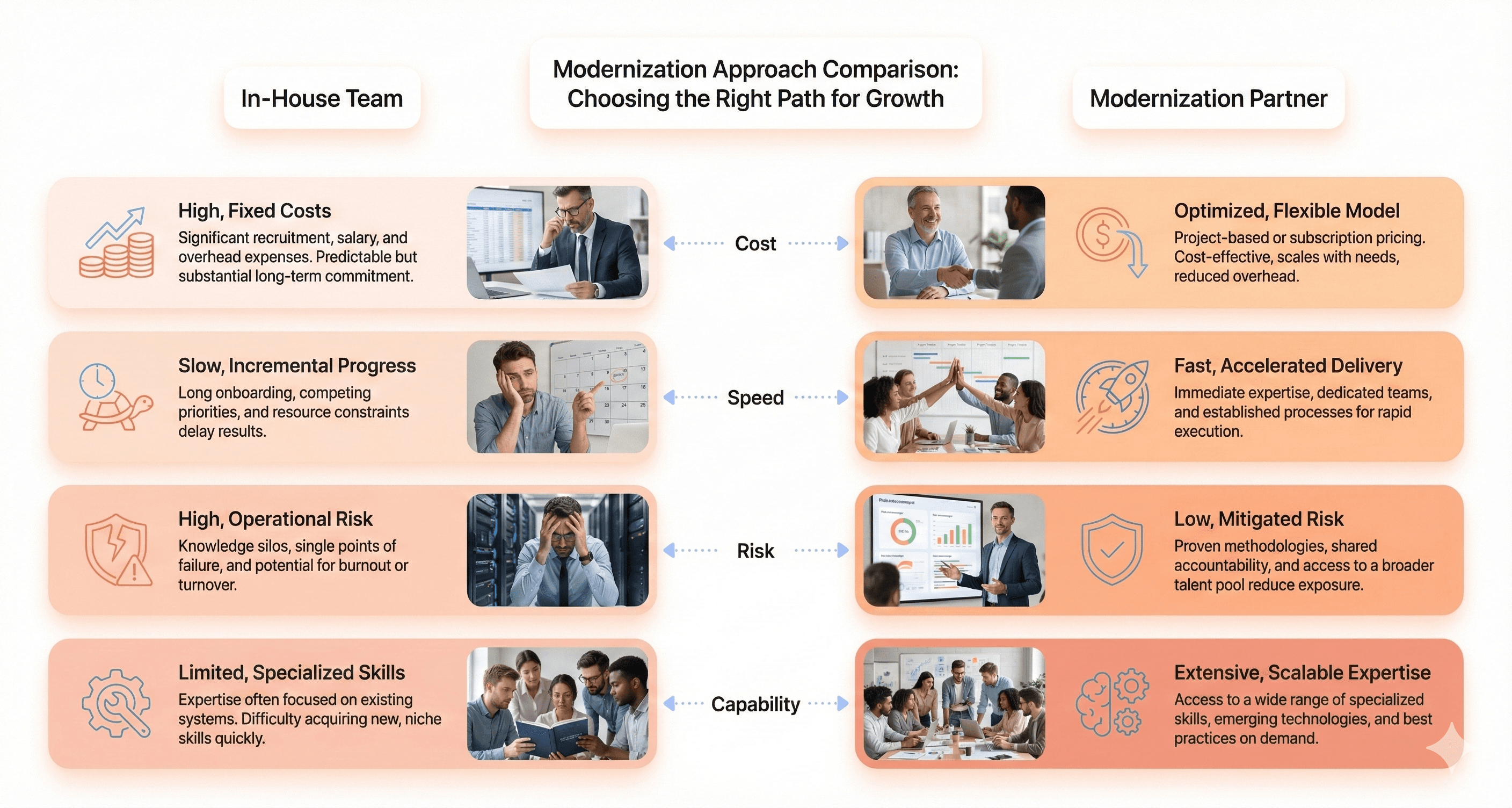
Side-by-side comparison of in-house team versus modernization partner showing differences in cost, speed, risk, and long-term capability.

Security, Reliability, and Compliance Considerations

Modernization decisions directly affect security posture.

IBM’s Cost of a Data Breach 2024 report places the average global breach cost at USD 4.88 million, reinforcing how expensive security failures can be.

Modernization often improves security by:

  • Eliminating unsupported systems

  • Introducing modern identity and access controls

  • Improving observability and monitoring

  • Reducing architectural complexity

In modernization surveys conducted by Red Hat and Konveyor, organizations reported:

  • Security improvements (58%)

  • Scalability improvements (53%)

  • Reliability improvements (52%)

Why Many Modernization Programs Fail

Despite heavy investment, many modernization initiatives fall short.

McKinsey frequently highlights that transformation failure is common, not due to technology, but due to execution, governance, and change management issues.

Common causes include:

  • Attempting to modernize too many systems at once

  • Underestimating legacy dependencies

  • Weak stakeholder alignment

  • Ignoring operating model changes

  • Treating modernization as a purely technical exercise

This is where experienced partners often add disproportionate value: sequencing, prioritization, and discipline.

The Hybrid Model: A Practical Middle Ground

For many organizations, the most effective approach is not choosing one model, but combining both.

What a Hybrid Model Looks Like

  • Internal teams own business logic and long-term architecture

  • Partners handle high-risk, high-complexity modernization phases

  • Knowledge transfer is embedded in delivery

  • Internal teams gradually assume ownership

This model balances speed with sustainability.

How to Decide What’s Right for You

Ask yourself:

  1. How urgent is modernization?

  2. How complex is your application landscape?

  3. Do you have proven modernization experience internally?

  4. What is the cost of delay?

  5. How critical is risk reduction?

  6. Do you want modernization capability long-term?

Your answers will point clearly toward an in-house, partner-led, or hybrid approach.
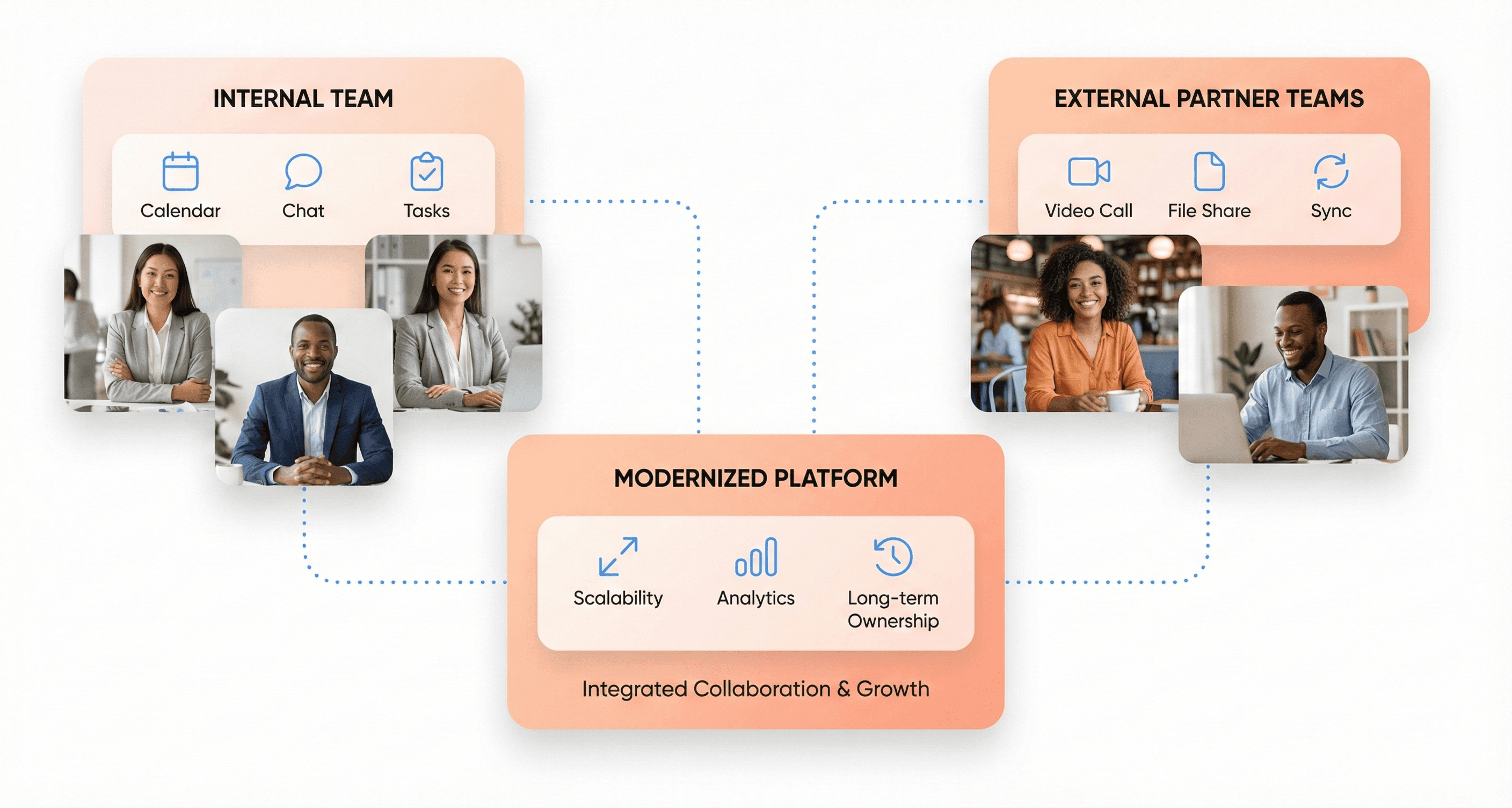
Hybrid application modernization model where internal teams and external partners collaborate to modernize and scale enterprise platforms.

Final Thoughts: Modernization Is a Leadership Decision

The choice between an in-house team and a specialized modernization partner is not about tools or trends.

It is about:

  • Risk appetite

  • Speed to value

  • Organizational maturity

  • Long-term capability strategy

Organizations that succeed are not those that choose perfectly, but those that execute deliberately.

Choose the path that aligns with your reality, your urgency, and your future, not just what looks good in a strategy deck.


A Strategic Guide to Making the Right Legacy Modernization Decision

Modernization is no longer a question of if.
It is a question of how and with whom.

Across industries, organizations are confronting the same uncomfortable reality: systems that once powered growth are now slowing it down. Legacy applications are harder to scale, harder to secure, expensive to maintain, and increasingly incompatible with modern customer expectations.

In response, leadership teams are committing serious budgets to application modernization. But before any cloud migration, refactor, or re-architecture begins, one decision quietly determines the success or failure of the entire effort:

Should you modernize using an in-house team, or partner with a specialized modernization provider?

This is not a purely technical choice. It is a strategic, organizational, and financial decision with long-term consequences.

This guide is written to help you, as a technology leader, engineering manager, product owner, or business stakeholder, make that decision with clarity and confidence. We will explore:

  • What application modernization truly involves

  • Why modernization has become a board-level priority

  • The real strengths and limitations of in-house teams

  • What specialized modernization partners actually bring

  • Cost, speed, risk, and security implications

  • When a hybrid approach makes the most sense

  • How to choose the right path based on your context

No hype. No vendor bias. Just a clear, grounded comparison.

What Application Modernization Really Means Today

Application modernization is often misunderstood as “moving to the cloud.” In reality, it is far broader and more complex.

At its core, application modernization involves updating, transforming, or replacing legacy software systems to align them with modern infrastructure, architectural patterns, security expectations, and business needs.

Application modernization approaches including rehosting, refactoring, replatforming, and replacing legacy systems shown through connected SaaS UI cards.

According to Gartner, application modernization services include migrating legacy applications to modern platforms, integrating new functionality, and selecting appropriate modernization strategies based on business risk and value.

Modernization can include:

Crucially, modernization is not a single technical task. It is a portfolio of decisions across applications, data, infrastructure, and operating models.

The “Rs” Framework: How Modernization Decisions Are Actually Made

Most modernization programs rely on a structured decision framework commonly known as the 6 Rs (sometimes expanded to 7).

Microsoft and AWS both publish official guidance around this model, making it one of the most widely adopted approaches in the industry.

The strategies include:

  • Rehost - Move applications “as-is” to the cloud (lift and shift)

  • Replatform - Make minor optimizations without changing core architecture

  • Refactor - Restructure code to better leverage cloud-native capabilities

  • Rearchitect - Redesign the system for scalability, resilience, or performance

  • Rebuild - Rewrite the application from scratch

  • Repurchase - Replace with a SaaS solution

  • Retire or Retain - Decommission or leave unchanged

Why does this matter for your in-house vs partner decision?

Because each strategy requires different skills, risk tolerance, and timelines. Organizations rarely apply the same approach across their entire application portfolio. Managing that complexity is where execution challenges begin.

Why Application Modernization Has Become a Strategic Imperative

Modernization is no longer driven solely by IT ambition. It is driven by business survival.

Independent market research shows explosive growth in modernization investment:

  • The application modernization services market was valued at USD 22.67 billion in 2024 and is projected to reach USD 51.45 billion by 2031, growing at approximately 14.6% CAGR.

  • Another market analysis estimates the legacy modernization market to reach USD 56.87 billion by 2030, growing at nearly 18% CAGR.

This growth reflects a simple truth: maintaining legacy systems is becoming more expensive than modernizing them.

The Real Cost of Legacy Systems and Technical Debt

Technical debt is often discussed abstractly, but its financial impact is very real.

McKinsey describes technical debt as the cumulative cost of shortcuts, outdated systems, and deferred maintenance. In some organizations, McKinsey estimates that technical debt accounts for up to 40% of the total IT balance sheet.

Technical debt manifests as:

  • Slower product delivery

  • Higher incident rates

  • Fragile integrations

  • Security vulnerabilities

  • Difficulty onboarding new engineers

  • Reduced ability to respond to market changes

In a large enterprise survey conducted by Pegasystems in partnership with Savanta, organizations reported hundreds of millions of dollars annually lost due to inefficiencies, delays, and failures caused by legacy systems.

Modernization, therefore, is not an optimization exercise, it is risk mitigation.

Option 1: Modernizing with an In-House Team

For many organizations, building an internal modernization team feels like the safest and most controllable option.

And in the right context, it can be.

In-house modernization team structure with internal engineers managing cloud, security, and application architecture for legacy modernization.

What an In-House Modernization Team Typically Involves

An internal modernization effort usually requires:

  • Backend and frontend engineers

  • Cloud infrastructure specialists

  • Security and compliance experts

  • Solution architects

  • DevOps and CI/CD engineers

  • QA and testing teams

  • Program and change management

In practice, you are creating a temporary transformation organization alongside your existing delivery teams.

Advantages of an In-House Approach

1. Deep institutional knowledge
Your internal teams understand your business processes, customers, regulatory environment, and historical system decisions better than any external party.

2. Strong ownership and accountability
Decisions stay internal. Trade-offs are aligned directly with business priorities.

3. Long-term capability building
If modernization is an ongoing initiative, investing internally can create durable skills and reduce future reliance on vendors.

4. Cultural alignment
Internal teams already understand how decisions are made, how risk is handled, and how collaboration works inside your organization.

The Less Visible Challenges of In-House Modernization

This is where many modernization programs struggle.

Hiring and ramp-up delays
Recruiting skilled engineers takes time and money. Industry benchmarks show:

  • Average cost per hire is around $4,700

  • Median time-to-hire for technical roles often exceeds 40 days

  • Total employee cost is frequently 1.25× to 1.4× base salary when benefits and overhead are included

Modernization work cannot progress meaningfully until the right team is in place.

Engineering manager reviewing hiring timelines and delivery constraints highlighting challenges of in-house application modernization.

Skill depth vs skill breadth
Modernization demands expertise across cloud platforms, legacy technologies, security, data migration, and architecture. Building that breadth internally, especially for a one-time initiative, is difficult.

Execution risk
Internal teams modernizing systems for the first time are learning while delivering. That learning curve introduces rework, delays, and architectural missteps.

Opportunity cost
Every engineer assigned to modernization is one fewer engineer delivering customer-facing features or revenue-driving initiatives.

Option 2: Partnering with a Specialized Modernization Provider

A specialized modernization partner is an organization whose core business is modernizing legacy applications across industries and platforms.

These partners bring experience, tooling, and delivery models specifically designed for transformation work.

Specialized application modernization partner using cloud frameworks, security expertise, and structured delivery to modernize legacy systems.

What Specialized Modernization Partners Bring to the Table

A capable partner typically offers:

  • Proven modernization frameworks and playbooks

  • Architects experienced in cloud-native design

  • Migration and refactoring tooling

  • Security and compliance expertise

  • Program governance and delivery discipline

  • Teams that have executed similar programs multiple times

This experience matters because modernization failures are rarely caused by technology alone.

Advantages of Working with a Modernization Partner

1. Faster time-to-value
Partners already have trained teams and repeatable processes, eliminating hiring and ramp-up delays.

2. Reduced execution risk
Having navigated similar transformations before, partners are better at identifying hidden dependencies and sequencing work effectively.

3. Access to scarce skills
Expertise in large-scale refactoring, cloud security architecture, and complex data migration is expensive and difficult to retain internally.

4. Structured governance
Partners bring delivery discipline, milestones, reporting, and accountability that large internal programs often struggle to maintain.

5. Focused outcomes
Partners are measured on delivery success, not internal politics or competing priorities.

Trade-Offs to Consider with Partners

Perceived cost
Partner engagements can look expensive upfront. However, comparisons often ignore internal hiring costs, delays, and rework.

Knowledge transfer risk
If not planned deliberately, critical system knowledge can remain with the partner rather than your internal teams.

Vendor dependency
Poorly structured contracts can create long-term reliance instead of capability uplift.

Cultural mismatch
Partners who do not adapt to your organization’s decision-making style can slow progress.

Cost, Speed, and Risk: A Side-by-Side View

Cost

  • In-house: Lower visible cost, higher hidden cost

  • Partner: Higher upfront cost, clearer scope, and predictability

Speed

  • In-house: Slower start, gradual acceleration

  • Partner: Immediate momentum

Risk

  • In-house: Higher learning-curve risk

  • Partner: Lower technical risk, higher vendor-management risk

Capability retention

  • In-house: Stronger long-term ownership

  • Partner: Requires intentional knowledge transfer

Side-by-side comparison of in-house team versus modernization partner showing differences in cost, speed, risk, and long-term capability.

Security, Reliability, and Compliance Considerations

Modernization decisions directly affect security posture.

IBM’s Cost of a Data Breach 2024 report places the average global breach cost at USD 4.88 million, reinforcing how expensive security failures can be.

Modernization often improves security by:

  • Eliminating unsupported systems

  • Introducing modern identity and access controls

  • Improving observability and monitoring

  • Reducing architectural complexity

In modernization surveys conducted by Red Hat and Konveyor, organizations reported:

  • Security improvements (58%)

  • Scalability improvements (53%)

  • Reliability improvements (52%)

Why Many Modernization Programs Fail

Despite heavy investment, many modernization initiatives fall short.

McKinsey frequently highlights that transformation failure is common, not due to technology, but due to execution, governance, and change management issues.

Common causes include:

  • Attempting to modernize too many systems at once

  • Underestimating legacy dependencies

  • Weak stakeholder alignment

  • Ignoring operating model changes

  • Treating modernization as a purely technical exercise

This is where experienced partners often add disproportionate value: sequencing, prioritization, and discipline.

The Hybrid Model: A Practical Middle Ground

For many organizations, the most effective approach is not choosing one model, but combining both.

What a Hybrid Model Looks Like

  • Internal teams own business logic and long-term architecture

  • Partners handle high-risk, high-complexity modernization phases

  • Knowledge transfer is embedded in delivery

  • Internal teams gradually assume ownership

This model balances speed with sustainability.

How to Decide What’s Right for You

Ask yourself:

  1. How urgent is modernization?

  2. How complex is your application landscape?

  3. Do you have proven modernization experience internally?

  4. What is the cost of delay?

  5. How critical is risk reduction?

  6. Do you want modernization capability long-term?

Your answers will point clearly toward an in-house, partner-led, or hybrid approach.

Hybrid application modernization model where internal teams and external partners collaborate to modernize and scale enterprise platforms.

Final Thoughts: Modernization Is a Leadership Decision

The choice between an in-house team and a specialized modernization partner is not about tools or trends.

It is about:

  • Risk appetite

  • Speed to value

  • Organizational maturity

  • Long-term capability strategy

Organizations that succeed are not those that choose perfectly, but those that execute deliberately.

Choose the path that aligns with your reality, your urgency, and your future, not just what looks good in a strategy deck.
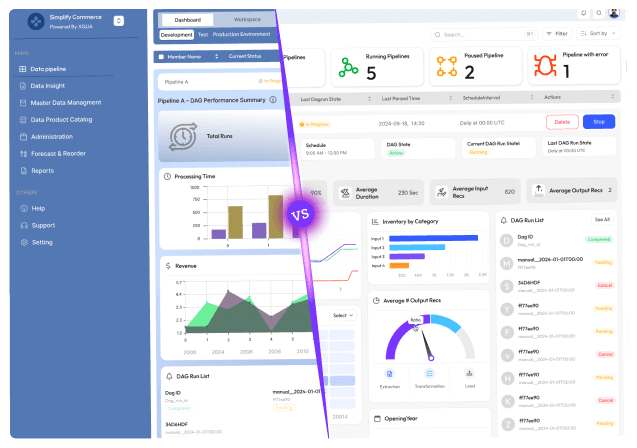
Stuck with slow releases and high IT costs?

▶︎

Launch 2.5x faster with our AI-driven frontend workflows, specialized for SaaS.

▶︎

Cut IT costs by up to 50% and boost user adoption by 2x with our proprietary frameworks.

Stuck with slow releases and high IT costs?

▶︎

Launch 2.5x faster with our AI-driven frontend workflows, specialized for SaaS.

▶︎

Cut IT costs by up to 50% and boost user adoption by 2x with our proprietary frameworks.

Stuck with slow releases and high IT costs?

▶︎

Launch 2.5x faster with our AI-driven frontend workflows, specialized for SaaS.

▶︎

Cut IT costs by up to 50% and boost user adoption by 2x with our proprietary frameworks.

Frequently Asked Questions

We're ready to answer your questions

Slow releases, clunky dashboards, and frustrated users? You've got questions about how to fix them. We have the Frontend-First answers that unlock growth. Let's talk solutions.

If speed, complexity, and risk reduction are priorities, a specialized partner often delivers faster and more predictably. In-house teams work best when modernization is a long-term capability investment and timelines are flexible.

Answer

Should you modernize with an in-house team or a specialized partner?

Question

Organizations typically use frameworks like the 6 Rs or 7 Rs, including rehosting, replatforming, refactoring, rearchitecting, rebuilding, replacing, or retiring applications based on business value and risk.

Answer

What are the most common application modernization strategies?

Question

Failures usually stem from poor sequencing, underestimated dependencies, lack of change management, and attempting overly complex refactors too early.

Answer

Why do modernization projects fail?

Question

Modernization requires investment, but the cost of maintaining legacy systems, technical debt, security risk, and lost agility, is often higher over time.

Answer

Is application modernization expensive?

Question

Yes. Many organizations report improved security, reliability, and scalability after modernization due to updated architectures and infrastructure.

Answer

Does modernization improve security?

Question

Frequently Asked Questions

We're ready to answer your questions

Slow releases, clunky dashboards, and frustrated users? You've got questions about how to fix them. We have the Frontend-First answers that unlock growth. Let's talk solutions.

If speed, complexity, and risk reduction are priorities, a specialized partner often delivers faster and more predictably. In-house teams work best when modernization is a long-term capability investment and timelines are flexible.

Answer

Should you modernize with an in-house team or a specialized partner?

Question

Organizations typically use frameworks like the 6 Rs or 7 Rs, including rehosting, replatforming, refactoring, rearchitecting, rebuilding, replacing, or retiring applications based on business value and risk.

Answer

What are the most common application modernization strategies?

Question

Failures usually stem from poor sequencing, underestimated dependencies, lack of change management, and attempting overly complex refactors too early.

Answer

Why do modernization projects fail?

Question

Modernization requires investment, but the cost of maintaining legacy systems, technical debt, security risk, and lost agility, is often higher over time.

Answer

Is application modernization expensive?

Question

Yes. Many organizations report improved security, reliability, and scalability after modernization due to updated architectures and infrastructure.

Answer

Does modernization improve security?

Question

Frequently Asked Questions

We're ready to answer your questions

Slow releases, clunky dashboards, and frustrated users? You've got questions about how to fix them. We have the Frontend-First answers that unlock growth. Let's talk solutions.

If speed, complexity, and risk reduction are priorities, a specialized partner often delivers faster and more predictably. In-house teams work best when modernization is a long-term capability investment and timelines are flexible.

Answer

Should you modernize with an in-house team or a specialized partner?

Question

Organizations typically use frameworks like the 6 Rs or 7 Rs, including rehosting, replatforming, refactoring, rearchitecting, rebuilding, replacing, or retiring applications based on business value and risk.

Answer

What are the most common application modernization strategies?

Question

Failures usually stem from poor sequencing, underestimated dependencies, lack of change management, and attempting overly complex refactors too early.

Answer

Why do modernization projects fail?

Question

Modernization requires investment, but the cost of maintaining legacy systems, technical debt, security risk, and lost agility, is often higher over time.

Answer

Is application modernization expensive?

Question

Yes. Many organizations report improved security, reliability, and scalability after modernization due to updated architectures and infrastructure.

Answer

Does modernization improve security?

Question

About the author

Author Name:

Parth G

|


Founder of

Hashbyt

I’m the founder of Hashbyt, an AI-first frontend and UI/UX SaaS partner helping 200+ SaaS companies scale faster through intelligent, growth-driven design. My work focuses on building modern frontend systems, design frameworks, and product modernization strategies that boost revenue, improve user adoption, and help SaaS founders turn their UI into a true growth engine.
Follow the expert:

Related Blogs

Related Blogs

Is a clunky UI holding back your growth?

Is a clunky UI holding back your growth?

▶︎

Transform slow, frustrating dashboards into intuitive interfaces that ensure effortless user adoption.

▶︎

Transform slow, frustrating dashboards into intuitive interfaces that ensure effortless user adoption.

Is a clunky UI holding back your growth?

Is a clunky UI holding back your growth?

▶︎

Transform slow, frustrating dashboards into intuitive interfaces that ensure effortless user adoption.

▶︎

Transform slow, frustrating dashboards into intuitive interfaces that ensure effortless user adoption.

Is a clunky UI holding back your growth?

Is a clunky UI holding back your growth?

▶︎

Transform slow, frustrating dashboards into intuitive interfaces that ensure effortless user adoption.

▶︎

Transform slow, frustrating dashboards into intuitive interfaces that ensure effortless user adoption.