

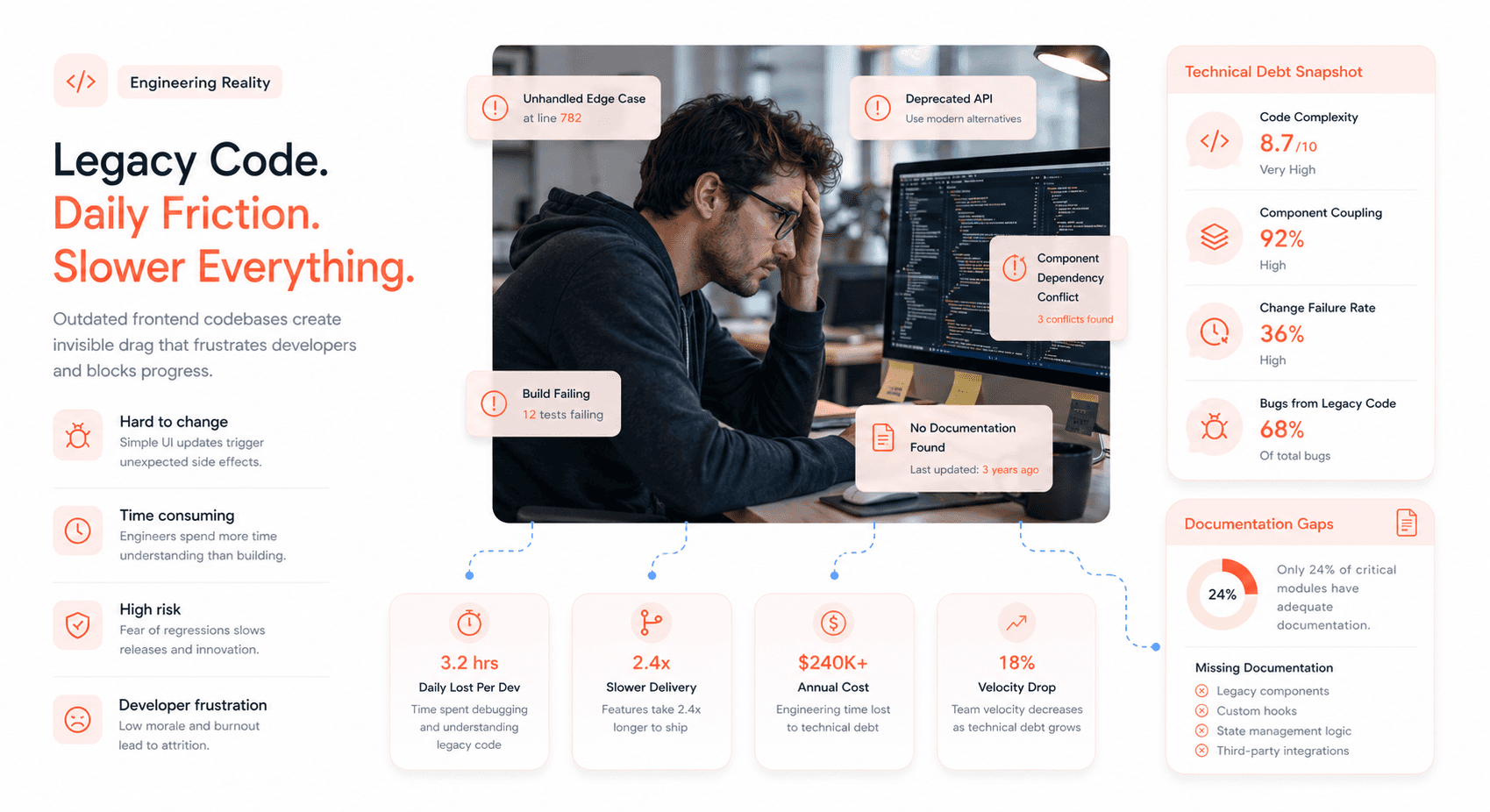
Your talented frontend developers are leaving, and you probably don't even realize why. When top talent walks away from your company, it's rarely about the salary or even the projects themselves. It's about the legacy code nightmares, broken processes, and toxic environments that make their daily work unbearable.
This guide is for engineering managers, CTOs, and startup founders who want to understand why their frontend developer hiring efforts keep failing and why developer talent retention feels impossible. You'll learn to spot the warning signs that send experienced developers running to your competitors.
We'll walk through the technical debt that destroys developer experience, from massive codebases with zero documentation to deployment processes that take hours instead of minutes. You'll also discover the management issues that drive away talent, including micromanagement disguised as "oversight" and decision-makers who don't understand the frontend development process. Finally, we'll cover the toxic workplace culture warning signs that create poor development environments where creativity dies and burnout thrives.
The best frontend developers have options. They can work anywhere they want. If your company has these frontend legacy code red flags, they won't stick around long enough to fix them.
Technical Debt That Destroys Developer Experience
Outdated Technology Stack That Limits Career Growth
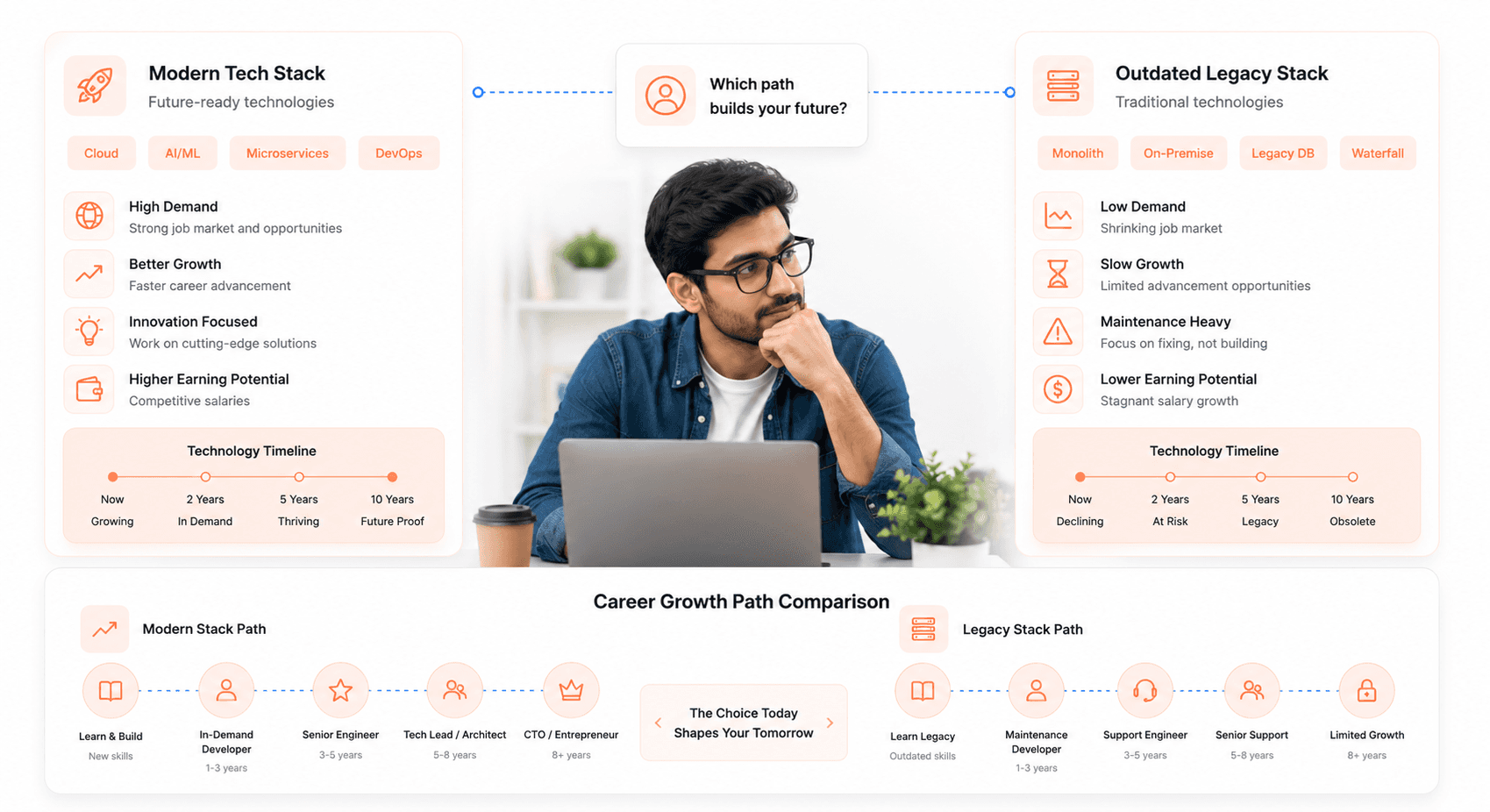
When you encounter a frontend codebase built on outdated technology, you're witnessing one of the most significant red flags in legacy code environments. Relying on legacy tools or failing to modernize can severely hinder your ability to grow and stay relevant in the rapidly evolving frontend landscape. A stagnant tech stack doesn't just limit innovation, it creates a professional dead end that leaves you feeling stuck and disconnected from current industry trends.
Your career progression depends heavily on your exposure to modern technologies and frameworks. When companies resist upgrading their tech stack, they're essentially asking you to sacrifice your professional development for their short-term convenience. This creates a frustrating scenario where your skills become increasingly obsolete while the market demands expertise in contemporary tools and methodologies.
The impact on your learning opportunities becomes immediately apparent when you're forced to work with deprecated frameworks, unsupported libraries, or antiquated build processes. You'll find yourself spending time maintaining outdated code instead of developing expertise in cutting-edge technologies that could advance your career. This technical stagnation doesn't just affect your current role, it makes you less competitive in the job market.
Companies that prioritize modernization demonstrate their commitment to both innovation and their developers' growth. They should regularly invest in modern tools, recognizing that technology updates aren't just operational necessities, they're investments in their team's future. When organizations involve engineers in tech-stack decisions, they create an environment where your expertise is valued and your professional input shapes the development direction.
You should also expect comprehensive training opportunities for emerging technologies. Forward-thinking companies understand that keeping teams engaged and future-ready requires ongoing education and skill development. This investment in your growth creates a virtuous cycle where improved capabilities lead to better products and increased job satisfaction.
Legacy Code Without Documentation or Tests
Your experience with undocumented legacy code represents one of the most frustrating aspects of working with technical debt. When you inherit code without proper documentation, you're essentially becoming an archaeological detective, trying to understand the intentions and logic behind someone else's work without any guidance or context.
The absence of tests compounds this problem exponentially. Without test coverage, you can't confidently make changes or improvements to the codebase. Every modification becomes a high-risk endeavor where you might inadvertently break existing functionality. This creates a paralyzing environment where innovation stagnates because the fear of breaking something outweighs the desire to improve the system.
Inconsistent Coding Standards Across Projects
Working in an environment with inconsistent coding standards creates unnecessary cognitive overhead in your daily development work. When you switch between projects and encounter different formatting rules, naming conventions, or architectural patterns, you're forced to constantly adapt your thinking and approach.
This inconsistency signals deeper organizational problems where different teams operate in isolation without shared best practices. You'll find yourself spending valuable time deciphering varying code styles instead of focusing on solving meaningful business problems or implementing new features.
Band-Aid Solutions Instead of Proper Architecture
When you encounter a codebase filled with temporary fixes and quick patches, you're seeing evidence of systematic architectural neglect. These band-aid solutions create a house of cards where each temporary fix introduces new complexities and potential failure points.
Your productivity suffers when you must navigate around hastily implemented workarounds instead of working with clean, well-architected code. These shortcuts accumulate over time, creating an increasingly unstable foundation that makes future development more difficult and time-consuming.
Poor Development Environment and Processes
Bureaucratic Decision-Making That Slows Innovation
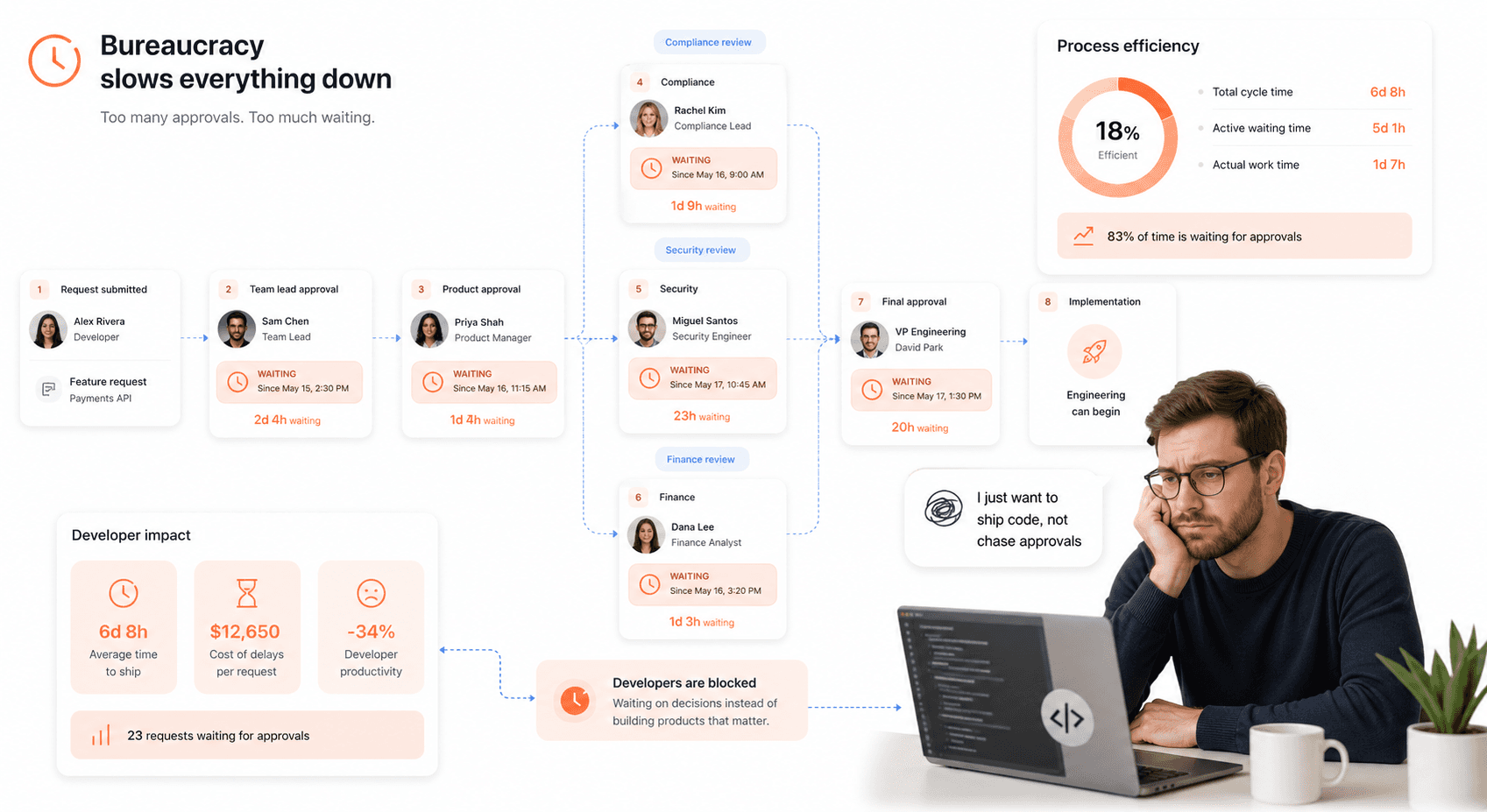
When you encounter a frontend legacy code environment plagued by slow, centralized decision-making, you're looking at one of the biggest red flags that will send top talent running. You'll recognize this pattern when every technical decision requires multiple layers of approvals, creating frustrating bottlenecks that kill your team's enthusiasm and momentum.
You've likely experienced this yourself - waiting weeks for approval to upgrade a critical dependency, or watching innovative solutions die in committee meetings. These bureaucratic processes fundamentally contradict what skilled frontend developers value most: agility and efficiency. When you're forced to navigate through endless approval chains just to implement basic improvements, your ability to deliver quality work becomes severely compromised.
The impact on developer experience issues becomes immediately apparent. You'll notice that simple tasks that should take hours stretch into days or weeks. Your team's motivation plummets as they watch their technical expertise undervalued by administrative overhead. This creates a toxic cycle where the most capable developers become increasingly frustrated with the lack of autonomy and decision-making power.
To address these poor development environment challenges, you need to streamline decision-making processes by adopting agile practices. This means empowering your frontend teams to make technical decisions within defined parameters rather than requiring executive approval for every change. You should encourage collaboration between developers and stakeholders, creating clear channels for faster iterations and feedback loops.
Consider implementing decision frameworks that give your developers the authority to make choices about tools, libraries, and architectural patterns within agreed-upon guidelines. This approach maintains necessary oversight while eliminating the bureaucratic delays that drive away talent.
Lack of Modern Development Tools and Infrastructure
While the specifics of outdated technology stacks fall under technical debt concerns, the broader issue of lacking modern development tools creates an environment where frontend developers cannot perform at their best. You'll find that talented developers quickly identify organizations that haven't invested in proper development infrastructure.
Your development environment should support modern workflows and enable developers to focus on creating value rather than fighting against outdated processes. When you fail to provide adequate tools and infrastructure, you're essentially telling your team that their productivity and job satisfaction aren't priorities.
Overcomplicated Deployment and Release Processes
Complex deployment procedures represent another critical aspect of poor development environment that impacts talent retention. When your release processes are overly complicated, you create unnecessary stress and reduce your team's ability to deliver features efficiently.
You'll recognize overcomplicated deployment when simple code changes require extensive manual steps, multiple environment promotions, or lengthy approval processes that delay getting improvements to users. These processes not only slow down development velocity but also increase the risk of errors and burnout among your frontend developers.
Modern development teams expect streamlined, automated deployment pipelines that allow for frequent, reliable releases. When you maintain complicated manual processes, you signal to potential and current team members that the organization hasn't prioritized developer experience or operational efficiency.
Missing Code Review and Quality Assurance Practices
The absence of proper code review and quality assurance practices creates an environment where code quality concerns flourish unchecked. You'll notice that without established review processes, your codebase becomes increasingly difficult to maintain, leading to frustrated developers who inherit poorly structured code.
Effective code review practices serve multiple purposes beyond quality control. They facilitate knowledge sharing, maintain coding standards, and create opportunities for mentorship within your team. When these practices are missing, you lose valuable opportunities to develop your team's skills and maintain consistent code quality standards.
Quality assurance processes should be integrated into your development workflow, not treated as an afterthought. Without proper QA practices, your frontend developers spend more time debugging production issues and less time building new features, creating a cycle of technical debt that makes the codebase increasingly difficult to work with.
Management Issues That Drive Away Talent
Lack of Technical Leadership and Mentorship
When you're evaluating a potential frontend role, one of the biggest red flags you'll encounter is the absence of technical leadership and mentorship opportunities. This issue creates a cascade of problems that can severely impact your career growth and day-to-day work satisfaction.
You'll quickly recognize this problem when managers without technical backgrounds are setting expectations for your work. These non-technical managers often don't understand the complexity of frontend legacy code challenges, leading them to establish unrealistic timelines and deliverables. When your manager doesn't grasp the technical nuances of refactoring legacy JavaScript or updating deprecated frameworks, they can't provide meaningful guidance or make informed decisions about project priorities.
The frustration you'll experience in this environment goes beyond just unrealistic expectations. Poor technical leadership fundamentally undermines trust and team cohesion within your development team. Without someone who understands the technical challenges you face daily, you'll find yourself constantly having to justify time estimates, explain technical decisions, and defend necessary refactoring work.
Your professional growth suffers significantly when technical experts aren't involved in planning and decision-making processes. You need mentors who can guide you through complex architectural decisions, code review processes, and career advancement opportunities. Companies that recognize this need will ensure they have senior engineers or technical leads supporting non-technical managers, creating a bridge between business objectives and technical realities.
Micromanagement That Stifles Creativity
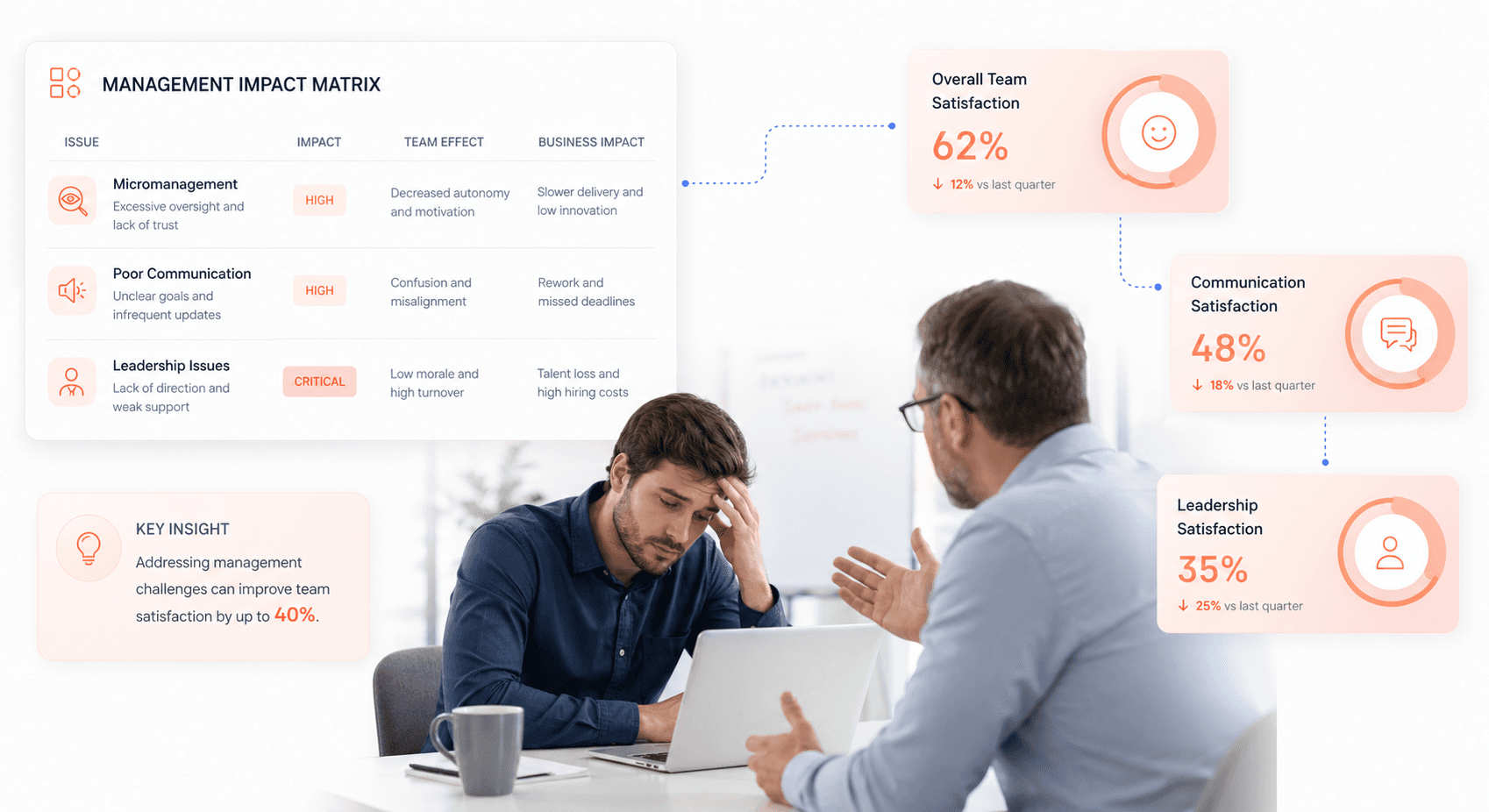
Another critical management issue that drives away top frontend talent is the prevalence of micromanagement practices that stifle your creativity and innovation. When you're working with legacy code, you need the freedom to explore different approaches, experiment with solutions, and apply creative problem-solving techniques.
Micromanagement sends a clear signal that your employer doesn't trust your technical judgment or abilities. This lack of trust becomes particularly damaging when you're dealing with frontend legacy code, where creative solutions are often necessary to work around outdated constraints and technical debt. When every decision must be approved or every approach must follow rigid protocols, your ability to innovate and find elegant solutions becomes severely limited.
You'll notice micromanagement undermining your confidence as a developer. Instead of feeling empowered to take ownership of your work and make technical decisions, you'll find yourself second-guessing every choice and seeking approval for routine development tasks. This environment discourages the kind of proactive thinking and creative problem-solving that makes frontend work engaging and rewarding.
Companies that successfully retain talent understand the importance of giving you ownership of your work. They set clear goals and expectations but allow you the flexibility to determine how to achieve them. This approach recognizes that you, as a skilled frontend developer, have the expertise to navigate technical challenges and find the best solutions within the constraints of legacy systems.
Unrealistic Deadlines Without Resource Planning
The combination of unrealistic deadlines and inadequate resource planning creates an environment where you're constantly fighting against impossible expectations. This management failure becomes especially problematic when dealing with frontend legacy code, where unexpected complications and technical debt can significantly impact project timelines.
Poor Communication Between Technical and Non-Technical Teams
Communication breakdowns between technical and non-technical teams represent another significant management red flag that can make your work environment untenable. When these communication gaps exist, you'll find yourself caught in the middle of misaligned expectations and conflicting priorities that make it difficult to deliver quality work while maintaining your professional satisfaction.
Toxic Workplace Culture Warning Signs
Overemphasis on Hustle Culture Over Work-Life Balance
When you encounter a company that glorifies excessive overtime and blurs the boundaries between work and personal life, you're looking at a major red flag that drives frontend developers away. This toxic workplace culture warning sign manifests in environments where output takes precedence over employee well-being, creating unsustainable working conditions.
You'll recognize this pattern when companies push for constant overachievement at the expense of balance, alienating talented engineers who value their personal time and mental health. The emphasis on hustle culture creates an environment where long hours and constant stress become the norm, ultimately harming both productivity and team morale.
The consequences of this approach extend far beyond immediate burnout. When you're working in such an environment, you'll notice that the relentless pressure leads to decreased code quality, increased technical debt, and ultimately drives away the very talent companies desperately need to maintain their frontend systems.
To address these issues, companies should adopt realistic workloads that respect your time and energy. This includes avoiding after-hours emails, introducing flexible working arrangements that accommodate your needs, and offering time off during high-stress periods. The focus should shift toward efficiency and collaboration over simply logging long hours.
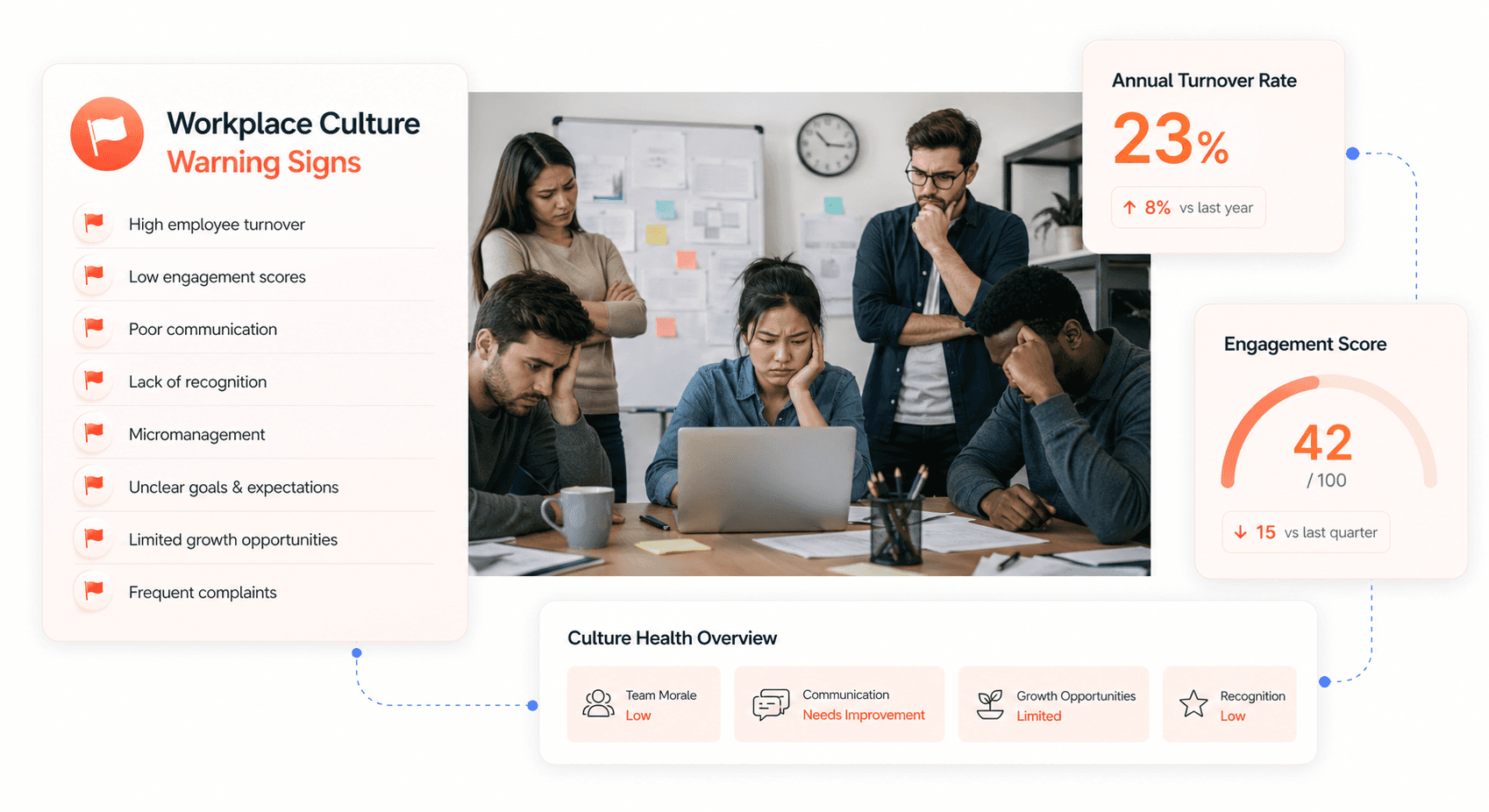
High Employee Turnover in Development Teams
When you observe frequent departures in development teams, you're witnessing a clear indicator of deeper cultural or management issues that create workplace instability. This pattern of high turnover serves as a warning sign that should make you question the company's commitment to its workforce and your potential future there.
The impact of constant departures goes beyond simple inconvenience. When you're part of a team experiencing high turnover, you'll find that projects become disrupted, institutional knowledge disappears, and the remaining team members face increased pressure to compensate for missing colleagues. This creates a cycle where the additional stress drives even more departures.
As a frontend developer evaluating potential opportunities, you should view high turnover as a symptom of underlying problems. Whether it's poor management, unrealistic expectations, inadequate compensation, or toxic culture, frequent departures signal that the organization hasn't addressed the root causes driving talent away.
Companies serious about retaining frontend talent must identify and address these fundamental issues rather than simply cycling through developers. When you're considering joining a team, investigate their retention rates and ask direct questions about why previous developers left.
Blame Culture Instead of Learning from Failures
A blame-focused environment represents one of the most destructive workplace culture patterns you can encounter as a frontend developer. When mistakes are met with finger-pointing rather than constructive analysis, it creates an atmosphere of fear that stifles innovation and growth.
In healthy development environments, you should expect failures to be treated as learning opportunities that strengthen both individual skills and team processes. However, in toxic blame cultures, you'll find that team members become risk-averse, avoiding necessary technical decisions or innovative solutions out of fear of potential consequences.
This cultural pattern particularly impacts frontend development, where rapid iteration, experimentation, and adaptation are essential for success. When you're working in a blame-focused environment, you'll notice that teams become reluctant to adopt new technologies, refactor legacy code, or implement necessary improvements that might temporarily introduce instability.
Lack of Diversity and Inclusion in Engineering
When you encounter engineering teams that lack diversity, you're seeing a workplace culture warning sign that can significantly impact both your experience and overall team morale. A culture that fails to foster diversity and inclusion creates an environment that repels talented engineers and limits the team's potential for innovation and growth.
The absence of diverse perspectives in frontend development teams affects everything from user experience decisions to technical approach selection. When you're part of a homogeneous team, you miss out on the varied viewpoints that lead to more comprehensive solutions and better products.
For your career development and day-to-day experience, working in an environment that doesn't prioritize diversity and inclusion means you may encounter unconscious biases, limited mentorship opportunities, and a culture that doesn't fully support all team members' success.
Companies that take diversity and inclusion seriously create environments where you can thrive regardless of your background. They foster respect among team members and ensure that all voices are heard in technical discussions and decision-making processes. This inclusive approach not only benefits you personally but also leads to stronger, more innovative frontend solutions.
Career Development and Compensation Red Flags
Unclear Career Progression Paths for Engineers
When you encounter a company where career advancement feels like navigating through fog, you're witnessing one of the most significant red flags in frontend development roles. Without clear growth opportunities, you'll find yourself feeling stagnant and disengaged, questioning your future with the organization. This lack of progression becomes a powerful motivator for ambitious engineers like yourself to seek growth opportunities elsewhere.
The absence of defined career paths signals that your employer hasn't invested thought into your professional development. You need companies that understand the importance of mapping out clear advancement opportunities, providing structured mentorship programs, and offering access to relevant certifications or training. When these elements are missing, you're essentially being asked to invest your talent in an organization that doesn't prioritize your growth.
Your career trajectory should never be a mystery. Companies serious about retaining top frontend talent establish transparent progression frameworks that show you exactly what skills, achievements, and milestones are required for advancement. Without this clarity, you're left guessing about your future, which inevitably leads to frustration and eventual departure.
Vague or Unfair Compensation Policies
Previously, I've mentioned the importance of transparency in career paths, but compensation clarity is equally crucial for your decision-making process. Unexplained salary structures or vague bonus systems should immediately raise concerns about your potential employer's commitment to fairness and transparency.
When you encounter ambiguity in pay structures, you're essentially being told that your contributions aren't valued enough to warrant clear communication. This lack of transparency suggests deeper organizational issues that extend beyond compensation into how the company operates as a whole. You deserve to understand exactly how your salary is determined, what factors influence raises, and how bonuses are calculated.
Companies that undervalue frontend developer contributions through unclear compensation policies are essentially pushing top engineers toward organizations that offer both clarity and fairness. Your expertise in dealing with frontend legacy code and modern development practices commands competitive compensation, and you should never settle for employers who can't articulate their pay philosophy.
The most forward-thinking organizations are upfront about salaries, benefits, and career progression opportunities from the start. They regularly benchmark their compensation against industry standards, ensuring you're fairly rewarded for your skills and experience. When you don't see this level of transparency, you're looking at a red flag that suggests the company may not be keeping pace with market rates or fair compensation practices.
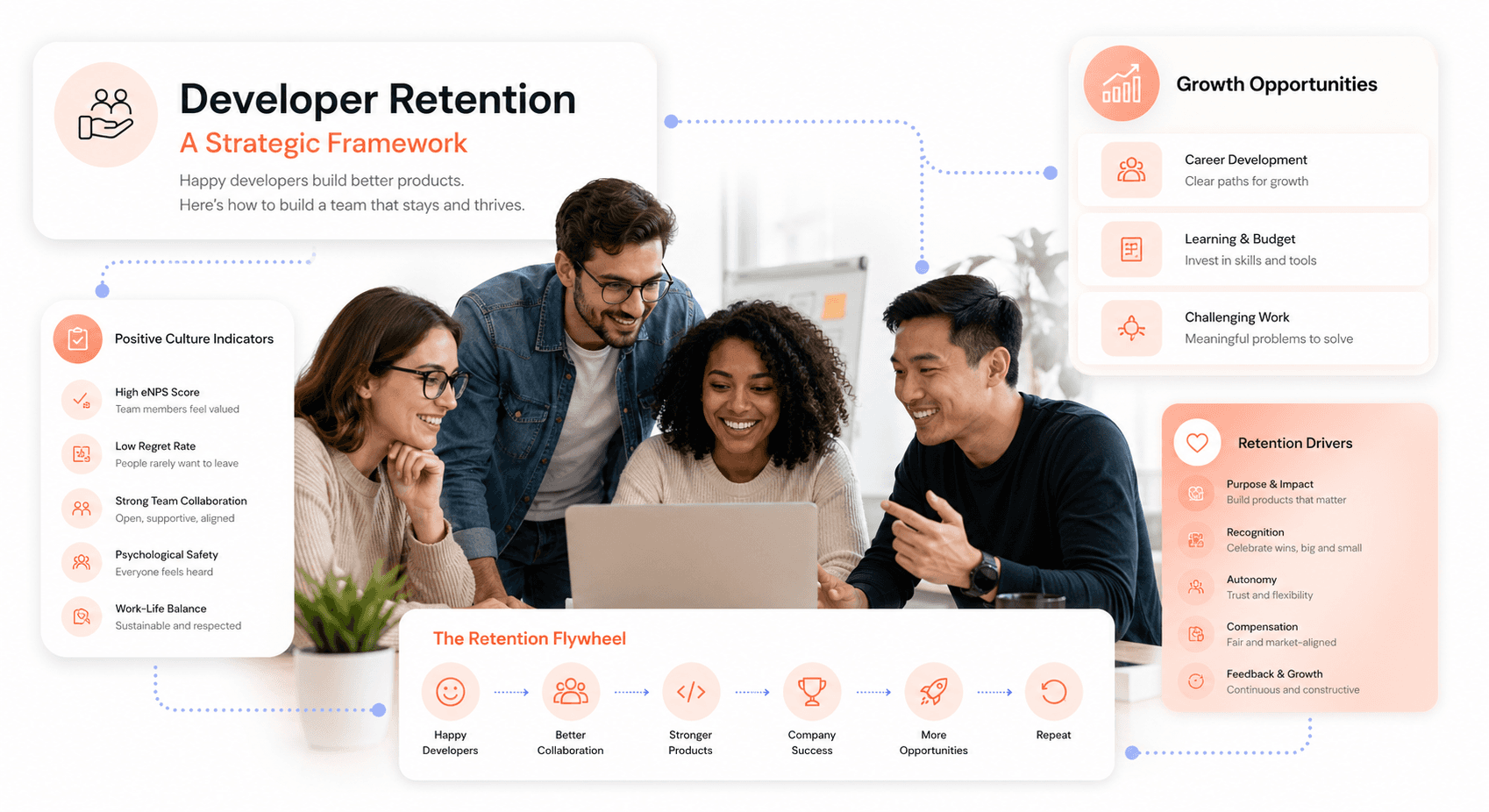
No Investment in Employee Learning and Skills Development
With this in mind, next, you'll want to evaluate how seriously your potential employer takes professional development. Providing training for emerging technologies isn't just a nice-to-have benefit, it's essential for keeping teams engaged and future-ready. When companies fail to invest in employee learning and skills development, they're essentially asking you to stagnate while the industry evolves around you.
Frontend development moves at breakneck speed, with new frameworks, tools, and best practices emerging regularly. You need an employer who recognizes that investing in your continuous learning is investing in their own competitive advantage. Companies that don't provide access to training, conferences, online courses, or dedicated learning time are showing you that they view developers as replaceable resources rather than growing assets.
The absence of learning opportunities becomes particularly problematic when you're dealing with legacy code challenges. You need employers who understand that modernizing frontend systems requires ongoing education about new technologies and approaches. Without this investment, you'll find yourself falling behind industry trends while struggling with outdated systems and practices.
Conclusion
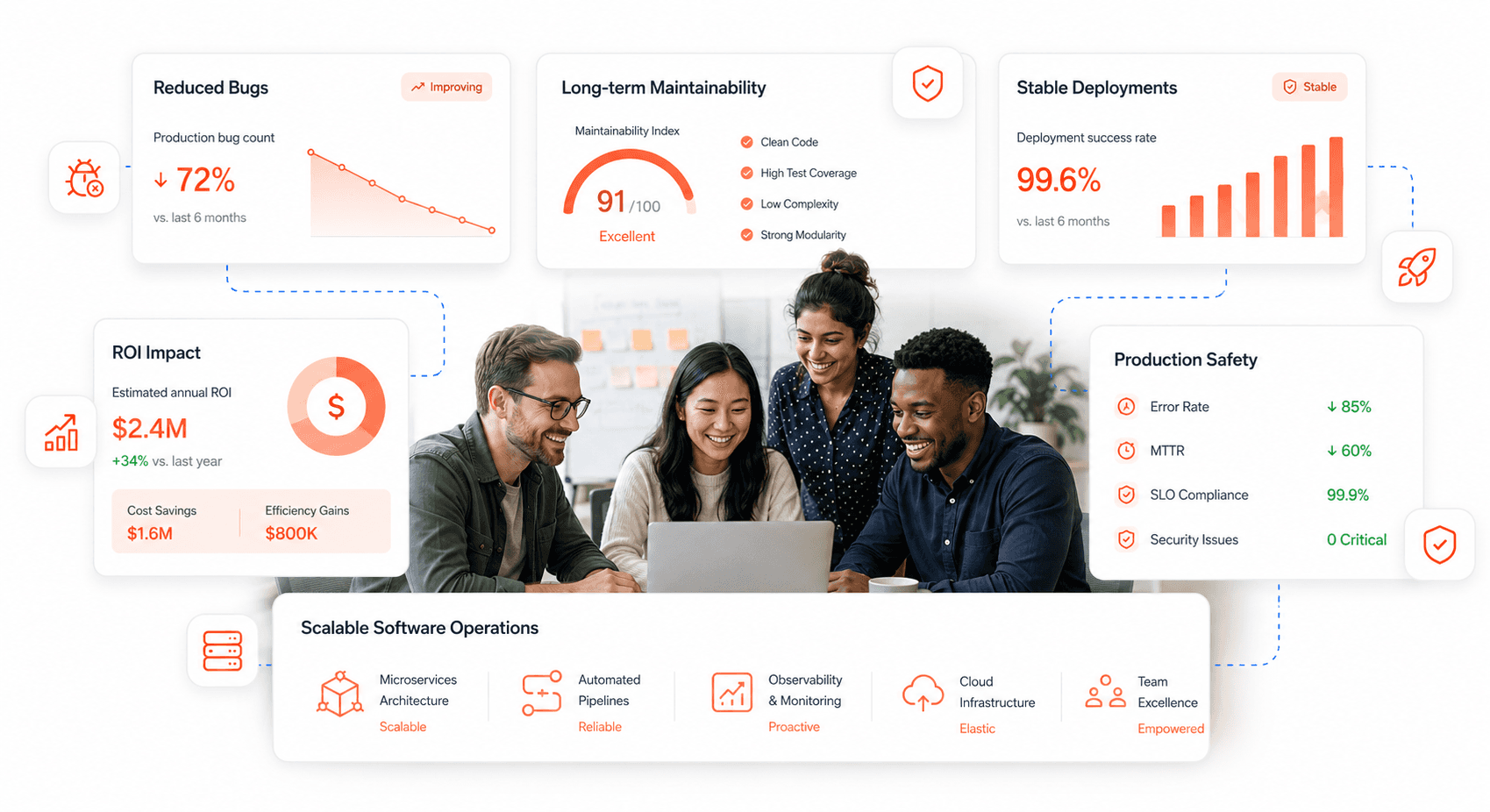
Top frontend developers have countless opportunities in today's market, and they won't settle for environments that hinder their growth or well-being. The red flags outlined above from outdated technology stacks and poor development processes to toxic workplace cultures and unclear career paths serve as immediate warning signs that can drive away the talent you need most. When developers encounter these issues, they quickly recognize them as barriers to their professional success and personal satisfaction.
Creating an environment that attracts and retains top frontend talent requires addressing these fundamental problems head-on. You need to invest in modern development tools, establish clear processes, foster respectful workplace cultures, and provide transparent career advancement opportunities. By eliminating these red flags and building a supportive, growth-oriented environment, you position your organization as an employer of choice that not only attracts exceptional developers but keeps them engaged and productive for years to come.




About the author
I’m the founder of Hashbyt, an AI-first frontend and UI/UX SaaS partner helping 200+ SaaS companies scale faster through intelligent, growth-driven design. My work focuses on building modern frontend systems, design frameworks, and product modernization strategies that boost revenue, improve user adoption, and help SaaS founders turn their UI into a true growth engine.
Is a clunky UI holding back your growth?
Is a clunky UI holding back your growth?
▶︎
Transform slow, frustrating dashboards into intuitive interfaces that ensure effortless user adoption.
▶︎
Transform slow, frustrating dashboards into intuitive interfaces that ensure effortless user adoption.
