

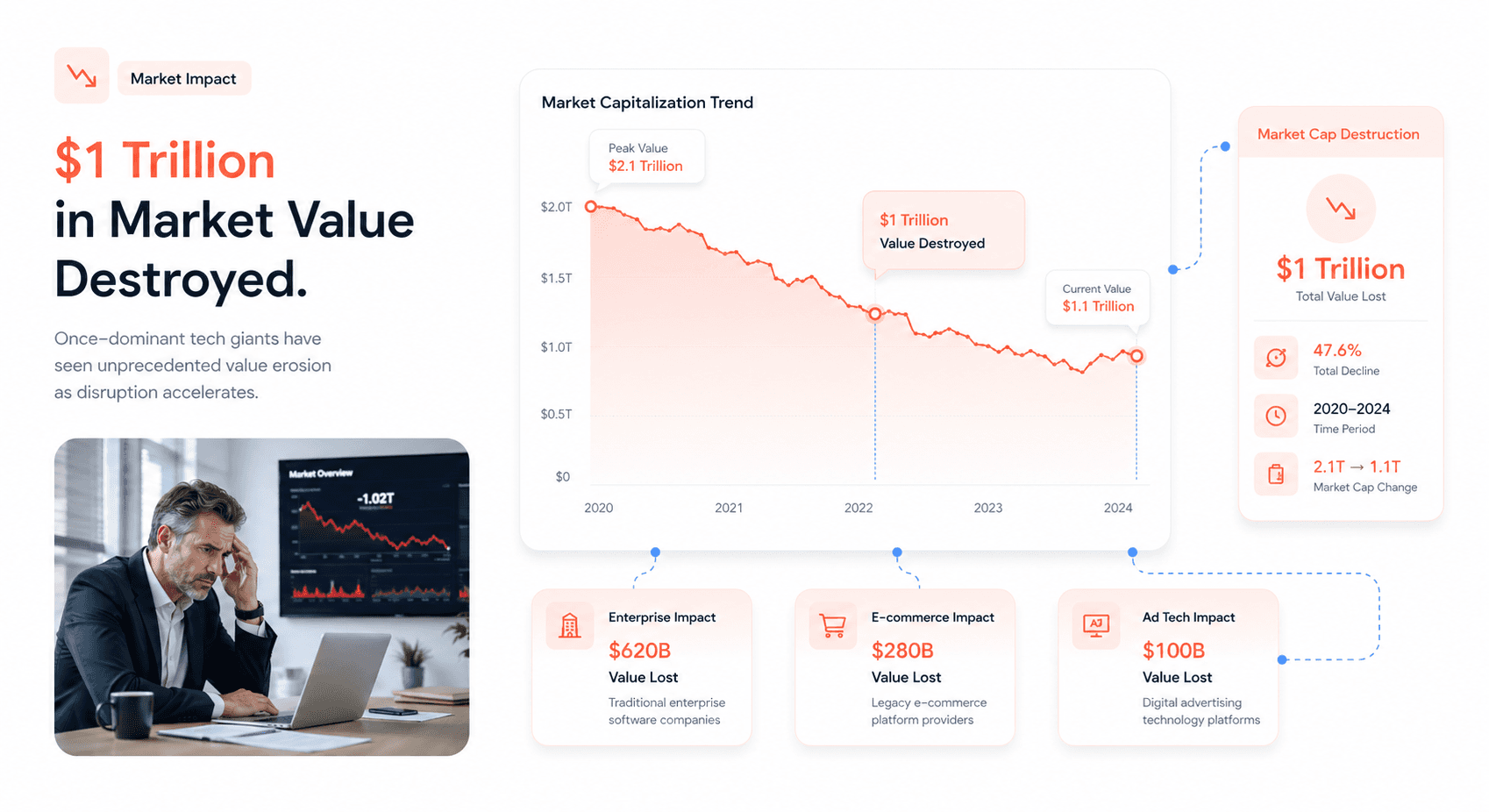
Quick answer: AI is disrupting enterprise software by changing what customers pay for. AI agents such as Anthropic's Claude Cowork can carry out multi-step work across files and apps, so buyers question paying per seat for tools whose main job is routine workflows. Disruptive SaaS now means products that price on usage or outcomes, own valuable data and make their workflows easy for agents to use.
In early 2026 investors sold off many software stocks on fears that agentic AI tools could replace them. By 9 February the iShares Expanded Tech-Software Sector ETF (IGV) was down 22% for the year, according to CNBC. The disruption is real but uneven: platforms that hold customer data are better placed than simple point tools, and many vendors are adding agents to their own products.
This guide is for SaaS founders, product leaders and enterprise technology buyers. It covers what triggered the sell-off, why AI agents put pressure on seat-based pricing, which kinds of SaaS are most exposed, what it means for product and UX teams, and how buyers are responding. For the wider modernisation picture, see our enterprise report on AI-powered legacy modernisation.
Understanding the 2026 SaaS Sell-Off
How far software stocks fell
Software shares fell sharply in the first weeks of 2026 as investors worried that AI agents could do work that companies currently buy SaaS seats for. By 9 February the IGV software ETF had fallen 22% since the start of the year and Monday.com shares had lost about half their value, CNBC reported.
A falling share price is not the same as falling revenue. Many of the companies affected were still growing: Monday.com reported fourth-quarter revenue up 25% year on year in the same results that sent its shares lower. What changed was investors' confidence in how long seat-based growth can last, and that now shapes how buyers judge enterprise software investments and procurement decisions.
What triggered it: Claude Cowork and its plugins
Anthropic released Claude Cowork as a research preview in January 2026. WIRED described it as a more approachable version of Claude Code for non-technical users, able to organise files, generate reports and use the browser for tasks. On 30 January Anthropic open-sourced 11 Cowork plugins covering areas such as productivity, sales, finance, data, legal, marketing and customer support.
CNBC later reported that the Cowork launch rattled software stocks as investors weighed AI's disruptive potential. The plugins mattered because they showed one general-purpose agent being pointed at jobs that companies often buy separate tools for.
Why investors reacted so strongly
Results season added to the pressure. On 9 February Monday.com's shares fell about 21% in a day after it issued revenue guidance below analysts' expectations, and CNBC linked the move to wider fears that AI is disrupting the software business model. Co-CEO Eran Zinman said the company did not "see any impact currently from any AI company" and was making its product more AI native.
The takeaway is a balanced one. Agent launches can move sentiment quickly, but the effect on contracts and usage takes longer to show. The products most at risk are those whose main value is a screen-by-screen workflow that an agent can now operate directly, which is why how SaaS products are designed and built is changing too.
Why AI Agents Threaten Traditional SaaS Business Models
Why per-seat pricing is under pressure
Per-seat pricing ties revenue to the number of people who use a product, and AI agents weaken that link. Tools such as Claude Cowork can carry out multi-step tasks across files and apps on a user's behalf, so some work that once needed a licensed person in each tool can be done by fewer people supervising an agent.
Your traditional enterprise software investments have been built on the assumption that seat-based pricing would grow forever. This assumption is now crumbling as AI agents demonstrate they can perform the same workflows without requiring seats. When AI agents can deliver value without being tied to individual user licenses, it fundamentally decouples the value delivered from the seats billed, leading to a potential reduction in your monetizable units.
That does not mean seat pricing disappears overnight. Change is likely to be gradual: vendors can add usage- or credit-based charges for AI features alongside seats, and buyers are right to ask how a contract should change when agents, not people, do part of the work.
How AI agents perform workflows without requiring user licenses
Traditionally, every team member who needed a workflow needed a licence for the tool that ran it. Agents change this by working across tools on a person's behalf.
Anthropic's 11 open-source Cowork plugins, released on 30 January 2026, tell Claude how a team likes work done, which tools and data to use and how to handle key workflows in functions such as sales, finance, data, marketing and legal. They do not replace a CRM or a finance system, but they show how one agent layer can take on routine tasks that teams often spread across several subscriptions.
In practice, agents can already:
Carry out multi-step tasks across different tools and files
Prepare data and draft reports for a person to check
Handle routine tasks that previously needed a dedicated user account
Work with existing systems through connectors, which can reduce the number of seats a team needs
Most of this still needs human review, and agents remain open to prompt injection attacks, as WIRED noted. Even so, each task an agent handles weakens the case for buying another seat purely to click through the same workflow.
The shift from seat-based to usage and outcome-based pricing models
Pricing is moving towards models that track the work done rather than the number of people with access. No single model has won yet, but three are common:
Usage-based pricing: Costs tied to actual consumption of services or processing volume
Agent-based pricing: Fees related to the number of AI agents performing work on your behalf
Outcome-based pricing: Payment structures aligned with measurable business results
Your enterprise technology decisions must now factor in these emerging pricing models as you evaluate which SaaS survival strategies make sense for your organization. Traditional SaaS limitations around rigid seat-based pricing are giving way to more flexible models that can better accommodate AI-enhanced workflows.
The implications for your enterprise client requirements are profound. You're no longer bound by the artificial constraint of matching software licenses to headcount, which opens up new possibilities for operational efficiency while potentially reducing your overall software expenditure.
Identifying Which SaaS Companies Will Survive vs Fail
Platform incumbents with system-of-record status maintain competitive advantages
Not every SaaS company faces the same risk. Exposure depends mostly on whether a product owns valuable data and deeply embedded workflows, or mainly offers an interface that an agent could operate or replace.
If your company operates as a platform incumbent like Salesforce, Oracle, or Microsoft, you maintain significant competitive advantages that AI agents actually enhance rather than replace. Your system-of-record status creates multiple defensive moats that protect you from the SaaS market collapse affecting other segments. These advantages include:
Proprietary data ownership: You control vast repositories of enterprise data that AI agents need to access rather than replace
Mission-critical workflow integration: Your systems run essential business processes that enterprises cannot afford to disrupt
High switching costs: The complexity and risk of migrating away from your platform creates natural barriers to adoption of alternative AI solutions
AI augmentation potential: Your existing infrastructure becomes more valuable when enhanced with AI capabilities rather than displaced by them
Your enterprise clients view platform incumbents as partners in their AI transformation journey rather than vendors to replace. This positioning allows you to evolve your offerings to incorporate AI agents while maintaining your core value proposition as the foundational system of record.
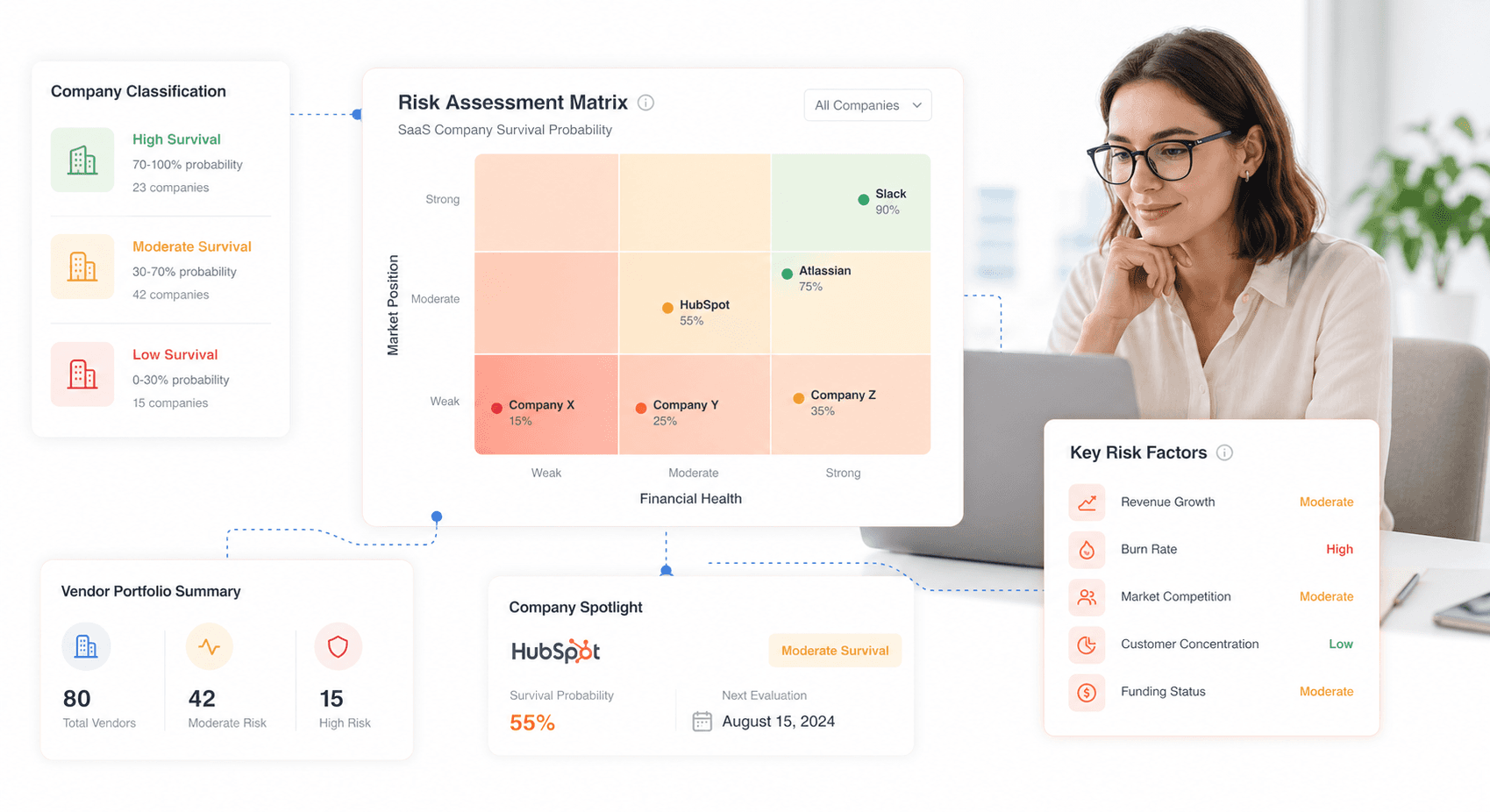
Horizontal point-solution tools face the highest risk of replacement
If you operate a horizontal point-solution SaaS business, you face the highest risk of replacement in the current enterprise technology landscape. Your vulnerability stems from fundamental structural disadvantages that AI agents exploit effectively. Unlike platform incumbents, you don't own the data layer that enterprises consider critical to their operations.
Your tools, whether focused on project management, basic CRM functionality, or other horizontal workflows, suffer from several critical weaknesses:
Low switching costs: Enterprise clients can migrate away from your solution with minimal disruption
Easily replicated functionality: General-purpose AI models can perform your core tasks without specialized training
Limited data differentiation: You lack access to unique, proprietary datasets that would make your solution irreplaceable
Commodity positioning: Your value proposition often overlaps with capabilities that AI agents provide as part of broader platforms
Investors applied this logic to work management vendors in early 2026. Buyers should still look for evidence before assuming a tool is replaceable: check whether an agent can complete the workflow end to end with your data, permissions and audit needs.
Your survival depends on rapidly differentiating your offering or finding ways to integrate into larger ecosystems before enterprise clients abandon your solution entirely.
Vertical and domain-specific SaaS vendors have better survival prospects
If your SaaS company focuses on vertical markets or domain-specific solutions, your survival prospects improve significantly compared to horizontal point-solution providers. Your specialization in complex industries creates natural barriers that general-purpose AI agents struggle to overcome effectively.
Your competitive advantage stems from several factors that enterprise clients in specialized sectors highly value:
Industry-specific expertise: You understand unique regulatory requirements, compliance standards, and operational complexities that generic AI solutions cannot easily replicate
Proprietary data access: Vendors such as Epic in healthcare records and IQVIA in life sciences hold specialised datasets that become more valuable when enhanced with AI rather than replaced
Complex workflow integration: Your deep understanding of industry-specific processes creates switching costs that protect your market position
Regulatory compliance: Your solutions meet stringent industry requirements that AI agents would need significant development to address
Specialised tools are harder to replace because buyers in regulated industries need software that understands their rules, data and workflows. In these markets AI is more likely to be added to existing products than to replace them outright.
Your success depends on leveraging your domain expertise to enhance rather than compete with AI capabilities. By positioning your solution as the intelligent layer that makes AI agents more effective within your specific industry context, you transform potential threats into competitive advantages that strengthen your relationship with enterprise clients.
What This Means for SaaS Product and UX Teams
Short answer: if customers pay per seat for a product whose main value is a screen people click through, agents put that value at risk. Product and UX teams should make core workflows usable by agents as well as people, and design around the outcomes customers buy rather than time spent in the interface.
Make workflows agent-friendly
Expose the workflow, not just the screen. Make every important action in the UI available through a documented API or connector, with the same permissions and validation, so agents can use the product properly instead of scraping it.
Keep structure and labels consistent. Clear names, predictable states and accessible markup help people using assistive technology and agents reading the interface. WCAG 2.1 AA is a sensible baseline.
Design for review and handover. Show what an agent did and why, what needs approval, and make it easy to undo. People stay accountable for the result.
Log agent actions. Enterprise buyers will ask who or what changed a record, so audit trails need to cover agents as well as users.
Design around outcomes, not seats
When pricing moves towards usage or outcomes, the product has to make the outcome visible. That means reports built around results customers care about, such as tickets resolved or invoices processed, rather than logins and clicks. It also means simpler interfaces for the decisions people still make, because routine steps move to agents. Our guide to AI UI generation for SaaS product design covers where AI speeds up design work and where human designers still matter.
Modernise in steps
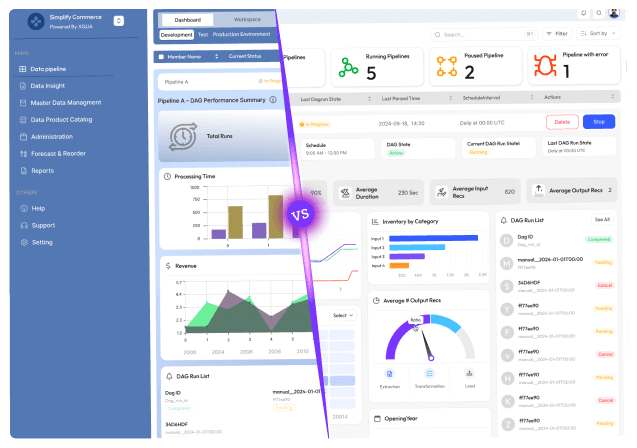
Many seat-based products sit on legacy frontends that are hard to open up to agents. Replacing them screen by screen keeps the product live while you add APIs and clearer workflows, which is how our legacy app modernisation work uses micro-frontends and the strangler fig pattern. For Silver Oak Wealth Advisors, Hashbyt's SaaS UI/UX modernisation work delivered a reusable React component library and design system, met WCAG 2.1 AA across all interfaces and cut UI-related support tickets by 65% (read the case study).
The Financial Reality Behind Enterprise AI Adoption
Enterprise AI Spending Growth From $1.7B to $37B in Just Two Years
Your enterprise software landscape is experiencing an unprecedented financial shift that directly impacts how you evaluate and invest in SaaS solutions. Enterprise spending on generative AI grew from $1.7 billion in 2023 to $37 billion in 2025, a 3.2x increase on 2024, according to Menlo Ventures' 2025 State of Generative AI in the Enterprise report. Menlo estimates this is now about 6% of the global SaaS market.
This meteoric rise in AI spending fundamentally alters your technology investment decisions. When you're allocating millions of dollars to AI initiatives, you're naturally scrutinizing existing SaaS subscriptions with greater intensity. The traditional SaaS adoption patterns you've relied on for years are being disrupted by this massive capital reallocation toward AI technologies.
Your organization is likely participating in this trend, whether through direct AI tool purchases, custom AI development projects, or hybrid solutions that combine traditional software with AI capabilities. This shift represents more than just a new budget line item, it signals a fundamental change in how you approach enterprise software procurement and vendor relationships.
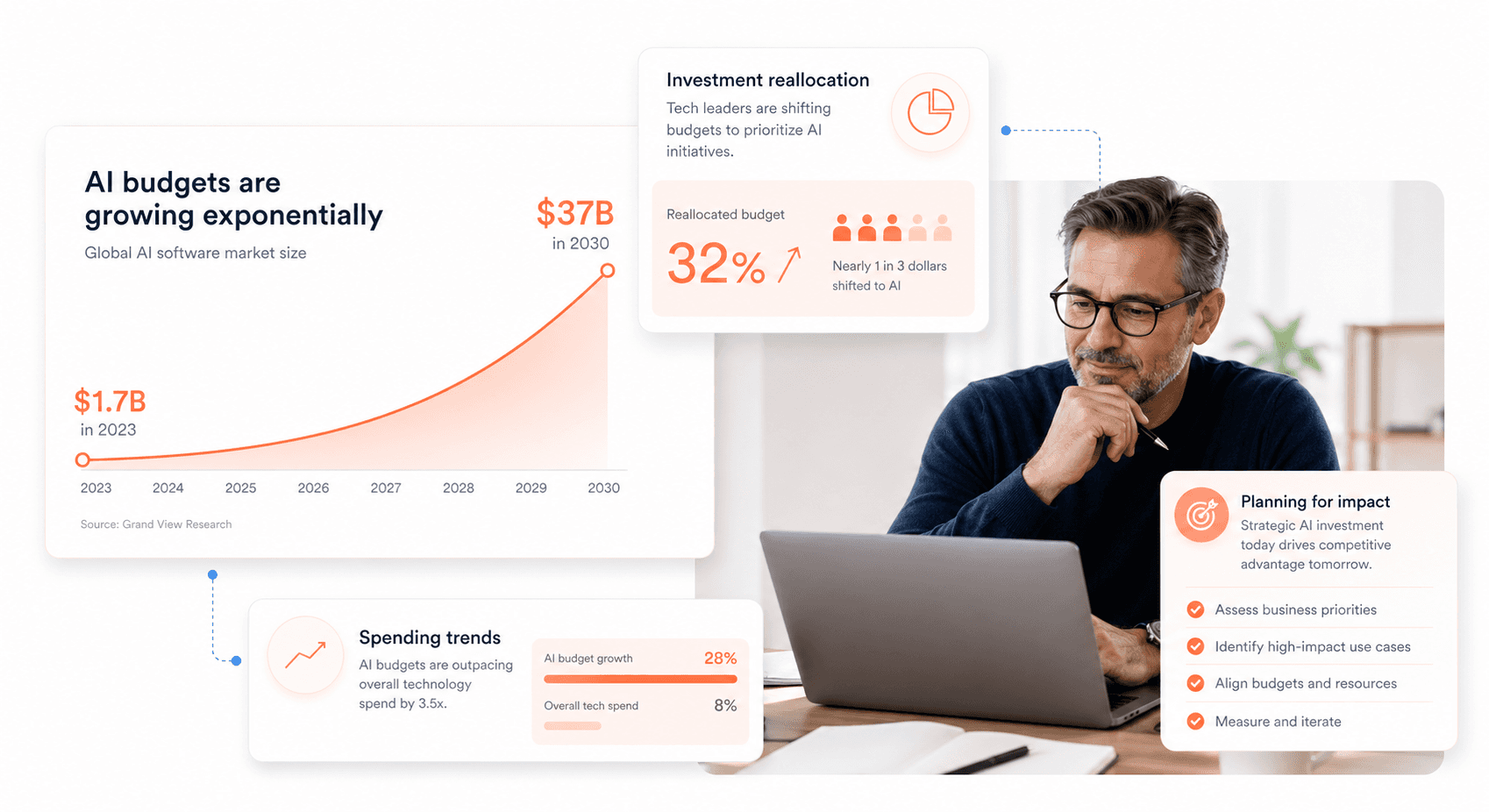
How AI Budgets Are Absorbing Traditional SaaS Expansion Dollars
That money has to come from somewhere. In many organisations new AI budgets now compete with the growth that would previously have gone on adding SaaS licences, upgrading tiers or buying new tools.
When you examine your own technology spending patterns, you'll likely notice this cannibalization effect. The dollars you might have spent on expanding SaaS licenses, upgrading to premium tiers, or adopting new SaaS tools are increasingly being redirected toward AI initiatives. This creates a zero-sum environment where traditional SaaS vendors must compete not just with each other, but with an entirely new category of technology solutions.
Your procurement decisions now involve weighing the long-term value of incremental SaaS capabilities against transformative AI investments. This shift forces you to question whether traditional SaaS expansion delivers sufficient ROI compared to AI solutions that promise automation, efficiency gains, and competitive advantages.
The impact on your vendor relationships is profound. SaaS providers that previously enjoyed predictable expansion revenue from your organization now face budget constraints and increased scrutiny. You're demanding more value from existing SaaS investments while simultaneously evaluating whether AI alternatives could deliver superior outcomes at comparable or lower costs.
The "Uncertainty Tax" Investors Apply to Threatened SaaS Vendors
With this budget reallocation reshaping enterprise software markets, you should understand how investor sentiment affects the SaaS vendors you depend on. The "uncertainty tax" represents a valuation discount that investors apply to SaaS businesses whose revenue models are perceived as structurally threatened by AI. This tax reflects unpredictability in annual recurring revenue (ARR), profit margins, and net revenue retention metrics that directly impact the stability and innovation capacity of your SaaS providers.
Your vendor selection process should account for this. Share prices can move on changed expectations about future seat demand before anything shows up in revenue. Monday.com is an example: revenue grew 25% year on year in the quarter it reported in February 2026, yet its shares fell about 21% on weaker guidance amid AI disruption fears.
The uncertainty tax affects different SaaS categories unequally, which influences your strategic vendor choices. Horizontal SaaS tools, those offering general productivity or workflow capabilities, face the heaviest uncertainty tax because AI agents can potentially replicate their functionality. Conversely, system-of-record platforms with deep enterprise integration face less severe impacts due to their embedded nature in your operational infrastructure.
Your vendor risk assessment must consider the operational consequences of uncertainty tax pressure. SaaS vendors facing significant uncertainty tax encounter constrained research and development budgets, which limits their ability to innovate and respond to your evolving needs. These vendors may resort to aggressive pricing tactics to retain customers, potentially indicating underlying business model stress. Additionally, uncertainty tax pressure elevates acquisition risk, as struggling vendors become targets for competitors or private equity firms seeking distressed assets.
When evaluating SaaS providers, you should assess their exposure to AI replacement risk and their strategic response to uncertainty tax pressures. Vendors investing in AI integration, demonstrating clear differentiation from AI alternatives, or operating in defensible market segments represent safer long-term partnerships for your enterprise technology strategy.
Strategic Actions for Enterprise Technology Leaders
Rearchitecting Existing SaaS Investments Before Buying New Solutions
Your first strategic move should not be buying new AI solutions. Instead, you should start by rearchitecting your current SaaS investments rather than immediately buying more AI capabilities. This approach allows you to maximize the value of your existing enterprise software while building a foundation for future AI integration.
Your current SaaS portfolio likely contains significant untapped potential that can be optimized before adding new layers of complexity. When you do consider new SaaS solutions, ensure you purchase them only with a clear understanding of their integration capabilities and their specific role in your overall enterprise AI strategy. This disciplined approach prevents the accumulation of disconnected tools that will become liabilities as AI agents become more prevalent.
A critical component of this rearchitecting process involves reducing your SaaS vendor sprawl by consolidating to strategic partners who can support your long-term AI transformation goals. This consolidation effort should simultaneously focus on remediating existing tech debt and eliminating redundancy across your software stack. By streamlining your vendor relationships now, you'll be better positioned to navigate the pricing model changes that are already beginning to reshape enterprise software contracts.
Developing AI Agent Roadmaps to Replace Redundant Software Tools
With your existing investments optimized, you need to prioritize developing a comprehensive AI agent roadmap that will fundamentally reshape your enterprise technology landscape. This roadmap should be developed in collaboration with your ecosystem partners to identify specific investment scenarios and clearly specify workflows that can be effectively offloaded to AI agents.
Your AI agent strategy should focus on identifying which of your current software tools perform tasks that AI agents can execute more efficiently. Rather than viewing AI as an add-on to existing systems, you should evaluate each workflow to determine whether traditional SaaS solutions or AI agents represent the optimal approach. This evaluation process requires working closely with your technology partners to understand the realistic capabilities and limitations of current AI agent technology.
As you develop these roadmaps, you'll need to establish new organizational roles specifically designed to create and supervise AI agents. These roles are essential for ensuring that your AI implementations deliver the expected productivity, velocity, and quality outcomes. Without proper oversight and management structures, even the most sophisticated AI agents can become productivity drains rather than enhancers.
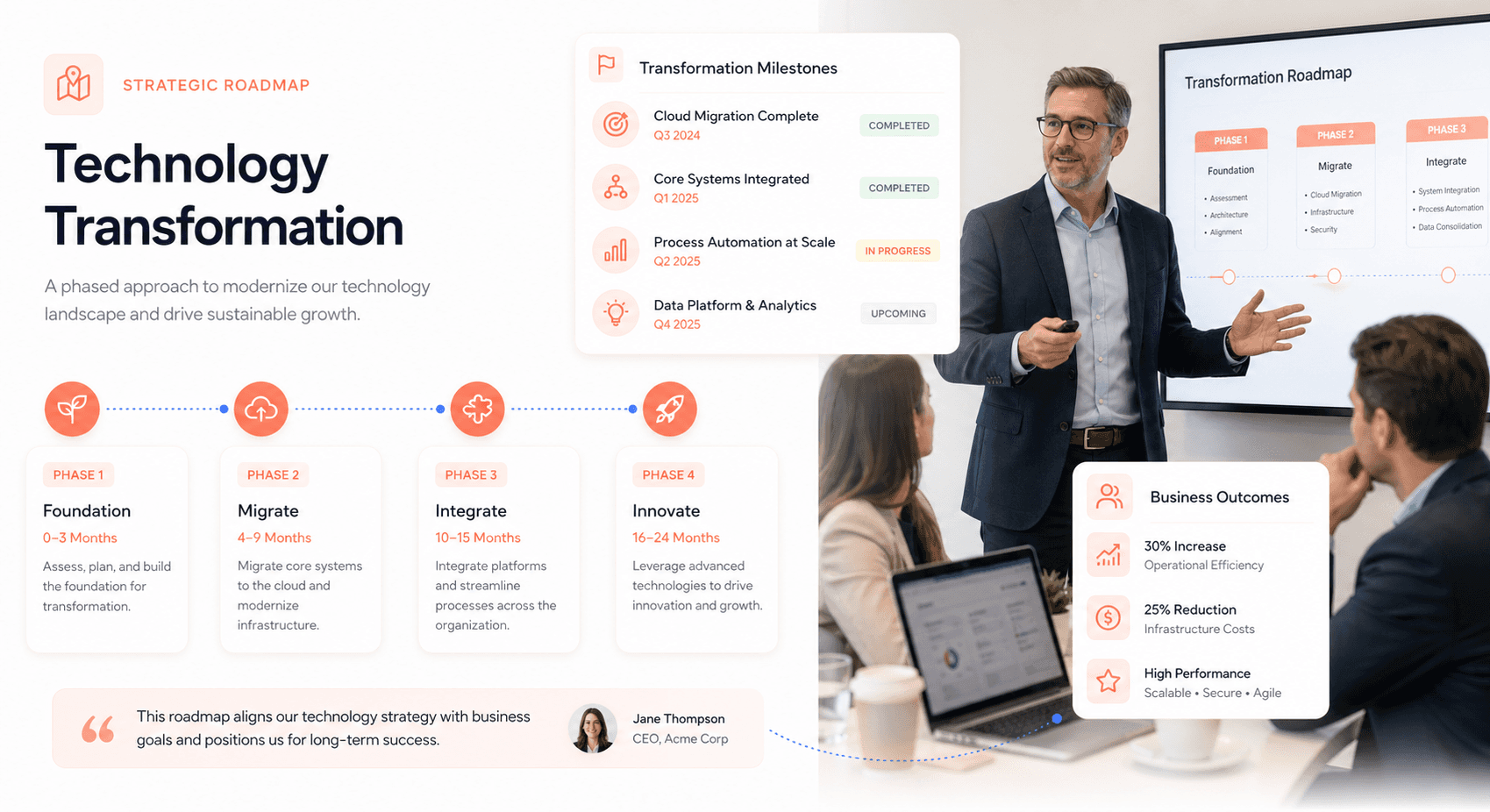
Renegotiating Vendor Contracts to Prepare for Pricing Model Changes
The enterprise SaaS market is experiencing fundamental shifts in pricing models, and you must proactively renegotiate your contracts with enterprise SaaS vendors to prepare for these changes. Traditional seat-based pricing models are rapidly giving way to consumption-based or outcome-based pricing structures, largely driven by the deployment of AI agents that don't require individual user seats but can perform the work of multiple users.
Your contract renegotiation strategy should anticipate how AI agent deployment will impact your usage patterns and cost structures. Many vendors are already beginning to offer flexible credits or alternative models that allow you to shift your current contracts to include AI agent capabilities. By engaging in these conversations early, you can secure more favorable terms and avoid being locked into pricing models that become obsolete as AI adoption accelerates.
During these renegotiations, you should also establish clear frameworks for how pricing will adjust as you transition workflows from human users to AI agents. This preparation is essential because the traditional metrics that vendors have used to calculate costs, such as active users, monthly active users or seat licences, become much less useful when AI agents can perform equivalent work without requiring individual licenses.
Your negotiation strategy should also include provisions for testing and piloting AI agent integrations without triggering immediate pricing changes. This flexibility allows you to experiment with different AI implementations and measure their effectiveness before committing to new pricing structures that reflect your transformed operational model.
Leveraging the Crisis for Competitive Advantage
Using Build-vs-Buy Calculations Favoring Internal AI-Assisted Development
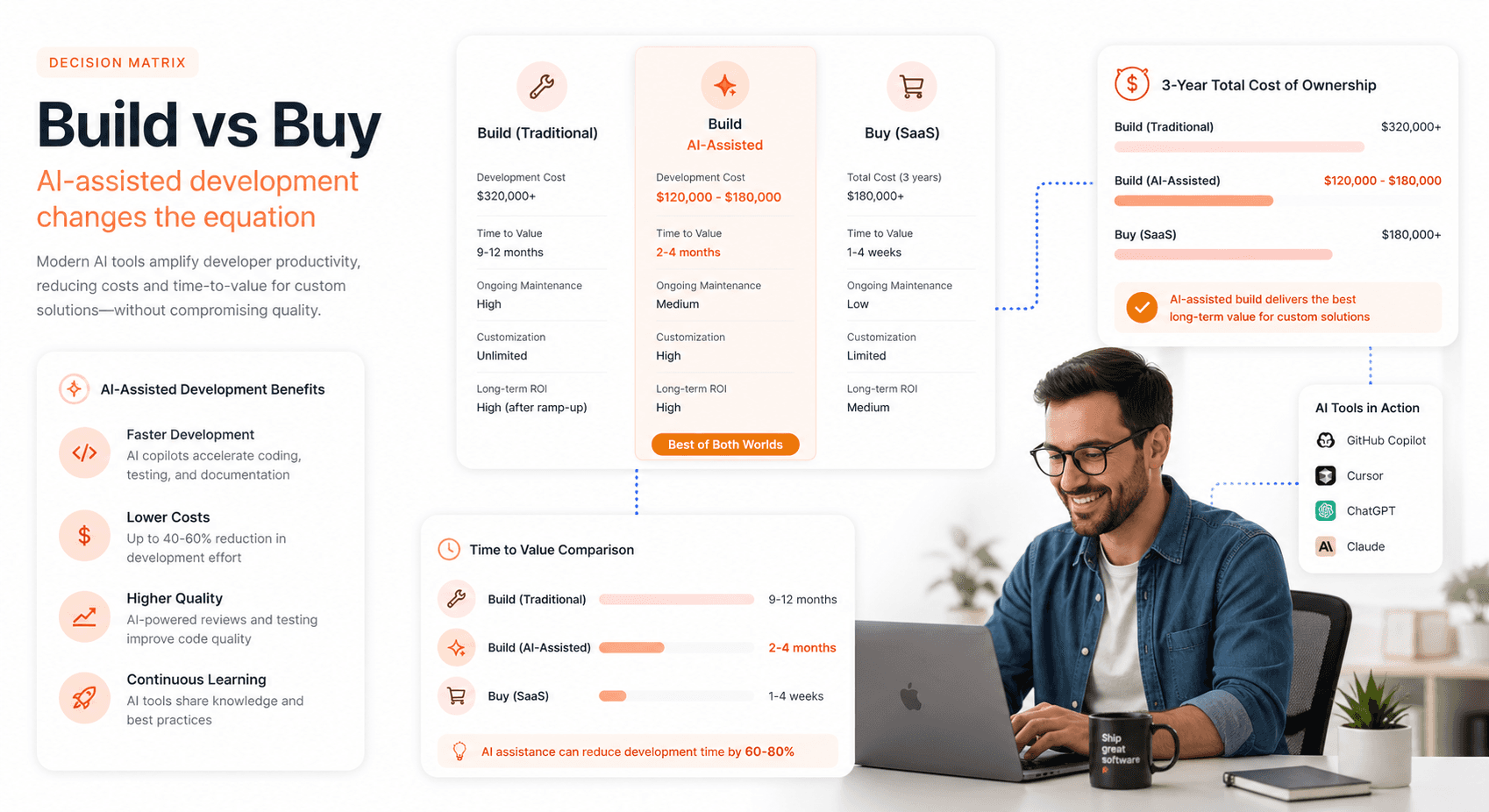
The traditional build-vs-buy calculus that has dominated enterprise technology decisions for decades has fundamentally shifted in your favor. Where custom development once required massive teams and budgets, AI-assisted internal development now makes building point-solution tools a viable and cost-effective alternative to expensive SaaS subscriptions.
AI coding assistants can shorten the time it takes to build simple internal tools, and for narrow, well-understood workflows a small team can now build and maintain a tool that once justified a SaaS subscription. Compare the full cost, though: development time, security review, hosting, support and years of maintenance, not just the AI subscription.
This shift in economics provides you with significant negotiating leverage when dealing with existing SaaS vendors. When you can credibly demonstrate that your team can build equivalent functionality for a fraction of the cost, your vendor relationships transform from dependency-based to partnership-based. You're no longer locked into accepting whatever pricing models or feature limitations your SaaS providers impose.
Consider how this impacts your technology strategy moving forward. Instead of defaulting to purchasing every new software capability, your teams can evaluate whether rapid internal development might serve your specific needs better. This approach allows you to maintain greater control over your technology stack while reducing long-term operational costs and vendor dependencies.
Reducing SaaS Sprawl by Consolidating to Strategic Vendor Partnerships
You can also use this disruption to address one of the most pressing challenges in enterprise technology: SaaS sprawl. The current market disruption creates an opportunity for you to consolidate your vendor relationships and focus on truly strategic partnerships.
Your organization likely subscribes to dozens of SaaS solutions that overlap in functionality or serve marginal use cases. The crisis in the SaaS market gives you the perfect justification to conduct a comprehensive audit of your software portfolio and eliminate redundancies. Instead of maintaining relationships with numerous vendors, you can concentrate your spending and attention on a smaller number of strategic partnerships.
This consolidation approach offers several advantages beyond cost reduction. You'll reduce complexity in your IT environment, simplify vendor management processes, and create stronger relationships with your remaining partners. These strategic vendors will be more invested in your success and more responsive to your specific requirements when they represent a larger portion of your technology budget.
When evaluating which vendors deserve strategic partnership status, prioritize those that demonstrate adaptability to the changing market conditions and show genuine innovation in integrating AI capabilities into their platforms. These partnerships should feel collaborative rather than transactional, with vendors willing to customize their offerings to meet your unique business requirements.
Involving Ecosystem Partners in Co-Innovation for Shared Transformation Gains
With this consolidated vendor strategy in mind, you should involve your ecosystem partners early and often in your technology transformation initiatives. The current crisis creates opportunities for co-innovation models that benefit all parties involved, allowing you to achieve shared transformation gains while distributing risks and costs.
Your strategic partners possess valuable insights and best practices from working with similar organizations navigating the same challenges. By engaging them as collaborative partners rather than simple service providers, you can tap into their expertise and accelerate your own transformation efforts. This approach allows you to benefit from lessons learned across their entire client base while contributing your own insights to improve their offerings.
Co-innovation partnerships can take various forms depending on your specific needs and circumstances. You might collaborate on developing new features that serve both your requirements and those of other enterprise clients. Alternatively, you could work together to create industry-specific solutions that address common challenges in your sector.
These partnerships also provide you with greater influence over product roadmaps and development priorities. When you're actively collaborating rather than simply consuming services, your feedback carries more weight in shaping future capabilities. This collaborative approach ensures that the solutions you're investing in will continue to meet your evolving needs as both technology and business requirements change.
The key to successful co-innovation lies in establishing clear expectations and shared objectives from the beginning. Both parties should understand what they're contributing and what they expect to gain from the collaboration. This transparency helps prevent misunderstandings and ensures that the partnership delivers value for everyone involved.
Conclusion
AI agents are not ending enterprise software, but they are changing what customers pay for. The early 2026 sell-off showed how quickly investors can mark down seat-based SaaS when agents look able to do the same work, even while revenue keeps growing. Horizontal point tools are most exposed; platforms with valuable data and vertical products with deep domain workflows are better placed.
For buyers, the priority is rearchitecting your current SaaS investments before adding more tools, consolidating vendors and preparing contracts for usage- or outcome-based pricing. For SaaS vendors, it is building products that agents can use and that customers value for outcomes, not seats.
Want to make your SaaS product ready for AI agents? Talk to Hashbyt's product and UX team.




About the author
I’m the founder of Hashbyt, an AI-first frontend and UI/UX SaaS partner helping 200+ SaaS companies scale faster through intelligent, growth-driven design. My work focuses on building modern frontend systems, design frameworks, and product modernization strategies that boost revenue, improve user adoption, and help SaaS founders turn their UI into a true growth engine.
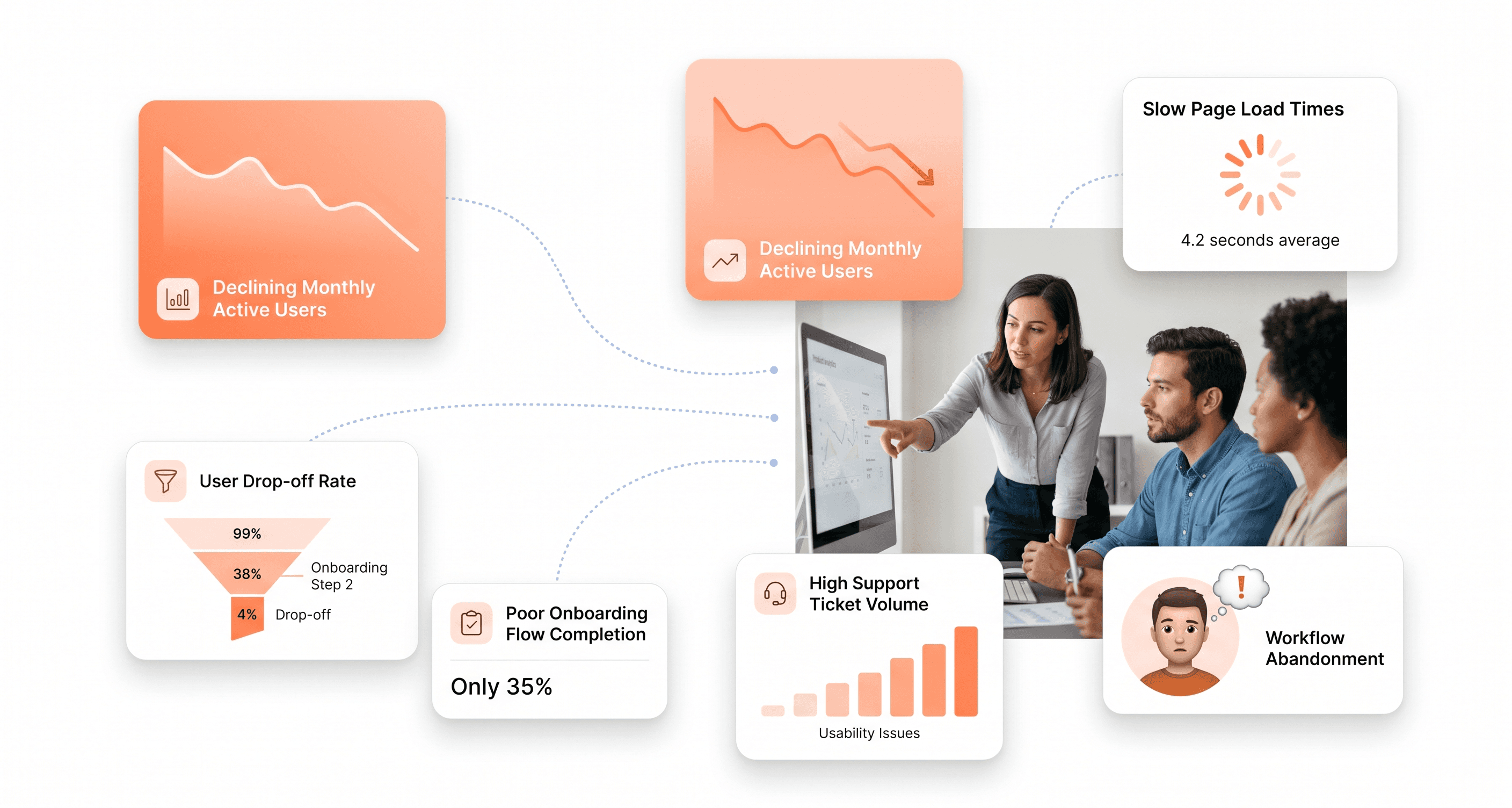
Is a clunky UI holding back your growth?
Is a clunky UI holding back your growth?
▶︎
Transform slow, frustrating dashboards into intuitive interfaces that ensure effortless user adoption.
▶︎
Transform slow, frustrating dashboards into intuitive interfaces that ensure effortless user adoption.
