

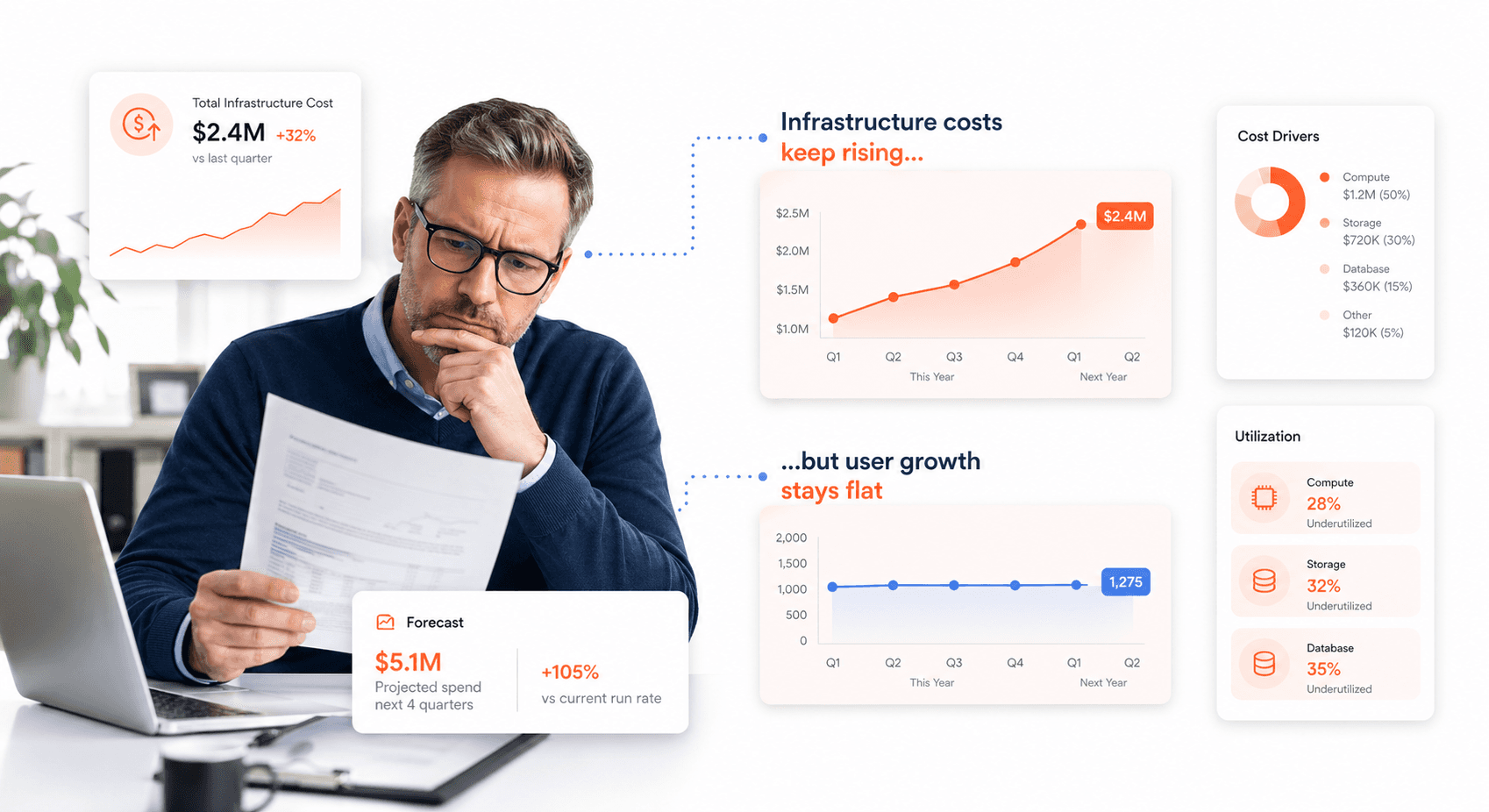
Your infrastructure costs are spiraling upward even though your user base hasn't grown. This frustrating reality hits IT leaders across industries who watch budgets stretch while questioning where the money actually goes.
This guide is for IT directors, infrastructure managers, and technology executives who need to understand why infrastructure cost increases are outpacing business growth and what to do about it.
We'll explore the hidden infrastructure inefficiencies quietly draining your budget and examine how market forces are driving unprecedented cost increases across all IT domains. You'll also discover proven strategies to regain cost control through better monitoring and governance frameworks that prevent waste before it starts.
Rising infrastructure expenses without corresponding user growth signals deeper problems in how organizations manage technology resources. The good news? These problems have solutions once you know where to look.
Hidden Infrastructure Inefficiencies Draining Your Budget
Server Sprawl and Chronically Underutilized Hardware Resources
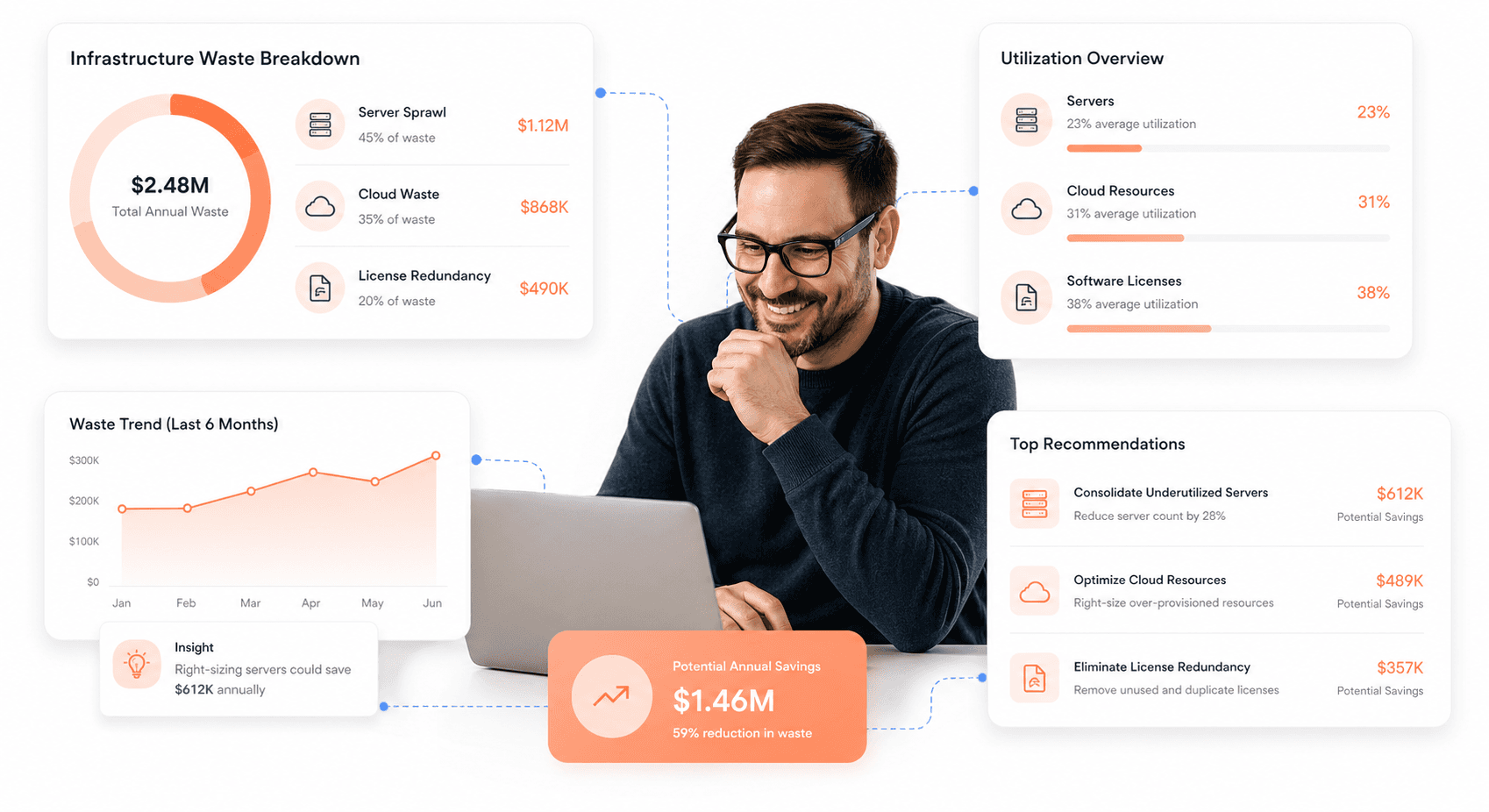
Your server infrastructure is likely harboring a silent budget killer that's bleeding money every month. Server sprawl occurs when your organization accumulates rarely used servers or maintains legacy hardware that quietly drains power and racks up unnecessary costs. The most alarming aspect of this hidden infrastructure cost is that CPU utilization often remains below 40%, meaning you're paying for computing power that's sitting idle the majority of the time.
This underutilization creates a cascading effect on your infrastructure cost optimization efforts. You're not just paying for the initial hardware investment, but also for ongoing power consumption, cooling requirements, physical space, and maintenance contracts for equipment that's barely contributing to your operational needs. These legacy systems often remain in place because teams are hesitant to decommission them "just in case" they're needed, creating a costly safety net that rarely gets used.
The financial impact extends beyond the obvious electricity bills. Your IT budget management becomes increasingly complex when you're maintaining numerous underperforming servers, each requiring individual monitoring, patching, and security updates. This inefficiency compounds over time, creating a growing burden on your infrastructure expenses that becomes harder to justify with each budget cycle.
Disconnected Systems Creating Costly Manual Workarounds
Your siloed tools and disconnected systems are generating hidden infrastructure costs through the manual workarounds they necessitate. When systems don't communicate effectively, your teams resort to copying data manually or duplicating records across multiple platforms, significantly increasing labor costs while introducing unnecessary security risks.
These manual processes don't just waste time – they create opportunities for human error that can lead to data inconsistencies and operational disruptions. Your staff spends valuable hours performing repetitive tasks that could be automated if systems were properly integrated. This inefficiency directly impacts your IT cost control strategies by requiring additional personnel hours to maintain data accuracy across disconnected platforms.
The disconnection problem also leads to redundant software licenses as different departments purchase similar tools to solve the same problems, simply because existing solutions aren't accessible or compatible across organizational boundaries. This fragmentation multiplies your software costs while reducing overall operational efficiency.
Over-Provisioned Cloud Resources Accumulating Waste Charges
Your cloud environment is likely accumulating waste charges through over-provisioned resources that continue generating costs long after their initial purpose has been fulfilled. This cloud cost reduction challenge manifests through idle virtual machines, unused storage volumes, and forgotten snapshots that quietly drain your budget month after month.
The root cause often stems from the practice of spinning up instances "just in case" without proper oversight or governance frameworks. Your teams may provision additional capacity to handle anticipated workloads or temporary projects, but these resources frequently remain active even when the need has passed. Without adequate infrastructure monitoring tools, these idle resources become invisible line items that compound your enterprise infrastructure expenses.
Forgotten snapshots represent a particularly insidious form of waste. While individual snapshots may seem inexpensive, they accumulate over time and can represent significant storage costs. Your organization may have hundreds or thousands of these forgotten backups consuming storage space and generating charges without providing any current value.
Redundant Software Licenses Renewing Automatically Without Oversight
Your software licensing costs are spiraling out of control through redundant or unused licenses that continue renewing automatically, even when no one is actively using them. This particularly affects SaaS seats and outdated tools that quietly drain budgets through auto-renewal mechanisms that operate without proper oversight.
The challenge with redundant software licenses lies in their invisible nature – they appear as routine expenses in your budget without triggering alerts about their actual utilization. Your organization may be paying for software seats that were assigned to former employees, temporary contractors, or departments that have shifted to alternative solutions. These licenses often renew automatically, making them easy to overlook during budget reviews.
This licensing inefficiency becomes particularly problematic with enterprise software agreements that include minimum seat requirements or volume discounts. Your teams may maintain these agreements to preserve favorable pricing tiers, even when actual usage has declined significantly, creating a disconnect between what you're paying for and what you're actually using.
Market Forces Driving Unprecedented Cost Increases
AI-driven demand constraining global semiconductor supply chains
Your IT infrastructure costs are climbing because artificial intelligence has fundamentally transformed the semiconductor landscape. The surge in AI adoption has created unprecedented demand for specialized components that your traditional infrastructure planning couldn't have anticipated. This isn't just about companies buying more servers – it's about a complete structural shift in how memory and compute resources are allocated across global supply chains.
The AI revolution demands high memory density components like High Bandwidth Memory (HBM) and advanced DDR5 DRAM configurations that were previously niche products. Your procurement teams are now competing with hyperscale AI providers for the same limited pool of these critical components. This competition has created allocation challenges that extend far beyond your immediate purchasing decisions, affecting your long-term infrastructure cost optimization strategies.
Historic price surges across memory and storage components
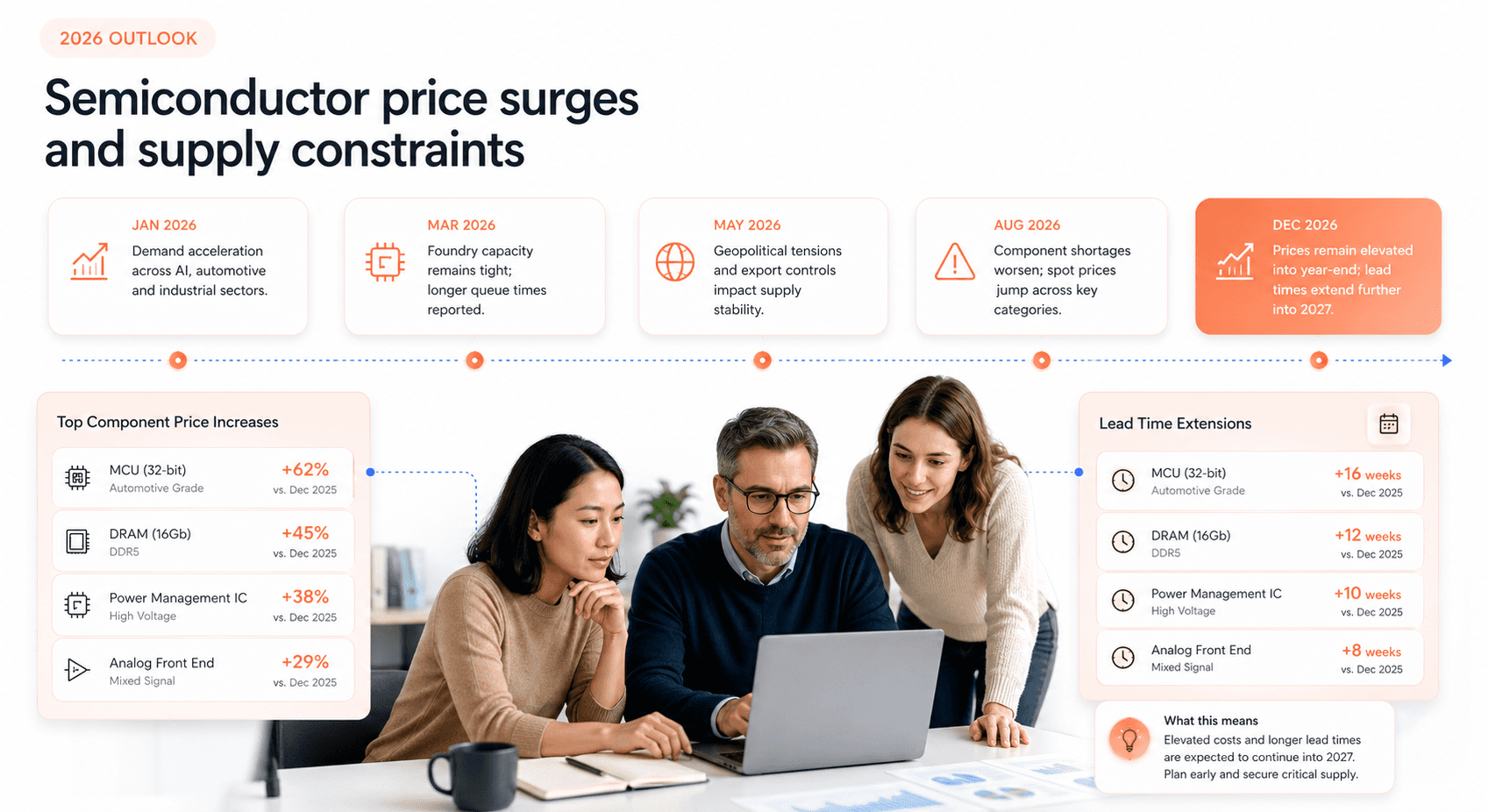
Your infrastructure budget is under siege from price increases that dwarf anything you've experienced in previous technology cycles. The numbers tell a stark story: DRAM contract prices have surged approximately 90% in Q1 2026, while NAND Flash has increased between 55-60%. These aren't minor adjustments – they represent fundamental shifts in your IT budget management calculations.
These historic price increases directly impact your enterprise infrastructure expenses in ways that traditional cost models can't absorb. Your memory and storage costs, which may have represented 20-30% of your infrastructure budget, are now consuming significantly larger portions of your allocated resources. The ripple effects extend to your cloud cost reduction strategies as well, since cloud providers are passing these increased component costs through to their pricing models.
Extended lead times creating long-term procurement challenges
Your procurement cycles have been fundamentally disrupted by lead times extending up to 52 weeks for critical components. This extended timeline creates a cascade of planning challenges that affect your entire infrastructure governance framework. You're no longer dealing with typical 8-12 week procurement windows – you're managing infrastructure investments that must be planned nearly a year in advance.
These extended lead times force you to commit to multiyear datacenter buildouts with component allocations locked through 2026 and 2027. Your traditional just-in-time procurement strategies are obsolete in this environment. You must now forecast your infrastructure needs with unprecedented accuracy, as course corrections become increasingly expensive and time-consuming.
The challenge extends beyond simple planning – your reactive IT operations cost management approaches no longer work when you can't quickly adjust capacity or swap vendors. You're forced into long-term commitments that reduce your operational flexibility while simultaneously increasing your financial exposure to market volatility.
Structural shift from cyclical to permanent pricing pressure
Your infrastructure cost control strategies must adapt to a new reality: what you're experiencing isn't a temporary market spike that will self-correct. IT infrastructure pricing has entered a new era defined by AI-driven demand, constrained semiconductor supply, and unprecedented volatility. This represents a structural shift rather than the cyclical pressure your organization has managed in the past.
The traditional boom-and-bust cycles of technology pricing have been replaced by sustained upward pressure driven by fundamental changes in demand patterns. Your infrastructure monitoring tools and budget planning processes must account for this new baseline, where high prices become the standard rather than the exception.
This structural transformation means your hidden infrastructure costs will continue expanding unless you fundamentally revise your approach to data center cost efficiency. The market forces driving these increases show no signs of abating, making proactive cost management more critical than ever for maintaining operational sustainability.
Enterprise-Wide Impact Beyond Data Center Infrastructure
Cost increases affecting all IT domains from compute to collaboration
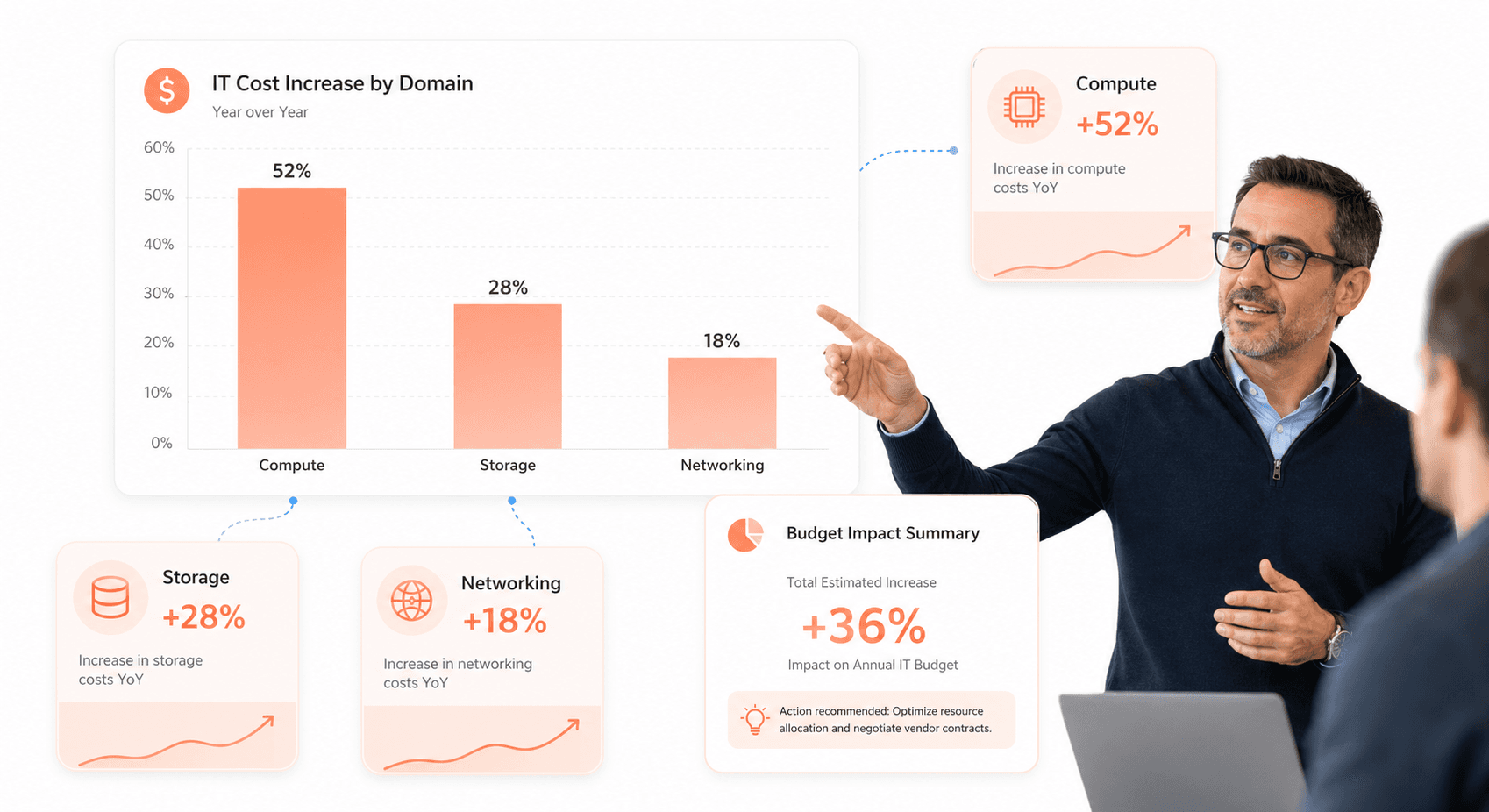
Your infrastructure cost optimization strategy must now account for unprecedented price increases across every domain of your IT environment. These rising component costs are cascading through your entire technology stack, creating budget pressures far beyond traditional data center infrastructure expenses.
Your compute infrastructure faces the steepest impact, with server costs experiencing approximately 30% increases that directly affect your core processing capabilities. This dramatic rise in compute expenses means your planned hardware refreshes and capacity expansions now require significantly larger budget allocations than previously anticipated.
Storage systems present another substantial challenge to your IT budget management efforts, with both flash and traditional hard disk drive solutions seeing 20% cost increases. These storage price escalations affect everything from primary data repositories to backup systems, forcing you to reconsider your data retention policies and storage architecture decisions.
Your networking infrastructure hasn't escaped these market pressures either, with network equipment costs rising by 12%. While this increase appears modest compared to compute and storage, it still represents a meaningful impact on your overall infrastructure expenses, particularly when planning large-scale network upgrades or expansions.
Backup appliances, critical for your data protection strategies, have experienced 20% cost increases that mirror storage pricing trends. These elevated costs compound the storage price increases, creating dual pressure points that affect your disaster recovery and business continuity investments.
Even your security infrastructure faces budget pressures, with firewall solutions experiencing 10% cost increases. Though smaller than other domains, these security equipment price rises occur precisely when your organization needs robust cybersecurity investments to address evolving threat landscapes.
Your collaboration platforms and tools show 15% cost increases that extend beyond traditional infrastructure into software and service domains. These price escalations affect your ability to maintain effective remote work capabilities and team productivity tools that have become essential for modern business operations.
Client devices round out the comprehensive cost impact with 15% increases affecting laptops, desktops, and mobile devices. These endpoint cost rises directly impact your user experience investments and employee productivity initiatives.
Memory and storage becoming strategic assets rather than commodities
Your approach to memory and semiconductor components must fundamentally shift as these previously predictable commodity inputs transform into strategic assets requiring careful allocation and planning. This transformation represents one of the most significant changes affecting your hidden infrastructure costs and long-term IT budget management.
Memory components that your organization once purchased as routine commodities now demand strategic consideration due to AI-driven capital expenditure growth across the technology industry. This shift means your memory procurement decisions directly compete with massive AI infrastructure investments from hyperscale cloud providers and technology giants, fundamentally altering market dynamics.
Your storage planning must now account for semiconductor components becoming scarce strategic resources rather than readily available commodities. This scarcity creates long-term allocation pressure that affects your ability to scale storage infrastructure predictably, requiring more sophisticated forecasting and procurement strategies.
Budget volatility threatening planned technology initiatives
Your technology roadmap faces unprecedented uncertainty as ongoing pricing volatility and extended lead times create budget unpredictability that threatens your planned infrastructure investments. This volatility represents a fundamental shift from the stable pricing environment your organization previously relied upon for multi-year technology planning.
Extended lead times now characterize the procurement landscape for critical infrastructure components, forcing your organization to extend planning horizons and maintain larger inventory buffers. These longer procurement cycles affect your ability to respond quickly to changing business requirements and may delay critical technology initiatives that support business growth.
Your budget planning processes must adapt to accommodate this new volatility, potentially requiring more frequent budget reviews and greater contingency reserves. The unpredictable nature of component pricing makes it challenging to commit to specific technology initiatives with confidence, potentially delaying important upgrades and expansions.
Supply chain constraints limiting architectural flexibility
Your architectural decisions now face significant constraints as long-term component allocations and supply chain limitations restrict your organizational agility and design flexibility. These constraints require fundamental changes to how you approach infrastructure architecture and vendor relationships.
Long-term allocation requirements mean your organization must commit to specific technology directions and vendor relationships earlier in the planning process, reducing your ability to adapt architectures based on changing business requirements or emerging technology opportunities. This reduced flexibility affects your cloud cost reduction strategies and overall infrastructure governance framework.
Supply chain constraints force your organization to reconsider architectural standards and vendor diversification strategies, potentially requiring multiple supplier relationships to ensure component availability. These constraints may push your infrastructure monitoring tools and governance processes to accommodate more complex, multi-vendor environments that were previously unnecessary.
Reactive IT Operations Multiplying Hidden Expenses
Break-Fix Support Models Driving Emergency Contractor Costs
Your IT operations are bleeding money every time you resort to reactive break-fix support models. When your teams constantly react to outages rather than preventing them, you're creating a costly cycle that multiplies your infrastructure expenses exponentially. These reactive approaches force you into emergency fixes that drain your budget through:
Emergency contractor fees: When critical systems fail outside business hours or exceed internal expertise, you're paying premium rates for immediate external support
Lost productivity costs: Every outage creates cascading effects across your organization, resulting in downtime that costs far more than the initial infrastructure investment
Repeated problem resolution: Without addressing root causes, you're solving the same issues multiple times, accumulating costs without creating lasting improvements
This reactive IT operations cost model prevents you from building sustainable infrastructure governance frameworks that could eliminate these recurring expenses entirely.
Legacy Systems Requiring Intensive Maintenance and Monitoring
Your legacy systems have become silent budget killers that demand increasingly intensive maintenance resources. These outdated platforms require constant attention through frequent patching, manual updates, and round-the-clock monitoring, making them extraordinarily expensive to maintain. Your infrastructure cost optimization efforts are undermined when these systems:
Consume disproportionate IT resources: Legacy platforms often require specialized knowledge and manual intervention that newer systems handle automatically
Create compatibility challenges: Integration with modern platforms becomes increasingly difficult, forcing you to maintain separate systems and duplicated functionality
Introduce security vulnerabilities: Older systems require additional security layers and monitoring tools, multiplying your hidden infrastructure costs
The intensive monitoring requirements alone can consume significant portions of your IT budget management resources, creating ongoing expenses that grow rather than diminish over time.
Lack of Strategic Roadmapping Creating Fragmented Investments
Without strategic IT roadmapping, your infrastructure investments become fragmented and inefficient, directly impacting your enterprise infrastructure expenses. This lack of direction results in:
Overlapping tool purchases: Multiple departments acquire similar solutions independently, creating redundant costs and integration challenges
Mid-project surprises: Unexpected compatibility issues and integration requirements emerge because purchases weren't aligned with overall architecture
Misaligned technology decisions: Individual purchasing decisions don't support broader organizational objectives, leading to stranded investments
These fragmented investments inflate your overall IT cost control strategies by forcing you to maintain multiple systems that could be consolidated under proper planning.
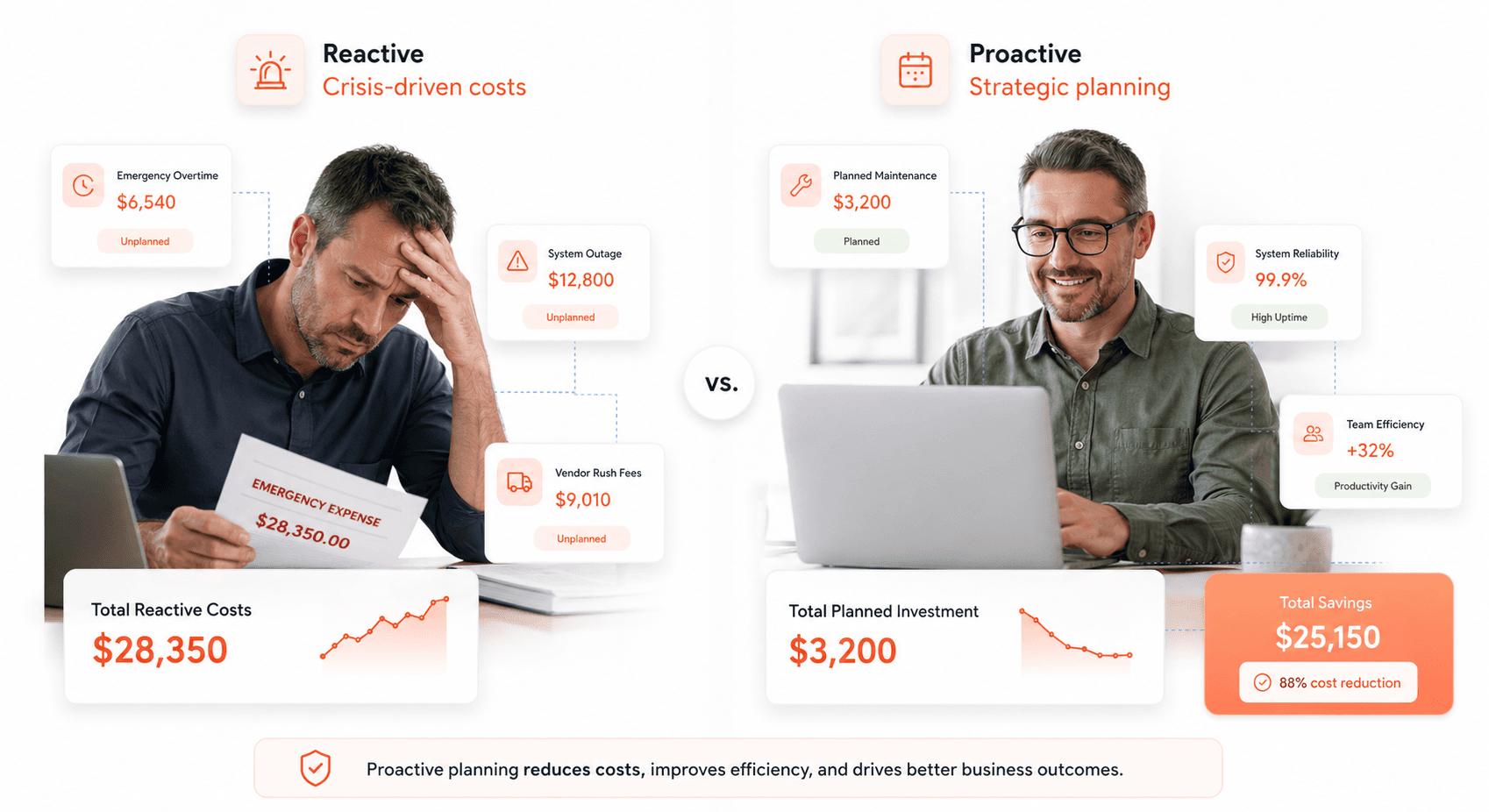
Poor Capacity Planning Leading to Crisis-Driven Purchases
Your capacity planning deficiencies create the most expensive type of infrastructure procurement: crisis-driven purchases. When you lack proper forecasting and monitoring frameworks, you're forced into reactive purchasing decisions that significantly increase your data center cost efficiency challenges. Poor planning manifests in:
Emergency procurement at premium prices: Urgent capacity needs eliminate your negotiating power and force acceptance of unfavorable terms
Over-provisioning to avoid future crises: Fear of repeated capacity shortfalls leads to excessive infrastructure purchases that exceed actual requirements
Limited vendor selection: Tight timelines restrict your ability to properly evaluate options, often resulting in suboptimal purchasing decisions
These crisis-driven approaches prevent you from implementing effective infrastructure monitoring tools that could provide the visibility needed for strategic capacity planning and long-term cost control.
Proven Strategies to Regain Cost Control
Proactive procurement planning to secure capacity and pricing
Planning your purchases early represents one of the most effective infrastructure cost optimization strategies you can implement. When you take a proactive approach to procurement, you position yourself to secure both capacity and stabilize your budgets while simultaneously avoiding the price hikes and supply shortages that catch reactive organizations off guard.
Your procurement timeline should extend well beyond immediate needs, incorporating forecasting that accounts for growth patterns and seasonal demand fluctuations. By establishing purchase agreements months or even quarters in advance, you create a buffer against market volatility that can otherwise devastate your IT budget management efforts. This forward-thinking approach ensures you're not scrambling to find available inventory when supply chains tighten or vendors implement sudden price increases.
The benefits of early procurement planning extend beyond cost savings. You gain access to preferred vendor relationships, priority allocation during shortages, and the ability to negotiate terms that favor your organization's cash flow requirements. This strategic positioning becomes particularly valuable when dealing with critical infrastructure components where delays can cascade into operational disruptions.
Configuration optimization to eliminate overprovisioning waste
Your configuration choices for primary cost drivers like DRAM and SSDs represent some of the highest-impact areas where you can significantly reduce spend by eliminating overprovisioning waste. Many organizations unknowingly hemorrhage budget through configurations that far exceed their actual performance requirements, creating hidden infrastructure costs that compound over time.
Start by conducting a comprehensive audit of your current memory and storage configurations. Examine utilization patterns across your infrastructure to identify where you've allocated resources that remain consistently underutilized. This analysis often reveals substantial opportunities to right-size your deployments without impacting performance or user experience.
Consider implementing tiered storage strategies that match performance characteristics to workload requirements. Not every application needs the fastest, most expensive storage options. By strategically placing workloads on appropriately configured infrastructure, you can achieve the same operational outcomes while dramatically reducing your overall infrastructure expenses.
Implementation of consumption-based and flexible financing models
Transitioning to consumption-based OPEX models and flexible financing arrangements can create the budget predictability you need while reducing upfront capital requirements that strain your organization's cash flow. These models align your infrastructure costs directly with your actual usage patterns, eliminating the financial burden of maintaining capacity you may not immediately need.
Consumption-based models offer particular advantages for organizations experiencing variable demand patterns. Instead of investing heavily in infrastructure to handle peak loads that occur infrequently, you pay only for the resources you actually consume. This approach provides natural cost control mechanisms while maintaining the scalability required for business growth.
Flexible financing options further enhance your cost control strategies by spreading infrastructure investments across extended timeframes. These arrangements often include upgrade paths and refresh cycles that keep your technology current without requiring large capital expenditures at regular intervals.
Cross-vendor benchmarking to identify better pricing opportunities
Regular cross-vendor benchmarking helps you uncover better pricing, shorter lead times, and more favorable configurations from different vendors in the marketplace. This practice ensures you're not locked into pricing structures that may have become uncompetitive over time, while also revealing alternative solutions that better match your specific requirements.
Establish a systematic approach to vendor evaluation that goes beyond simple price comparisons. Consider total cost of ownership, including support costs, implementation complexity, and long-term compatibility with your existing infrastructure. Sometimes a slightly higher upfront cost from an alternative vendor delivers superior value through reduced operational overhead or better performance characteristics.
Document your findings to build institutional knowledge about vendor capabilities and market positioning. This information becomes invaluable during future procurement cycles and provides leverage during contract negotiations with your existing suppliers.
Essential Monitoring and Governance Framework
Quarterly Auditing of Physical and Virtual Infrastructure Utilization
Your infrastructure governance framework begins with systematic quarterly reviews of your physical and virtual server environments. You should implement comprehensive auditing using proven tools like VMware vRealize, Zabbix, or Nagios to gain visibility into your actual hardware utilization patterns. These quarterly assessments will help you identify underutilized hardware that's silently draining your infrastructure budget.
During each quarterly audit, you need to examine CPU, memory, storage, and network utilization across all your servers. This systematic approach to infrastructure monitoring tools ensures you're capturing performance data during different business cycles and seasonal variations. Your audit should focus on identifying servers operating below optimal capacity thresholds, which represent immediate cost optimization opportunities.
The quarterly frequency strikes the right balance between maintaining current visibility and avoiding audit fatigue. You'll discover that many organizations have servers running at 10-20% capacity while continuing to consume full power, cooling, and maintenance resources. This regular auditing process becomes the foundation of your infrastructure cost optimization strategy.
Centralized License Management and Usage Tracking Systems
Your software licensing represents a significant portion of hidden infrastructure costs that require dedicated governance oversight. You must establish a centralized license management system that conducts quarterly auditing of license usage across your entire technology stack. This centralized approach prevents the common scenario where departments purchase duplicate licenses or maintain unused software subscriptions.
Your licensing governance should include centralizing all procurement and renewal processes to eliminate redundant purchases and negotiate better enterprise agreements. You'll gain better cost control by consolidating vendor relationships and leveraging volume discounts that individual department purchases cannot achieve.
Where possible, you should shift toward usage-based licensing models that align your software costs with actual consumption. This transition requires careful tracking of user activity and feature utilization to ensure you're not overpaying for capabilities your organization doesn't actively use. Your centralized system should provide real-time visibility into license allocation, usage patterns, and upcoming renewal dates.
Cloud Cost Optimization Through Automated Policies and Right-Sizing
Your cloud cost reduction efforts require dedicated audits and automated governance policies to prevent cost drift. You need to implement comprehensive auto-scaling policies that automatically adjust resources based on actual demand patterns, ensuring you're not paying for idle capacity during low-usage periods.
Right-sizing policies should be central to your cloud governance framework, automatically identifying and recommending instance downgrades for underutilized resources. Your automated policies should include scheduled shutdowns for development and testing environments that don't require 24/7 availability, which can immediately reduce your enterprise infrastructure expenses by 30-50% in non-production environments.
You must utilize dedicated cost-optimization tools that continuously monitor your cloud spending and provide actionable recommendations. These tools should automatically flag anomalous spending patterns and enforce budget thresholds to prevent unexpected cost escalation. Your governance framework should include regular reviews of these automated recommendations to ensure they align with your business requirements.
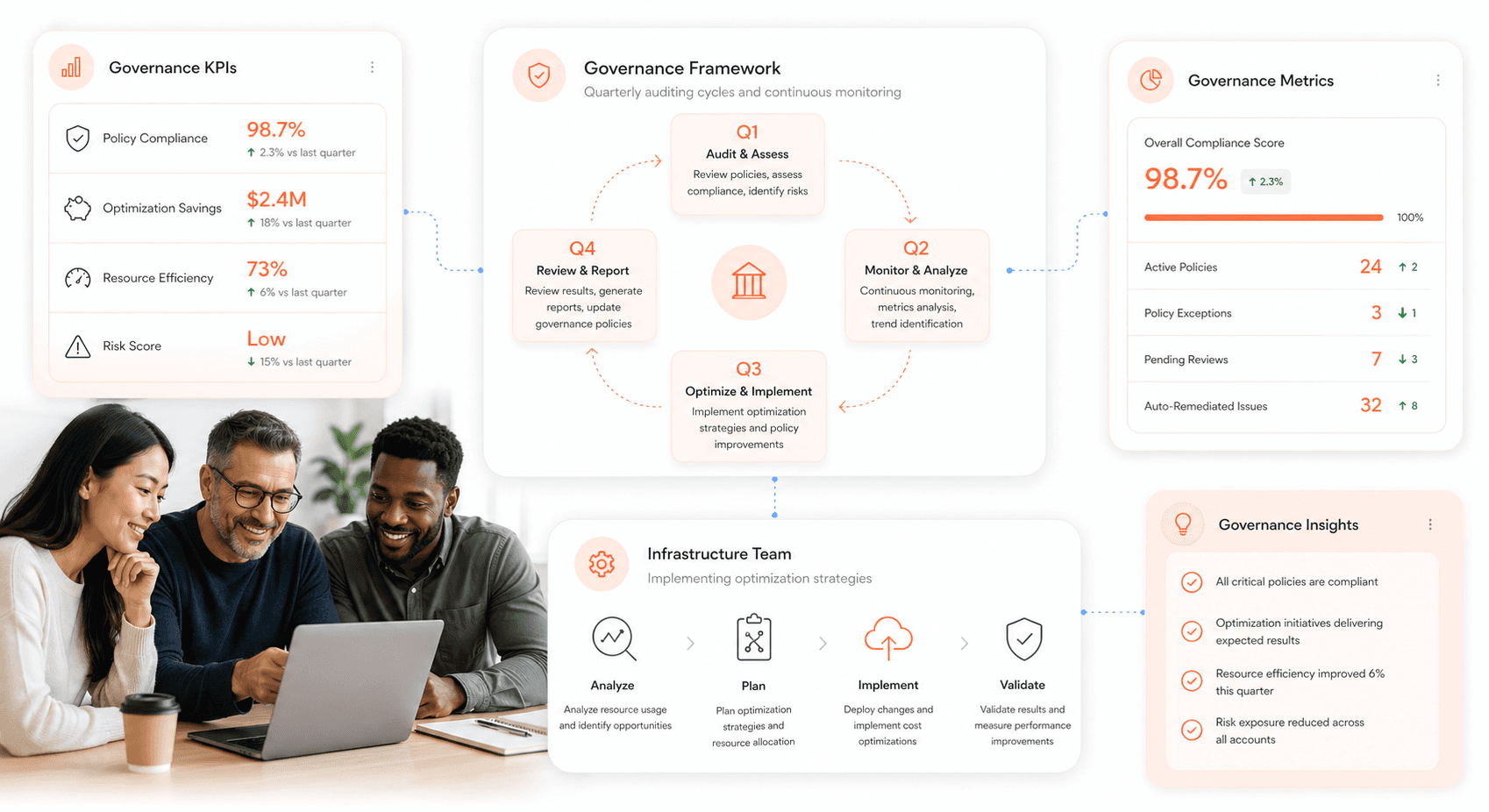
Strategic KPI Implementation for Measurable ROI Tracking
Your IT budget management requires well-defined metrics that demonstrate the financial impact of your infrastructure investments. You should establish key performance indicators such as infrastructure cost per user, which provides a clear benchmark for measuring efficiency improvements over time. This metric helps you understand whether your infrastructure spending is scaling appropriately with business growth.
Average license utilization serves as another critical KPI that reveals whether your software investments are delivering expected value. You need to track this metric quarterly to identify opportunities for license optimization or redistribution across departments.
Your cloud spend growth rate provides essential insight into whether your cloud migration and optimization efforts are achieving intended cost benefits. You should implement dashboards or business intelligence tools that track ROI after major infrastructure changes, providing clear visibility into which initiatives deliver measurable cost savings.
These strategic metrics should be integrated into regular executive reporting to ensure infrastructure cost control strategies remain aligned with broader business objectives. Your dashboard should provide real-time visibility into these KPIs, enabling proactive decision-making before cost issues escalate.
Conclusion
Rising infrastructure costs aren't inevitable, they're the result of specific inefficiencies that you can identify and eliminate. From server sprawl and over-provisioned cloud resources to redundant software licenses and reactive IT operations, these hidden cost drivers compound over time without delivering business value. The current market environment, with AI-driven demand pushing component costs up 30% or more across compute domains, makes cost optimization more critical than ever.
You have the power to regain control through systematic auditing, strategic planning, and proactive monitoring. Start by conducting quarterly reviews of your server utilization, cloud spend, and software licenses. Implement integration strategies to eliminate silos, develop a 12-18 month IT roadmap aligned with business objectives, and shift from reactive break-fix models to preventive maintenance. The organizations that adapt to this new era of infrastructure economics treating memory and storage as strategic assets rather than commodities will be the ones positioned to thrive while others struggle with spiraling costs.




About the author
I’m the founder of Hashbyt, an AI-first frontend and UI/UX SaaS partner helping 200+ SaaS companies scale faster through intelligent, growth-driven design. My work focuses on building modern frontend systems, design frameworks, and product modernization strategies that boost revenue, improve user adoption, and help SaaS founders turn their UI into a true growth engine.
Is a clunky UI holding back your growth?
Is a clunky UI holding back your growth?
▶︎
Transform slow, frustrating dashboards into intuitive interfaces that ensure effortless user adoption.
▶︎
Transform slow, frustrating dashboards into intuitive interfaces that ensure effortless user adoption.
