

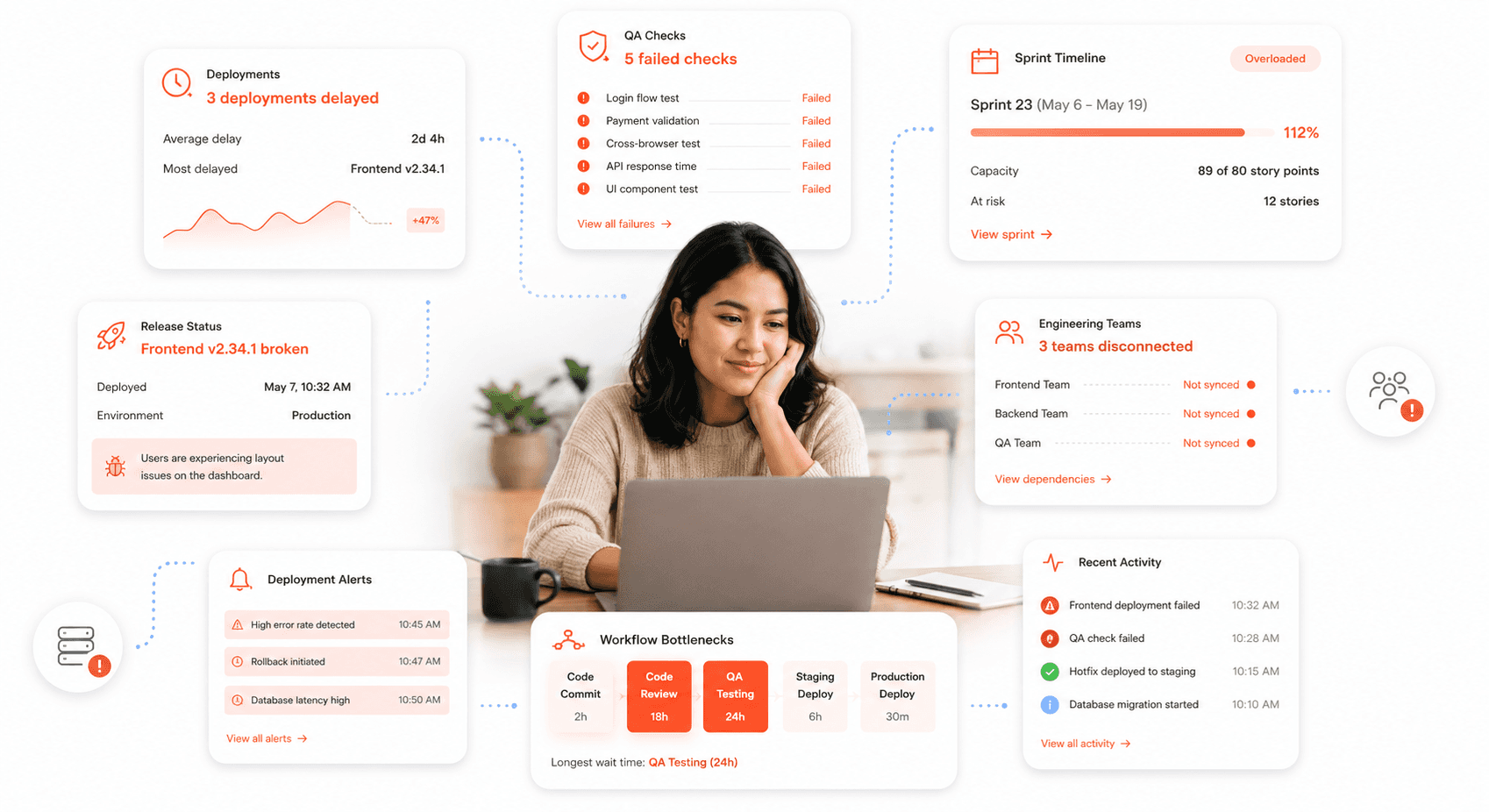
Your software release process shapes everything from developer productivity to customer satisfaction. If your team struggles with missed deadlines, communication breakdowns, or constantly firefighting production issues, your release process likely needs attention.
This guide is for development teams, engineering managers, and technical leaders working with legacy frontend systems who recognize that their current release management approach isn't delivering the results they need. You'll discover five clear warning signs that indicate deeper problems in your software release process and learn practical strategies to address them.
We'll examine how missed deadlines often signal inadequate planning and resource allocation rather than just poor time estimates. You'll also see why communication breakdowns between frontend and backend teams create costly delays and how insufficient testing practices lead to low-quality deliverables that frustrate both developers and users. Finally, we'll cover essential tools and frameworks that can transform your release management from a source of stress into a competitive advantage.
Missed Deadlines Signal Deeper Process Issues
Frequent delays and overextended timelines drain team morale
When your software releases consistently miss their deadlines, you're witnessing a symptom of deeper systemic issues within your development process. Frequent delays don't just impact your project timelines, they create a cascading effect that erodes team confidence and motivation. Your developers begin to doubt the feasibility of project goals, while stakeholders lose trust in your team's ability to deliver on commitments.
You'll notice that overextended timelines become a self-fulfilling prophecy. As deadlines slip, your team members start to feel overwhelmed and demoralized, leading to decreased productivity and further delays. This creates a vicious cycle where mounting pressure to catch up often results in rushed development, introducing technical debt that will slow down future releases even more.
The psychological impact on your development team cannot be understated. When deadlines are consistently unrealistic or missed, team burnout becomes inevitable. Your developers may begin working excessive hours to meet impossible targets, leading to decreased code quality, increased error rates, and higher turnover rates. This knowledge loss further compounds your timeline problems as new team members require time to understand existing systems and processes.
Poor planning and unclear requirements create bottlenecks
Inadequate planning stands as one of the leading causes of software release delays in your organization. When you fail to establish proper project plans with accurate budget and deadline estimation, you're setting your team up for failure from the start. Your planning process should include comprehensive budgets that determine project costs and allocate resources appropriately to avoid overruns and financial issues.
You must develop clear and reasonable timelines that consider the proper time required for each stage of your project. Without these realistic timelines, your team operates under unrealistic expectations that don't align with the actual complexity of the work involved. Your planning should also ensure that your team has access to all necessary resources, including hardware, software, and personnel required for successful completion.
Creating milestones throughout your project's lifecycle becomes essential for measuring progress and keeping track of development. You should implement regular planning reviews to ensure that your project plan remains relevant and up-to-date with any changes made to scope or requirements. When your requirements are unclear or poorly defined, your development team wastes valuable time interpreting ambiguous specifications, leading to rework and missed deadlines.
Poor communication around requirements creates misunderstandings that ripple through your entire development process. Your team members may work toward different interpretations of the same goal, resulting in integration issues and delays when components don't work together as expected.
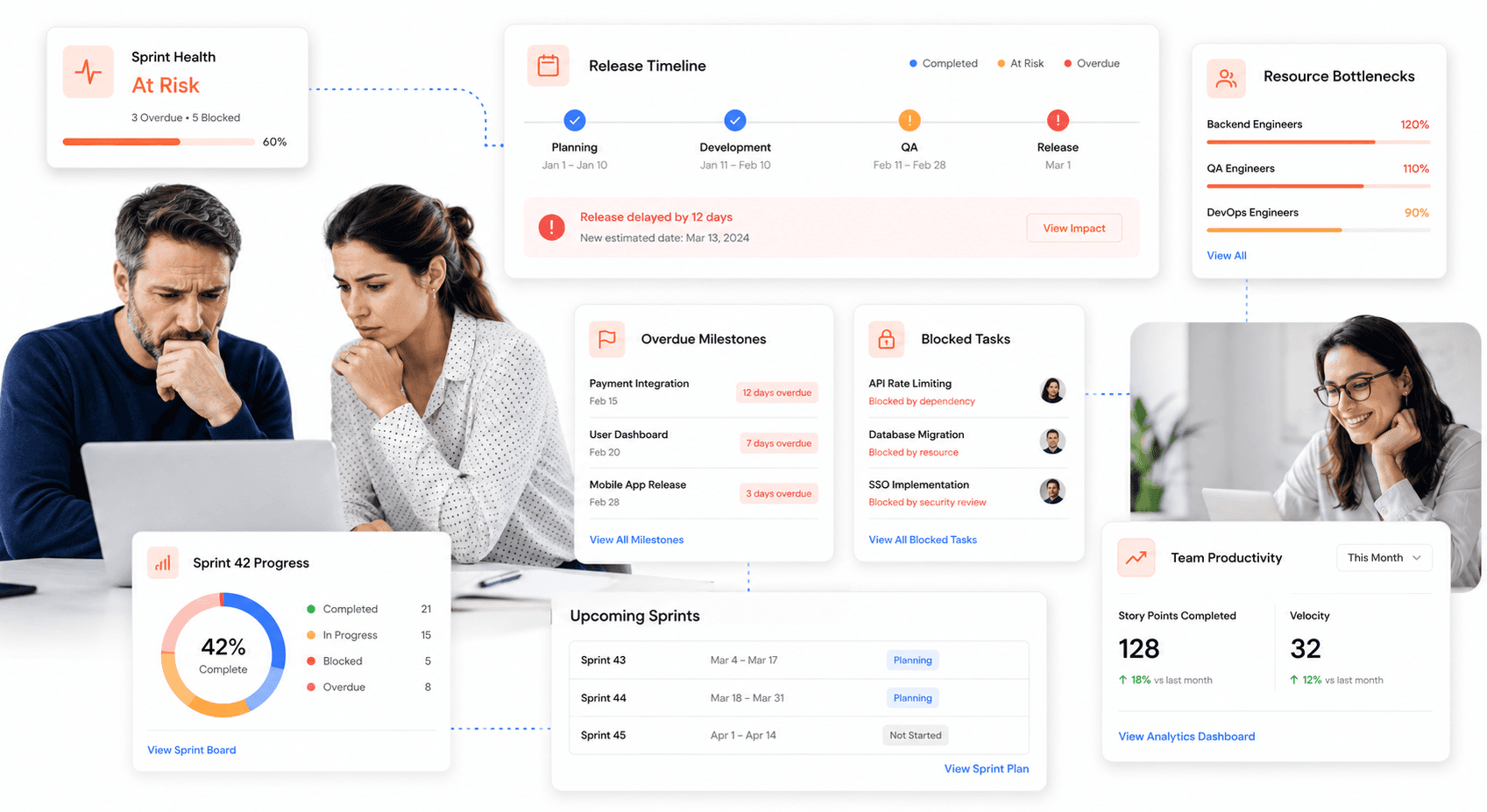
Resource mismanagement compounds deadline problems
Improper resource allocation creates significant bottlenecks in your software release process. When your developers cannot access necessary resources, including software and hardware tools, productivity plummets and deadlines become impossible to meet. You must identify all required resources at the project's outset, including hardware, software, network infrastructure, and other tools required for testing and development.
Your resource allocation strategy should efficiently distribute available resources while considering your team's workload and established timelines. You need to monitor resource usage continuously to ensure that resources are used effectively and efficiently throughout the project lifecycle. When resources are misallocated or unavailable when needed, your development teams face unnecessary delays that could have been prevented with proper planning.
Resource mismanagement often stems from poor visibility into actual resource needs and availability. You may find that critical team members are over-allocated across multiple projects, creating bottlenecks that delay multiple releases simultaneously. This situation becomes particularly problematic when specialized skills are required, as the loss or unavailability of key personnel can halt progress entirely.
Legacy frontend systems slow down deployment cycles
Your legacy frontend systems present unique challenges that significantly impact your deployment cycles and overall release velocity. These older systems often lack the modern automation capabilities and integration points that contemporary development workflows require. When you're working with legacy frontend code, you frequently encounter outdated build processes, manual deployment procedures, and limited testing automation that slow down your entire release pipeline.
The technical debt accumulated in legacy frontend systems creates additional complexity during the deployment process. Your development team must navigate outdated dependencies, deprecated frameworks, and incompatible tooling that weren't designed for modern continuous integration practices. This forces your team to maintain parallel processes or develop custom solutions that add overhead to every release cycle.
Legacy frontend systems typically require more extensive manual testing due to limited automated testing capabilities. Your QA team must perform comprehensive manual verification across multiple browsers and devices, extending your testing cycles significantly. The absence of proper test automation in legacy systems means that regression testing becomes a time-consuming manual process that cannot easily be parallelized or accelerated.
Additionally, your legacy frontend systems may have complex interdependencies with other legacy components, creating a web of technical constraints that limit your deployment flexibility. These dependencies often require careful coordination and sequential deployment strategies that prevent you from adopting modern deployment approaches like blue-green deployments or canary releases, further extending your deployment timelines and increasing the risk of deployment-related issues.
Communication Breakdowns Destroy Cross-Team Alignment
Teams working in silos miss critical dependencies
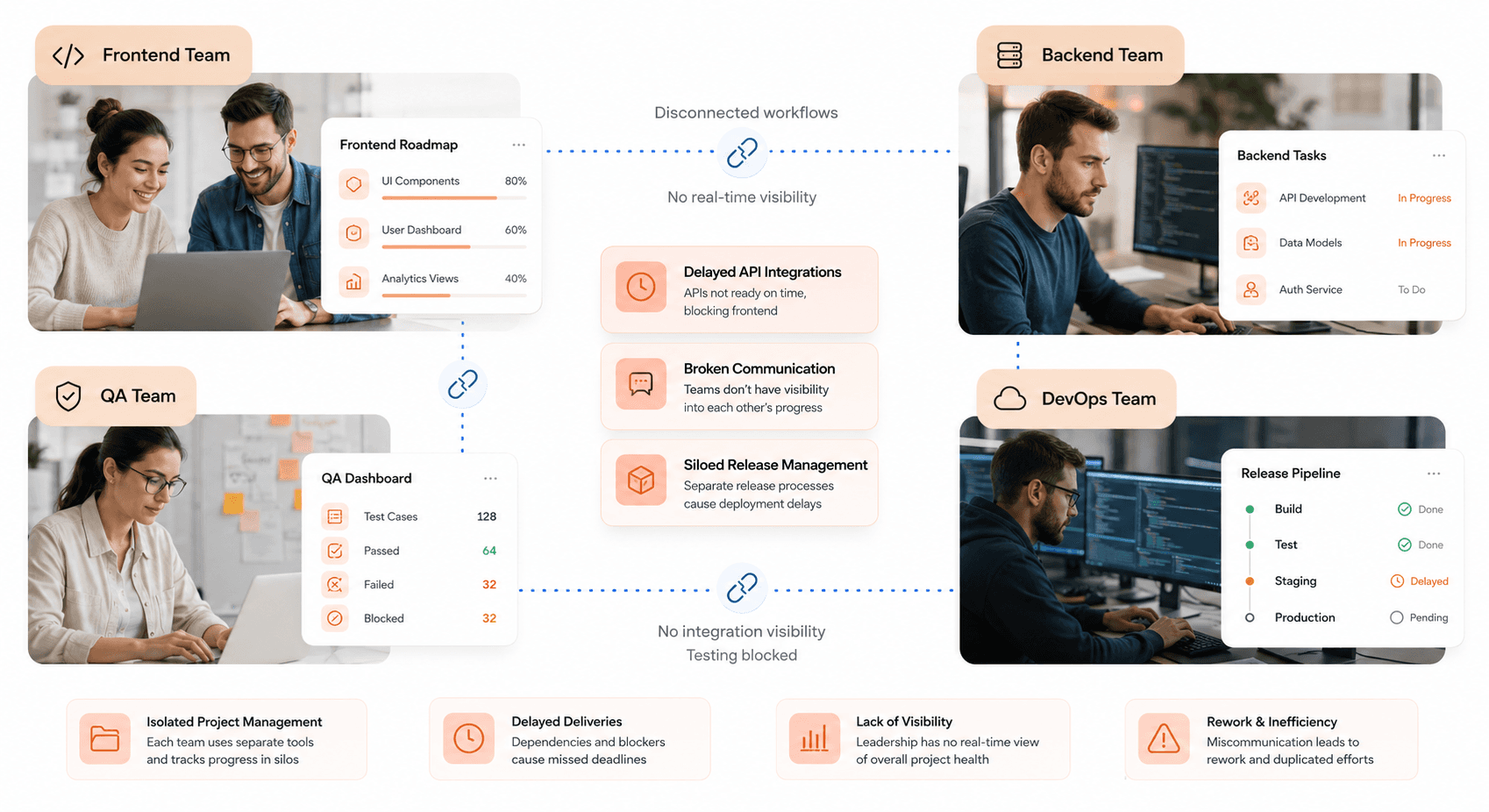
When your development teams operate in isolation, you're setting up your software release process for critical failures. Each team becomes focused solely on their own deliverables, losing sight of how their work interconnects with other teams' efforts. This tunnel vision creates dangerous blind spots where dependencies go unnoticed until they become blocking issues.
Your frontend team might be building new features without understanding the backend API changes happening simultaneously. Meanwhile, your QA team could be preparing test cases based on outdated requirements because they weren't looped into recent design decisions. These disconnected workflows inevitably lead to last-minute surprises that derail your entire release timeline.
The problem becomes exponentially worse when teams create their own microservices just to avoid collaboration with other teams. While microservices can help scale software teams by reducing communication overhead, they're often abused as barriers to cross-team coordination rather than solutions for it. When you use architectural decisions to sidestep human communication challenges, you're not solving the underlying problem you're just moving it elsewhere.
Lack of visibility creates misaligned goals and priorities
Without proper visibility into what other teams are working on, your organization develops competing priorities that pull resources in different directions. You might find your teams making decisions in large group meetings where 18 developers gather biweekly for an hour, yet still walk away without understanding how their work aligns with broader objectives.
This visibility gap creates empire building behaviors where developers choose to code their own solutions rather than reusing existing services, simply because there's no clear path for collaboration. Without defined SLAs, ownership models, or streamlined onboarding processes, your teams default to building redundant solutions rather than working together efficiently.
The absence of shared visibility also means critical decisions get made without input from affected teams. Your developers might discover major changes during retrospectives rather than being involved in the decision-making process, creating friction and misalignment that compounds throughout your release cycle.
Ineffective communication tools hinder real-time collaboration
Your current communication infrastructure may be actively working against productive collaboration. When teams rely on scattered email threads, informal hallway conversations, and disconnected messaging platforms, important information gets lost or siloed within individual teams.
Effective cross-team communication requires more than just tools, it needs incentive structures that encourage collaboration. If reusing another team's service involves unclear processes, undefined responsibilities, and lengthy onboarding periods, your developers will naturally choose to build their own solutions instead.
Modern release management demands communication tools that create shared threads where all related chats, emails, and documentation live together. This centralized approach ensures that cross-team visibility isn't dependent on manual updates or remembering to include the right people in conversations.
Project leadership misalignment trickles down to development teams
When your leadership lacks alignment on priorities and direction, this confusion cascades through every level of your development organization. Team leads who aren't coordinating effectively create conflicting signals that leave individual contributors unsure about what they should be working on or how their efforts contribute to larger goals.
The pressure of converting tickets in sprints often leaves little time for the "thought work" necessary to maintain cross-team alignment. Your teams become so focused on meeting sprint commitments that they lose sight of broader architectural decisions and long-term technical strategy.
Successful cross-team coordination happens when leads maintain regular communication about what each team is working on and actively identify collaboration points. This requires moving beyond administrative standups toward strategic discussions about dependencies, shared objectives, and resource allocation across teams.
Low-Quality Deliverables Indicate Insufficient Testing
Buggy Releases and Excessive QA Issues Damage User Trust
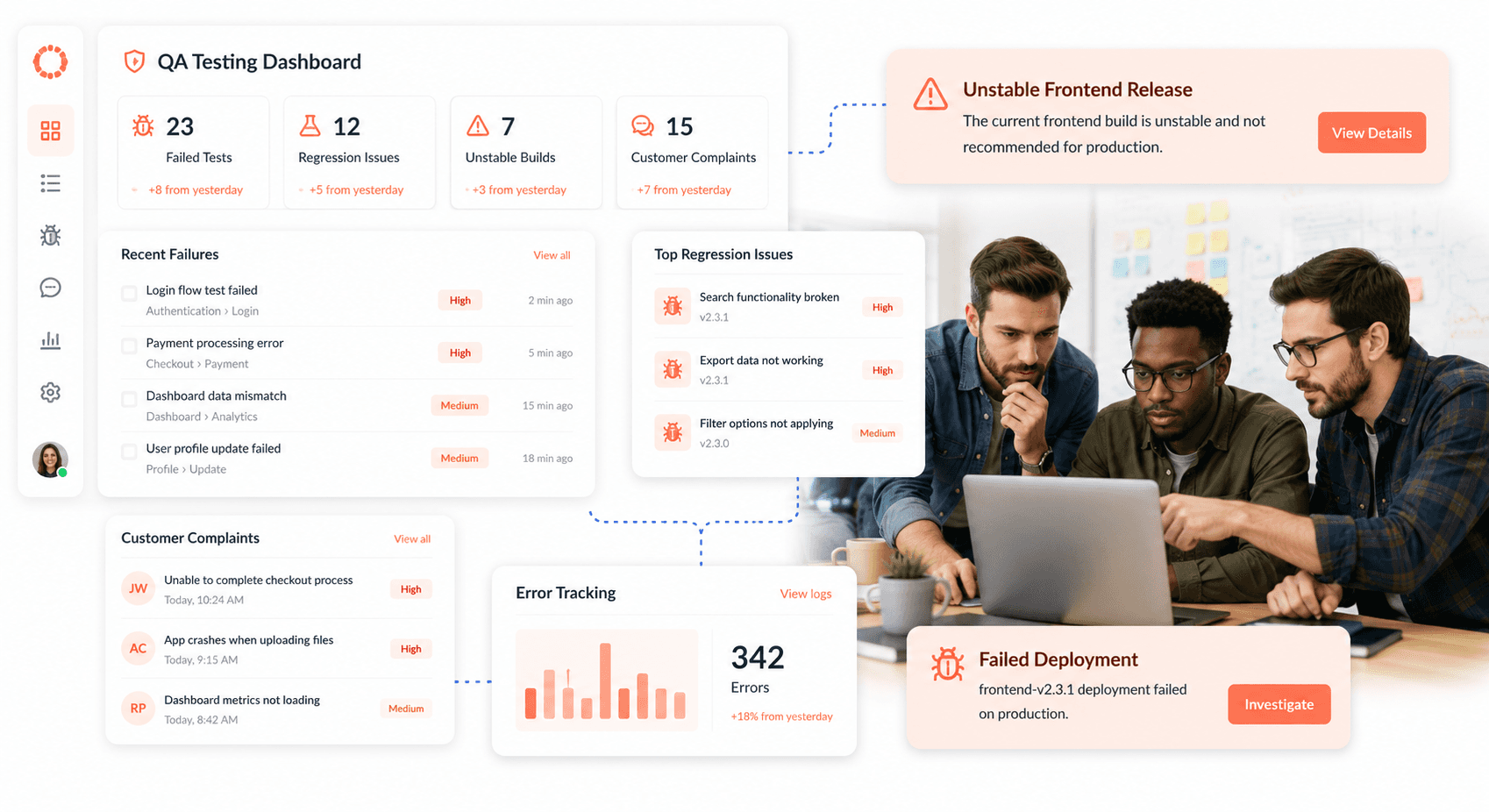
When your release process consistently delivers buggy software to users, you're not just facing technical problems—you're eroding the foundation of user trust that takes years to build. Each defect that escapes to production becomes a direct hit to your brand reputation and user confidence. Your users expect reliable functionality, and when software fails to meet basic quality standards, they quickly lose faith in your product and team.
The impact of poor quality deliverables extends far beyond immediate user frustration. Users who encounter frequent bugs begin questioning your organization's competence and reliability. They start seeking alternatives, share negative experiences with peers, and become hesitant to adopt new features or updates. This creates a vicious cycle where declining user trust makes it increasingly difficult to recover from quality issues, even when you implement improvements.
Your development team also suffers when quality issues plague releases. Team morale plummets when developers repeatedly face criticism for buggy software, especially when quality problems stem from systemic process issues rather than individual performance. The stress of constant firefighting and user complaints creates a toxic environment that drives away talented team members and makes it difficult to attract new talent.
Constant Rework Cycles Waste Development Resources
Nothing destroys development productivity quite like endless rework cycles triggered by insufficient testing. When your team discovers critical defects after deployment, you're forced into reactive mode, pulling developers away from planned feature work to address urgent production issues. This constant context switching fragments focus and dramatically reduces overall team efficiency.
Your development velocity suffers significantly when teams must repeatedly revisit supposedly "completed" features. The cost of fixing defects increases exponentially as they progress through your development lifecycle. A defect caught during development might take 30 minutes to fix, while the same issue discovered in production could require days of investigation, coordination, and careful deployment procedures.
The resource waste extends beyond immediate fix efforts. Your team must allocate time for defect triage meetings, coordinate emergency releases, communicate with stakeholders about delays, and manage customer escalations. These unplanned activities consume resources that could otherwise drive new feature development and business value creation.
Quality issues also force your team into defensive development patterns. Developers begin spending excessive time on workarounds and patches rather than building robust, maintainable solutions. This technical debt accumulates over time, making future development increasingly difficult and expensive.
Rushed Development Without Proper Testing Protocols
When your release process operates under constant time pressure, proper testing protocols become casualties of aggressive deadlines. Your team begins cutting corners on test design, skipping regression testing, or reducing test coverage to meet unrealistic delivery timelines. This creates a dangerous pattern where short-term schedule gains result in long-term quality degradation.
Your testing activities suffer when development cycles don't allocate sufficient time for comprehensive quality validation. Manual test execution takes significant time, and when deadlines loom, teams often reduce test scope or skip critical test scenarios entirely. This rushed approach leaves gaps in validation that allow defects to slip through to production.
The pressure to deliver quickly also impacts test case creation and maintenance. Your QA team may resort to superficial testing that covers happy path scenarios while missing edge cases, error conditions, and integration issues. Without proper time allocation, teams cannot conduct thorough exploratory testing that often uncovers the most critical usability and functionality issues.
Legacy Frontend Architecture Makes Quality Assurance Challenging
Your legacy frontend systems present unique quality assurance challenges that compound release process problems. Older architectures often lack the modularity and testability features that enable efficient automated testing. This forces your team to rely heavily on manual testing approaches that don't scale with modern development velocity requirements.
Legacy frontend codebases frequently suffer from tight coupling between components, making it difficult to isolate functionality for focused testing. Your QA team struggles to create reliable automated tests when UI elements lack consistent identifiers or when application state management is unpredictable. These architectural limitations force reliance on brittle test automation that breaks frequently and requires constant maintenance.
The challenge intensifies when legacy systems integrate with modern components. Your testing strategy must account for complex integration points where new and old technologies interact. These integration boundaries often become sources of unexpected failures that are difficult to detect through traditional testing approaches.
Your team also faces challenges with test environment management when dealing with legacy systems. Older technologies may require specific configurations, dependencies, or infrastructure that's difficult to replicate consistently across testing environments. This environmental inconsistency leads to the dreaded "works on my machine" problem where functionality appears stable in development but fails in production.
Cross-browser compatibility testing becomes particularly challenging with legacy frontend architectures. Modern testing tools may not support older browsers or technologies that your legacy systems require, forcing your team into time-consuming manual testing across multiple browser configurations.
Overwhelmed Teams Signal Broken Resource Allocation
Developers feeling overworked leads to high turnover rates
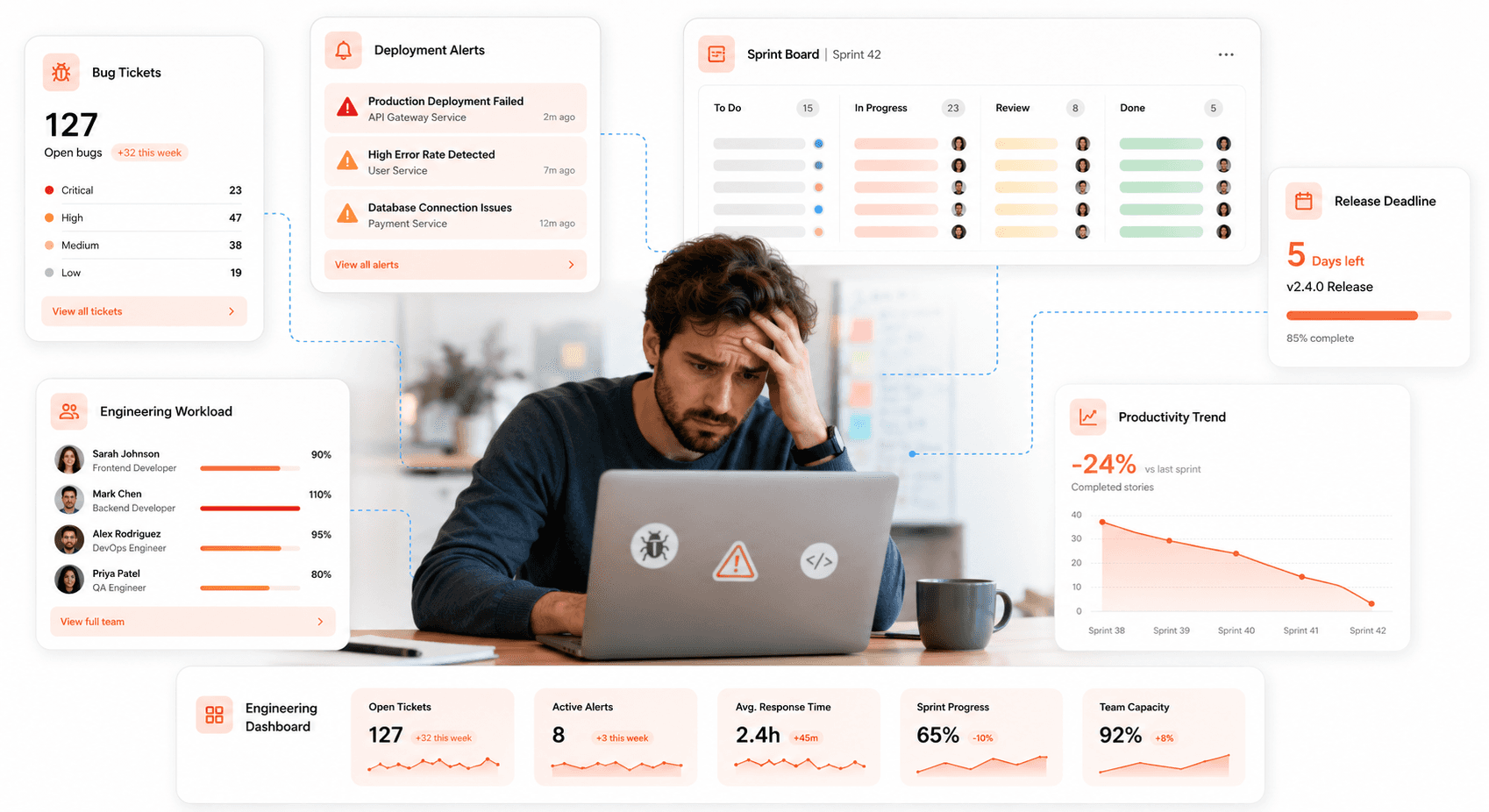
When your development teams consistently work 80-100-hour weeks to meet release deadlines, you're creating an unsustainable environment that drives away your best talent. Research shows that replacing a high-performing developer can cost anywhere from 50% to 200% of their annual salary - meaning losing a senior developer making $120,000 could cost your organization between $60,000 and $240,000 just to get back to square one.
The warning signs of overworked developers are often subtle at first. You'll notice previously vocal team members becoming silent observers in meetings, giving minimal responses or simply agreeing without contributing meaningful input. Their code quality starts declining without explanation - pull requests that once showcased thoughtful architecture now require multiple review cycles for basic issues they never used to make.
Your developers begin isolating themselves from the team, declining lunch invitations and skipping optional events. They increasingly request remote work and take more frequent time off. Most critically, they stop taking ownership of complex problems, focusing only on assigned tickets while avoiding anything ambiguous or high-stakes.
The financial impact extends beyond replacement costs. During the months before developers actually quit, they enter what industry experts call the "zombie phase" - working longer hours but delivering less value. This creates a cascade of hidden costs including slower release cycles, mounting technical debt, and increased bugs that impact user satisfaction.
Unrealistic expectations create unsustainable work environments
Your release process becomes broken when stakeholders consistently set impossible deadlines without consulting the development team. This creates a culture where every sprint ends in a scramble, priorities change halfway through development cycles, and teams constantly operate in "just get it done" mode.
The problem compounds when everything becomes labeled as "urgent." Your developers lose the ability to distinguish between genuine emergencies and manufactured crises, leading to chronic stress even during standard 40-hour work weeks. When developers can't advocate for realistic timelines without being called "difficult" or "not a team player," they stop speaking up about technical concerns altogether.
Unrealistic expectations manifest in several destructive ways. You'll see developers working nights and weekends regularly, not because of genuine emergencies, but because project managers routinely underestimate complexity. Your team starts cutting corners on code quality, skipping proper testing phases, and accumulating technical debt that will slow future releases even more.
The psychological impact is significant. When developers repeatedly watch their carefully crafted solutions get scrapped or rushed to market with known flaws, they develop cynicism about their work's value. They begin expressing sentiments like "this will probably get scrapped anyway" or "project management won't listen," indicating a fundamental disconnect between effort and perceived impact.
Poor resource allocation creates productivity bottlenecks
Your release process suffers when you consistently over-rely on specific developers while others have bandwidth. This uneven distribution creates bottlenecks that slow your entire pipeline and burns out your highest performers. Engineering management platforms reveal that many organizations unknowingly create "rock star" dependencies where one or two developers handle disproportionate amounts of critical work.
Resource allocation problems become visible through several patterns. Your most experienced developers end up handling all code reviews, becoming bottlenecks for the entire team's progress. Critical bug fixes consistently fall to the same people because "they know the system best," preventing knowledge transfer and creating single points of failure.
The context switching problem amplifies these issues. When developers juggle five different branches while bouncing between frontend fixes, backend bugs, and CI updates within a single sprint, their cognitive load becomes overwhelming. Research indicates it takes up to 23 minutes to fully refocus after an interruption, and for developers working on complex problems, this mental reset happens dozens of times per day.
Poor resource allocation also means technical debt gets dumped on the same people repeatedly instead of being distributed fairly across the team. This creates resentment and frustration among your most capable developers, who feel punished for their competence by receiving all the tedious maintenance work.
Lack of support and clarity burns out development teams
Without clear priorities and proper support systems, your developers waste mental energy on decisions that should be straightforward. When your release process lacks well-defined requirements, developers spend excessive time decoding ambiguous specifications and making architectural decisions without proper context about business goals.
The absence of psychological safety compounds these problems significantly. When pointing out technical problems makes developers "the problem," they learn to stay silent even when they spot critical flaws. Your team members see issues with architecture, know deadlines are impossible, or identify security gaps, but raising concerns results in being labeled as negative or obstructive.
Inadequate tooling and infrastructure support creates additional friction that accumulates throughout your development cycle. When developers spend more time fighting with broken CI/CD pipelines, outdated documentation, and fragmented development environments than writing actual code, frustration builds rapidly. Simple tasks that should take 20 minutes turn into day-long investigations because nobody knows what will break next in your legacy systems.
The communication breakdown extends to feedback loops as well. When developers complete features without understanding their impact on end users or business metrics, they lose connection to the purpose of their work. Without regular updates showing how their bug fixes resolved customer issues or how their features improved user satisfaction, your team starts questioning why they bother putting in extra effort at all.
Absence of Feedback Loops Prevents Continuous Improvement
No post-project reviews miss valuable learning opportunities
When your release process lacks post-project reviews, you're essentially throwing away your most valuable learning opportunities. These reviews serve as crucial feedback loops that help you understand what worked, what didn't, and how you can improve future releases. Without them, your team operates in a vacuum, repeating the same mistakes and missing chances to refine your software release process.
Post-project reviews function as large feedback loops that provide broader, project-wide insights across teams. Unlike small feedback loops that offer immediate feedback on daily tasks, these reviews give you the eagle-eye view needed to maintain overall process architecture and sanity. They're your opportunity to gather metrics, analyze problems, and define strategies for improvement toward achieving better results in future release cycles.
The absence of these reviews means you're missing critical data about your release management best practices. You can't measure cycle time, lead time, or deployment frequency effectively without regular retrospectives. This data blindness prevents you from making informed decisions about process improvements and resource allocation, leaving your broken deployment pipeline issues unresolved.
Ignoring user feedback creates disconnect from market needs
Your release process becomes fundamentally broken when you ignore the feedback loops that connect you to actual user needs. User feedback represents one of the most important external feedback loops in software development, yet many teams treat it as secondary to internal metrics. This disconnect creates a dangerous gap between what you're building and what your customers actually want.
Without proper user feedback integration, your frontend development workflow becomes an echo chamber. You might be delivering features on time and within budget, but if those features don't meet user expectations, your release process is ultimately failing. The market provides crucial signals about product-market fit, usability issues, and feature priorities that should directly influence your development and deployment decisions.
When you fail to incorporate user feedback into your release cycles, you miss opportunities to validate assumptions early and often. This leads to expensive rework later in the development process, missed deadlines, and ultimately, products that don't achieve their intended business outcomes. Your continuous integration problems multiply when you're not continuously integrating real user insights into your development workflow.
Outdated practices resist necessary modernization efforts
Your legacy systems and outdated practices create significant barriers to implementing modern feedback loops and release management improvements. When your organization clings to old methodologies without regular evaluation and updates, you create resistance to the technological and process innovations that could dramatically improve your software delivery optimization.
Outdated practices often lack the automation and tooling necessary for effective feedback loops. Without modern continuous integration, deployment automation, feature flags, and comprehensive monitoring, your team struggles to implement the rapid iteration cycles that characterize high-performing development teams. These legacy constraints prevent you from adopting emerging trends like AI-assisted development tools or low-code platforms that could streamline your development processes.
The problem compounds when outdated practices become institutionalized. Teams become comfortable with inefficient processes simply because "that's how we've always done it." This resistance to change prevents the adoption of proven strategies like test-driven development, behavior-driven development, pair programming, and agile modeling that could provide faster, more accurate feedback on your development work.

Company culture barriers prevent process evolution
Cultural barriers represent perhaps the most challenging obstacle to establishing effective feedback loops in your release process. Even with the right tools and technical capabilities, a culture that doesn't value continuous learning, experimentation, and open feedback will struggle to implement meaningful process improvements.
When your organization lacks a mindset of continuous learning, teams avoid the experimentation and risk-taking necessary to optimize feedback loops. Fear of failure prevents developers from trying new techniques, sharing knowledge openly, or admitting when current processes aren't working. This cultural resistance creates an environment where broken processes persist because no one feels empowered to challenge or change them.
Collaboration barriers compound these cultural issues. Without cross-functional collaboration and open communication, your feedback loops become siloed and less effective. Teams working in isolation miss opportunities to leverage diverse perspectives and expertise that could identify improvement areas. The absence of psychological safety means team members won't provide honest feedback about process failures or suggest innovative solutions.
Leadership plays a crucial role in either enabling or preventing process evolution. When managers don't recognize and reward collaborative achievements, innovative solutions, and process improvements, they inadvertently discourage the behaviors necessary for effective feedback loops. Organizations must actively foster trust, respect, and developer autonomy to create an environment where continuous process refinement can flourish.
Fix Your Release Process with Strategic Improvements
Establish clear goals and roadmaps for better alignment
Now that we've identified the key signs of a broken software release process, it's time to implement strategic improvements that will transform your development workflow. The first step in fixing your broken deployment pipeline is establishing clear goals and roadmaps that align your entire team toward common objectives.
When your release management best practices begin with well-defined goals, you create a foundation for success that prevents the communication breakdowns and missed deadlines that plague broken processes. Start by drawing a comprehensive picture of your current release process using visual tools like swim lane diagrams and value stream maps. This approach provides you with a clear view of the what, when, and who of your existing workflow, making it easier to communicate the current state to stakeholders and identify areas for improvement.
Your roadmap should outline specific milestones, timelines, and responsibilities for each phase of your software delivery optimization journey. This visual representation becomes invaluable when working with legacy system modernization projects, where complex dependencies and technical debt can obscure the path forward. By mapping out your process visually, you'll gain the clarity needed to make informed decisions about where to focus your improvement efforts.
Implement automated CI/CD pipelines to reduce manual errors
With clear goals established, your next priority is implementing automated continuous integration and continuous deployment pipelines that eliminate the manual errors plaguing your current frontend development workflow. Manual processes are often the root cause of deployment failures, inconsistent releases, and the quality issues that signal a broken process.
Before implementing automation, you must determine the root causes of your current process breakdowns. Use diagnostic tools like fishbone diagrams to map out where failures occur most frequently. This analysis will help you understand whether your existing process can be salvaged through automation or if you need to completely redesign your approach.
Focus your automation efforts on the most error-prone areas of your release process. Common targets include code compilation, testing execution, environment provisioning, and deployment procedures. When these steps are automated, you reduce the likelihood of human error while increasing the consistency and reliability of your releases.
Prioritize quality over speed to prevent technical debt
As you implement these changes, remember that prioritizing quality over speed is essential for preventing technical debt that can break your process again in the future. Determine whether your current process is delivering the intended outcomes or if making it more efficient will simply help you achieve the wrong results faster.
If your process isn't delivering desired outcomes, making it more efficient won't solve the underlying problems. In this scenario, you need to go back to the drawing board and completely redesign your approach using lessons learned from your previous process failures. This is particularly important when dealing with continuous integration problems that have accumulated over time.
Your quality-first approach should include comprehensive testing strategies, code review processes, and validation checkpoints that catch issues before they reach production. While this may initially slow down your release velocity, it will ultimately improve your development team productivity by reducing the time spent on bug fixes and emergency patches.
Create continuous feedback loops for ongoing optimization
The final component of your strategic improvement plan involves creating continuous feedback loops that enable ongoing optimization of your release process improvement efforts. Business environments constantly evolve with new product lines, leadership changes, and technological advances, making it essential to regularly review and update your processes.
Implement monitoring and revision cycles that track key metrics such as deployment frequency, lead time, mean time to recovery, and change failure rate. These metrics will help you identify when your process begins to degrade and needs attention before it breaks completely.
Your feedback loops should involve all stakeholders in your release process, from developers and testers to product managers and operations teams. Regular retrospectives and process reviews create opportunities to identify inefficiencies and implement improvements before they become major problems. Remember, when it comes to maintaining effective release management, there is never a finish line – continuous improvement is the key to long-term success.
Essential Tools and Frameworks for Modern Release Management
Agile frameworks like Scrum and Kanban streamline workflows
Now that we've identified the core problems plaguing your release process, implementing Agile frameworks can dramatically transform your workflow efficiency. Scrum and Kanban provide structured approaches that directly address communication breakdowns and resource allocation issues you've likely encountered.
When you adopt Scrum, you're establishing time-boxed sprints that create predictable release cycles. Your development teams work in focused iterations, typically 2-4 weeks, with defined goals and deliverables. This framework eliminates the chaos of undefined timelines and provides your stakeholders with clear expectations about when features will be available.
Kanban boards offer visual workflow management that makes bottlenecks immediately apparent. You can track work items as they move through columns like "To Do," "In Progress," "Testing," and "Done." This visibility helps your teams identify where work gets stuck and enables quick adjustments to maintain flow.
Both frameworks emphasize cross-team collaboration through regular ceremonies. Daily standups ensure your team members communicate blockers and dependencies quickly, while retrospectives provide structured opportunities to identify process improvements. These practices directly combat the communication breakdowns that derail release schedules.
Monitoring and analytics tools provide data-driven insights
Your release process needs comprehensive metrics to guide improvement decisions. Release management tools with robust analytics capabilities track key performance indicators such as deployment frequency, failure rates, and recovery times to assess your process effectiveness.
You should implement monitoring solutions that integrate seamlessly with your existing development tools. These platforms collect data from your CI/CD pipelines, version control systems, and deployment environments to provide holistic views of your release performance. Analytics help you identify bottlenecks and improvement areas, guiding informed decision-making about where to focus optimization efforts.
Real-time monitoring during deployments enables rapid issue detection and resolution. When you integrate observability tools like Prometheus or New Relic with your release management platform, you gain immediate visibility into application performance and can quickly identify problems before they impact users significantly.
Consider implementing automated rollback triggers based on specific metrics thresholds. If error rates or latency exceed predetermined levels during deployment, your system can automatically revert to the last stable version, minimizing downtime and user impact.
Collaborative tools improve visibility and task management
With proper collaboration platforms, you can eliminate the silos that create release process friction. Modern release management tools provide centralized spaces where your development, QA, and operations teams can share updates, address issues, and coordinate workflows effectively.
Integration capabilities ensure these tools connect with your existing software ecosystem, including CI/CD pipelines, version control systems, and cloud services. This connectivity reduces context switching and maintains consistent operations while incorporating modern release management practices.
Look for platforms that offer role-based access control and single-sign-on capabilities. These features ensure team members have appropriate permissions while maintaining security standards. Complete audit trails make compliance reviews straightforward and provide transparency into who made changes and when.
Automated workflows eliminate repetitive manual tasks that slow your release cycles. You can configure pipelines that automatically trigger builds, run tests, and deploy code based on specific events like git commits or scheduled times. This automation reduces human error and accelerates your time-to-market.

Legacy frontend modernization strategies reduce deployment friction
Your legacy frontend systems often create the most significant deployment bottlenecks in modern release processes. These older codebases typically lack automated testing, use outdated build processes, and require manual deployment steps that increase both risk and cycle time.
Start by implementing feature toggles to decouple deployment from release activation. This approach allows you to deploy incomplete or experimental features with toggles switched off, enabling controlled rollouts without requiring full code rollbacks if issues arise.
Consider adopting canary deployment strategies for your frontend applications. Deploy updates to small user subsets first while monitoring key performance metrics for anomalies before expanding to your entire user base. This approach minimizes risk while providing early feedback on new features.
Environment-specific configurations managed through your release tools prevent configuration drift between development, staging, and production environments. This consistency ensures smooth transitions and reduces environment-related deployment failures.
Gradually modernize your build processes by introducing containerization and automated testing frameworks. While complete rewrites aren't always feasible, incremental improvements to your legacy systems can significantly reduce deployment friction and improve overall release reliability.
Conclusion
A broken release process isn't just an operational inconvenience, it's a clear signal that deeper organizational issues need attention. When you consistently face missed deadlines, communication breakdowns, quality problems, overwhelmed teams, and stagnant feedback loops, these symptoms point to systemic challenges in your technical infrastructure, team structures, and cultural practices. The good news is that addressing these root causes through strategic improvements can transform not just your releases, but your entire development experience.
Start by measuring what matters most to your organization, implementing automation where it delivers the highest impact, and designing processes that expect and gracefully handle failures. Focus on reducing batch sizes to shorten feedback loops and align incentives across your development, operations, and product teams. Remember that your release process serves as both a practical deployment mechanism and a diagnostic tool for organizational health. By treating release friction as valuable feedback about your system's overall effectiveness, you can create conditions where your teams spend less time managing process overhead and more time solving meaningful problems that drive real business value.




About the author
I’m the founder of Hashbyt, an AI-first frontend and UI/UX SaaS partner helping 200+ SaaS companies scale faster through intelligent, growth-driven design. My work focuses on building modern frontend systems, design frameworks, and product modernization strategies that boost revenue, improve user adoption, and help SaaS founders turn their UI into a true growth engine.
Is a clunky UI holding back your growth?
Is a clunky UI holding back your growth?
▶︎
Transform slow, frustrating dashboards into intuitive interfaces that ensure effortless user adoption.
▶︎
Transform slow, frustrating dashboards into intuitive interfaces that ensure effortless user adoption.
