
How Product Development Services Accelerate SaaS Time-to-Market
Posted on
Comparison
Frontend
Posted at
Jan 21, 2026
Jan 21, 2026
Min read
10

I hope you found this post valuable. If you’re looking for proven frontend and design expertise to elevate your product, feel free to reach out.


Summary
Building Security Tools SOC Analysts Can
Navigate Under Pressure?
Summary
Building Security Tools SOC Analysts Can Navigate Under Pressure?
Summary
Building Security Tools SOC Analysts Can
Navigate Under Pressure?
SaaS companies face a harsh reality: launching late often means launching last. Product development services accelerate SaaS time-to-market by eliminating common bottlenecks, streamlining development processes, and providing specialized expertise when you need it most.
This guide is for SaaS founders, product managers, and development teams who need to move from concept to launch faster without sacrificing quality. Speed isn't just about beating competitors—it's about capturing market opportunities, validating product-market fit early, and starting revenue generation sooner.
We'll explore how strategic launch planning creates alignment across teams and prevents costly delays. You'll discover lean development methodologies that help you build smarter, not harder. Finally, we'll show you how technical process optimization and automation can cut weeks from your development cycle while improving product quality.
Understanding Time-to-Market and Its Strategic Importance for SaaS
Defining Time-to-Market in SaaS Product Development
Time to Market (TTM), also known as T2M, refers to the amount of time it takes for a product or service to be developed, manufactured, and made available for sale or use in the market. In the context of the SaaS industry, TTM is particularly important as it directly impacts a company's ability to deliver software solutions and stay competitive in a rapidly evolving market.
For SaaS companies, TTM is a critical metric that measures the efficiency and speed at which they can bring new products, features, or updates to their customers. The SaaS industry is known for its dynamic nature, with customer needs, technological advancements, and market trends constantly changing. To effectively capitalize on these opportunities and meet customer demands, SaaS companies must minimize their TTM.
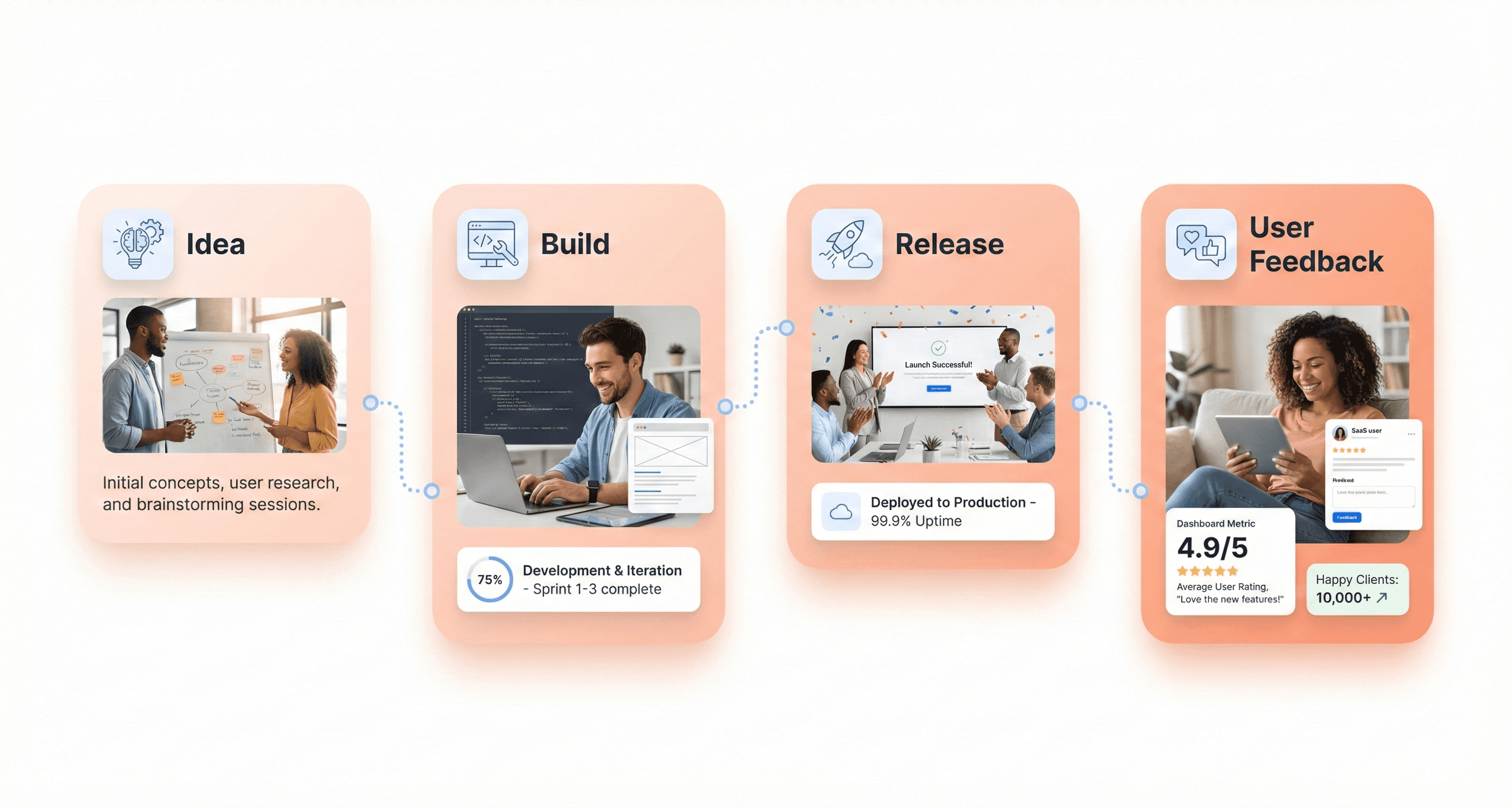
A shorter TTM enables SaaS companies to iterate on their products and incorporate customer feedback more rapidly. This iterative process helps improve the software's functionality, user experience, and overall quality, leading to higher customer satisfaction and loyalty. By releasing updates and improvements quickly, SaaS companies can stay ahead of customer expectations and adapt to evolving market demands.
First-Mover Advantage and Competitive Positioning
A shorter time to market allows companies to respond quickly to market needs and emerging trends, gaining a competitive edge over slower competitors. By releasing new features or products faster, SaaS companies can attract new customers, retain existing ones, and expand their market share.
The shorter the time to market (TTM), the greater the chance of capturing more revenue and market share before competitors can release similar products. A company that is able to establish the market price for a truly innovative product is able to gain a competitive advantage over its competitors in the future by being the first to market.
Being the first to market can give a company an advantage in terms of mindshare and brand recognition. New products are frequently compared to existing, similar products by consumers. With a faster TTM, your product will become the point of reference, which can be a significant advantage.
A company's delay in releasing a product or application gives its competitors more time to develop similar products. An increased level of competition can make it difficult for a company to stand out in the market and can make it more difficult for them to stand out.
Revenue Impact and Return on Investment Benefits
A fast time to market can be extremely beneficial when done correctly. The shorter the time to market, the greater the chance of capturing more revenue and market share before competitors can release similar products. Companies can generate feedback faster if they focus on speed-to-market in their initial strategy.
Delays in releasing a product or application can result in lost revenue, as customers may turn to competitors that have already released similar products. In addition, a longer TTM can result in a company missing out on the early adopters who are most likely to purchase and promote a new product.
With a faster time to market, the product can also be tested with real users, feedback can be collected, and improvements can be made. Using customer insights, the company can iterate on the product and create a better version. As competitors roll out version 1.0 of their product, companies can already be working on version 1.5 or version 2.
Customers are more likely to be excited about and engage with new and innovative products when the TTM is shorter. Your existing customers will be more loyal to your brand when they know that new features and products are always available.
Cost Reduction Through Development Efficiency
As delays in product development can often result in additional expenses such as overtime compensation and increased resource utilization, a shorter TTM can also result in cost savings for a company. A company's speed to market is particularly important because it prevents them from procrastinating on an idea that may not be successful. Procrastinating means losing a competitive advantage and R&D budget.
A shorter TTM results in improved agility and adaptability to market changes. As a result of a shorter TTM, a company is able to respond to market changes and trends more rapidly. Companies that respond quickly to market changes may have an advantage over their competitors.
Prioritizing and streamlining development processes as well as bringing products and applications to market as quickly as possible will enable companies to reap these benefits and remain competitive. The advantages of a faster time to market include increased revenue and market share, improved customer satisfaction, improved agility and adaptability to market changes, the opportunity to test and iterate, and reduced costs.
Common Barriers That Slow SaaS Product Launches
Resource Constraints and Allocation Issues
Limited resources represent one of the most significant barriers that slow SaaS product launches. Organizations frequently struggle with insufficient budget allocation, staffing shortages, and competing priorities that divert attention from core development initiatives. IT departments often face bandwidth limitations, making them heavily dependent on external resources to maintain competitive advantage with the latest technology.
The challenge becomes particularly acute when companies attempt to handle every process in-house without adequate personnel. Hiring larger teams to address resource gaps can prove costly, creating a cycle where budget constraints prevent the very investments needed to accelerate development. This resource crunch forces development teams to make difficult trade-offs between feature completeness, quality assurance, and launch timelines.
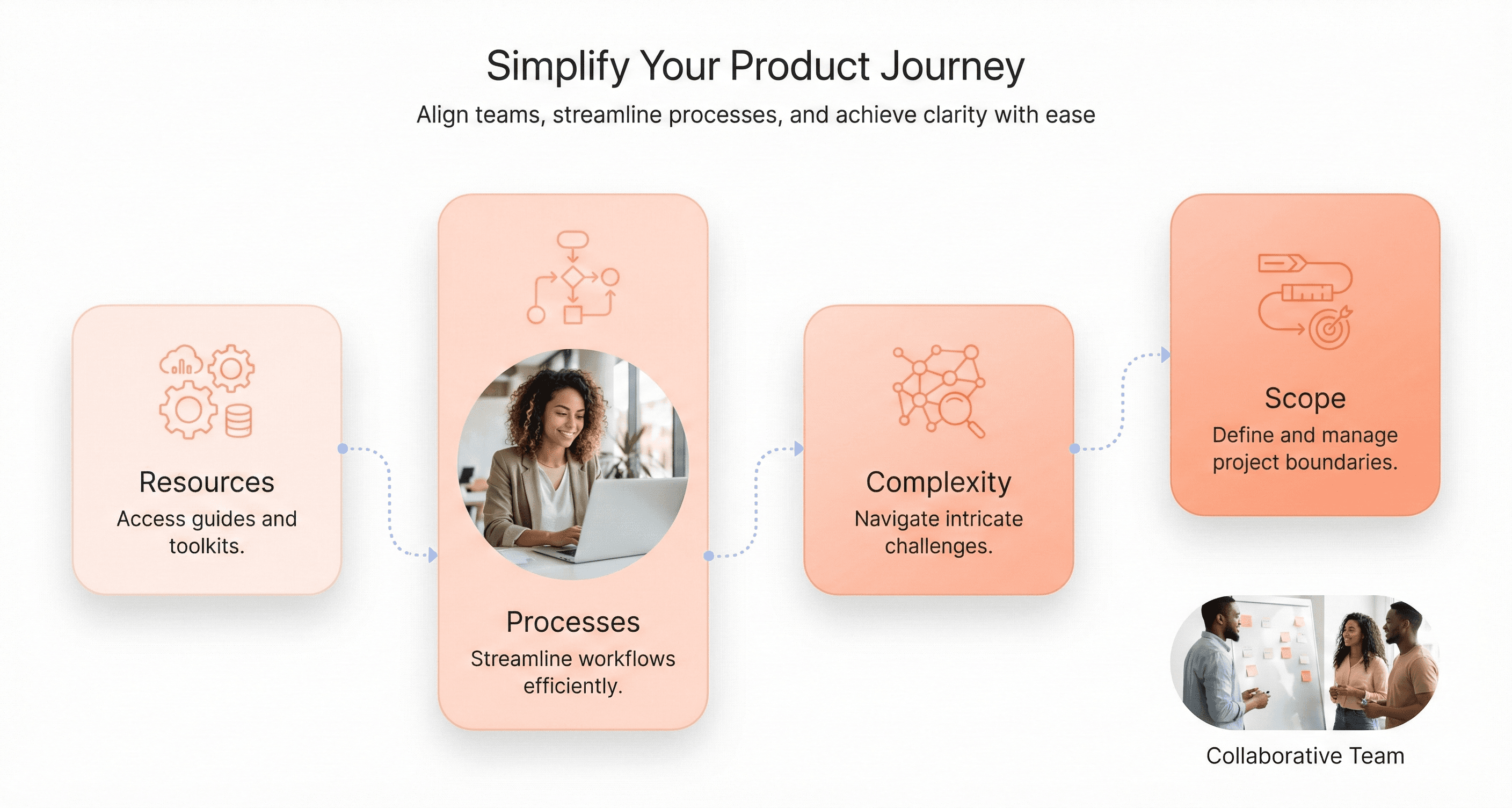
Inefficient Development Processes and Workflows
Process inefficiencies create significant bottlenecks that extend time-to-market considerably. Many SaaS companies struggle with outdated workflows that lack proper automation, forcing teams to rely heavily on manual processes that consume valuable time and increase the likelihood of errors.
Poor coordination between departments compounds these workflow challenges. When development, marketing, sales, and customer success teams operate in silos without streamlined communication channels, critical decisions get delayed and important feedback loops break down. The absence of standardized processes for code reviews, testing procedures, and deployment protocols creates inconsistencies that require additional time to resolve.
Integration challenges between existing systems and new product components further complicate workflows. Teams often discover that their current technology stack requires extensive customization or middleware development to support new features, adding unexpected complexity to what should be straightforward implementation tasks.
Product Complexity and Technical Challenges
Technical complexity emerges as users struggle to navigate unfamiliar interfaces, understand new terminology, and grasp how different features work together cohesively. This complexity barrier extends beyond user experience to encompass the underlying architecture and development challenges.
Integration issues represent a major roadblock for enterprise-wide SaaS adoption. Development teams must ensure seamless data synchronization between new software and existing systems, often requiring extensive API development and data transformation processes. The need to maintain compatibility across multiple platforms while introducing new functionality creates additional layers of technical debt that must be addressed before launch.
Security and compliance requirements add another dimension of complexity. SaaS providers must navigate regulatory standards while implementing robust data protection measures, often requiring specialized expertise and additional development cycles to ensure proper implementation.
Scope Creep and Lack of Clear Prioritization
Without clear prioritization frameworks, SaaS development projects frequently suffer from scope creep that significantly delays launch timelines. Teams often attempt to introduce all features simultaneously rather than adopting a phased approach that delivers core functionality first.
The absence of well-defined product positioning creates confusion about which features truly matter for initial market entry. Development teams may invest substantial resources in advanced capabilities while neglecting fundamental user experience improvements that would drive adoption more effectively.
Stakeholder management becomes particularly challenging when multiple departments have competing feature requests without a clear decision-making hierarchy. Product managers must balance demands from sales teams seeking specific client-requested features against technical teams advocating for infrastructure improvements, often leading to compromised solutions that satisfy no one completely.
This lack of focus prevents teams from establishing clear success metrics and creates unrealistic expectations about what can be accomplished within given timeframes and resource constraints.
Strategic Launch Planning and Team Alignment
Creating Modular Launch Playbooks for Consistency
Successful SaaS launches require standardized, repeatable processes that eliminate guesswork and ensure consistent execution across product teams. Creating modular launch playbooks serves as the foundation for this systematic approach, providing teams with clear frameworks that can be adapted for different product features or market segments.
A well-structured launch playbook should include defined stages from pre-launch through post-launch evaluation. The pre-launch phase must encompass competitor analysis, user persona development, and beta testing protocols. During the launch phase, playbooks should detail pricing strategies, content marketing execution, and customer acquisition channel deployment. Post-launch modules must focus on performance evaluation, user journey optimization, and outreach strategy refinement.
These playbooks become particularly valuable when they include specific templates for each launch component. For instance, competitor analysis templates should guide teams through website evaluation, SEO assessment, social media presence review, and market positioning analysis. Similarly, user persona templates should standardize the collection of demographics, pain points, primary goals, and job roles to ensure consistent customer profiling across all launches.
Establishing Single Source of Truth for Product Messaging
With a clear understanding of launch processes, establishing unified product messaging becomes critical for market success. A centralized messaging framework eliminates scattered communication and builds trust through consistent brand narratives across all customer touchpoints.
The messaging framework should begin with a compelling value proposition that focuses on customer outcomes rather than feature lists. This core message must be customer-friendly, avoiding technical jargon while clearly stating how users' lives improve with the product. Supporting this central proposition, teams need defined key messaging points that map to different buyer stages and customer segments.
Effective messaging frameworks also incorporate the unique selling proposition derived from thorough competitive analysis. This differentiation should address specific customer pain points that competitors fail to solve, making the value proposition more compelling and urgent for target audiences. The framework must ensure message consistency across websites, emails, sales conversations, and content marketing efforts.
Brand storytelling becomes an essential component of this unified messaging approach. The narrative should appeal to customer emotions and needs, whether focusing on time savings, increased security, or enhanced productivity. This story provides the foundation for all marketing communications and helps prospects understand not just what the product does, but why it matters to their specific situation.
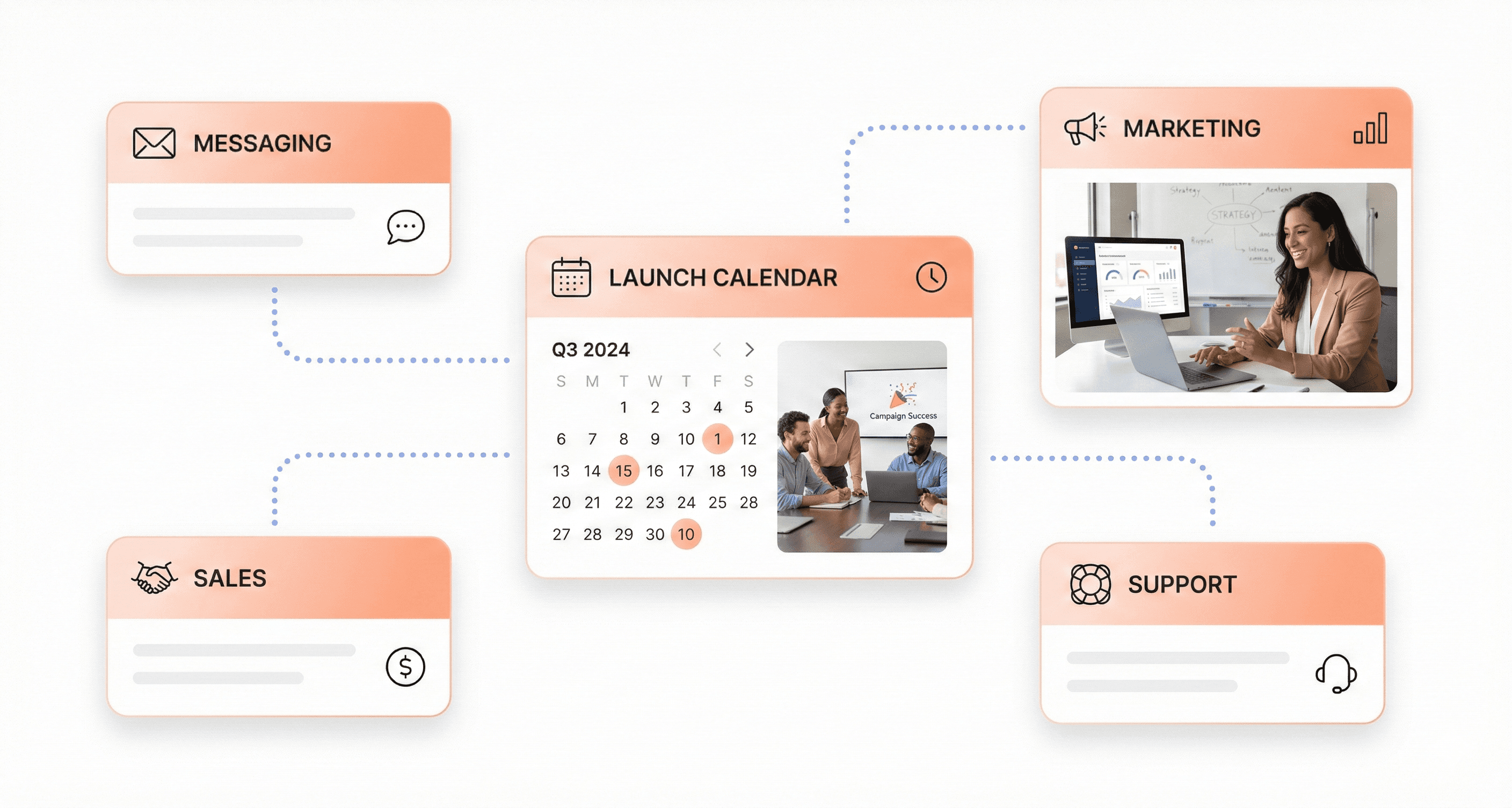
Synchronizing Launch Calendars with Go-to-Market Teams
Now that messaging consistency is established, coordinating launch timelines across all go-to-market functions ensures seamless execution and maximum market impact. Synchronized calendars prevent communication gaps and align sales, marketing, and support teams around critical launch milestones.
The synchronization process must begin during the pre-launch planning phase, incorporating content creation schedules, social media campaigns, and PR release timelines. Marketing teams need sufficient lead time to develop educational content that addresses target audience pain points and positions the brand as a trusted authority before the actual launch.
Sales and support team preparation requires particular attention in launch calendar coordination. These teams must understand the product, ideal customer profile, and common objections well before launch day. This preparation includes creating onboarding guides, FAQ documents, and response templates that align with the established messaging framework.
Launch calendar synchronization also encompasses soft launch phases, where limited user groups test the product before full public release. This staged approach allows teams to collect feedback, refine messaging, and optimize user onboarding processes while maintaining coordinated communication across all go-to-market functions.
Validating Product-Market Fit Before Full Development
Previously, we've established the framework for coordinated launches, but the most critical factor for SaaS success remains validating genuine market demand before investing significant development resources. Product-market fit validation reduces wasted effort and increases launch confidence through early user feedback and market testing.
Validation begins with clearly defining the specific problem the product solves. Teams must identify painful, frequent, and urgent problems that users actively want to resolve, rather than building features first and searching for users later. This problem definition requires direct conversations with potential users about their daily challenges, identifying patterns in complaints and workarounds.
Beta testing serves as the primary validation mechanism, providing honest feedback that internal teams cannot replicate. Even small user groups can reveal major insights about product usability, feature priorities, and market positioning. Teams should share prototypes, demos, or mockups with beta users, collecting feedback through structured calls and surveys while looking for genuine excitement rather than polite approval.
The validation process must also include waitlist building that demonstrates real commitment rather than casual interest. Effective waitlists offer early access or exclusive benefits while clearly explaining the value of early adoption. Quality over quantity becomes paramount - committed early users provide more valuable feedback and become stronger advocates than large numbers of uncommitted prospects.
Lean Development Methodologies for Speed
Implementing Lean Product Development Principles
Lean product development principles fundamentally transform how SaaS teams approach building products. The seven core principles adapted from lean manufacturing create a framework that eliminates waste while amplifying learning. These principles include eliminating waste, amplifying learning, deciding as late as possible, delivering as fast as possible, empowering the team, building integrity in, and optimizing the whole.
The elimination of waste stands as the cornerstone principle. In software development, waste manifests as partially done work, extra features, task switching, waiting periods, defects, and unnecessary handoffs. Value stream mapping techniques help identify these waste sources systematically. For SaaS products, this means focusing exclusively on features that deliver real customer value rather than building comprehensive solutions based on assumptions.
Amplifying learning transforms software development into a continuous learning process based on iterations. Rather than adding more documentation or detailed planning, teams learn by writing code and building functional prototypes. This approach speeds up the learning process through short iteration cycles coupled with refactoring and integration testing.
Adopting Agile Methodologies for Iterative Progress
While Lean and Agile methodologies share common ground, they offer distinct advantages when combined effectively. Agile focuses on development speed through structured sprints, while Lean emphasizes customer validation to ensure real impact. This complementary relationship enables SaaS teams to maintain structured flexibility while pursuing value-driven development.
The iterative approach promotes the ability to adapt to changes and correct mistakes that might prove costly if discovered after system release. Short feedback sessions with customers help determine the current development phase and adjust efforts for future improvements. During these sessions, both customer representatives and development teams learn more about domain problems and identify solutions for further development.
Set-based development concentrates on communicating solution constraints rather than specific solutions, promoting dialogue-driven problem-solving. This approach allows teams to explore multiple implementation paths simultaneously, deferring commitment until the optimal solution becomes clear through validated learning.
Building MVP First to Validate Market Demand
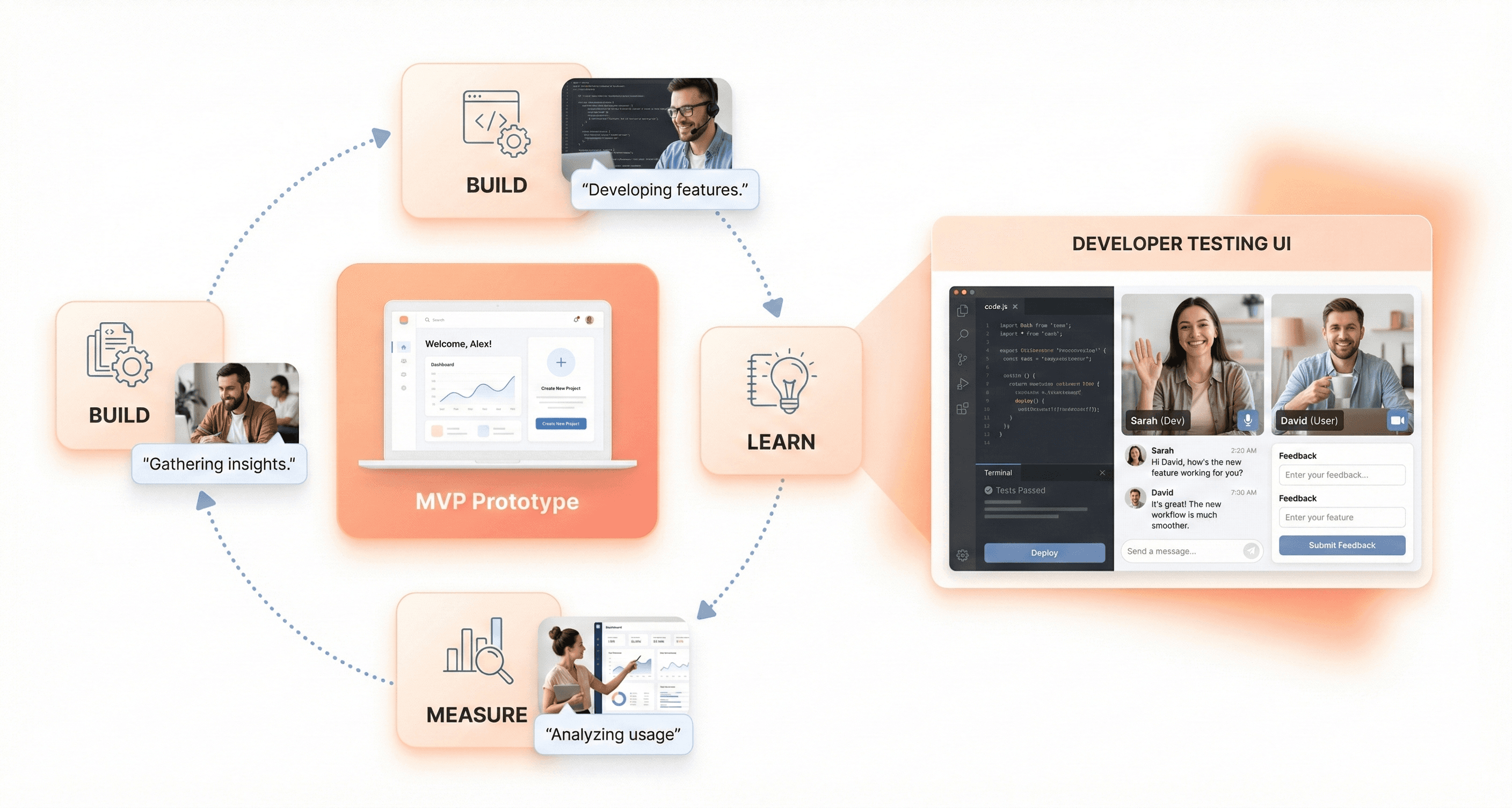
The MVP-first approach represents a fundamental shift from building complete products to validating core assumptions early. More than 42% of startups fail due to lack of product-market fit, making MVP validation crucial for SaaS success. The lean startup framework flips traditional development scripts by testing ideas and iterating quickly for real user value delivery from day one.
Creating MVP design involves developing core experiences that prove value for early users. When startups achieve clarity regarding user needs, they can create clickable prototypes that allow teams to test usability and measure engagement levels. This prototype-driven approach enables rapid validation without extensive resource investment.
The build-measure-learn cycle forms the foundation of MVP development. Teams implement just enough features to deliver measurable value, enabling faster shipping and shorter feedback loops. Release to controlled user groups provides opportunities to collect insights without large-scale deployment risks, while outcome measurement captures user behavior and responses to core features.
Minimizing Waste Through Process Optimization
Process optimization requires systematic identification and elimination of activities that don't add customer value. The seven wastes of software development include partially done work, extra processes, extra features, task switching, waiting, motion (handoffs), and defects. Each represents opportunities for streamlining development workflows.
Waste removal should occur iteratively until even seemingly essential processes face scrutiny for elimination. For SaaS development, this means questioning every feature, process step, and documentation requirement against its direct contribution to customer value. The approach prevents accumulation of defects by running tests immediately when code is written.
Just-in-time production ideology applies to software development by presenting needed results and allowing teams to self-organize around specific iteration goals. This creates self-pulling systems where team members review daily progress, identify tomorrow's priorities, and request necessary inputs from colleagues or customers. Transparency in this process benefits team communication while eliminating coordination waste.
Modern software systems require understanding that they represent not simply the sum of parts, but products of component interactions. By decomposing large tasks into standardized development stages, teams can identify and eliminate root causes of defects while building systems with smoothly interacting components.
Technical Process Optimization and Automation
Streamlining Quality Checks and Testing Procedures
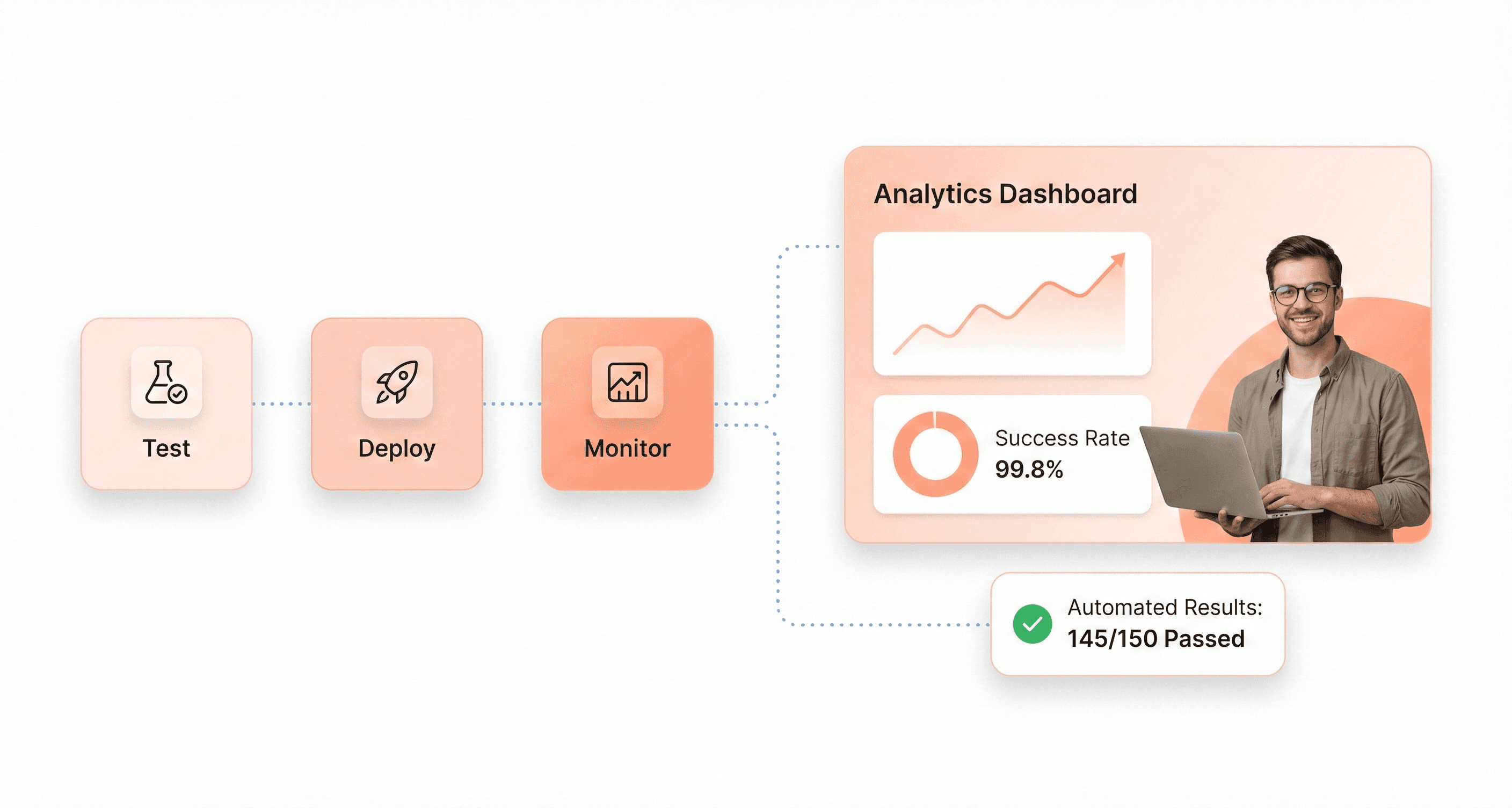
Modern SaaS development requires automated quality assurance processes that eliminate manual bottlenecks and reduce time-to-market. Performance monitoring and testing automation tools like Datadog provide comprehensive solutions for maintaining application quality while accelerating deployment cycles.
Real-time dashboards combine infrastructure metrics, application performance monitoring traces, logs, and user monitoring data into customizable views. This unified approach enables development teams to detect performance spikes, errors, or slowdowns immediately and assess root causes from a single platform, eliminating the need for time-consuming manual checks across multiple systems.
Synthetic monitoring capabilities schedule automated API and browser tests that simulate critical user flows including checkout processes, login sequences, and signup workflows from multiple global locations. These automated tests ensure uptime and response-time service level agreements are met before real users encounter issues, preventing costly post-launch problems.
Application Performance Monitoring (APM) and distributed tracing features automatically trace requests across microservices with flame graphs and latency breakdowns. This enables teams to pinpoint inefficient code paths and optimize performance without manual code reviews, significantly reducing testing cycles.
Implementing CI/CD Pipelines for Faster Deployment
Continuous Integration and Continuous Deployment pipelines represent the backbone of accelerated SaaS delivery, automating the entire journey from code commit to production deployment. These automated workflows eliminate manual intervention points that traditionally slow software releases.
Application management software plays a pivotal role by automating routine deployment tasks and providing valuable analytics throughout the deployment process. These solutions automate updates and patching processes, freeing IT staff for more strategic development activities while enhancing overall productivity.
Modern CI/CD implementations include automated testing suites that run comprehensive quality checks at each stage of the deployment pipeline. Load testing, uptime monitoring, and alerting systems automatically validate application performance before code reaches production environments.
Key components of effective CI/CD automation include automated build processes, containerized deployments, and rollback capabilities. These features ensure that failed deployments can be quickly reversed without extended downtime periods that impact user experience and business operations.
Setting Up Automated Usage Tracking and Billing Systems
Automated billing and usage tracking systems eliminate manual invoice generation and payment processing bottlenecks that can delay SaaS launches and ongoing operations. Financial automation tools streamline recurring billing cycles and expense tracking, reducing administrative overhead significantly.
Finance and billing automation encompasses invoice generation, payment processing, recurring subscription billing, and comprehensive expense tracking capabilities. Tools like Stripe, QuickBooks, and Chargebee provide end-to-end automation for these critical business functions.
Automated invoicing and recurring billing capabilities generate and send invoices on predetermined schedules, then automatically follow up on late payments. This ensures consistent cash flow without requiring manual client communications or payment chasing activities.
Bank reconciliation features automatically match transactions to bank and credit card statements within seconds. These systems flag discrepancies immediately, enabling teams to resolve errors before they compound into larger financial issues that could delay product launches or operations.
Event tracking automation captures every user interaction including clicks, hovers, and form submissions when software development kits are activated. This comprehensive data collection eliminates the need for manual event tagging, allowing teams to focus on utilizing usage data for billing optimization and user experience improvements.
Leveraging API Integrations Over Custom Development
API integrations significantly reduce development time by connecting existing services rather than building functionality from scratch. This approach accelerates SaaS time-to-market by leveraging proven, tested solutions instead of investing months in custom development cycles.
Workflow automation platforms like Zapier enable teams to link CRM systems, email platforms, advertising tools, spreadsheets, and over 8,000 other applications to sync data automatically. These integrations eliminate the need for custom-built connections between business-critical systems.
Multi-step automation workflows with branching logic handle complex customer journeys without requiring custom development. Filters and delays enable actions to run only when specific conditions are met, while scheduled follow-up communications create sophisticated drip campaigns using existing API endpoints.
Application lifecycle management benefits significantly from API-first approaches, ensuring applications integrate seamlessly with existing business systems throughout their entire lifespan. From initial development through deployment, monitoring, and eventual retirement, API integrations provide consistent connectivity without ongoing custom development requirements.
Native integrations between platforms like ClickUp and over 1,000 business tools enable data synchronization and cross-platform automation triggers. This connectivity approach reduces the technical debt associated with custom integrations while providing more reliable, maintained connections between critical business systems.
Partnership and Distribution Channel Acceleration
Using Federated Marketplace Engines for Multi-Channel Launch
With this in mind, next, we'll see how federated marketplace engines revolutionize the way SaaS companies approach multi-channel distribution. A platform like Apptium's Cloud Commerce Platform (CCP) syndicates your product listing across all connected resellers at once, eliminating the traditional bottlenecks of manual setup processes.
When you're part of the Apptium ecosystem and available to their network of resellers, the moment you push your new product live in CCP, every reseller in the network can instantly activate and sell it in their own storefronts. This means when you're ready to sell your new product, your resellers and distributors are simultaneously ready to sell your new product. The platform that syndicates your products eliminates delays caused by manual setup, communication and process lags, and inconsistent messaging.
This approach drastically reduces time-to-market across the entire ecosystem, especially when selling through hundreds of partners. Rather than coordinating individual launches with each partner, federated engines enable simultaneous activation across your entire distribution network.
Automating Partner Setup and Product Syndication
Previously, partner onboarding required extensive manual coordination between vendors and each individual reseller. Now, automation platforms streamline this entire process by handling the technical infrastructure that supports rapid partner activation.
Platforms that support automated usage-based billing can help ensure your monetization strategy doesn't lag behind your launch date. Automating these processes reduces internal overhead and ensures customers and partners have a smooth, scalable experience from the start. This automation extends beyond billing to include provisioning, metering, and customer activation systems.
The syndication process ensures consistent product information, pricing, and messaging across all partner channels, eliminating the risk of conflicting details that can confuse potential customers or create partner friction.
Eliminating Manual Processes in Reseller Networks
Manual processes in reseller networks create significant delays that compound across multiple partners. Traditional approaches require individual communication with each reseller, separate setup procedures, and ongoing coordination to maintain consistency.
By leveraging automated syndication platforms, SaaS companies eliminate the need for their teams or partners to rebuild product listings from scratch each time. This removes the bottleneck of manual setup, communication lags, and the risk of inconsistent messaging across the partner ecosystem.
The elimination of manual processes also reduces the internal resources required to manage partner relationships, freeing up teams to focus on product development and strategic initiatives rather than administrative coordination.
Scaling Across Distribution Channels Instantly
Now that we have covered the foundational elements of automated partner management, scaling across distribution channels becomes a matter of platform configuration rather than individual partner negotiations. When using federated marketplace engines, adding new distribution channels or partners doesn't require rebuilding your entire go-to-market infrastructure.
The instant scaling capability allows SaaS companies to expand their market reach without proportionally increasing their operational overhead. Each new partner added to the network immediately gains access to your complete product catalog, with automated billing, provisioning, and support systems already in place.
This scalability is particularly valuable for SaaS companies targeting global markets or those with rapid product development cycles, as it ensures that distribution capability never becomes a limiting factor in growth strategies.
Outsourcing and External Expertise Leverage
Gaining Specialized Skills Through Strategic Outsourcing
Strategic outsourcing provides access to specialized SaaS expertise that would otherwise require significant time and resources to develop internally. External development teams that focus on SaaS already understand common build requirements, recurring billing systems, and long-term maintainability considerations. This familiarity with Software as a Service technical patterns helps avoid architectural decisions that create friction as products scale.
SaaS products share specific technical challenges beyond standard application development, including multi-tenancy, subscription management, and continuous deployment requirements. Teams with proven SaaS experience bring this domain knowledge immediately, eliminating the learning curve that internal teams might face when tackling these specialized requirements for the first time.
The outsourcing approach allows companies to tap into expertise across multiple disciplines simultaneously - from UI/UX design and front-end development to back-end architecture and quality assurance testing. Rather than hiring generalists internally, this model provides access to specialists exactly when needed, with 78% of businesses citing this targeted expertise advantage in recent surveys.
Accelerating Development with Global Talent Pools
Now that we've established the value of specialized skills, global talent pools offer unprecedented opportunities to accelerate SaaS development timelines. Development outsourcing can reduce time-to-market by up to 40% according to Deloitte research, primarily by eliminating hiring and ramp-up delays that plague internal team expansion.
External development partners can begin execution quickly since they already have established teams and processes in place. This immediate availability contrasts sharply with the 3-6 months typically required for new internal hires to reach full productivity. The global nature of these talent pools also enables around-the-clock development cycles, with teams in different time zones contributing to continuous progress.
Location considerations play a crucial role in maximizing these benefits. Nearshore software development can support real-time collaboration during shared work hours, while offshore teams provide cost advantages and access to larger talent pools. The key lies in selecting the right geographic model based on communication needs, time zone overlap requirements, and project complexity.
Focusing Internal Teams on Core Product Features
With external teams managing implementation details, internal leaders can maintain focus on product direction, user feedback, and strategic planning. This separation of responsibilities reduces context switching and enables in-house teams to make more consistent decisions as products mature.
When third-party teams handle routine development tasks, internal resources become available for higher-value activities like market research, customer interviews, and competitive analysis. This strategic reallocation of internal bandwidth often proves more valuable than the direct cost savings from outsourcing.
The hybrid approach works particularly well when product management and design remain in-house while core development functions are outsourced. This structure maintains control over product vision and user experience while leveraging external expertise for technical implementation.
Reducing Time-to-Hire Through External Partnerships
Previously, I've outlined how internal hiring creates significant delays and costs. External partnerships eliminate these bottlenecks entirely by providing immediate access to pre-vetted development teams. The average cost-per-hire for technical roles exceeds $22,000 when factoring in recruiters, job listings, and interview time - costs that disappear when working with established development partners.
Staff augmentation models allow teams to add external developers with specific skills without the overhead of full-time hiring. This approach provides more control over work and enables direct collaboration while avoiding the 3-6 month onboarding period typical for new internal hires.
Dedicated team models offer another pathway to rapid scaling, providing long-term external teams that work exclusively on your SaaS product. While this requires higher ongoing investment than short-term models, it delivers consistent output and deep product knowledge without the management bandwidth required for building internal teams.
The flexibility inherent in external partnerships supports varying development needs as priorities shift. Teams can increase or reduce development capacity without restructuring existing internal resources, supporting both growth periods and quieter phases without long-term staffing commitments.
Post-Launch Optimization and Real-Time Iteration
Tracking Key Metrics and Performance Indicators
Post-launch success hinges on monitoring the right metrics that reveal genuine product performance rather than vanity numbers. The five core metrics that actually matter for SaaS products include activation rate, user adoption rate, time to value, customer retention rate, and feature adoption rate.
Activation rate measures the percentage of users who reach your product's core value moment - not just signing up, but actually experiencing the "aha moment." Industry benchmarks show good products activate 40-60% of signups within the first week, while exceptional products push 70% or higher. If your activation rate falls below 25%, you're facing serious onboarding problems.
User adoption rate evaluates what percentage of your target audience actively uses the new product, answering whether the people you built this for are actually using it. This metric can reveal a disconnect between high activation rates and low broader market adoption.
Time to value tracks how quickly new users reach their first benefit after signing up. Shorter times correlate directly with higher engagement and conversion to paying customers, as users who take too long to see value often drop off before experiencing your product's benefits.
Customer retention rate and feature adoption rate complete the core metric suite, showing whether users stick with your product beyond launch hype and how much of your functionality delivers real value.
Implementing Real-Time Monitoring and Alerting
Real-time monitoring capabilities provide immediate visibility into how users interact with your newly launched product. Modern analytics platforms enable you to track user journeys as they happen, showing the exact path each user takes through your product and identifying where they may be dropping off.
Setting up proper event tracking requires defining your key performance indicators before launch and implementing tracking for specific user actions. This includes tracking custom events for key actions you've defined, monitoring page views and unique visitors, and connecting website analytics to see traffic sources including email campaigns, social media posts, and referral sites.
Dashboard monitoring provides a high-level view of traffic and engagement, displaying popular events and interactions, user properties such as location or device, and referrer data with UTM campaign tracking. The ability to filter and segment data by event type or user property allows you to see how specific launch activities perform in real-time.
Funnel analysis becomes particularly valuable for real-time optimization, as you can create funnels with your launch steps and see conversion and drop-off numbers at each stage as they occur, enabling immediate adjustments when bottlenecks appear.
Gathering Customer Feedback for Rapid Improvements
Net Promoter Score (NPS) serves as a crucial feedback mechanism for measuring customer satisfaction and loyalty by asking how likely customers are to recommend your product. High NPS indicates satisfied users who will likely promote your product organically, while low NPS signals user frustration or unmet expectations that require immediate attention.
Social media engagement provides another valuable feedback channel, tracking how your audience reacts to launch announcements and feature content through likes, shares, comments, mentions, and engagement rates across social channels. Strong engagement indicates content resonance and audience interest, while low engagement suggests the need to rethink content strategy or audience targeting.
Website engagement metrics complement direct feedback by showing how many people actively check your product information and how long they remain interested. This includes tracking total visitors, unique page views, conversion rates, bounce rates, and session duration to gauge genuine interest levels.
The combination of quantitative metrics and qualitative feedback creates a comprehensive view of user sentiment, enabling rapid identification of friction points and opportunities for improvement during the critical post-launch period.
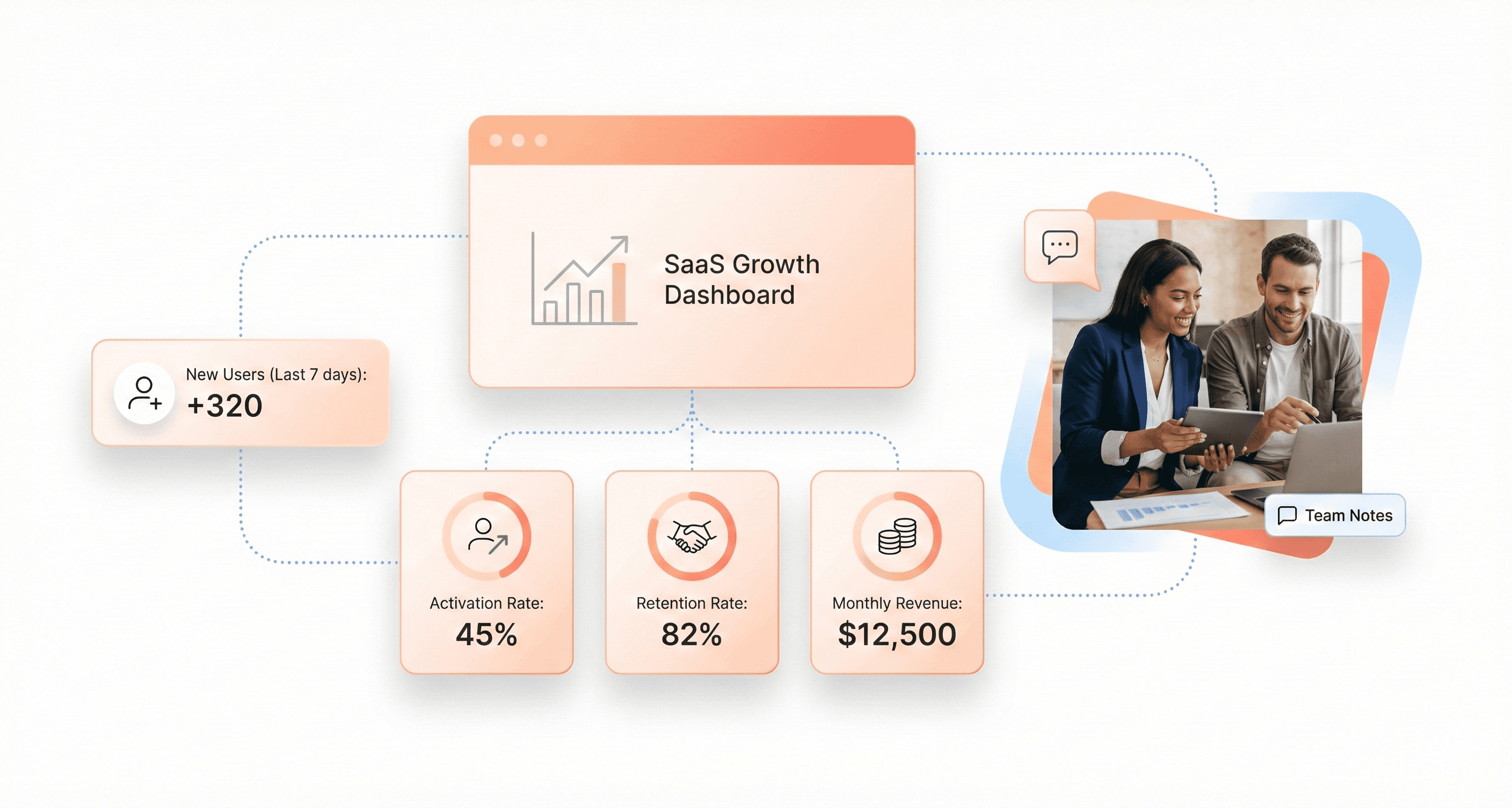
Making Data-Driven Adjustments to Protect Revenue Trajectory
Data-driven optimization requires moving beyond assumptions to make decisions based on actual user behavior patterns. Product launch analytics connects user actions to business outcomes, showing whether new features achieve desired results and contribute to your product's core value proposition.
Customer Acquisition Cost (CAC) monitoring during launch reveals the efficiency of your acquisition channels. High CAC with low user acquisition indicates the need to rethink launch strategy and campaign targeting before scaling efforts. This metric directly impacts revenue trajectory by determining the sustainability of your growth investments.
Resource allocation optimization becomes possible through detailed engagement and conversion path analysis. Instead of guessing what to fix or build next, teams can allocate development time and marketing effort toward activities that generate measurable results. This prevents the common mistake of scaling before finding product-market fit, which causes 73% of startup failures.
User journey analysis reveals specific friction points in the conversion process, allowing for immediate fixes that can significantly improve user experience before the majority of your audience encounters these issues. By identifying leaks in the funnel early, you can protect revenue trajectory through proactive optimization rather than reactive damage control.
The key is connecting launch metrics directly to revenue impact, ensuring that every optimization decision supports long-term business sustainability rather than just improving surface-level engagement numbers.
Conclusion
Accelerating SaaS time-to-market isn't about cutting corners—it's about cutting friction. The strategies outlined above, from strategic launch planning and lean methodologies to technical optimization and leveraging external expertise, work together to eliminate the common barriers that slow product launches. When teams align around clear processes, embrace automation, and focus on delivering value quickly through approaches like MVP development, they can significantly reduce the time from concept to customer.
The competitive advantage goes to SaaS companies that can move fast while maintaining quality. By implementing these proven strategies, whether through better internal coordination, streamlined technical processes, or strategic partnerships, you position your product to capture market opportunities before competitors arrive. Speed matters in SaaS, and with the right development approach and expert support, your next launch can turn into revenue weeks or months sooner than traditional methods would allow.
SaaS companies face a harsh reality: launching late often means launching last. Product development services accelerate SaaS time-to-market by eliminating common bottlenecks, streamlining development processes, and providing specialized expertise when you need it most.
This guide is for SaaS founders, product managers, and development teams who need to move from concept to launch faster without sacrificing quality. Speed isn't just about beating competitors—it's about capturing market opportunities, validating product-market fit early, and starting revenue generation sooner.
We'll explore how strategic launch planning creates alignment across teams and prevents costly delays. You'll discover lean development methodologies that help you build smarter, not harder. Finally, we'll show you how technical process optimization and automation can cut weeks from your development cycle while improving product quality.
Understanding Time-to-Market and Its Strategic Importance for SaaS
Defining Time-to-Market in SaaS Product Development
Time to Market (TTM), also known as T2M, refers to the amount of time it takes for a product or service to be developed, manufactured, and made available for sale or use in the market. In the context of the SaaS industry, TTM is particularly important as it directly impacts a company's ability to deliver software solutions and stay competitive in a rapidly evolving market.
For SaaS companies, TTM is a critical metric that measures the efficiency and speed at which they can bring new products, features, or updates to their customers. The SaaS industry is known for its dynamic nature, with customer needs, technological advancements, and market trends constantly changing. To effectively capitalize on these opportunities and meet customer demands, SaaS companies must minimize their TTM.

A shorter TTM enables SaaS companies to iterate on their products and incorporate customer feedback more rapidly. This iterative process helps improve the software's functionality, user experience, and overall quality, leading to higher customer satisfaction and loyalty. By releasing updates and improvements quickly, SaaS companies can stay ahead of customer expectations and adapt to evolving market demands.
First-Mover Advantage and Competitive Positioning
A shorter time to market allows companies to respond quickly to market needs and emerging trends, gaining a competitive edge over slower competitors. By releasing new features or products faster, SaaS companies can attract new customers, retain existing ones, and expand their market share.
The shorter the time to market (TTM), the greater the chance of capturing more revenue and market share before competitors can release similar products. A company that is able to establish the market price for a truly innovative product is able to gain a competitive advantage over its competitors in the future by being the first to market.
Being the first to market can give a company an advantage in terms of mindshare and brand recognition. New products are frequently compared to existing, similar products by consumers. With a faster TTM, your product will become the point of reference, which can be a significant advantage.
A company's delay in releasing a product or application gives its competitors more time to develop similar products. An increased level of competition can make it difficult for a company to stand out in the market and can make it more difficult for them to stand out.
Revenue Impact and Return on Investment Benefits
A fast time to market can be extremely beneficial when done correctly. The shorter the time to market, the greater the chance of capturing more revenue and market share before competitors can release similar products. Companies can generate feedback faster if they focus on speed-to-market in their initial strategy.
Delays in releasing a product or application can result in lost revenue, as customers may turn to competitors that have already released similar products. In addition, a longer TTM can result in a company missing out on the early adopters who are most likely to purchase and promote a new product.
With a faster time to market, the product can also be tested with real users, feedback can be collected, and improvements can be made. Using customer insights, the company can iterate on the product and create a better version. As competitors roll out version 1.0 of their product, companies can already be working on version 1.5 or version 2.
Customers are more likely to be excited about and engage with new and innovative products when the TTM is shorter. Your existing customers will be more loyal to your brand when they know that new features and products are always available.
Cost Reduction Through Development Efficiency
As delays in product development can often result in additional expenses such as overtime compensation and increased resource utilization, a shorter TTM can also result in cost savings for a company. A company's speed to market is particularly important because it prevents them from procrastinating on an idea that may not be successful. Procrastinating means losing a competitive advantage and R&D budget.
A shorter TTM results in improved agility and adaptability to market changes. As a result of a shorter TTM, a company is able to respond to market changes and trends more rapidly. Companies that respond quickly to market changes may have an advantage over their competitors.
Prioritizing and streamlining development processes as well as bringing products and applications to market as quickly as possible will enable companies to reap these benefits and remain competitive. The advantages of a faster time to market include increased revenue and market share, improved customer satisfaction, improved agility and adaptability to market changes, the opportunity to test and iterate, and reduced costs.
Common Barriers That Slow SaaS Product Launches
Resource Constraints and Allocation Issues
Limited resources represent one of the most significant barriers that slow SaaS product launches. Organizations frequently struggle with insufficient budget allocation, staffing shortages, and competing priorities that divert attention from core development initiatives. IT departments often face bandwidth limitations, making them heavily dependent on external resources to maintain competitive advantage with the latest technology.
The challenge becomes particularly acute when companies attempt to handle every process in-house without adequate personnel. Hiring larger teams to address resource gaps can prove costly, creating a cycle where budget constraints prevent the very investments needed to accelerate development. This resource crunch forces development teams to make difficult trade-offs between feature completeness, quality assurance, and launch timelines.

Inefficient Development Processes and Workflows
Process inefficiencies create significant bottlenecks that extend time-to-market considerably. Many SaaS companies struggle with outdated workflows that lack proper automation, forcing teams to rely heavily on manual processes that consume valuable time and increase the likelihood of errors.
Poor coordination between departments compounds these workflow challenges. When development, marketing, sales, and customer success teams operate in silos without streamlined communication channels, critical decisions get delayed and important feedback loops break down. The absence of standardized processes for code reviews, testing procedures, and deployment protocols creates inconsistencies that require additional time to resolve.
Integration challenges between existing systems and new product components further complicate workflows. Teams often discover that their current technology stack requires extensive customization or middleware development to support new features, adding unexpected complexity to what should be straightforward implementation tasks.
Product Complexity and Technical Challenges
Technical complexity emerges as users struggle to navigate unfamiliar interfaces, understand new terminology, and grasp how different features work together cohesively. This complexity barrier extends beyond user experience to encompass the underlying architecture and development challenges.
Integration issues represent a major roadblock for enterprise-wide SaaS adoption. Development teams must ensure seamless data synchronization between new software and existing systems, often requiring extensive API development and data transformation processes. The need to maintain compatibility across multiple platforms while introducing new functionality creates additional layers of technical debt that must be addressed before launch.
Security and compliance requirements add another dimension of complexity. SaaS providers must navigate regulatory standards while implementing robust data protection measures, often requiring specialized expertise and additional development cycles to ensure proper implementation.
Scope Creep and Lack of Clear Prioritization
Without clear prioritization frameworks, SaaS development projects frequently suffer from scope creep that significantly delays launch timelines. Teams often attempt to introduce all features simultaneously rather than adopting a phased approach that delivers core functionality first.
The absence of well-defined product positioning creates confusion about which features truly matter for initial market entry. Development teams may invest substantial resources in advanced capabilities while neglecting fundamental user experience improvements that would drive adoption more effectively.
Stakeholder management becomes particularly challenging when multiple departments have competing feature requests without a clear decision-making hierarchy. Product managers must balance demands from sales teams seeking specific client-requested features against technical teams advocating for infrastructure improvements, often leading to compromised solutions that satisfy no one completely.
This lack of focus prevents teams from establishing clear success metrics and creates unrealistic expectations about what can be accomplished within given timeframes and resource constraints.
Strategic Launch Planning and Team Alignment
Creating Modular Launch Playbooks for Consistency
Successful SaaS launches require standardized, repeatable processes that eliminate guesswork and ensure consistent execution across product teams. Creating modular launch playbooks serves as the foundation for this systematic approach, providing teams with clear frameworks that can be adapted for different product features or market segments.
A well-structured launch playbook should include defined stages from pre-launch through post-launch evaluation. The pre-launch phase must encompass competitor analysis, user persona development, and beta testing protocols. During the launch phase, playbooks should detail pricing strategies, content marketing execution, and customer acquisition channel deployment. Post-launch modules must focus on performance evaluation, user journey optimization, and outreach strategy refinement.
These playbooks become particularly valuable when they include specific templates for each launch component. For instance, competitor analysis templates should guide teams through website evaluation, SEO assessment, social media presence review, and market positioning analysis. Similarly, user persona templates should standardize the collection of demographics, pain points, primary goals, and job roles to ensure consistent customer profiling across all launches.

Establishing Single Source of Truth for Product Messaging
With a clear understanding of launch processes, establishing unified product messaging becomes critical for market success. A centralized messaging framework eliminates scattered communication and builds trust through consistent brand narratives across all customer touchpoints.
The messaging framework should begin with a compelling value proposition that focuses on customer outcomes rather than feature lists. This core message must be customer-friendly, avoiding technical jargon while clearly stating how users' lives improve with the product. Supporting this central proposition, teams need defined key messaging points that map to different buyer stages and customer segments.
Effective messaging frameworks also incorporate the unique selling proposition derived from thorough competitive analysis. This differentiation should address specific customer pain points that competitors fail to solve, making the value proposition more compelling and urgent for target audiences. The framework must ensure message consistency across websites, emails, sales conversations, and content marketing efforts.
Brand storytelling becomes an essential component of this unified messaging approach. The narrative should appeal to customer emotions and needs, whether focusing on time savings, increased security, or enhanced productivity. This story provides the foundation for all marketing communications and helps prospects understand not just what the product does, but why it matters to their specific situation.
Synchronizing Launch Calendars with Go-to-Market Teams
Now that messaging consistency is established, coordinating launch timelines across all go-to-market functions ensures seamless execution and maximum market impact. Synchronized calendars prevent communication gaps and align sales, marketing, and support teams around critical launch milestones.
The synchronization process must begin during the pre-launch planning phase, incorporating content creation schedules, social media campaigns, and PR release timelines. Marketing teams need sufficient lead time to develop educational content that addresses target audience pain points and positions the brand as a trusted authority before the actual launch.
Sales and support team preparation requires particular attention in launch calendar coordination. These teams must understand the product, ideal customer profile, and common objections well before launch day. This preparation includes creating onboarding guides, FAQ documents, and response templates that align with the established messaging framework.
Launch calendar synchronization also encompasses soft launch phases, where limited user groups test the product before full public release. This staged approach allows teams to collect feedback, refine messaging, and optimize user onboarding processes while maintaining coordinated communication across all go-to-market functions.
Validating Product-Market Fit Before Full Development
Previously, we've established the framework for coordinated launches, but the most critical factor for SaaS success remains validating genuine market demand before investing significant development resources. Product-market fit validation reduces wasted effort and increases launch confidence through early user feedback and market testing.
Validation begins with clearly defining the specific problem the product solves. Teams must identify painful, frequent, and urgent problems that users actively want to resolve, rather than building features first and searching for users later. This problem definition requires direct conversations with potential users about their daily challenges, identifying patterns in complaints and workarounds.
Beta testing serves as the primary validation mechanism, providing honest feedback that internal teams cannot replicate. Even small user groups can reveal major insights about product usability, feature priorities, and market positioning. Teams should share prototypes, demos, or mockups with beta users, collecting feedback through structured calls and surveys while looking for genuine excitement rather than polite approval.
The validation process must also include waitlist building that demonstrates real commitment rather than casual interest. Effective waitlists offer early access or exclusive benefits while clearly explaining the value of early adoption. Quality over quantity becomes paramount - committed early users provide more valuable feedback and become stronger advocates than large numbers of uncommitted prospects.
Lean Development Methodologies for Speed
Implementing Lean Product Development Principles
Lean product development principles fundamentally transform how SaaS teams approach building products. The seven core principles adapted from lean manufacturing create a framework that eliminates waste while amplifying learning. These principles include eliminating waste, amplifying learning, deciding as late as possible, delivering as fast as possible, empowering the team, building integrity in, and optimizing the whole.
The elimination of waste stands as the cornerstone principle. In software development, waste manifests as partially done work, extra features, task switching, waiting periods, defects, and unnecessary handoffs. Value stream mapping techniques help identify these waste sources systematically. For SaaS products, this means focusing exclusively on features that deliver real customer value rather than building comprehensive solutions based on assumptions.
Amplifying learning transforms software development into a continuous learning process based on iterations. Rather than adding more documentation or detailed planning, teams learn by writing code and building functional prototypes. This approach speeds up the learning process through short iteration cycles coupled with refactoring and integration testing.
Adopting Agile Methodologies for Iterative Progress
While Lean and Agile methodologies share common ground, they offer distinct advantages when combined effectively. Agile focuses on development speed through structured sprints, while Lean emphasizes customer validation to ensure real impact. This complementary relationship enables SaaS teams to maintain structured flexibility while pursuing value-driven development.
The iterative approach promotes the ability to adapt to changes and correct mistakes that might prove costly if discovered after system release. Short feedback sessions with customers help determine the current development phase and adjust efforts for future improvements. During these sessions, both customer representatives and development teams learn more about domain problems and identify solutions for further development.
Set-based development concentrates on communicating solution constraints rather than specific solutions, promoting dialogue-driven problem-solving. This approach allows teams to explore multiple implementation paths simultaneously, deferring commitment until the optimal solution becomes clear through validated learning.
Building MVP First to Validate Market Demand
The MVP-first approach represents a fundamental shift from building complete products to validating core assumptions early. More than 42% of startups fail due to lack of product-market fit, making MVP validation crucial for SaaS success. The lean startup framework flips traditional development scripts by testing ideas and iterating quickly for real user value delivery from day one.
Creating MVP design involves developing core experiences that prove value for early users. When startups achieve clarity regarding user needs, they can create clickable prototypes that allow teams to test usability and measure engagement levels. This prototype-driven approach enables rapid validation without extensive resource investment.
The build-measure-learn cycle forms the foundation of MVP development. Teams implement just enough features to deliver measurable value, enabling faster shipping and shorter feedback loops. Release to controlled user groups provides opportunities to collect insights without large-scale deployment risks, while outcome measurement captures user behavior and responses to core features.
Minimizing Waste Through Process Optimization
Process optimization requires systematic identification and elimination of activities that don't add customer value. The seven wastes of software development include partially done work, extra processes, extra features, task switching, waiting, motion (handoffs), and defects. Each represents opportunities for streamlining development workflows.
Waste removal should occur iteratively until even seemingly essential processes face scrutiny for elimination. For SaaS development, this means questioning every feature, process step, and documentation requirement against its direct contribution to customer value. The approach prevents accumulation of defects by running tests immediately when code is written.

Just-in-time production ideology applies to software development by presenting needed results and allowing teams to self-organize around specific iteration goals. This creates self-pulling systems where team members review daily progress, identify tomorrow's priorities, and request necessary inputs from colleagues or customers. Transparency in this process benefits team communication while eliminating coordination waste.
Modern software systems require understanding that they represent not simply the sum of parts, but products of component interactions. By decomposing large tasks into standardized development stages, teams can identify and eliminate root causes of defects while building systems with smoothly interacting components.
Technical Process Optimization and Automation
Streamlining Quality Checks and Testing Procedures
Modern SaaS development requires automated quality assurance processes that eliminate manual bottlenecks and reduce time-to-market. Performance monitoring and testing automation tools like Datadog provide comprehensive solutions for maintaining application quality while accelerating deployment cycles.
Real-time dashboards combine infrastructure metrics, application performance monitoring traces, logs, and user monitoring data into customizable views. This unified approach enables development teams to detect performance spikes, errors, or slowdowns immediately and assess root causes from a single platform, eliminating the need for time-consuming manual checks across multiple systems.
Synthetic monitoring capabilities schedule automated API and browser tests that simulate critical user flows including checkout processes, login sequences, and signup workflows from multiple global locations. These automated tests ensure uptime and response-time service level agreements are met before real users encounter issues, preventing costly post-launch problems.
Application Performance Monitoring (APM) and distributed tracing features automatically trace requests across microservices with flame graphs and latency breakdowns. This enables teams to pinpoint inefficient code paths and optimize performance without manual code reviews, significantly reducing testing cycles.
Implementing CI/CD Pipelines for Faster Deployment
Continuous Integration and Continuous Deployment pipelines represent the backbone of accelerated SaaS delivery, automating the entire journey from code commit to production deployment. These automated workflows eliminate manual intervention points that traditionally slow software releases.
Application management software plays a pivotal role by automating routine deployment tasks and providing valuable analytics throughout the deployment process. These solutions automate updates and patching processes, freeing IT staff for more strategic development activities while enhancing overall productivity.
Modern CI/CD implementations include automated testing suites that run comprehensive quality checks at each stage of the deployment pipeline. Load testing, uptime monitoring, and alerting systems automatically validate application performance before code reaches production environments.
Key components of effective CI/CD automation include automated build processes, containerized deployments, and rollback capabilities. These features ensure that failed deployments can be quickly reversed without extended downtime periods that impact user experience and business operations.
Setting Up Automated Usage Tracking and Billing Systems
Automated billing and usage tracking systems eliminate manual invoice generation and payment processing bottlenecks that can delay SaaS launches and ongoing operations. Financial automation tools streamline recurring billing cycles and expense tracking, reducing administrative overhead significantly.
Finance and billing automation encompasses invoice generation, payment processing, recurring subscription billing, and comprehensive expense tracking capabilities. Tools like Stripe, QuickBooks, and Chargebee provide end-to-end automation for these critical business functions.
Automated invoicing and recurring billing capabilities generate and send invoices on predetermined schedules, then automatically follow up on late payments. This ensures consistent cash flow without requiring manual client communications or payment chasing activities.
Bank reconciliation features automatically match transactions to bank and credit card statements within seconds. These systems flag discrepancies immediately, enabling teams to resolve errors before they compound into larger financial issues that could delay product launches or operations.
Event tracking automation captures every user interaction including clicks, hovers, and form submissions when software development kits are activated. This comprehensive data collection eliminates the need for manual event tagging, allowing teams to focus on utilizing usage data for billing optimization and user experience improvements.

Leveraging API Integrations Over Custom Development
API integrations significantly reduce development time by connecting existing services rather than building functionality from scratch. This approach accelerates SaaS time-to-market by leveraging proven, tested solutions instead of investing months in custom development cycles.
Workflow automation platforms like Zapier enable teams to link CRM systems, email platforms, advertising tools, spreadsheets, and over 8,000 other applications to sync data automatically. These integrations eliminate the need for custom-built connections between business-critical systems.
Multi-step automation workflows with branching logic handle complex customer journeys without requiring custom development. Filters and delays enable actions to run only when specific conditions are met, while scheduled follow-up communications create sophisticated drip campaigns using existing API endpoints.
Application lifecycle management benefits significantly from API-first approaches, ensuring applications integrate seamlessly with existing business systems throughout their entire lifespan. From initial development through deployment, monitoring, and eventual retirement, API integrations provide consistent connectivity without ongoing custom development requirements.
Native integrations between platforms like ClickUp and over 1,000 business tools enable data synchronization and cross-platform automation triggers. This connectivity approach reduces the technical debt associated with custom integrations while providing more reliable, maintained connections between critical business systems.
Partnership and Distribution Channel Acceleration
Using Federated Marketplace Engines for Multi-Channel Launch
With this in mind, next, we'll see how federated marketplace engines revolutionize the way SaaS companies approach multi-channel distribution. A platform like Apptium's Cloud Commerce Platform (CCP) syndicates your product listing across all connected resellers at once, eliminating the traditional bottlenecks of manual setup processes.
When you're part of the Apptium ecosystem and available to their network of resellers, the moment you push your new product live in CCP, every reseller in the network can instantly activate and sell it in their own storefronts. This means when you're ready to sell your new product, your resellers and distributors are simultaneously ready to sell your new product. The platform that syndicates your products eliminates delays caused by manual setup, communication and process lags, and inconsistent messaging.
This approach drastically reduces time-to-market across the entire ecosystem, especially when selling through hundreds of partners. Rather than coordinating individual launches with each partner, federated engines enable simultaneous activation across your entire distribution network.
Automating Partner Setup and Product Syndication
Previously, partner onboarding required extensive manual coordination between vendors and each individual reseller. Now, automation platforms streamline this entire process by handling the technical infrastructure that supports rapid partner activation.
Platforms that support automated usage-based billing can help ensure your monetization strategy doesn't lag behind your launch date. Automating these processes reduces internal overhead and ensures customers and partners have a smooth, scalable experience from the start. This automation extends beyond billing to include provisioning, metering, and customer activation systems.
The syndication process ensures consistent product information, pricing, and messaging across all partner channels, eliminating the risk of conflicting details that can confuse potential customers or create partner friction.
Eliminating Manual Processes in Reseller Networks
Manual processes in reseller networks create significant delays that compound across multiple partners. Traditional approaches require individual communication with each reseller, separate setup procedures, and ongoing coordination to maintain consistency.
By leveraging automated syndication platforms, SaaS companies eliminate the need for their teams or partners to rebuild product listings from scratch each time. This removes the bottleneck of manual setup, communication lags, and the risk of inconsistent messaging across the partner ecosystem.
The elimination of manual processes also reduces the internal resources required to manage partner relationships, freeing up teams to focus on product development and strategic initiatives rather than administrative coordination.
Scaling Across Distribution Channels Instantly
Now that we have covered the foundational elements of automated partner management, scaling across distribution channels becomes a matter of platform configuration rather than individual partner negotiations. When using federated marketplace engines, adding new distribution channels or partners doesn't require rebuilding your entire go-to-market infrastructure.
The instant scaling capability allows SaaS companies to expand their market reach without proportionally increasing their operational overhead. Each new partner added to the network immediately gains access to your complete product catalog, with automated billing, provisioning, and support systems already in place.
This scalability is particularly valuable for SaaS companies targeting global markets or those with rapid product development cycles, as it ensures that distribution capability never becomes a limiting factor in growth strategies.
Outsourcing and External Expertise Leverage
Gaining Specialized Skills Through Strategic Outsourcing
Strategic outsourcing provides access to specialized SaaS expertise that would otherwise require significant time and resources to develop internally. External development teams that focus on SaaS already understand common build requirements, recurring billing systems, and long-term maintainability considerations. This familiarity with Software as a Service technical patterns helps avoid architectural decisions that create friction as products scale.
SaaS products share specific technical challenges beyond standard application development, including multi-tenancy, subscription management, and continuous deployment requirements. Teams with proven SaaS experience bring this domain knowledge immediately, eliminating the learning curve that internal teams might face when tackling these specialized requirements for the first time.
The outsourcing approach allows companies to tap into expertise across multiple disciplines simultaneously - from UI/UX design and front-end development to back-end architecture and quality assurance testing. Rather than hiring generalists internally, this model provides access to specialists exactly when needed, with 78% of businesses citing this targeted expertise advantage in recent surveys.
Accelerating Development with Global Talent Pools
Now that we've established the value of specialized skills, global talent pools offer unprecedented opportunities to accelerate SaaS development timelines. Development outsourcing can reduce time-to-market by up to 40% according to Deloitte research, primarily by eliminating hiring and ramp-up delays that plague internal team expansion.
External development partners can begin execution quickly since they already have established teams and processes in place. This immediate availability contrasts sharply with the 3-6 months typically required for new internal hires to reach full productivity. The global nature of these talent pools also enables around-the-clock development cycles, with teams in different time zones contributing to continuous progress.
Location considerations play a crucial role in maximizing these benefits. Nearshore software development can support real-time collaboration during shared work hours, while offshore teams provide cost advantages and access to larger talent pools. The key lies in selecting the right geographic model based on communication needs, time zone overlap requirements, and project complexity.
Focusing Internal Teams on Core Product Features
With external teams managing implementation details, internal leaders can maintain focus on product direction, user feedback, and strategic planning. This separation of responsibilities reduces context switching and enables in-house teams to make more consistent decisions as products mature.
When third-party teams handle routine development tasks, internal resources become available for higher-value activities like market research, customer interviews, and competitive analysis. This strategic reallocation of internal bandwidth often proves more valuable than the direct cost savings from outsourcing.
The hybrid approach works particularly well when product management and design remain in-house while core development functions are outsourced. This structure maintains control over product vision and user experience while leveraging external expertise for technical implementation.
Reducing Time-to-Hire Through External Partnerships
Previously, I've outlined how internal hiring creates significant delays and costs. External partnerships eliminate these bottlenecks entirely by providing immediate access to pre-vetted development teams. The average cost-per-hire for technical roles exceeds $22,000 when factoring in recruiters, job listings, and interview time - costs that disappear when working with established development partners.
Staff augmentation models allow teams to add external developers with specific skills without the overhead of full-time hiring. This approach provides more control over work and enables direct collaboration while avoiding the 3-6 month onboarding period typical for new internal hires.
Dedicated team models offer another pathway to rapid scaling, providing long-term external teams that work exclusively on your SaaS product. While this requires higher ongoing investment than short-term models, it delivers consistent output and deep product knowledge without the management bandwidth required for building internal teams.
The flexibility inherent in external partnerships supports varying development needs as priorities shift. Teams can increase or reduce development capacity without restructuring existing internal resources, supporting both growth periods and quieter phases without long-term staffing commitments.
Post-Launch Optimization and Real-Time Iteration
Tracking Key Metrics and Performance Indicators
Post-launch success hinges on monitoring the right metrics that reveal genuine product performance rather than vanity numbers. The five core metrics that actually matter for SaaS products include activation rate, user adoption rate, time to value, customer retention rate, and feature adoption rate.
Activation rate measures the percentage of users who reach your product's core value moment - not just signing up, but actually experiencing the "aha moment." Industry benchmarks show good products activate 40-60% of signups within the first week, while exceptional products push 70% or higher. If your activation rate falls below 25%, you're facing serious onboarding problems.
User adoption rate evaluates what percentage of your target audience actively uses the new product, answering whether the people you built this for are actually using it. This metric can reveal a disconnect between high activation rates and low broader market adoption.
Time to value tracks how quickly new users reach their first benefit after signing up. Shorter times correlate directly with higher engagement and conversion to paying customers, as users who take too long to see value often drop off before experiencing your product's benefits.
Customer retention rate and feature adoption rate complete the core metric suite, showing whether users stick with your product beyond launch hype and how much of your functionality delivers real value.
Implementing Real-Time Monitoring and Alerting
Real-time monitoring capabilities provide immediate visibility into how users interact with your newly launched product. Modern analytics platforms enable you to track user journeys as they happen, showing the exact path each user takes through your product and identifying where they may be dropping off.
Setting up proper event tracking requires defining your key performance indicators before launch and implementing tracking for specific user actions. This includes tracking custom events for key actions you've defined, monitoring page views and unique visitors, and connecting website analytics to see traffic sources including email campaigns, social media posts, and referral sites.
Dashboard monitoring provides a high-level view of traffic and engagement, displaying popular events and interactions, user properties such as location or device, and referrer data with UTM campaign tracking. The ability to filter and segment data by event type or user property allows you to see how specific launch activities perform in real-time.
Funnel analysis becomes particularly valuable for real-time optimization, as you can create funnels with your launch steps and see conversion and drop-off numbers at each stage as they occur, enabling immediate adjustments when bottlenecks appear.
Gathering Customer Feedback for Rapid Improvements
Net Promoter Score (NPS) serves as a crucial feedback mechanism for measuring customer satisfaction and loyalty by asking how likely customers are to recommend your product. High NPS indicates satisfied users who will likely promote your product organically, while low NPS signals user frustration or unmet expectations that require immediate attention.
Social media engagement provides another valuable feedback channel, tracking how your audience reacts to launch announcements and feature content through likes, shares, comments, mentions, and engagement rates across social channels. Strong engagement indicates content resonance and audience interest, while low engagement suggests the need to rethink content strategy or audience targeting.
Website engagement metrics complement direct feedback by showing how many people actively check your product information and how long they remain interested. This includes tracking total visitors, unique page views, conversion rates, bounce rates, and session duration to gauge genuine interest levels.
The combination of quantitative metrics and qualitative feedback creates a comprehensive view of user sentiment, enabling rapid identification of friction points and opportunities for improvement during the critical post-launch period.

Making Data-Driven Adjustments to Protect Revenue Trajectory
Data-driven optimization requires moving beyond assumptions to make decisions based on actual user behavior patterns. Product launch analytics connects user actions to business outcomes, showing whether new features achieve desired results and contribute to your product's core value proposition.
Customer Acquisition Cost (CAC) monitoring during launch reveals the efficiency of your acquisition channels. High CAC with low user acquisition indicates the need to rethink launch strategy and campaign targeting before scaling efforts. This metric directly impacts revenue trajectory by determining the sustainability of your growth investments.
Resource allocation optimization becomes possible through detailed engagement and conversion path analysis. Instead of guessing what to fix or build next, teams can allocate development time and marketing effort toward activities that generate measurable results. This prevents the common mistake of scaling before finding product-market fit, which causes 73% of startup failures.
User journey analysis reveals specific friction points in the conversion process, allowing for immediate fixes that can significantly improve user experience before the majority of your audience encounters these issues. By identifying leaks in the funnel early, you can protect revenue trajectory through proactive optimization rather than reactive damage control.
The key is connecting launch metrics directly to revenue impact, ensuring that every optimization decision supports long-term business sustainability rather than just improving surface-level engagement numbers.
Conclusion
Accelerating SaaS time-to-market isn't about cutting corners—it's about cutting friction. The strategies outlined above, from strategic launch planning and lean methodologies to technical optimization and leveraging external expertise, work together to eliminate the common barriers that slow product launches. When teams align around clear processes, embrace automation, and focus on delivering value quickly through approaches like MVP development, they can significantly reduce the time from concept to customer.
The competitive advantage goes to SaaS companies that can move fast while maintaining quality. By implementing these proven strategies, whether through better internal coordination, streamlined technical processes, or strategic partnerships, you position your product to capture market opportunities before competitors arrive. Speed matters in SaaS, and with the right development approach and expert support, your next launch can turn into revenue weeks or months sooner than traditional methods would allow.


Stuck with slow releases and high IT costs?
▶︎
Launch 2.5x faster with our AI-driven frontend workflows, specialized for SaaS.
▶︎
Cut IT costs by up to 50% and boost user adoption by 2x with our proprietary frameworks.

Stuck with slow releases and high IT costs?
▶︎
Launch 2.5x faster with our AI-driven frontend workflows, specialized for SaaS.
▶︎
Cut IT costs by up to 50% and boost user adoption by 2x with our proprietary frameworks.

Stuck with slow releases and high IT costs?
▶︎
Launch 2.5x faster with our AI-driven frontend workflows, specialized for SaaS.
▶︎
Cut IT costs by up to 50% and boost user adoption by 2x with our proprietary frameworks.
Frequently Asked Questions
We're ready to answer your questions
Slow releases, clunky dashboards, and frustrated users? You've got questions about how to fix them. We have the Frontend-First answers that unlock growth. Let's talk solutions.
An MVP (Minimum Viable Product) is a version with only the core features needed to satisfy early users and gather feedback for future development.
Answer
What is an MVP in SaaS product development?
Question
Building an MVP helps you launch faster, test your product idea with real users, reduce risk, and avoid spending heavily on features users may not need.
Answer
Why should SaaS companies build an MVP first?
Question
MVPs focus only on essential functionality, allowing teams to go to market much quicker compared to building a full product upfront.
Answer
How does an MVP help reduce time-to-market?
Question
Benefits include: faster time-to-market, cost efficiency, early user feedback, and validation of product–market demand.
Answer
What are the main benefits of launching a SaaS MVP?
Question
While timelines vary with complexity, many MVPs can be built in 3–6 months when teams focus on core features.
Answer
How long does it typically take to build a SaaS MVP?
Question
Frequently Asked Questions
We're ready to answer your questions
Slow releases, clunky dashboards, and frustrated users? You've got questions about how to fix them. We have the Frontend-First answers that unlock growth. Let's talk solutions.
An MVP (Minimum Viable Product) is a version with only the core features needed to satisfy early users and gather feedback for future development.
Answer
What is an MVP in SaaS product development?
Question
Building an MVP helps you launch faster, test your product idea with real users, reduce risk, and avoid spending heavily on features users may not need.
Answer
Why should SaaS companies build an MVP first?
Question
MVPs focus only on essential functionality, allowing teams to go to market much quicker compared to building a full product upfront.
Answer
How does an MVP help reduce time-to-market?
Question
Benefits include: faster time-to-market, cost efficiency, early user feedback, and validation of product–market demand.
Answer
What are the main benefits of launching a SaaS MVP?
Question
While timelines vary with complexity, many MVPs can be built in 3–6 months when teams focus on core features.
Answer
How long does it typically take to build a SaaS MVP?
Question
Frequently Asked Questions
We're ready to answer your questions
Slow releases, clunky dashboards, and frustrated users? You've got questions about how to fix them. We have the Frontend-First answers that unlock growth. Let's talk solutions.
An MVP (Minimum Viable Product) is a version with only the core features needed to satisfy early users and gather feedback for future development.
Answer
What is an MVP in SaaS product development?
Question
Building an MVP helps you launch faster, test your product idea with real users, reduce risk, and avoid spending heavily on features users may not need.
Answer
Why should SaaS companies build an MVP first?
Question
MVPs focus only on essential functionality, allowing teams to go to market much quicker compared to building a full product upfront.
Answer
How does an MVP help reduce time-to-market?
Question
Benefits include: faster time-to-market, cost efficiency, early user feedback, and validation of product–market demand.
Answer
What are the main benefits of launching a SaaS MVP?
Question
While timelines vary with complexity, many MVPs can be built in 3–6 months when teams focus on core features.
Answer
How long does it typically take to build a SaaS MVP?
Question

About the author
Author Name:
Parth G
|
Founder of
Hashbyt
I’m the founder of Hashbyt, an AI-first frontend and UI/UX SaaS partner helping 200+ SaaS companies scale faster through intelligent, growth-driven design. My work focuses on building modern frontend systems, design frameworks, and product modernization strategies that boost revenue, improve user adoption, and help SaaS founders turn their UI into a true growth engine.
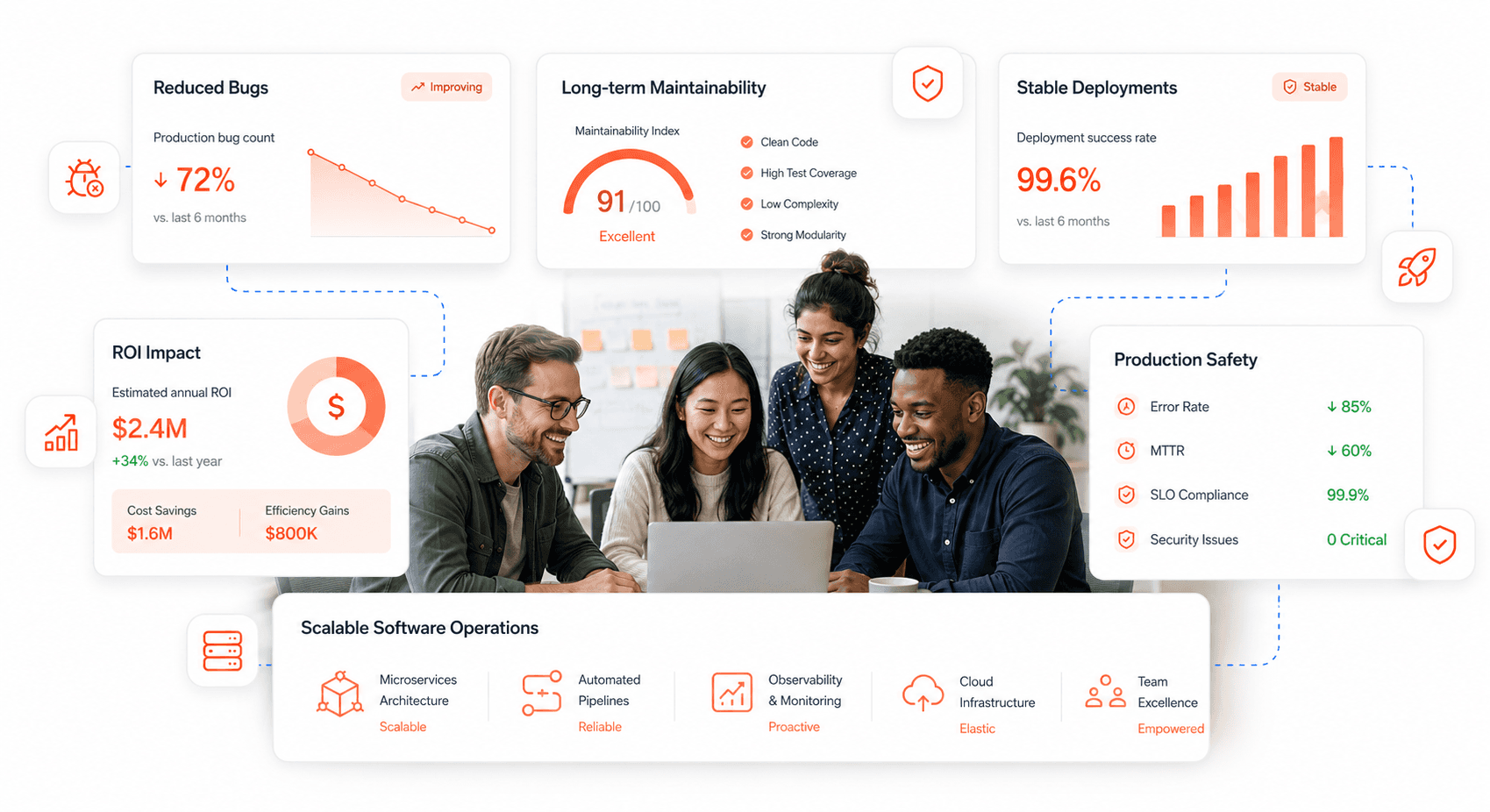
Related Blogs
Related Blogs
Is a clunky UI holding back your growth?
▶︎
Transform slow, frustrating dashboards into intuitive interfaces that ensure effortless user adoption.
▶︎
Transform slow, frustrating dashboards into intuitive interfaces that ensure effortless user adoption.
Is a clunky UI holding back your growth?
▶︎
Transform slow, frustrating dashboards into intuitive interfaces that ensure effortless user adoption.
▶︎
Transform slow, frustrating dashboards into intuitive interfaces that ensure effortless user adoption.
Is a clunky UI holding back your growth?
▶︎
Transform slow, frustrating dashboards into intuitive interfaces that ensure effortless user adoption.
▶︎
Transform slow, frustrating dashboards into intuitive interfaces that ensure effortless user adoption.