

Your business is growing, but something feels off. What started as exciting momentum now feels like controlled chaos. You're constantly putting out fires, your team seems stretched thin, and every new customer or opportunity somehow creates more problems than profit.
This guide is for business owners and leaders who are experiencing rapid growth but finding their operations harder to manage with each passing month. If you're wondering why scaling feels more difficult than starting your business in the first place, you're not alone.
We'll explore the common scaling pitfalls that sabotage growth before they happen, and why adding structure before you scale can be the difference between sustainable success and expensive burnout. You'll also learn how to build systems that actually work without your constant oversight, and discover why the right culture makes all the difference when change becomes your new normal.
Growth without intentional planning creates more problems than it solves. Let's fix that.
Common Scaling Pitfalls That Sabotage Growth
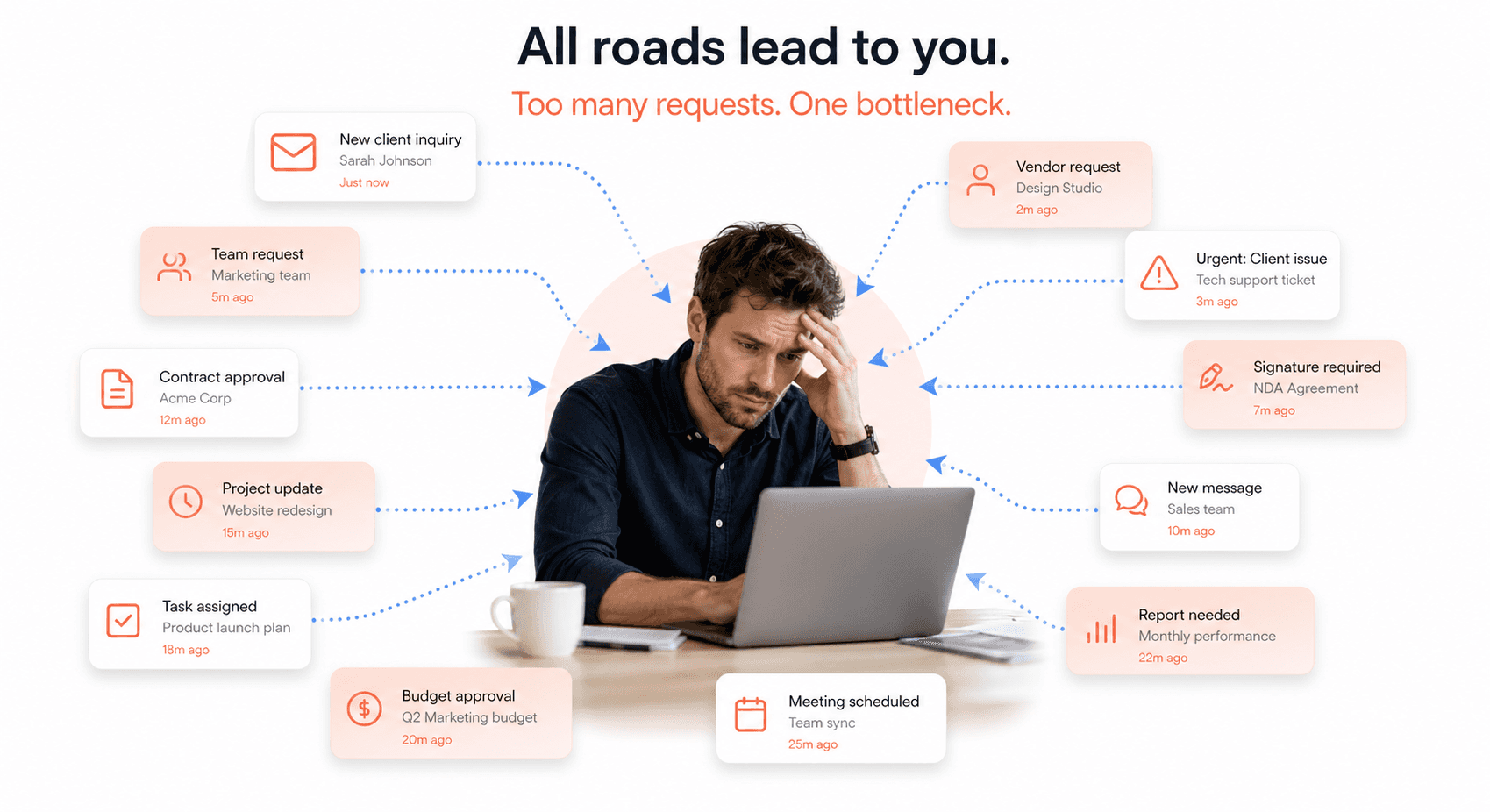
Founder Becomes the Bottleneck for All Decisions
You've probably experienced this scenario: your phone buzzes constantly with questions that only you can answer, deals that need your approval, and delivery issues that require your immediate attention. When your business reaches this point, you've unknowingly created the most dangerous obstacle to scaling yourself. As the founder, you become the single point of failure that everything flows through, from minor operational decisions to major strategic choices.
This bottleneck effect occurs because you've maintained control over every aspect of your business operations. Your team members hesitate to make decisions without your input, deals stall while waiting for your signature, and delivery timelines stretch because processes depend on your availability. The irony is striking: the very person who built the company becomes the primary reason it can't grow beyond a certain threshold.
Your involvement in every decision creates a ripple effect throughout your organization. When you're unavailable, work stops. When you're overwhelmed, quality suffers. Your capacity to process decisions becomes the limiting factor for your entire company's growth trajectory, creating an unsustainable model that restricts your business to whatever you can personally handle in a given day.
Teams Operate in Silos Without Clear Communication
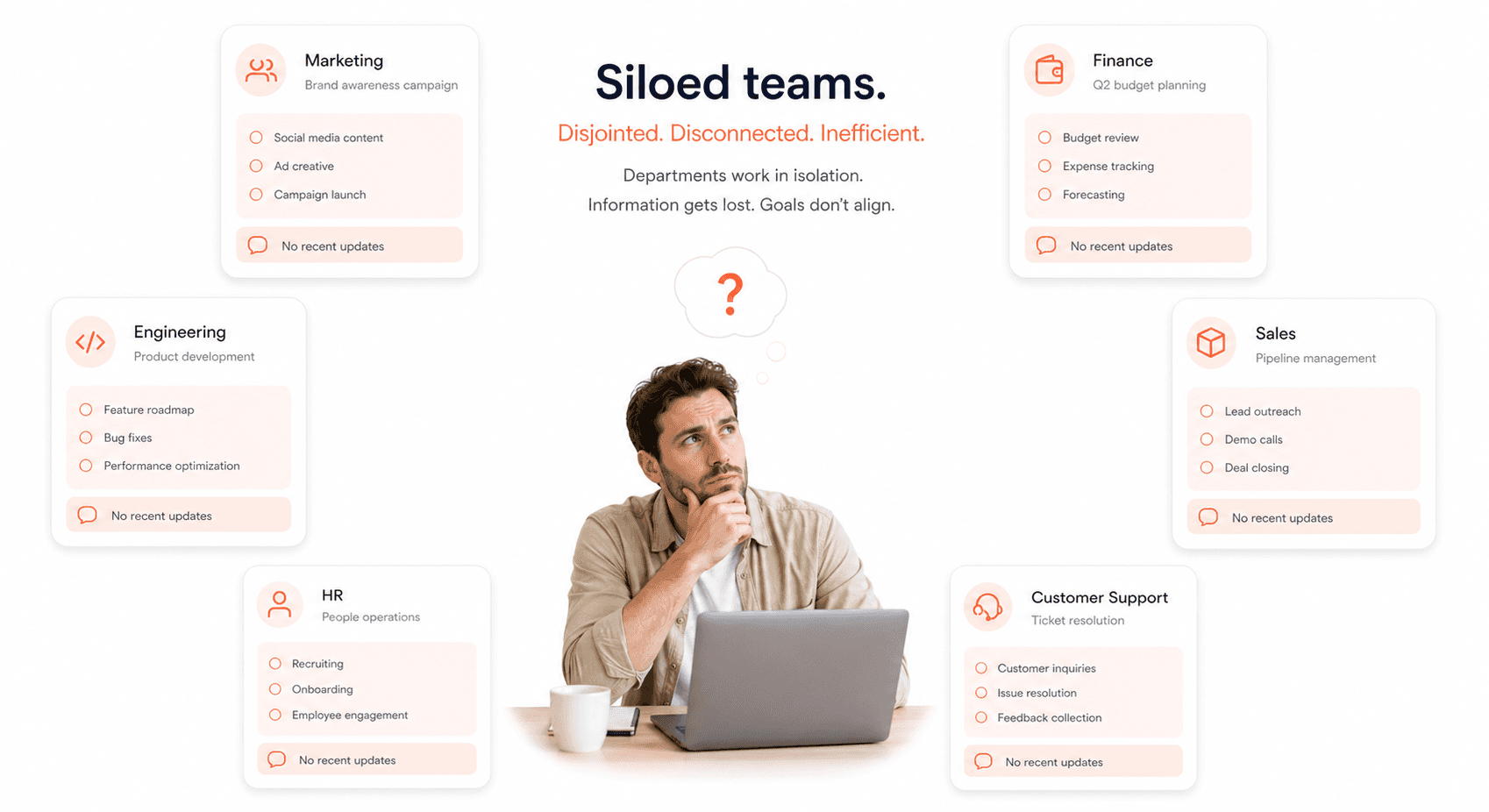
Your departments function like isolated islands, each operating with their own priorities, processes, and understanding of company objectives. This siloed approach creates a fragmented organization where your sales team makes promises your delivery team can't keep, your marketing generates leads your sales team isn't equipped to handle, and your customer service resolves issues that other departments continue to create.
The absence of clear communication channels means your teams frequently reinvent solutions to problems that other departments have already solved. You watch valuable time and resources drain away as multiple teams tackle identical challenges independently, creating redundant efforts and inconsistent results across your organization.
This fragmentation becomes more pronounced as you grow. What worked when your entire team could sit around one table becomes a liability when you have multiple departments, locations, or remote workers. Your teams lose sight of how their work connects to broader company goals, leading to decisions that optimize for departmental success while potentially undermining overall business performance.
Business Reacts to Problems Instead of Planning Ahead
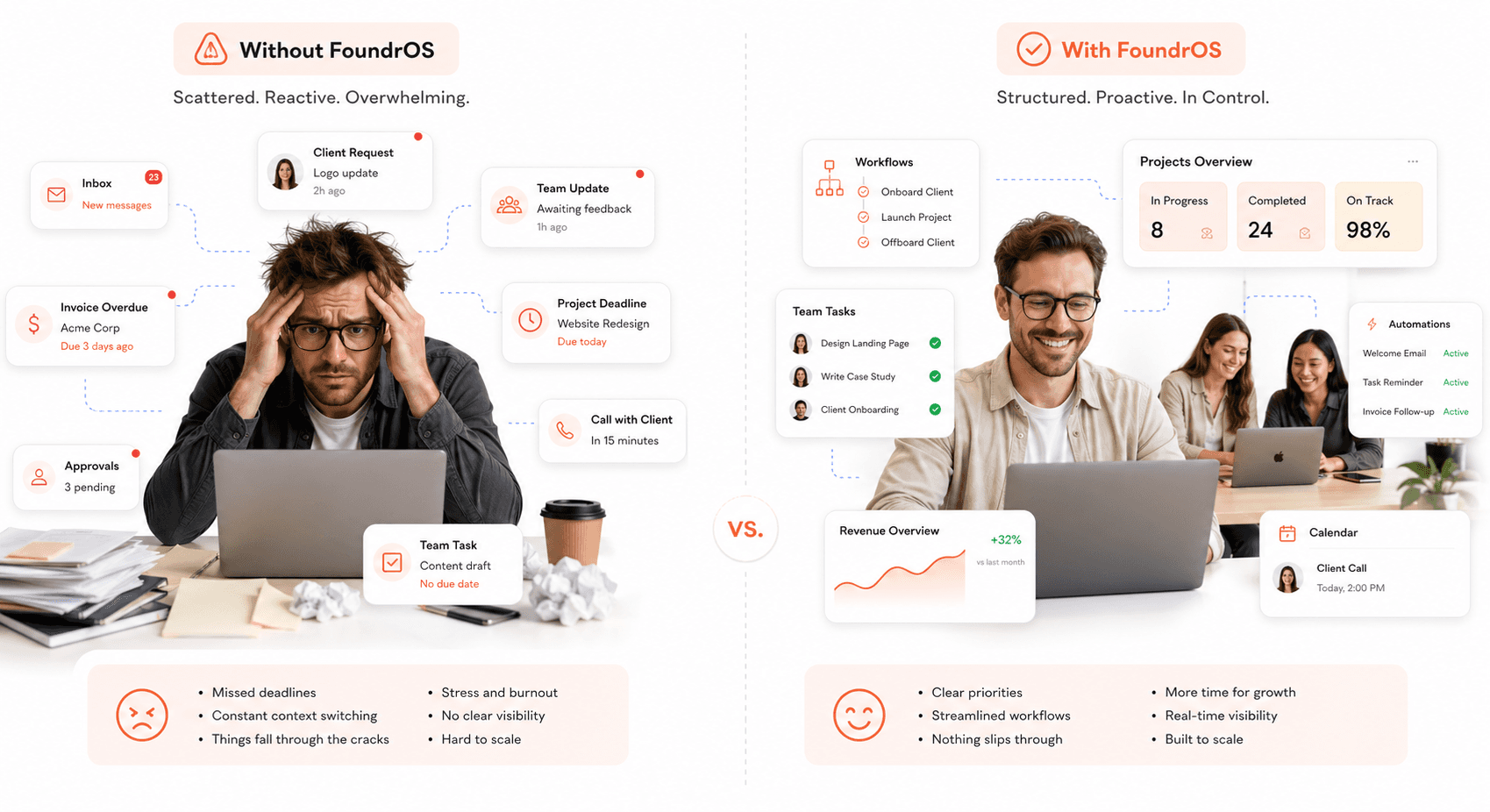
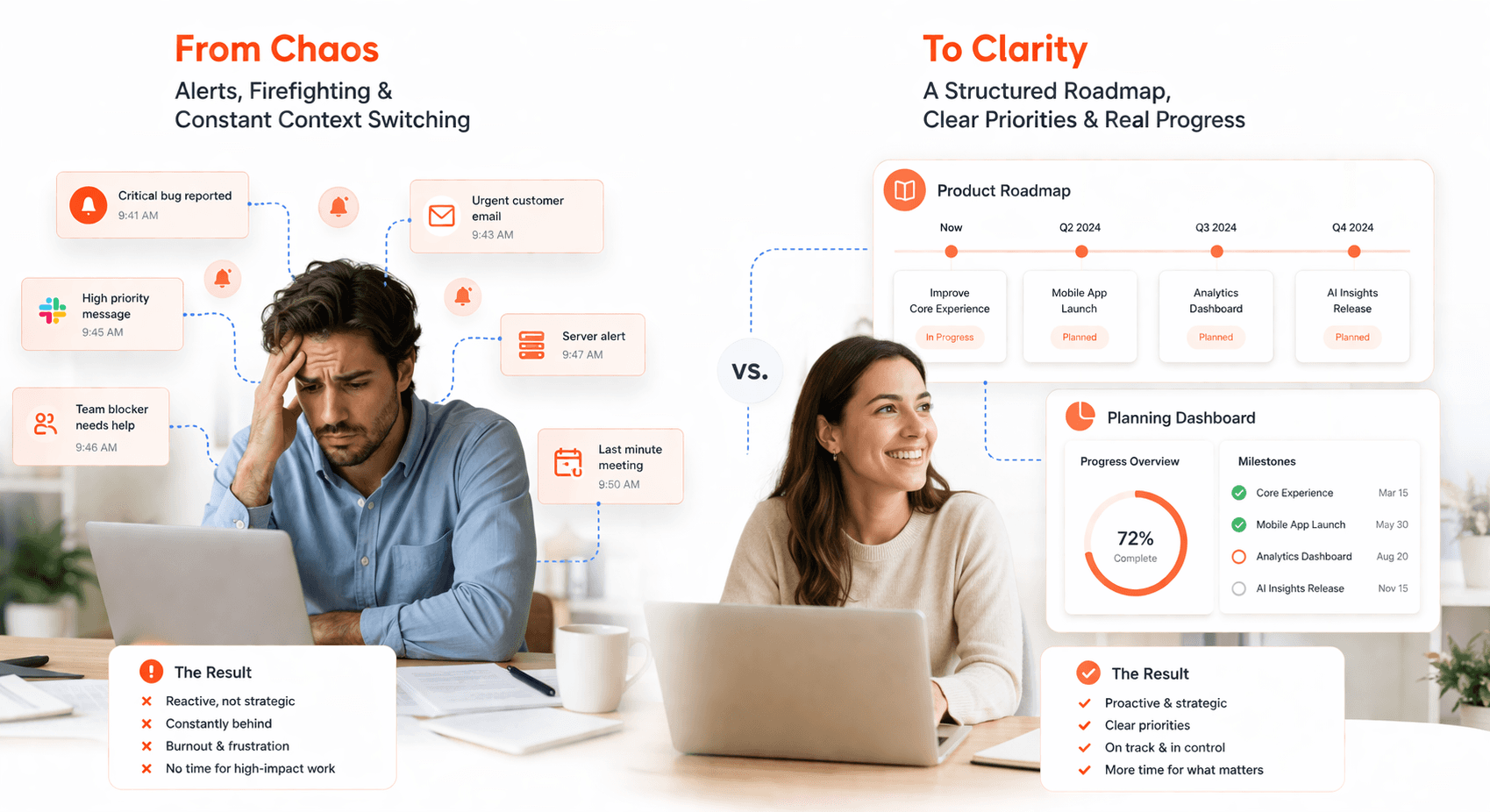
Your organization operates in constant crisis mode, jumping from one urgent issue to the next without ever stepping back to identify patterns or implement preventive measures. This reactive approach keeps you perpetually behind the curve, always responding to problems after they've already impacted your customers, revenue, or team morale.
You find yourself making hasty decisions under pressure, often choosing quick fixes over sustainable solutions. These band-aid approaches create more problems down the line, establishing a cycle where each temporary solution generates new challenges that require immediate attention. Your team becomes skilled at firefighting but loses the ability to build systems that prevent fires from starting.
This reactive mindset prevents you from capitalizing on opportunities that require advance planning and preparation. While you're busy solving today's crisis, your competitors are building the infrastructure and strategies that will dominate tomorrow's market. Your business becomes trapped in a pattern of always playing catch-up instead of setting the pace.
No Real-Time Visibility Into Performance Metrics
Your decision-making process relies on outdated information, gut feelings, and fragmented reports that paint an incomplete picture of your business performance. Without real-time visibility into key metrics, you're essentially flying blind, making critical decisions based on assumptions rather than accurate, current data.
This lack of visibility means you discover problems weeks or months after they begin impacting your business. By the time negative trends become apparent, significant damage has already occurred customers have left, revenue has declined, or market opportunities have passed you by. Your ability to course-correct becomes severely limited because you're always working with stale information.
The absence of real-time metrics also prevents you from recognizing and amplifying what's working well in your business. You miss opportunities to double down on successful strategies because you can't identify them quickly enough to take advantage of momentum. Your growth becomes accidental rather than intentional, leaving you unable to replicate success or scale effective approaches across your organization.
Why Growth Without Structure Creates Chaos
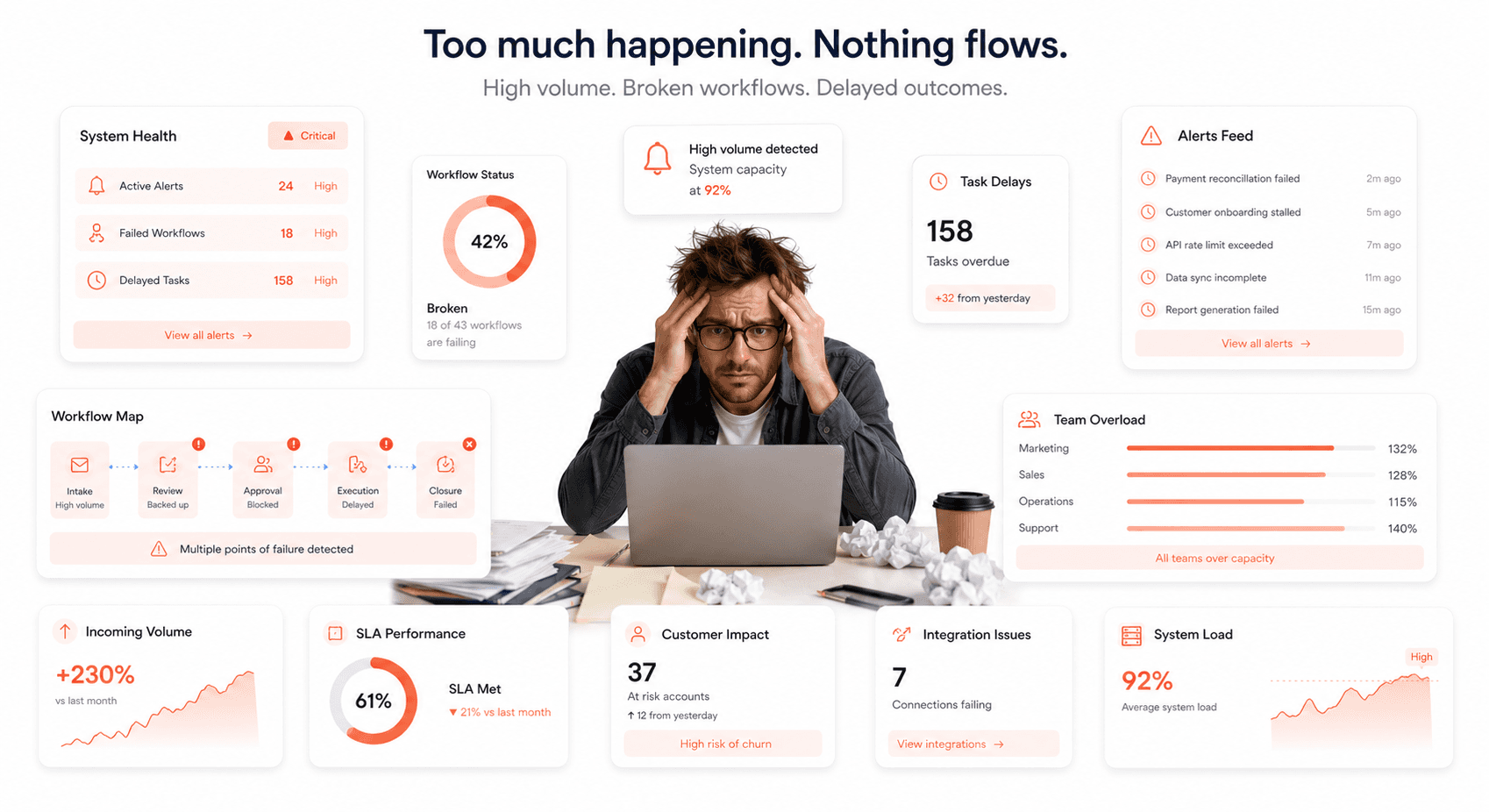
Current Systems Break Under Increased Volume
When your growth outpaces your infrastructure, you'll quickly discover that the systems that carried you through your early stages simply can't handle the pressure. Your operational processes, technological frameworks, and customer service protocols that worked seamlessly for a smaller operation begin to crack under the weight of increased volume. What once felt manageable suddenly becomes a bottleneck that threatens to derail your progress.
You might notice your customer response times stretching from hours to days, your inventory management system failing to track stock accurately, or your payment processing hitting unexpected limits. These aren't minor inconveniences, they're critical system failures that can damage your reputation and customer relationships. Your existing processes, designed for a different scale, start failing at precisely the moment when reliability becomes most crucial.
Complexity Overwhelms Team Members Without Proper Support
As your business scales, you'll find that every role within your organization becomes significantly more complex. The decisions your team members face carry more weight, and the ambiguity surrounding their responsibilities grows exponentially. What was once a straightforward task now involves multiple stakeholders, intricate approval processes, and far-reaching consequences that your team may not be prepared to handle.
Your employees, who excelled in their positions during simpler times, may suddenly feel overwhelmed by the increased complexity of their daily responsibilities. Without proper training and support systems in place, even your most capable team members can struggle to adapt to the heightened demands. The clarity they once enjoyed in their roles becomes clouded by the multifaceted nature of decisions in a larger, more complex organization.
This overwhelming complexity can lead to decision paralysis, where team members hesitate to act due to uncertainty about the broader implications of their choices. You'll notice productivity declining not because your people are less capable, but because they're navigating an increasingly complex landscape without the proper guidance and support structures.
Communication Gaps Widen as Organization Expands
Previously effective communication channels that worked when your team could gather around a single table begin to break down as your organization expands. Information that once flowed naturally through informal conversations and quick check-ins becomes trapped in departmental silos. You'll discover that critical updates fail to reach the people who need them most, leading to misaligned efforts and duplicated work.
The communication gaps that emerge during rapid growth aren't just about information flow, they're about maintaining the shared understanding that drives coordinated action. As your team grows, the informal networks that once ensured everyone stayed informed become insufficient. Without structured communication protocols, important decisions get made in isolation, strategies become fragmented, and your team loses the cohesive direction that characterized your earlier success.
Culture Struggles to Adapt to New Demands
Your startup culture, which served as a powerful foundation during your early growth phase, faces significant challenges as you scale. The informal, flexible approach that enabled rapid decision-making and close collaboration begins to clash with the structured processes and formal hierarchies that larger organizations require. You'll find that the cultural elements that made your company special perhaps the casual communication style, the everyone-wears-many-hats mentality, or the rapid pivoting capability don't translate effectively to a larger operation.
When your business culture isn't adaptive, growth exposes its fundamental weaknesses. The entrepreneurial spirit that drove your initial success may struggle to coexist with the systematic approaches necessary for managing larger teams and more complex operations. Your team members might feel disconnected from the culture they originally joined, while new hires struggle to understand and integrate into a culture that's still evolving. This cultural misalignment can create friction that undermines the very growth you're working so hard to achieve.
Build Your Foundation Before You Scale
Define Clear Purpose to Guide Team Direction
Your business purpose serves as the North Star that guides every decision your team makes. When you're preparing to scale, having a crystal-clear purpose becomes even more critical because it provides unwavering direction during periods of rapid change and complexity. Without this foundational element, your team will struggle to make consistent decisions that align with your long-term vision.
Your purpose should be more than just a mission statement hanging on the wall, it needs to be a living, breathing guide that influences how your team approaches problems, prioritizes tasks, and serves customers. When everyone understands not just what you do but why you do it, they can make autonomous decisions that move your business forward even when you're not directly involved in every conversation.
As you grow, you'll face countless opportunities and challenges that could pull your business in different directions. A well-defined purpose acts as a filter, helping you and your team quickly identify which opportunities align with your core mission and which ones might distract you from your primary objectives. This clarity becomes invaluable when you're managing multiple projects, expanding into new markets, or bringing on new team members who need to understand your business philosophy quickly.
Align People with Your Core Values
Your people are the engine of your business, and ensuring they're aligned with your core values is fundamental to successful scaling. When you hire, promote, and develop team members who genuinely embody your values, you create a self-reinforcing culture that maintains consistency regardless of how large your organization becomes.
Value alignment goes beyond skills and experience, it's about finding individuals who naturally operate in ways that support your business culture. These are the people who will make decisions that reflect your company's principles even when no one is watching. They become culture carriers who help maintain the essence of your business as you add new team members and expand operations.
When your team shares common values, communication becomes more efficient, conflicts decrease, and collaboration improves naturally. This alignment creates a foundation of trust that allows you to delegate more effectively and scale your leadership across the organization. Your values-aligned team members will often anticipate problems, propose solutions, and support each other in ways that automated systems simply cannot replicate.
Ensure Profit Margins for Strategic Decision Making
Sufficient profit margins provide you with the financial flexibility necessary for making wise and strategic decisions during your scaling journey. Without adequate profit buffers, you'll find yourself constantly operating in crisis mode, making reactive decisions based on immediate cash flow needs rather than long-term strategic opportunities.
Your profit margins directly impact your ability to invest in the infrastructure, technology, and talent required for sustainable growth. When you have healthy margins, you can afford to make strategic investments before they become urgent necessities. This proactive approach prevents the common scaling trap of trying to build systems while managing explosive growth simultaneously.
Strong profit margins also give you the luxury of time, time to research solutions thoroughly, time to implement changes gradually, and time to course-correct when initial attempts don't work perfectly. This financial cushion allows you to scale thoughtfully rather than frantically, leading to more sustainable and profitable long-term growth.
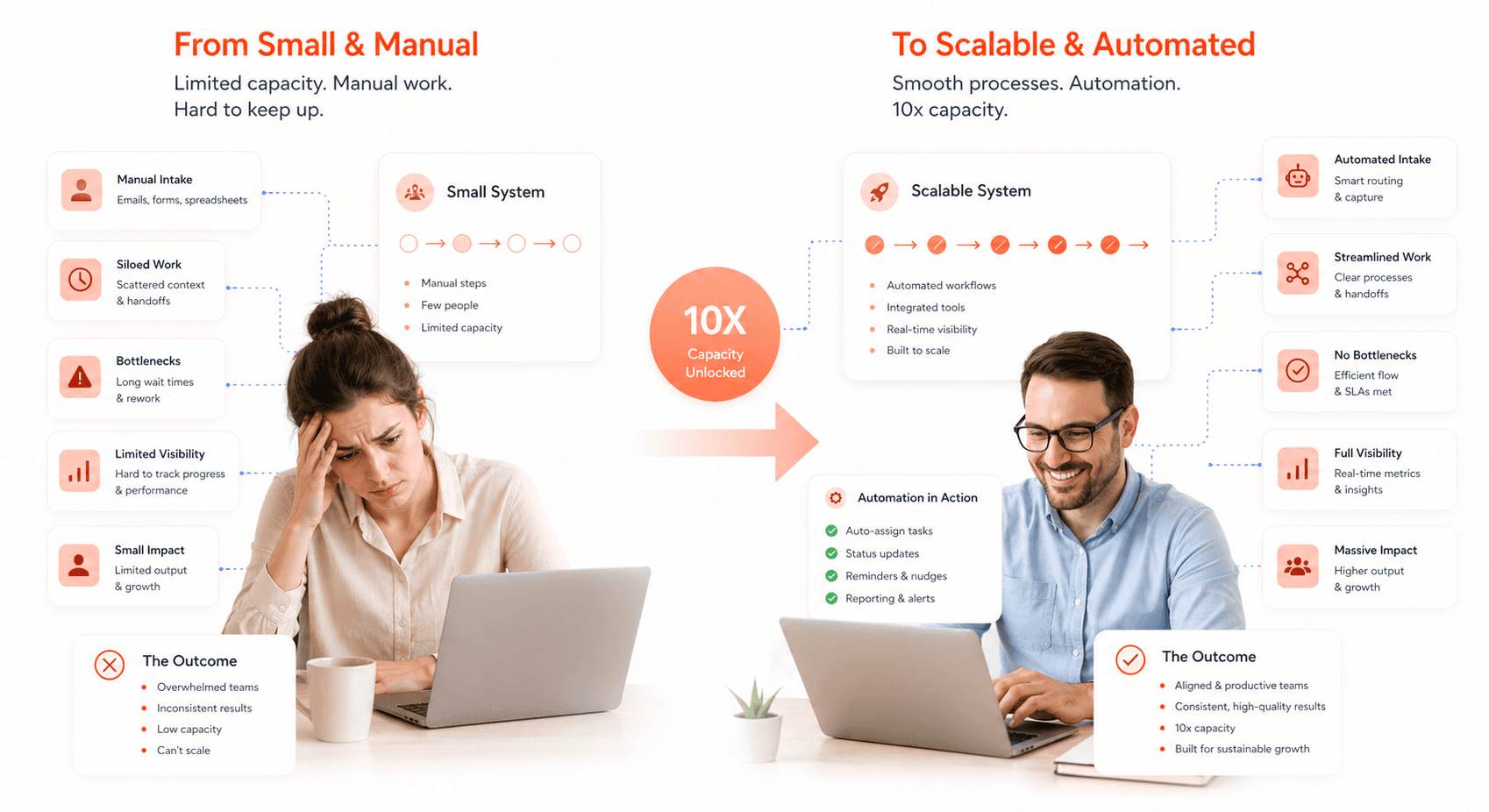
Create Infrastructure That Handles 10X Capacity
Smart scaling requires you to proactively build infrastructure that can handle significantly more volume than your current needs potentially 10X your current capacity. This forward-thinking approach prevents your systems from breaking under pressure when growth accelerates rapidly.
Your infrastructure planning should encompass automation, refined processes, and robust workflows that can accommodate dramatic increases in volume without proportional increases in manual effort. This means investing in technology platforms, creating standardized procedures, and building redundancies into your critical business processes before you actually need them.
Consider every aspect of your business operations, from customer service systems to inventory management, from financial reporting to quality control processes. Each element needs to be designed with scalability in mind, incorporating automation wherever possible and creating clear, repeatable workflows that new team members can follow without extensive training.
When you build for 10X capacity, you're essentially future-proofing your business against the chaos that typically accompanies rapid growth. Your systems remain stable and efficient even as demand increases, allowing you to focus on strategic initiatives rather than constantly fixing broken processes.
Implement Systems That Work Without You
Document and Standardize Repeatable Processes
Previously, we've established why growth without structure creates chaos. Now that we have covered the importance of building a solid foundation, let's explore how you can implement systems that truly work without your constant oversight. The first step in creating autonomous systems is documenting your repeatable processes with surgical precision.
You need to approach process documentation as if you're writing instructions for someone who has never worked in your industry before. Every process that drives your business forward should be broken down step-by-step, making them clear, prescriptive, and simple to follow. This isn't just about creating a manual that sits on a shelf, it's about building the operational DNA of your company.
When documenting these processes, involve your team members who actually perform the work. Their input is invaluable because they understand the nuances and potential pitfalls that you might overlook. They know which steps are critical and which shortcuts lead to problems down the road. This collaborative approach ensures your documentation reflects reality, not just theoretical workflows.
Your documented processes should create consistency across your organization, allowing work to happen without constant oversight from you or your leadership team. Think of these documents as the rulebook that enables your business to run smoothly even when key players are unavailable.
Automate Tasks That Don't Require Human Judgment
With your processes properly documented and tested, you can now identify which tasks are prime candidates for automation. The key principle here is that automation should only happen after your processes are working effectively. Don't automate a broken process fix it first, then automate it.
Focus your automation efforts on repetitive tasks that don't require human judgment or creativity. These might include automating lead handoffs in your CRM system, ensuring that prospects move seamlessly from marketing to sales without manual intervention. You can set up systems to trigger onboarding emails automatically when new customers sign up, eliminating the risk of delays or forgotten communications.
Consider implementing automated scheduling for internal task reminders, keeping your team on track without requiring constant management oversight. You might also explore using AI for generating routine client reports, freeing up your team's time for more strategic analysis and relationship-building activities.
The goal of automation isn't to replace your team, it's to free them up to focus on tasks that add more value to your business. When you automate the routine, predictable work, your team members can dedicate their energy to problem-solving, innovation, and building stronger client relationships.
Create Workflows That Function Under Pressure
Your systems must be robust enough to handle increased volume and stress without breaking down. As your business grows, the workflows that seemed adequate at smaller scales often crumble under pressure. You need to build workflows that anticipate growth and can handle the inevitable spikes in demand.
Test your workflows under various stress scenarios. What happens when order volume doubles? How does your system handle it when three key team members are out sick simultaneously? Your workflows should have built-in redundancies and fallback procedures that maintain quality and consistency even when things don't go according to plan.
Design your workflows to be scalable from the start. This means avoiding bottlenecks that depend on single individuals or resources that can't be easily expanded. Your workflows should flow smoothly whether you're processing ten orders or a hundred, without requiring complete restructuring.
Establish Clear Handoff Points Between Team Members
One of the most critical aspects of autonomous systems is creating seamless transitions between team members and departments. These handoff points are where many businesses experience failures, delays, and quality issues. You need to establish crystal-clear protocols for every point where work transitions from one person or team to another.
Define exactly what information needs to be passed along, in what format, and by when. Specify who is responsible for each handoff and who needs to confirm receipt. Create checklists and verification steps that ensure nothing falls through the cracks during these transitions.
Your handoff points should include quality checks and approval gates where necessary. This ensures that work meets your standards before moving to the next stage, preventing problems from compounding as they move through your system.
Having robust systems in place ensures business continuity and growth, even when leadership steps away. As demonstrated by successful entrepreneurs like FSM founder John Burdett, the businesses that scale successfully are those that can operate effectively without requiring the founder's constant presence. Your systems should be so well-designed that your business continues to deliver exceptional results whether you're in the office, on vacation, or focused on strategic planning rather than day-to-day operations.
Develop a Culture That Thrives on Change
Prepare Teams Internally for Growth Challenges
Now that we have covered the importance of building foundational systems, your next critical step involves preparing your teams for the inevitable challenges that come with growth. You cannot expect your workforce to naturally adapt to increased demands without proper internal preparation. As your business scales, the complexity of operations, decision-making, and collaboration multiplies exponentially, placing unprecedented pressure on every team member.
Your role as a leader requires you to proactively identify the specific growth challenges your teams will face. These might include managing larger volumes of work, coordinating across multiple departments, handling more sophisticated customer needs, or navigating new regulatory requirements. You must communicate these upcoming challenges clearly and honestly with your teams, giving them time to mentally prepare and adjust their expectations.
Creating transparency around growth challenges helps your teams understand that difficulties are part of the scaling journey, not signs of failure. When you openly discuss the complexities ahead, you enable your people to develop resilience and problem-solving skills before they encounter these obstacles in real-time situations.
Equip People to Handle Increased Complexity
With this in mind, next, we'll see how critical it becomes to equip your people with the specific tools, training, and support they need to deal with increased complexity. As your organization grows, simple processes become multi-layered workflows, and straightforward decisions require input from multiple stakeholders. Your teams must be prepared to navigate this complexity effectively.
You need to provide comprehensive training programs that address the new skills your employees will require. This includes technical training for new systems and processes, as well as soft skills development for improved communication, time management, and critical thinking. Your training initiatives should focus on building competence in areas like cross-functional collaboration, data analysis, and strategic thinking.
Additionally, you must ensure your teams have access to the right tools and resources to manage complexity efficiently. This means investing in technology platforms that streamline workflows, communication tools that facilitate coordination across departments, and documentation systems that maintain clarity as procedures become more intricate. Your support structure should include mentorship programs, regular check-ins, and clear escalation paths when team members encounter challenges beyond their current capabilities.
Invest in Leadership Development at All Levels
Previously, you might have relied on a small group of leaders to drive your organization forward. However, as you scale, you must invest in developing leadership capabilities throughout all levels of your organization. Growth creates new leadership demands at every tier, from team leads to department heads to executive positions.
Your leadership development strategy should focus on cultivating leaders who can think strategically while managing day-to-day operations effectively. These emerging leaders need skills in delegation, performance management, conflict resolution, and strategic planning. You cannot afford to have leadership gaps when your organization faces the pressures of rapid growth.
Consider implementing formal leadership development programs that include mentoring relationships, cross-departmental assignments, and structured learning opportunities. Your investment in leadership development creates a pipeline of capable leaders who can step into expanded roles as your organization grows, ensuring continuity and maintaining your culture throughout the scaling process.
Make Change an Opportunity Rather Than a Threat
Now that we have covered the practical aspects of preparation, your ultimate goal is developing an adaptive culture where your teams see change as an opportunity to learn and improve, rather than a threat to their security or comfort. This cultural shift represents one of the most powerful competitive advantages you can create during the scaling process.
You must actively work to reframe change within your organization. Instead of presenting growth-related changes as necessary evils, position them as exciting opportunities for professional development, career advancement, and skill building. When your teams view change through this lens, they become more engaged, creative, and resilient in the face of scaling challenges.
Your communication strategy should consistently highlight the benefits that change brings to individual team members and the organization as a whole. Share success stories of team members who have grown their capabilities through change initiatives, and create recognition programs that celebrate adaptability and continuous learning. By making change an integral part of your organizational identity, you create a workforce that not only tolerates the complexities of scaling but actively embraces them as pathways to personal and professional growth.
Create Visibility Into What Drives Results
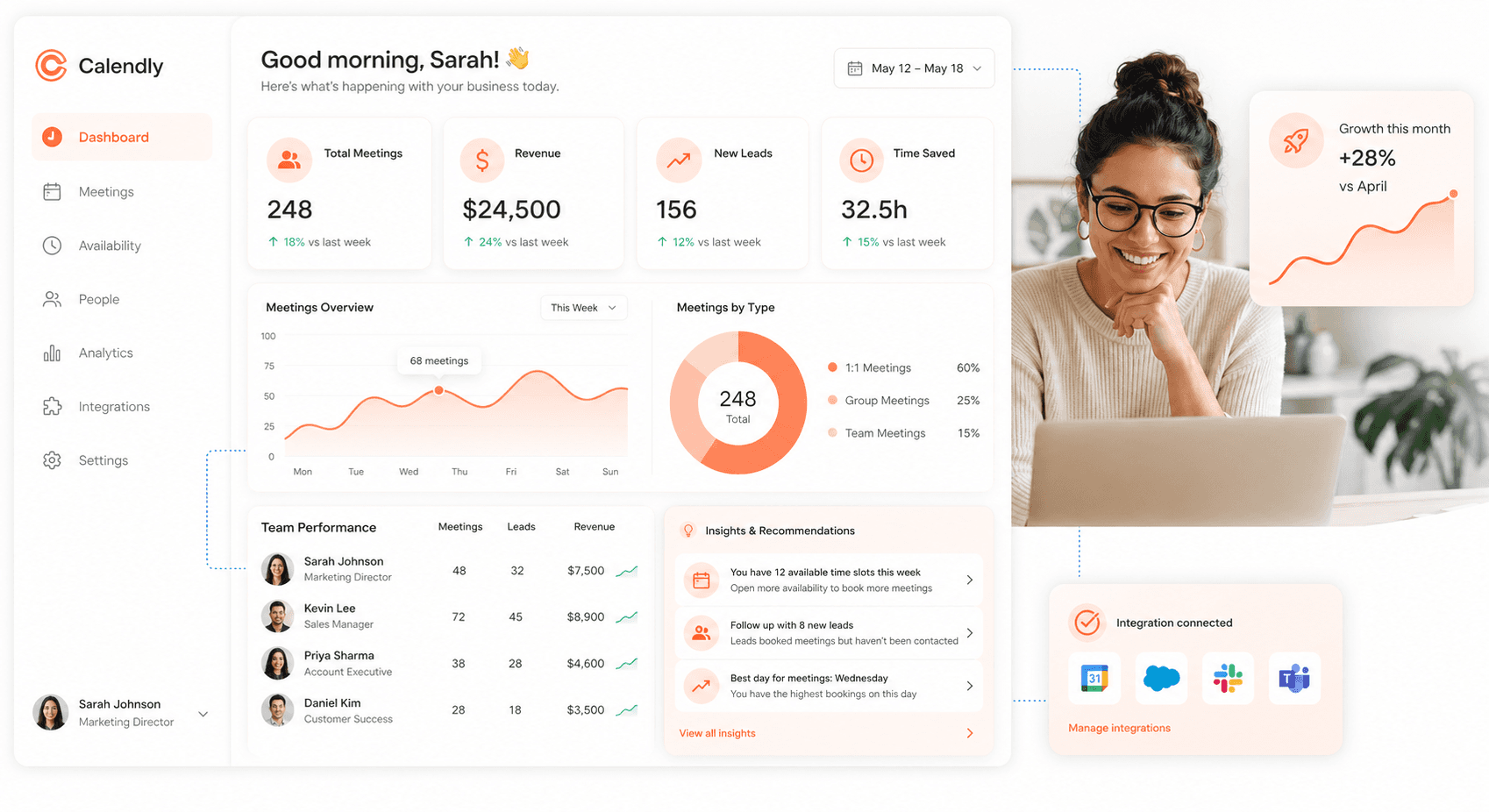
Build Dashboards That Answer Critical Business Questions
Now that you've established systems and culture, the next critical step is creating visibility into your business performance through strategic dashboards. You need dashboards that go beyond vanity metrics and actually answer the questions that keep you awake at night. Your dashboards should immediately tell you whether you're identifying the right deals, where your business is failing, and what specific factors are driving or stalling your growth.
When you build these dashboards, focus on answering three fundamental questions: What opportunities are we missing? Where are we bleeding revenue? And what's preventing us from scaling faster? Your dashboard should provide instant clarity on deal quality, helping you distinguish between prospects that will close and those that will waste your team's time. You also need clear visibility into failure points whether it's customer churn, sales conversion drops, or operational bottlenecks that are silently destroying your growth trajectory.
The power of effective dashboards lies in their ability to surface patterns you might otherwise miss. When you can see your entire business performance at a glance, you'll spot trends before they become problems and identify opportunities before your competitors do.
Track Leading Indicators of Growth Problems
Previously, many growing companies focus solely on lagging indicators like monthly revenue or customer count, but you need to shift your attention to leading indicators that predict problems before they impact your bottom line. Leading indicators act as your early warning system, giving you the opportunity to course-correct while you still have time and resources to make meaningful changes.
You should monitor metrics that precede your key outcomes. If customer lifetime value is critical to your business, track engagement scores, support ticket trends, and usage patterns weeks before churn typically occurs. If sales growth is your priority, monitor pipeline velocity, lead quality scores, and sales activity metrics that predict future deal closure. These leading indicators will show you exactly when your growth engine is starting to sputter, giving you precious time to intervene.
With this approach, you transform from reactive to proactive management. Instead of discovering problems when they've already damaged your business, you'll catch them early when solutions are easier and less expensive to implement.
Monitor Team Performance and Capacity
Your people are your most valuable asset, and monitoring team performance and capacity is essential for sustainable scaling. You need visibility into how your team is performing individually and collectively, but more importantly, you need to understand their capacity limits before they become overwhelmed and burn out.
Tools like Salesforce or HubSpot can provide real-time visibility into individual and team performance, showing you who's exceeding expectations, who needs additional support, and where capacity constraints are developing. You should track not just output metrics, but also leading indicators of team health like response times, quality scores, and workload distribution.
Understanding capacity is particularly crucial because overloaded teams make more mistakes, deliver lower quality work, and eventually leave your company. By monitoring these metrics proactively, you can redistribute work, hire strategically, and maintain high performance standards even during rapid growth periods.
Use Data to Make Proactive Improvements
With comprehensive visibility established, you can now use data-driven insights to make proactive improvements in your business operations. This means moving beyond simply collecting data to actually acting on the insights it provides. You should establish regular review cycles where you analyze your dashboard data and identify specific, actionable improvements.
The key to proactive improvement is connecting your data to specific business actions. When your dashboards show declining lead quality, you don't just note the trend you immediately adjust your marketing targeting. When team capacity metrics indicate stress points, you don't wait for burnout—you redistribute workload or accelerate hiring plans.
This data-driven approach ensures that every improvement you make is based on real performance evidence rather than assumptions or gut feelings. You'll make better decisions faster, avoid costly mistakes, and continuously optimize your operations for maximum growth potential.
Conclusion
Scaling your business doesn't have to mean sacrificing your sanity or working yourself to death. The key is recognizing that growth without proper structure creates chaos, while intentional scaling creates freedom. By building strong foundations, implementing systems that work without your constant oversight, and developing a culture that thrives on change, you create a business that can handle 10x capacity without breaking.
Remember, scaling is not a trophy for making it this far, it's a process that must be planned, led, and managed at every level. Start by strengthening your foundation with clear purpose, aligned people, and healthy profit margins. Then build repeatable processes, add strategic automation, and create visibility into what drives your results. When you prepare your business internally for growth, you're not just building something bigger you're building something that lasts.




About the author
I’m the founder of Hashbyt, an AI-first frontend and UI/UX SaaS partner helping 200+ SaaS companies scale faster through intelligent, growth-driven design. My work focuses on building modern frontend systems, design frameworks, and product modernization strategies that boost revenue, improve user adoption, and help SaaS founders turn their UI into a true growth engine.
Is a clunky UI holding back your growth?
Is a clunky UI holding back your growth?
▶︎
Transform slow, frustrating dashboards into intuitive interfaces that ensure effortless user adoption.
▶︎
Transform slow, frustrating dashboards into intuitive interfaces that ensure effortless user adoption.
