

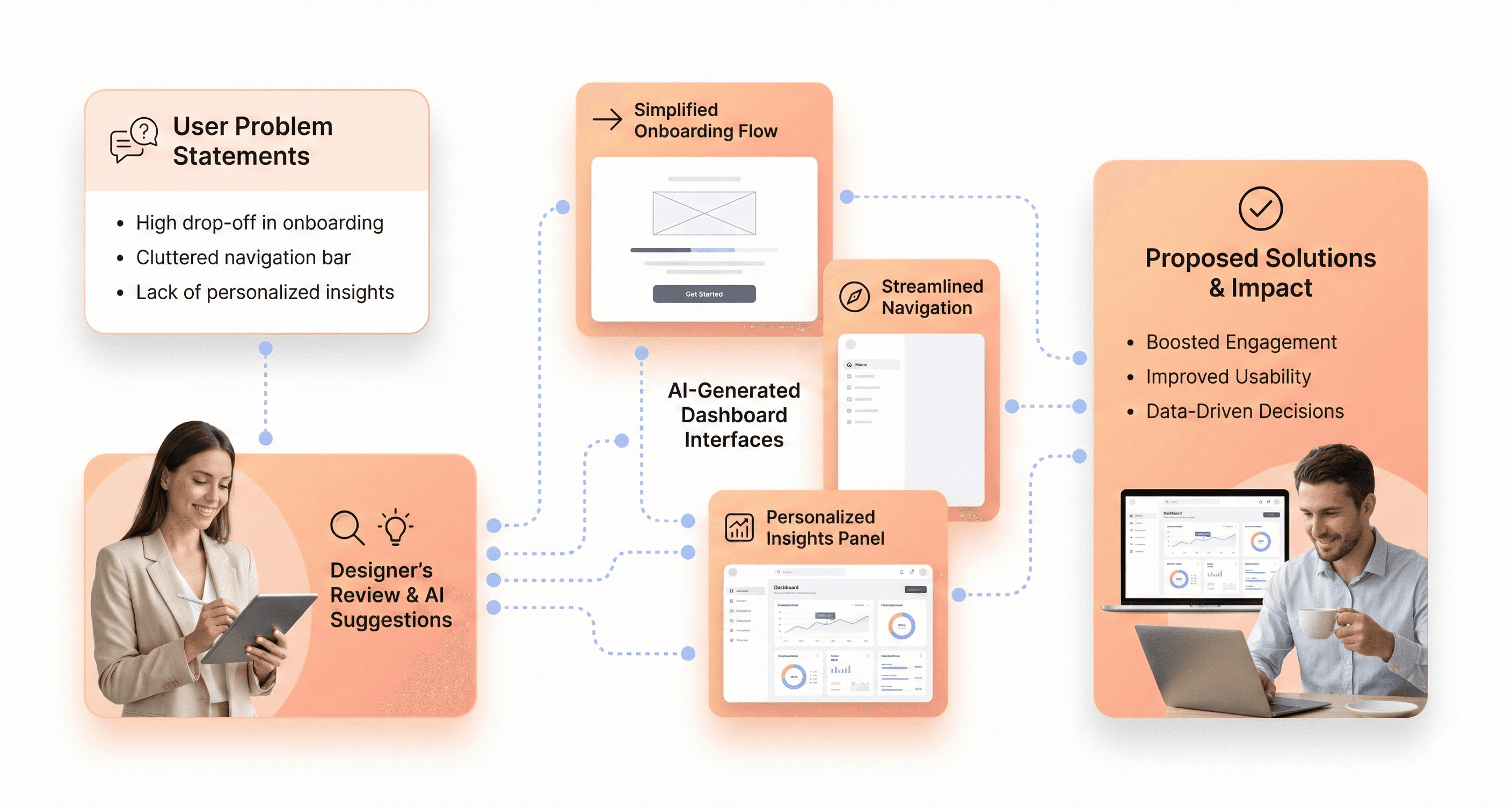
AI-generated UI tools are exploding in popularity, but they can't replace human designers just yet. This guide is for designers, product managers, and tech leaders who want to understand AI design limitations and how these tools fit into modern workflows.
AI UI design tools struggle with core design challenges that require human insight. While AI design automation can create interfaces quickly, it can't identify the right problems to solve or understand the complex context behind user needs. Machine learning UI design lacks the empathy and creative problem-solving that human designers bring to every project.
We'll explore why AI generated user interface solutions miss the mark on problem identification and context understanding. You'll also learn how design work demands multidisciplinary expertise that combines psychology, business strategy, and user research - skills that human designers vs artificial intelligence clearly shows favor humans.
Finally, we'll cover why AI requires constant human oversight and works best as an enhancement tool rather than a replacement for creative design thinking.
AI Struggles with Problem Identification and Context Understanding
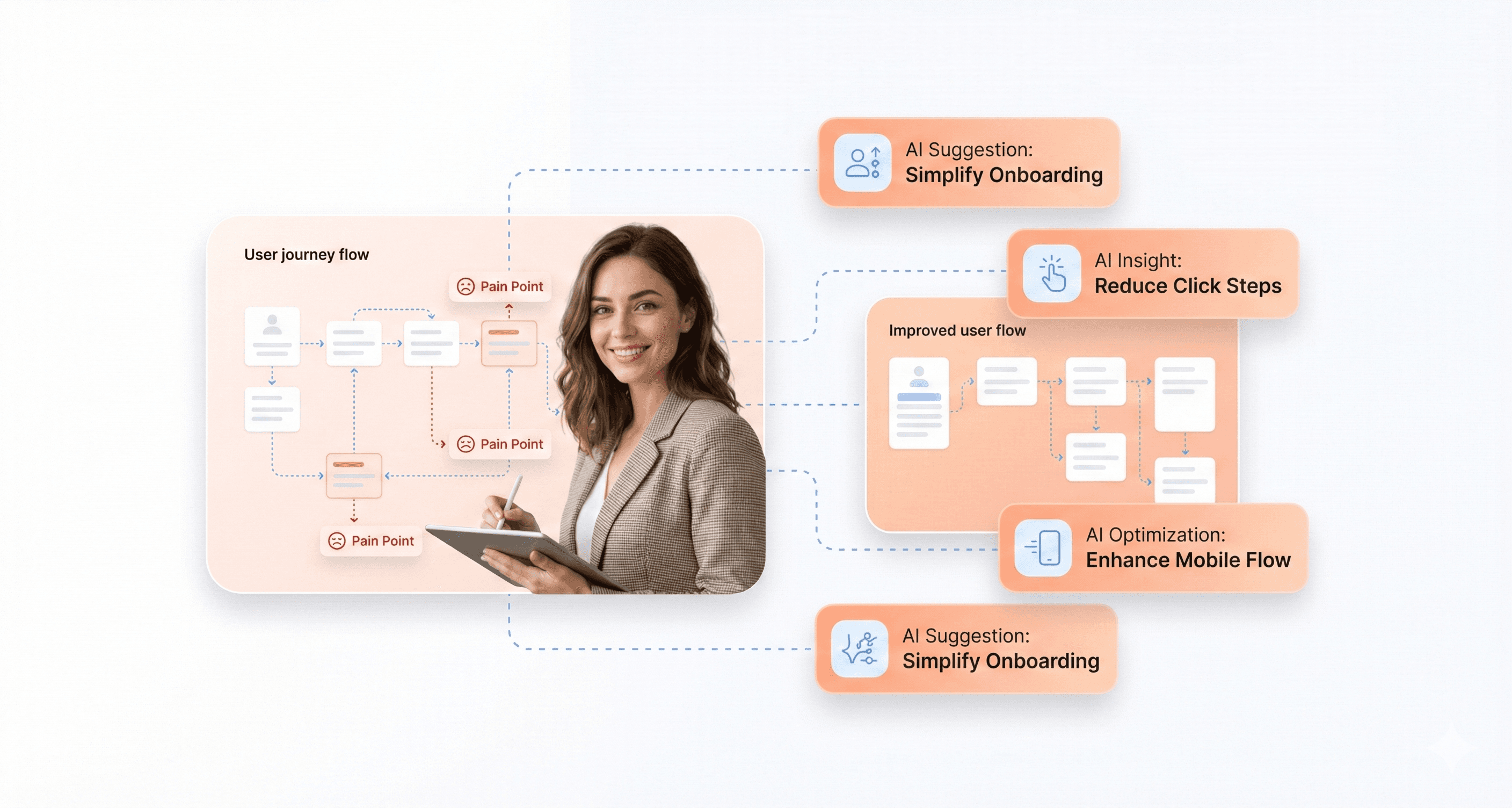
Limited Ability to Grasp Complex Human Scenarios and Pain Points
AI-generated UI design tools face significant challenges when it comes to understanding the intricate human scenarios that drive effective design decisions. Unlike human designers who can intuitively grasp the nuanced pain points users experience, AI systems operate based on patterns learned from training data without comprehending the underlying concepts or contextual meaning.
Current AI design limitations stem from their dependence on data quality and their inability to truly understand complex human situations. When AI encounters incomplete or biased datasets, it amplifies these flaws in its design recommendations. A recent study highlighted how AI systems routinely misinterpret user needs due to limited data sources, leading to design solutions that fail to address real human problems.
The challenge becomes more pronounced when AI attempts to identify problems that haven't been explicitly documented in its training data. Human designers excel at recognizing subtle cues, unspoken frustrations, and emerging user needs that aren't immediately obvious. AI systems, however, lack this intuitive problem-identification capability and often miss critical design opportunities that require creative problem-solving beyond existing patterns.
Difficulty Understanding User Psychology, Environment, and Background Factors
AI's missing emotional intelligence creates substantial barriers in UI design automation. While AI can mimic certain design patterns, it fundamentally lacks the emotional awareness necessary to understand how users feel, think, and behave in different contexts. This limitation becomes particularly evident when designing for diverse user groups with varying psychological profiles and environmental constraints.
The absence of true emotional understanding means AI cannot detect subtle human cues that inform design decisions. For instance, AI systems struggle to recognize when a user interface might feel too cold, too overwhelming, or inappropriately casual for specific contexts. Human designers naturally consider factors like user stress levels, cultural backgrounds, accessibility needs, and situational constraints that significantly impact design effectiveness.
Environmental factors such as lighting conditions, device usage contexts, and social settings heavily influence UI design requirements. AI systems typically cannot account for these real-world variables that human designers intuitively consider. The technology's inability to read body language, hesitation patterns, or contextual social cues further limits its capacity to create truly user-centered design solutions.
Requires Human Guidance to Connect Contextual Dots Into Meaningful Solutions
Even the most advanced AI design tools require extensive human oversight and guidance to transform data insights into coherent, contextually appropriate design solutions. AI excels at remixing known design patterns but cannot generate truly novel ideas or breakthrough design concepts that address unique user challenges.
The limitation becomes evident in AI's inability to transfer knowledge across different design domains effectively. An AI system trained on e-commerce interfaces may struggle to apply relevant principles when designing healthcare applications, despite potential overlapping user experience principles. This narrow specialization requires human designers to provide contextual bridges and ensure design solutions remain relevant across different use cases.
Human creativity remains essential for connecting disparate contextual elements into innovative design solutions. While AI can accelerate certain design processes by suggesting layout options or color schemes based on existing patterns, it needs human guidance to ensure these suggestions align with broader business objectives, brand values, and user experience goals. The technology's dependence on human judgment for meaningful problem-solving reinforces its role as an enhancement tool rather than a replacement for human design expertise.
Human designers must continuously validate AI-generated suggestions against real-world constraints, user feedback, and evolving business requirements that AI systems cannot independently assess or prioritize.
Design Solutions Demand Multidisciplinary Expertise
Need for systems thinking across multiple fields and sciences
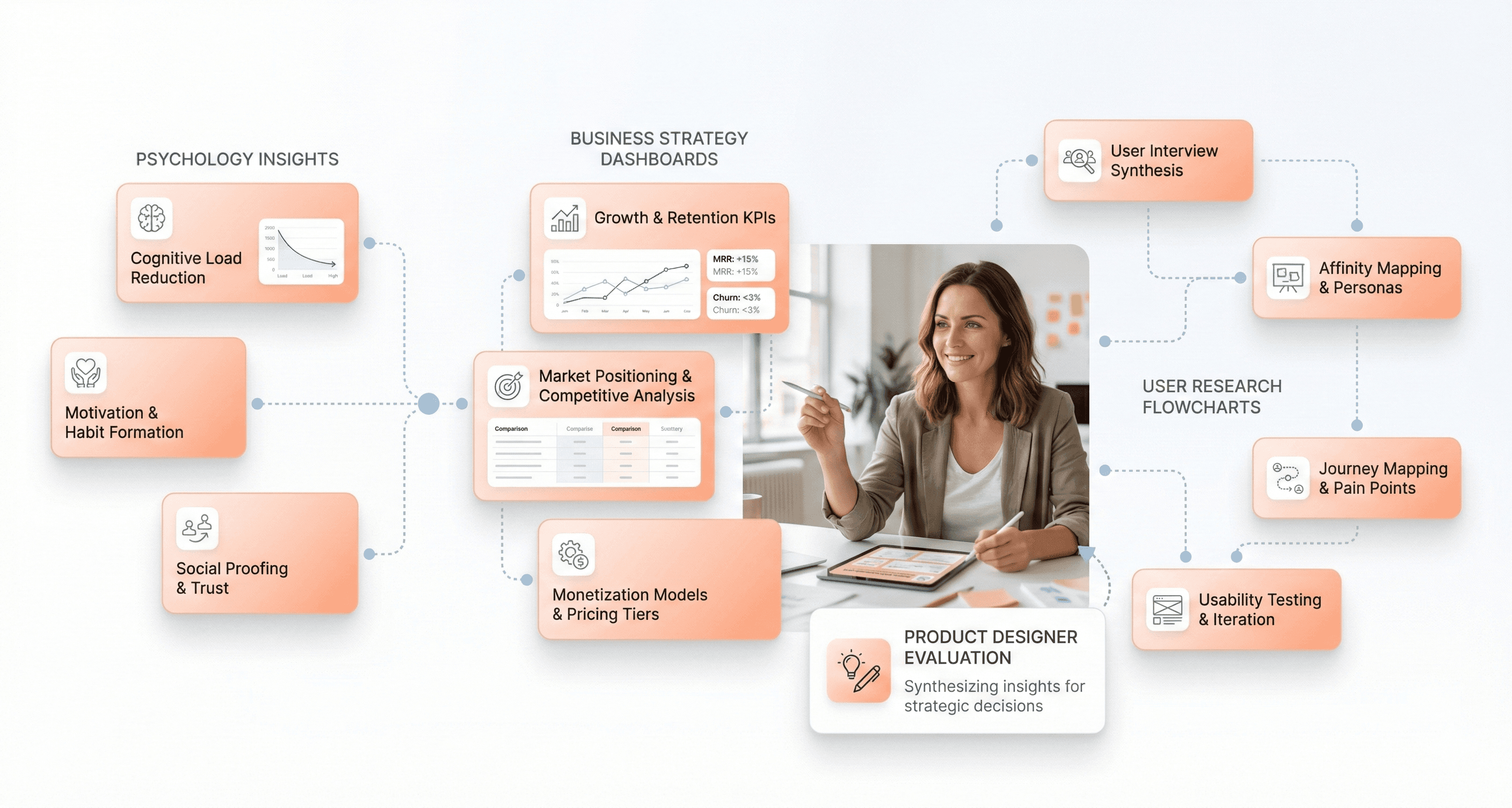
Effective AI UI design demands an integrated approach that draws knowledge from diverse disciplines including psychology, cognitive science, business strategy, and technical design principles. Unlike AI systems that operate within narrow parameters, human designers naturally synthesize insights from multiple domains to create comprehensive solutions. This systems thinking approach enables designers to consider how user interface elements interact with broader organizational goals, user psychology, and technical constraints simultaneously.
The complexity of modern digital products requires understanding how visual design principles connect with user behavior patterns, business objectives, and technical feasibility. Human designers excel at recognizing these interconnections, while AI generated user interface tools struggle to navigate the multifaceted nature of design challenges that span across different fields of expertise.
AI's inability to combine knowledge from psychology, business strategy, and design principles effectively
Current AI design automation tools demonstrate significant limitations when attempting to integrate knowledge from disparate fields. While AI can process vast amounts of data from individual domains, it lacks the contextual understanding necessary to synthesize insights from psychology, business strategy, and design principles into cohesive solutions.
The reference content highlights that AI systems "lack a deep understanding of the world" and "operate based on patterns learned from data without comprehending the underlying concepts." This limitation becomes particularly evident in AI assisted design workflow scenarios where the system cannot effectively balance user psychological needs with business requirements and aesthetic principles.
Human creativity in design emerges from the ability to draw connections between seemingly unrelated concepts from different disciplines. For instance, a human designer might apply psychological principles about cognitive load while simultaneously considering business conversion goals and visual hierarchy rules. AI systems, constrained by their training parameters, cannot replicate this multidisciplinary synthesis effectively.
The absence of true creativity and original thought in AI means these systems cannot "innovate, envision abstract concepts, or produce truly novel ideas that go beyond the patterns present in their training data." This creative limitation prevents AI from developing innovative solutions that require understanding complex relationships between different knowledge domains.
Human critical thinking required to oversee complex solution development
Complex design solutions demand the kind of critical thinking and contextual reasoning that remains distinctly human. The reference content emphasizes that AI struggles with "common-sense reasoning, intuitive understanding, and contextual awareness" - all essential elements for overseeing sophisticated design projects.
Human vs AI design capabilities become most apparent in scenarios requiring nuanced decision-making that considers multiple variables simultaneously. Human designers can evaluate trade-offs between user experience, technical constraints, business objectives, and aesthetic considerations in ways that current machine learning UI design tools cannot match.
The "black box" nature of AI models poses additional challenges for complex solution development. Understanding how AI arrives at specific design decisions remains difficult, making it challenging for teams to validate whether AI-generated solutions align with broader project goals and requirements.
Furthermore, AI design limitations include the inability to engage in creative problem-solving or adapt to novel situations without explicit programming. This rigidity constrains AI's effectiveness in projects that require innovative approaches or adaptation to unique business contexts that weren't represented in the training data.
Human oversight becomes crucial for ensuring that design solutions address real user needs rather than simply following learned patterns. The reference content notes that while AI can generate content, it cannot provide the deep understanding necessary for complex decision-making scenarios that define successful design projects.
AI UI Design Limitations in Understanding Human Emotion
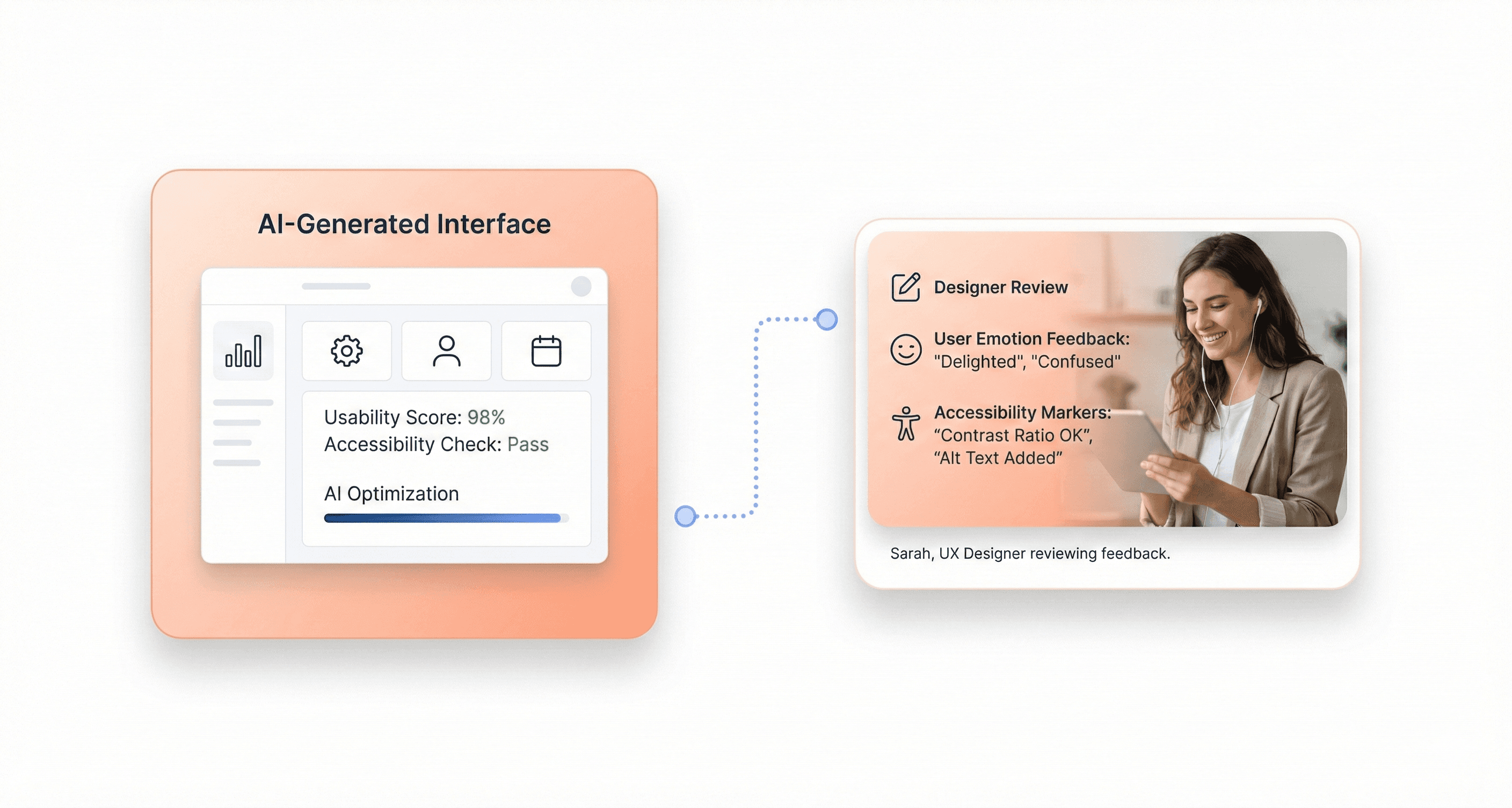
Missing empathy and genuine understanding of human emotions
AI-generated UI design fundamentally lacks the emotional intelligence that human designers naturally possess. While AI can mimic empathy in its outputs, it cannot achieve true emotional awareness or understanding of human nuances. This limitation becomes particularly evident when AI systems fail to recognize subtle human cues that are essential for creating meaningful user experiences.
The technology struggles with detecting sarcasm, interpreting subtle body language, or recognizing moments of hesitation that experienced human designers would immediately notice. When AI attempts to address emotional contexts, the results often feel cold or detached, creating user experiences that lack the warmth and connection users expect from well-designed interfaces.
This emotional disconnect has real-world consequences. AI systems have been documented failing to recognize signs of crisis or providing inappropriate responses in sensitive situations. The absence of genuine emotional intelligence means AI cannot truly empathize with users or anticipate their emotional needs the way human designers can through their natural understanding of human psychology.
Human designers bring deep emotional awareness to their work, allowing them to create interfaces that resonate on a personal level and address users' unspoken needs. This human connection remains irreplaceable in AI UI design, as emotional nuance cannot be scaled with more data or processing power.
Limited creativity that relies on recombining existing elements rather than true imagination
AI excels at remixing known patterns and combining existing design elements, but it fundamentally cannot generate truly novel ideas or breakthrough concepts. The technology's creative process is limited to recombining patterns it has learned from training data, rather than demonstrating genuine imagination or innovative thinking.
This limitation becomes increasingly problematic as more designers rely on the same AI design automation tools trained on similar datasets. The result is a homogenization of design outputs, where AI-generated user interfaces begin to look remarkably similar across different projects and applications. While AI can accelerate certain aspects of the creative process and help designers push past creative blocks, it requires human creativity to produce something materially new.
The technology's over-reliance on existing data means it struggles to identify emerging design trends or unexpected user behaviors that aren't represented in its training data. Human designers, conversely, can leverage their intuition and creativity to explore new possibilities and innovate beyond the constraints of existing patterns.
Despite growing concerns about AI replacing creative professionals, demand for human creative talent continues to increase, highlighting the irreplaceable value of genuine human imagination in design work.
AI-generated designs appear stereotypical and lack human spark
AI-generated designs consistently exhibit a stereotypical quality that reflects the biases and limitations present in their training data. These designs often lack the unique personality and intangible qualities that make interfaces memorable and engaging for users.
The technology struggles to capture the essence of a brand or infuse designs with the distinctive characteristics that set one product apart from another. While AI can generate functional interface designs, these outputs frequently appear generic and fail to reflect the unique values and personality that human designers naturally incorporate into their work.
This limitation stems from AI's inability to understand and interpret the subtle, qualitative aspects that define exceptional design. Human designers bring intuition, cultural understanding, and emotional intelligence to their work, creating interfaces that feel alive and purposeful. In contrast, AI-generated UI designs often feel mechanical and lack the "human spark" that makes designs truly resonate with users.
The standardization effect of AI tools compounds this problem, as similar training data across different AI systems leads to increasingly homogeneous design outputs. This trend toward stereotypical solutions undermines the goal of creating distinctive, memorable user experiences that effectively communicate brand identity and connect with target audiences on an emotional level.
Human-centered design principles require the deep understanding of human psychology that only human designers can provide, ensuring that interfaces are not only functional but also engaging and meaningful for users.
Why AI UX Design Tools Need Human Oversight
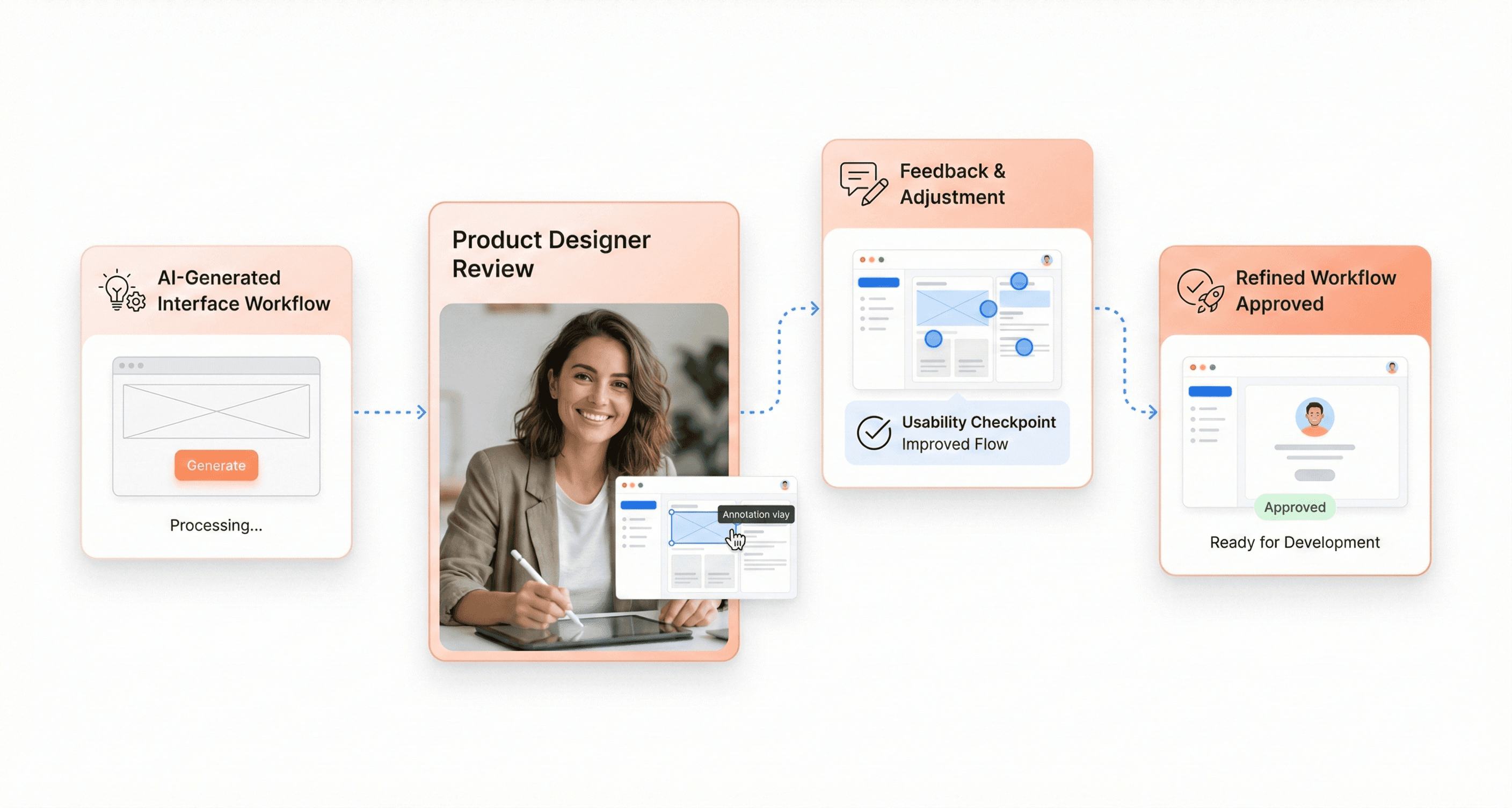
Tendency to hallucinate and go off-track without supervision
AI-generated UI design tools face a significant challenge with hallucinations - a phenomenon where AI systems confidently produce false, misleading, or fabricated information presented as fact. In the context of UI design, this manifests when AI design automation tools generate interfaces that appear plausible but contain elements disconnected from actual user needs, brand guidelines, or functional requirements.
These AI UX design tools often "try their best" even when provided with incomplete or vague design briefs, leading to creative outputs that may look professional but lack grounding in real design principles.
The AI's creativity can go too far, producing interface elements that seem logical but are actually inappropriate for the specific use case or user context. Without human oversight, these systems can generate design solutions that deviate significantly from project objectives, creating visually appealing but ultimately ineffective user interfaces.
The confidence with which AI presents these hallucinated design decisions makes them particularly dangerous, as stakeholders might accept seemingly professional outputs without recognizing underlying flaws. Human designers vs artificial intelligence comparison reveals that while AI can generate numerous design variations quickly, it lacks the critical thinking necessary to evaluate whether those variations serve actual user needs or business goals.
Need for careful dataset curation and explicit instructions
The effectiveness of AI generated user interface tools heavily depends on the quality and comprehensiveness of their training data. Poor training datasets create significant risks for hallucinations in AI design systems. When AI UI design tools are trained on insufficient or biased design examples, they tend to memorize specific patterns rather than understanding fundamental design principles.
This limitation becomes particularly evident when AI design automation attempts to work in specialized domains or niche industries where training data may be limited. The system may generate interfaces that follow general design patterns but fail to address specific industry requirements or user behaviors unique to that context.
Careful dataset curation emerges as a critical requirement for reliable AI assisted design workflow implementation. Organizations must ensure their AI systems have access to high-quality, diverse design examples that represent the full spectrum of their design challenges. Additionally, explicit instructions and detailed prompts prove essential for guiding AI behavior toward desired outcomes.
Vague design briefs increase hallucination risks significantly. For instance, asking AI to "create a modern interface" may provoke more design hallucinations than providing specific requirements like "design a dashboard for financial advisors that displays real-time portfolio performance with accessibility compliance for WCAG 2.1 AA standards."
Inability to handle unexpected situations independently
AI design tools demonstrate significant limitations when encountering novel situations or edge cases that weren't adequately represented in their training data. Unlike human creativity in design, which can adapt and innovate when faced with unique challenges, AI systems often struggle to generate appropriate solutions for unexpected scenarios without extensive human guidance.
This inability becomes particularly problematic in dynamic design environments where requirements change mid-project or when stakeholders introduce new constraints that weren't part of the original brief. Machine learning UI design systems typically lack the contextual understanding necessary to recognize when situations fall outside their competency area, leading them to generate confident but inappropriate responses.
The risk compounds when AI encounters complex, multi-faceted design problems requiring interdisciplinary knowledge spanning psychology, business strategy, technical constraints, and user research insights. Without human oversight, these systems may focus on isolated aspects of the design challenge while missing critical connections between different requirements.
Human designers possess the judgment to recognize when they're operating beyond their expertise and can seek additional input or research. AI systems, conversely, continue generating outputs even when facing scenarios they cannot handle effectively, making human supervision essential for identifying when AI-generated solutions may be inadequate or potentially harmful to user experience goals.
AI as an Enhancement Tool Rather Than Replacement
Potential to Augment Designer Capabilities and Reduce Cognitive Load
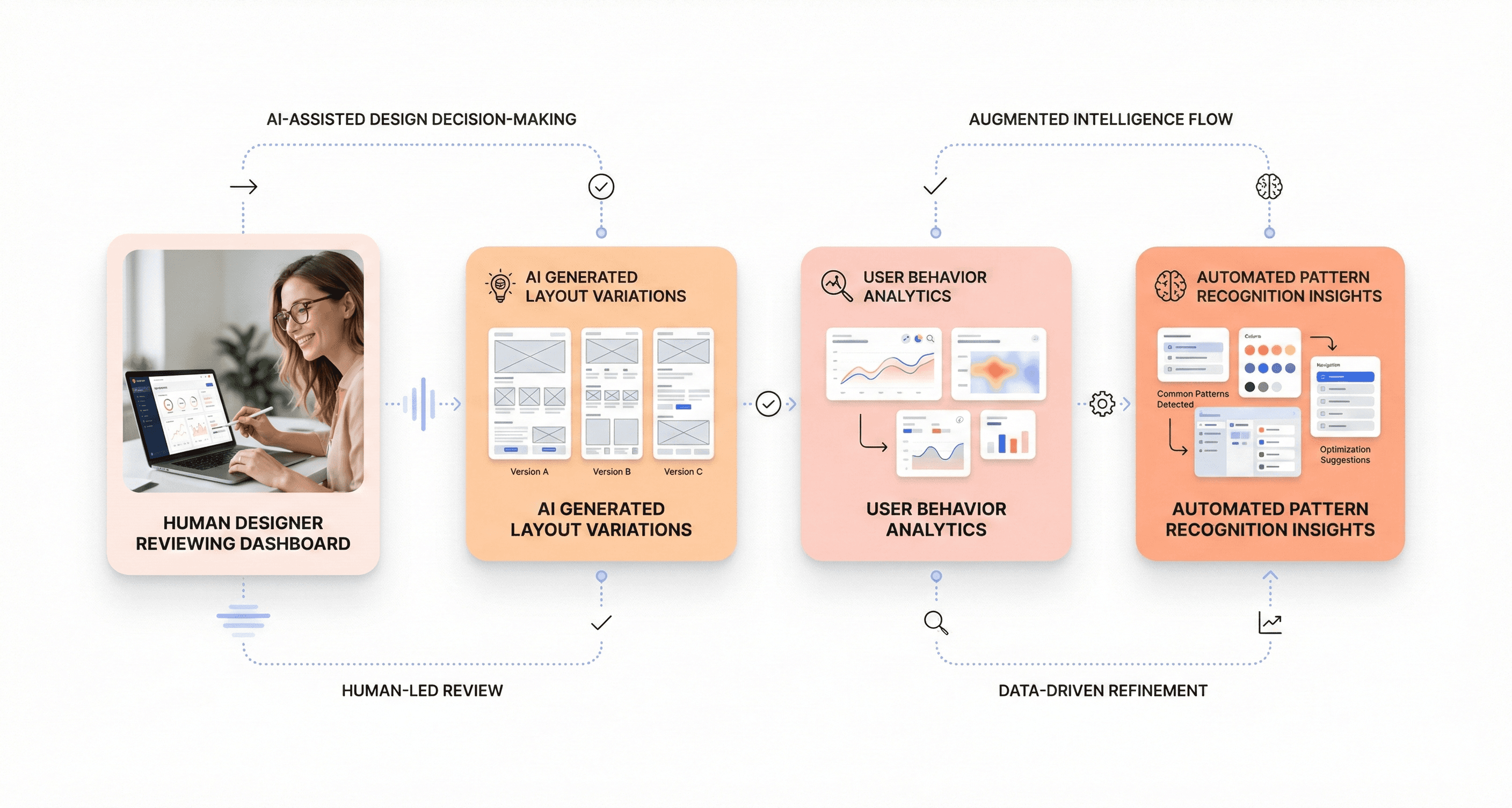
Rather than viewing AI as a replacement threat, forward-thinking designers are discovering how AI assisted design workflow tools can significantly reduce cognitive load and enhance creative capabilities. The concept of intelligence augmentation (IA) focuses on applying digital technology, particularly machine learning, to support and enhance human capabilities like knowledge search, analysis, and planning. Unlike artificial intelligence that aims to fully automate tasks, IA services are designed to function in close cooperation with humans under human direction.
Modern AI UX design tools excel at handling data-intensive tasks that traditionally consumed valuable designer time. By automating pattern recognition, generating multiple design variations based on predefined parameters, and analyzing vast amounts of user data, these tools free designers to focus on higher-level strategic thinking and creative problem-solving.
This augmentation allows design professionals to dedicate more mental resources to understanding user needs, crafting meaningful experiences, and making nuanced design decisions that require human judgment and empathy.
Benefits of Faster Decision-Making and Project Kickstarts
Now that we understand how AI can reduce cognitive burden, it's important to examine the tangible benefits this brings to design workflows. AI design automation tools provide significant advantages in accelerating project initiation and decision-making processes. When teams use intelligence augmentation design toolkits, they can quickly structure their thinking around design challenges and brainstorm service concepts more efficiently.
The toolkit approach enables teams to bridge the gap between design and technical expertise by creating shared understanding across different disciplines. By working with tangible, analogue tools on physical maps, teams can demonstrate complex concepts and make abstract machine learning ideas more concrete. This collaborative process naturally breaks down silos between departments and accelerates communication, leading to faster consensus-building and more rapid project launches.
For designers working on AI generated user interface projects, these tools provide frameworks for identifying potential areas where machine learning can benefit users while simultaneously helping teams spot possible problem areas early in the process. This proactive approach to design planning significantly reduces project delays and costly revisions later in the development cycle.
Opportunity for Human-AI Collaboration in Future Design Workflows
With this foundation of augmentation established, the future points toward sophisticated collaborative models where human creativity in design works synergistically with AI capabilities. The collaborative AI model represents the next evolution, where AI and humans function as equal partners, each contributing their unique strengths to solve complex design problems.
In creative industries like product design and user experience, this partnership model shows particular promise. AI can rapidly generate multiple design options based on specific parameters and constraints, while human designers apply their domain expertise to validate, refine, and enhance the most promising concepts. This collaborative approach requires designing interfaces and workflows that facilitate seamless interaction and enable both parties to learn from each other.
The success of human-AI collaboration depends on fostering trust and communication between AI systems and human workers. Design teams must create shared understanding of goals, roles, and responsibilities, with humans primarily responsible for setting objectives, defining parameters, and providing creative direction while AI handles data processing, pattern analysis, and iterative generation tasks.
Future machine learning UI design workflows will likely incorporate assistive models where AI serves as a sophisticated design assistant, providing relevant insights, recommendations, and automated execution of routine tasks, while designers maintain control over strategic decisions and creative vision. This partnership approach maximizes the strengths of both human intuition and machine processing power.
Conclusion
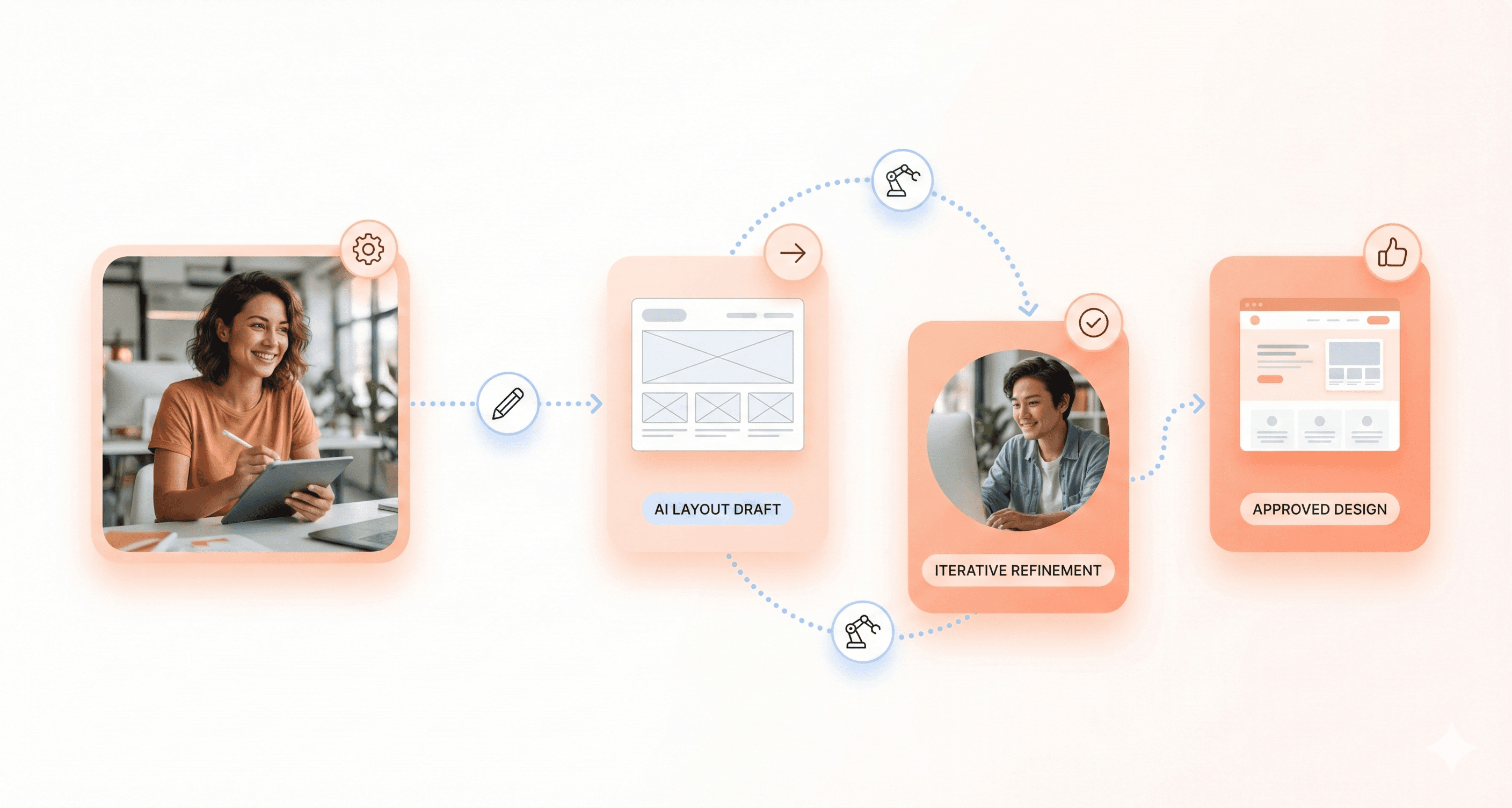
While AI tools continue to evolve at breakneck speed, the evidence is clear: human designers remain irreplaceable in the UI/UX landscape. AI struggles with fundamental design challenges like problem identification, context understanding, and the multidisciplinary thinking required for complex solutions. More critically, AI lacks the empathy, creativity, and human psychology insights that drive meaningful user experiences.
The future isn't about AI replacing designers—it's about smart collaboration. Designers who embrace AI as an enhancement tool will find themselves better equipped to handle data processing, reduce cognitive load, and kickstart projects faster.
The key is approaching this technology with intentionality and ethics, using it to amplify human capabilities rather than compete with them. As the design landscape transforms, those who master human-AI collaboration will define the next era of user experience design.




About the author
I’m the founder of Hashbyt, an AI-first frontend and UI/UX SaaS partner helping 200+ SaaS companies scale faster through intelligent, growth-driven design. My work focuses on building modern frontend systems, design frameworks, and product modernization strategies that boost revenue, improve user adoption, and help SaaS founders turn their UI into a true growth engine.
Is a clunky UI holding back your growth?
Is a clunky UI holding back your growth?
▶︎
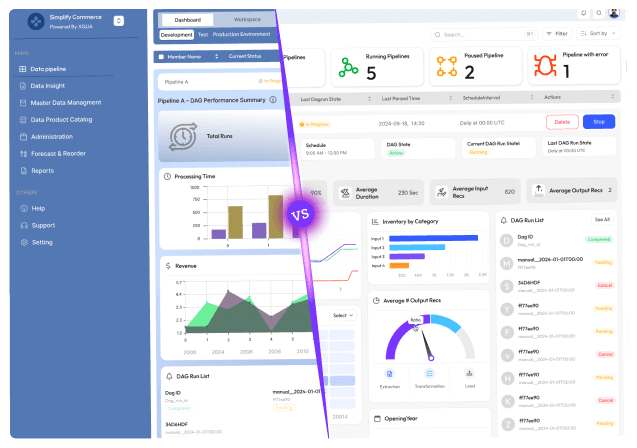
Transform slow, frustrating dashboards into intuitive interfaces that ensure effortless user adoption.
▶︎
Transform slow, frustrating dashboards into intuitive interfaces that ensure effortless user adoption.
