

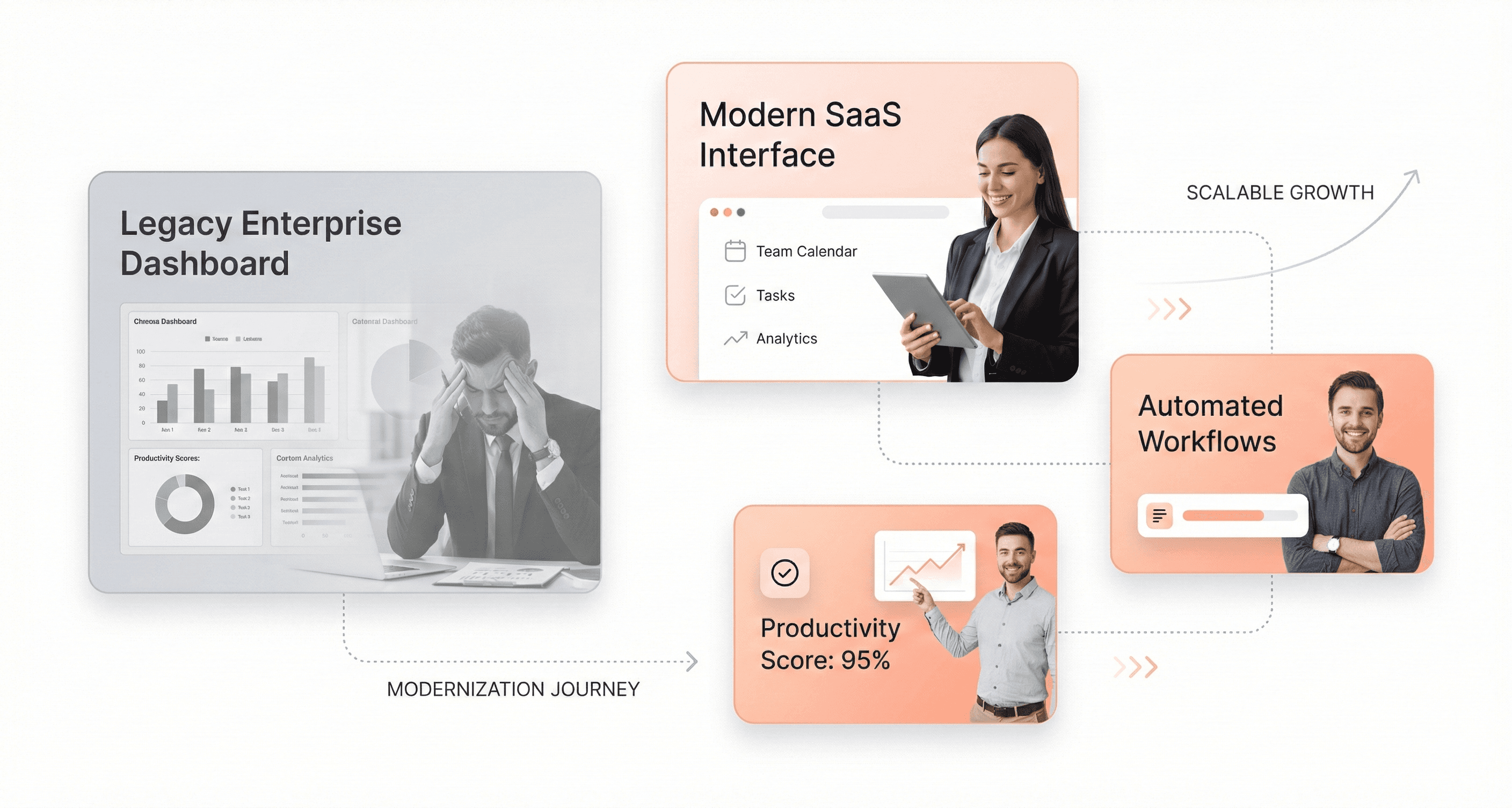
Your outdated enterprise software interfaces are dragging your business down. While your competitors leverage modern, intuitive systems that boost productivity and drive growth, your teams struggle with clunky legacy interfaces that slow decision-making and frustrate employees. Leveraging the right legacy modernization services can help transform these systems into scalable, high-performing digital experiences.
This guide is for IT leaders, business executives, and decision-makers who need to modernize their enterprise software interfaces but aren't sure where to start or how to justify the investment.
You'll discover how enterprise legacy modernization transforms outdated systems into powerful business drivers through strategic UI/UX improvements and frontend modernization. We'll explore the measurable productivity gains that modern interfaces deliver, from faster task completion to improved employee satisfaction. You'll also learn the essential features that make modern SaaS interfaces so effective, including real-time data access, mobile-responsive design, and intuitive workflows that reduce training time.
Finally, we'll walk you through proven strategies for planning and executing your modernization project while avoiding common pitfalls that derail transformation efforts. By the end, you'll have a clear roadmap for turning your enterprise software interface modernization into a competitive advantage that drives real business results.
Understanding Enterprise Software Modernization and Its Business Impact
Defining ERP and enterprise software modernization beyond simple upgrades
When you think about enterprise software modernization, you're looking at something far more transformative than typical system upgrades. This isn't about patching security vulnerabilities or adding new features to your existing ERP system. Instead, you're embarking on a strategic business evolution that redefines how your organization creates value, competes, and adapts in today's rapidly shifting landscape.
Unlike past approaches that focused narrowly on replacing outdated systems or adopting individual technologies, your modernization journey must extend across your full operating fabric, from infrastructure and data architecture to decision-making models and workforce design. You're essentially re-engineering your enterprise to be intelligent by design, where technology, process, and culture work in sync to deliver speed, flexibility, and insight at scale.
Your modernization strategy represents a fundamental shift from fragmented upgrades to strategic transformation. Every investment you make should align with your long-term business priorities rather than just addressing immediate operational gaps. This means moving beyond the traditional view of modernization as a destination and embracing it as an ongoing capability that enables your organization to evolve continuously.
Key drivers forcing businesses to modernize legacy systems
Your legacy systems are likely holding you back in ways that extend far beyond outdated interfaces. With nearly half of CIOs and technology executives prioritizing enterprise application modernization, the pressure to modernize has reached a critical point where staying competitive requires immediate action.
You're facing accelerated market disruption where customer expectations shift rapidly, supply chains become more volatile, and AI disruption becomes increasingly pervasive. Your monolithic architectures are slowing your time-to-market, limiting your ability to activate new use cases and seize emerging opportunities. This rigidity is costing you, legacy codebases and software sprawl are locking up 20-40% of your company's technology value.
Security concerns are another critical driver pushing your modernization efforts. Outdated software poses significant security risks, with 84% of codebases containing vulnerabilities. Your legacy systems weren't designed to manage today's complex cyber threat landscape or evolving regulatory demands, leaving your organization exposed and reactive rather than proactive.
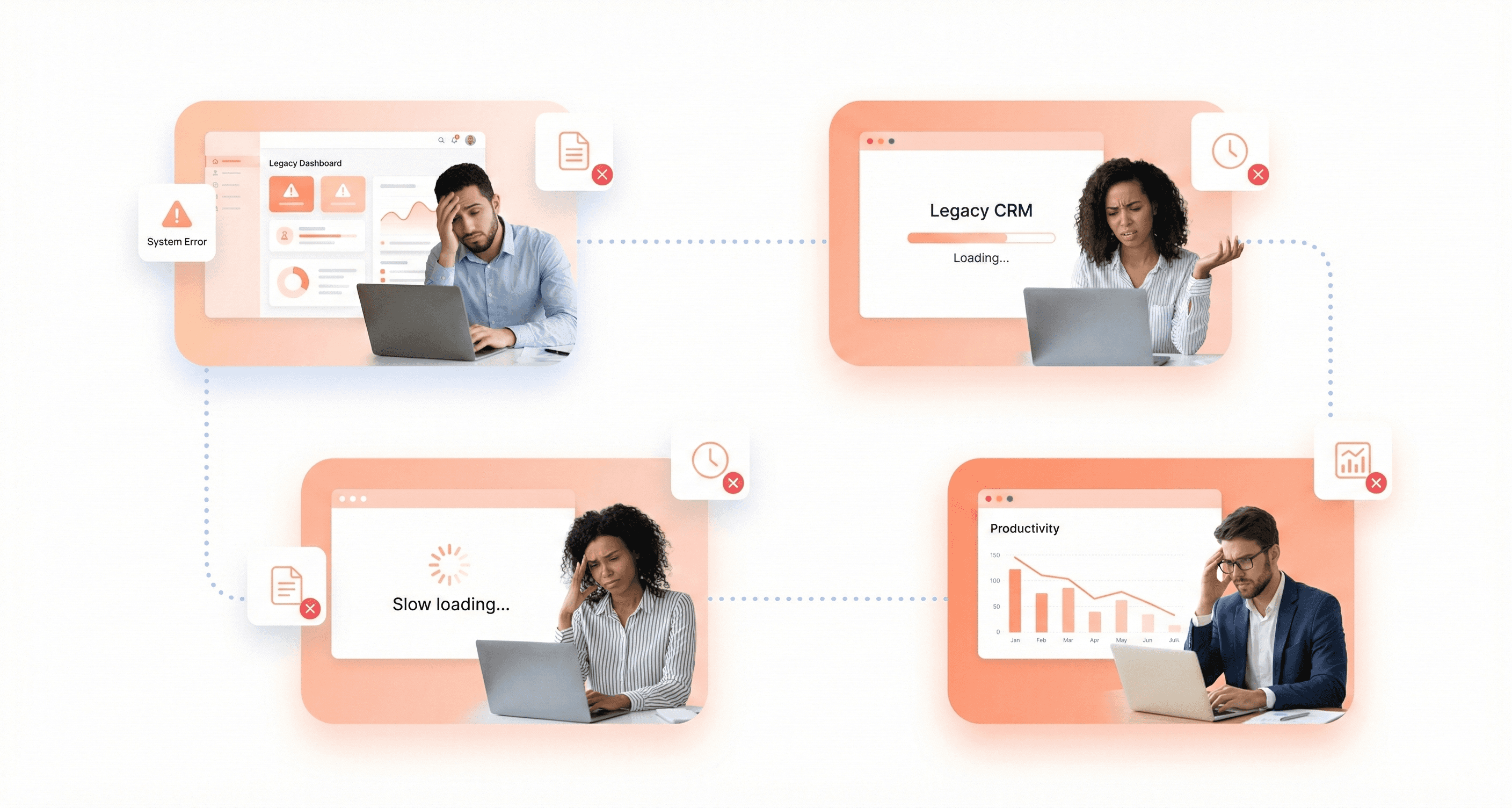
Your workforce is also driving change. Employees expect intuitive, empowering systems that elevate their potential, and finding skilled professionals who understand both legacy and modern technologies is becoming increasingly difficult. You need systems that enable your teams to build forward, not look backward.
Cost efficiency represents another compelling driver. Your outdated systems are often locking up budgets and slowing innovation. By consolidating technology stacks and shifting to flexible, usage-based models, you can reduce operational costs while enhancing agility.
The shift from on-premises to cloud-based solutions
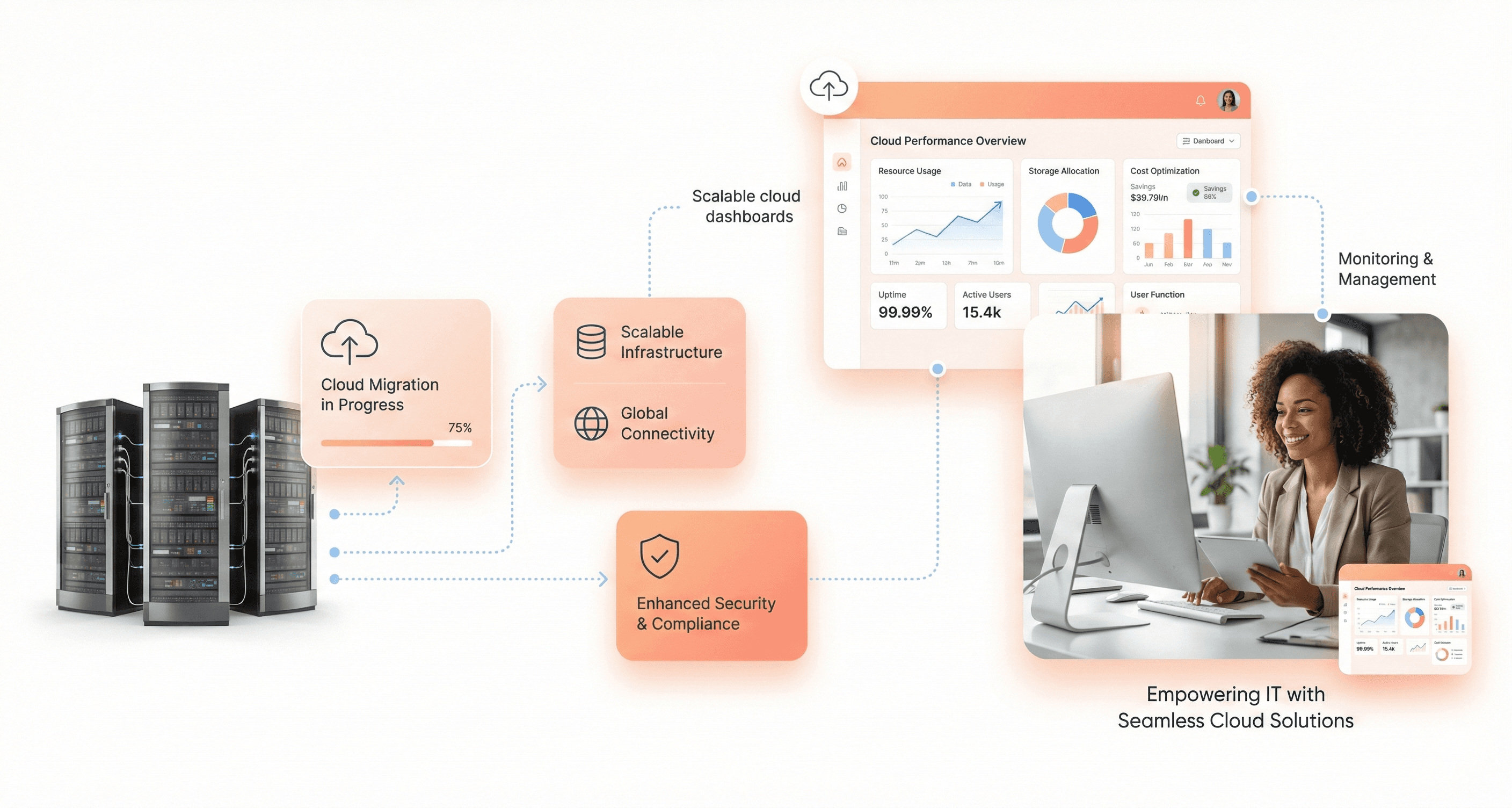
Your journey from on-premises to cloud-based solutions represents more than just a technology migration, it's a fundamental transformation in how your business operates and scales. According to Gartner, by 2026, 75% of organizations will run on digital transformation models built on cloud as their foundation, not because it's trendy, but because it's the only way to stay adaptive, scalable, and competitive.
When you embrace cloud-native architectures, you're gaining the ability to scale operations, support larger customers, and create new revenue streams with a modern software platform. Your cloud transformation enables you to optimize spending and reduce ongoing maintenance costs by adopting scalable, efficient architectures that grow with your business needs.
The shift to cloud-based solutions empowers your development teams with modern tools and architectures that drive innovation, automation, and developer productivity. This transformation makes it easier for you to attract and retain skilled developers who want to work with modern technology stacks, addressing the talent shortage challenge many organizations face.
Your cloud adoption increases organizational agility, enabling you to develop faster, integrate new technologies more easily, and adapt to changing business needs. With cloud-native, composable, and real-time architectures, you can create an infrastructure that's responsive rather than reactive, supporting interoperability, scalability, and insight-driven decision-making.
The move to the cloud also strengthens your security posture. Modern cloud architectures embed security by design, using zero-trust frameworks, AI-powered threat detection, and automated compliance to proactively manage risk at scale. This isn't just about protection—it's about building long-term resilience that can adapt to evolving threats and regulatory requirements.
Critical Business Benefits of Interface Modernization
Revenue Growth Through Improved Scalability and New Business Opportunities
When you modernize your enterprise software interfaces, you unlock significant revenue potential through enhanced scalability capabilities. Modern applications are designed to handle increased workloads and adapt seamlessly to changes in user demand, which is essential as your enterprise grows. This scalability enables you to accommodate a larger user base and more complex operations without experiencing performance bottlenecks that could limit your revenue growth.
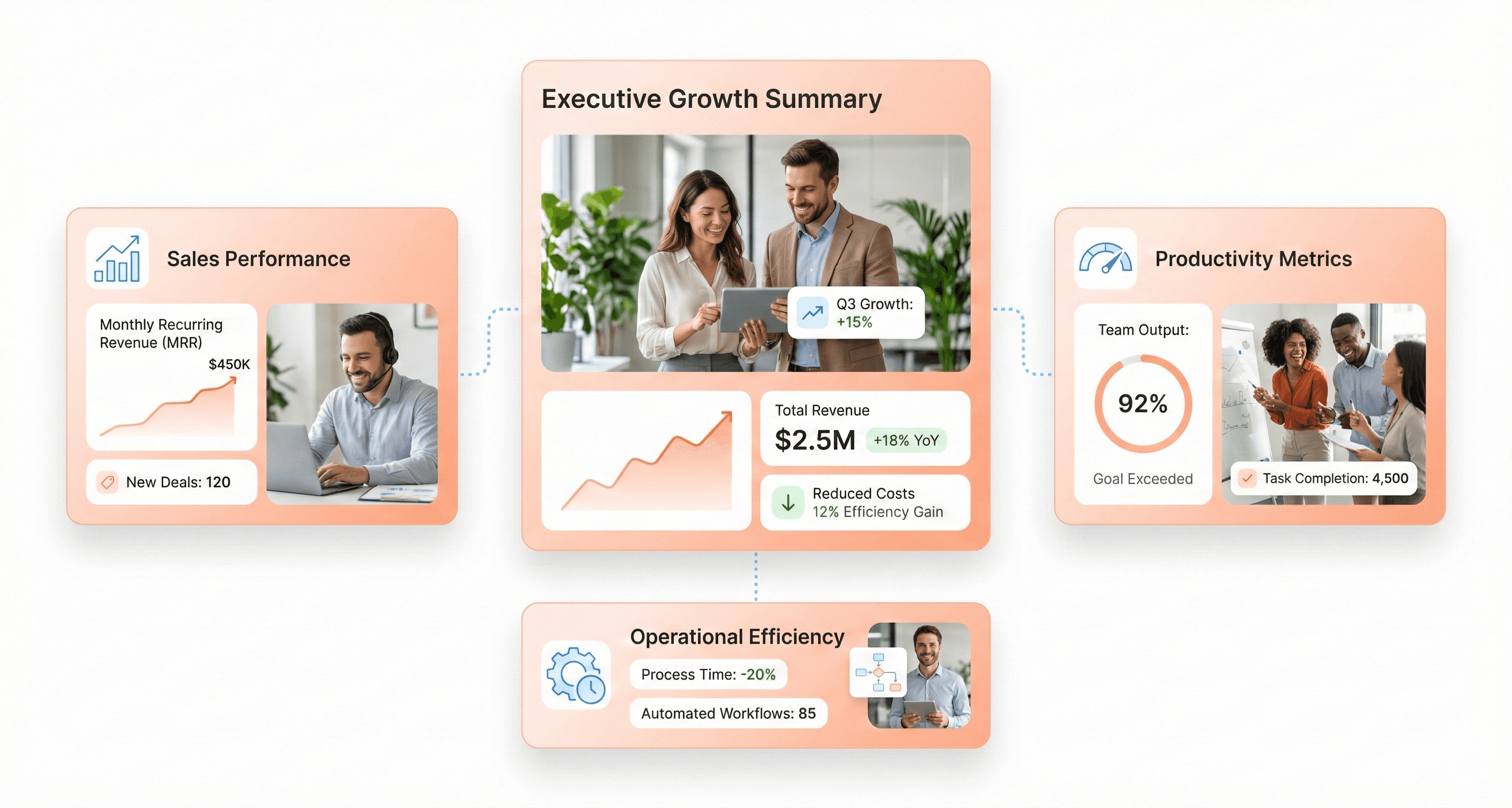
Your modernized systems can respond more rapidly to business needs, allowing you to capitalize on market opportunities faster than competitors still relying on legacy systems. With the ability to bring new offerings to market more rapidly through streamlined operations, you can capture market share and generate revenue from emerging business opportunities. Studies show that enterprises investing in modernization can see an impressive 14% rise in annual revenue, calculated at around USD 1 billion on average for larger organizations.
Cost Reduction Through Optimized Infrastructure and Maintenance Savings
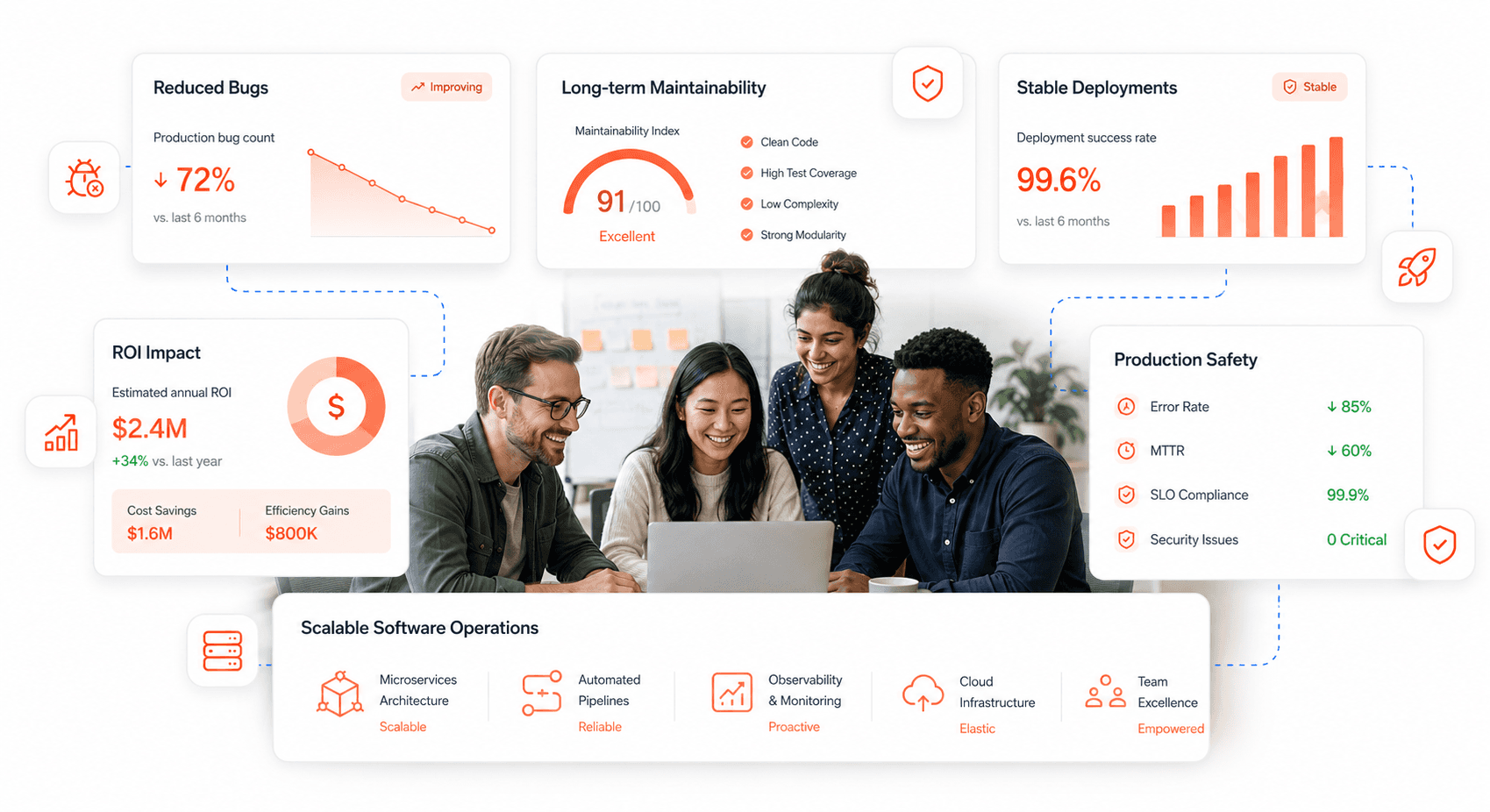
Your modernization efforts deliver substantial cost savings across multiple operational areas. Legacy applications typically require 30-50% more in application maintenance and running costs compared to modernized systems. By updating your infrastructure, you can achieve approximately 74% lower hardware, software, and staffing costs while improving overall operational efficiency by 10%.
Modernized systems require significantly less maintenance and demonstrate greater resilience, leading to reduced maintenance costs and fewer operational disruptions over time. You'll also benefit from automated processes that eliminate routine manual tasks, freeing up your resources for more strategic initiatives. The transition to cloud-based solutions can help you eliminate costly license fees associated with legacy systems while optimizing your resource utilization.
Enhanced Employee Productivity and Talent Acquisition Advantages
Your modernization investment directly impacts developer experience and overall workforce productivity. When your development teams face friction from technical debt, older language frameworks, or misalignment with leadership priorities, it significantly slows innovation and reduces productivity. Modern enterprise interfaces eliminate these barriers, allowing your developers to work more efficiently and focus on feature development rather than maintenance and bug fixing
This is especially relevant in HR platforms where HRTech UI UX services help enterprises modernize employee management dashboards, hiring workflows, and internal productivity tools used across distributed teams.
Improved developer workflows and reduced inefficiencies keep your talent engaged and productive, which is crucial for successful digital transformation. Modern systems also attract top talent who prefer working with contemporary technologies, giving you a competitive advantage in talent acquisition. Your teams can deliver features faster to users instead of spending valuable time on legacy system maintenance, directly boosting your organization's innovation capacity.
Accelerated Time-to-Market for New Features and Services
With modernized enterprise software interfaces, you can significantly reduce your product development cycles and accelerate time-to-market for new features and services. Modern architectures enable your teams to implement changes more quickly and efficiently, allowing you to respond to market demands and customer needs with greater agility.
Your modernized applications support faster deployment pipelines through DevOps practices and continuous integration/continuous deployment (CI/CD) capabilities. This streamlined approach to software delivery ensures that you can push updates and new features to market more reliably and frequently. The enhanced agility from modernization allows you to foster a culture of innovation within your organization, where teams can quickly test new ideas and bring successful concepts to market ahead of competitors still constrained by legacy system limitations.
Essential Features of Modern Enterprise Software Interfaces
Unified and Intuitive User Interfaces Across All Platforms
When you modernize your enterprise software interface, establishing a unified design system becomes your foundation for success. Your users expect consistency whether they're accessing your application on desktop, tablet, or mobile devices. A well-designed enterprise UI significantly boosts human productivity by providing intuitive, easy-to-navigate, and visually appealing interfaces that streamline workflows and reduce the learning curve for your employees.
You should prioritize creating a cohesive visual hierarchy with clear differentiation between tabs and sections, ensuring your users can navigate intuitively and find information quickly without confusion. Your design system must incorporate consistent iconography and color schemes that help users quickly locate and understand different functions, reducing the learning curve for new users while maintaining familiarity for existing ones.
Your unified interface should feature clean, well-organized layouts that present critical information at a glance. By implementing clear labels, logical grouping, and intuitive navigation patterns such as menus, breadcrumbs, and search functionalities, you enable your users to move through different sections of your application effortlessly. This approach minimizes cognitive load and ensures your team can focus on their core tasks rather than struggling with interface complexities.
Real-time Data Access and Mobile Compatibility
Your modern enterprise interface must deliver seamless real-time data access while maintaining full mobile compatibility. When you implement responsive design principles, you ensure your application adapts effortlessly to different screen sizes, guaranteeing consistency and usability regardless of the device your team uses.
You need to provide your users with immediate access to critical business information, enabling them to make informed decisions quickly. Real-time data visualization through charts, graphs, and dashboards helps you present complex information in an easily understandable format, which is essential for effective decision-making in your enterprise context.
Your mobile interface should offer all the functionalities of the desktop version, maintaining feature parity to ensure your users can work efficiently while on the go. The responsive design must guarantee that your interface remains functional and user-friendly across various devices, from smartphones to large desktop monitors, without sacrificing usability or performance.
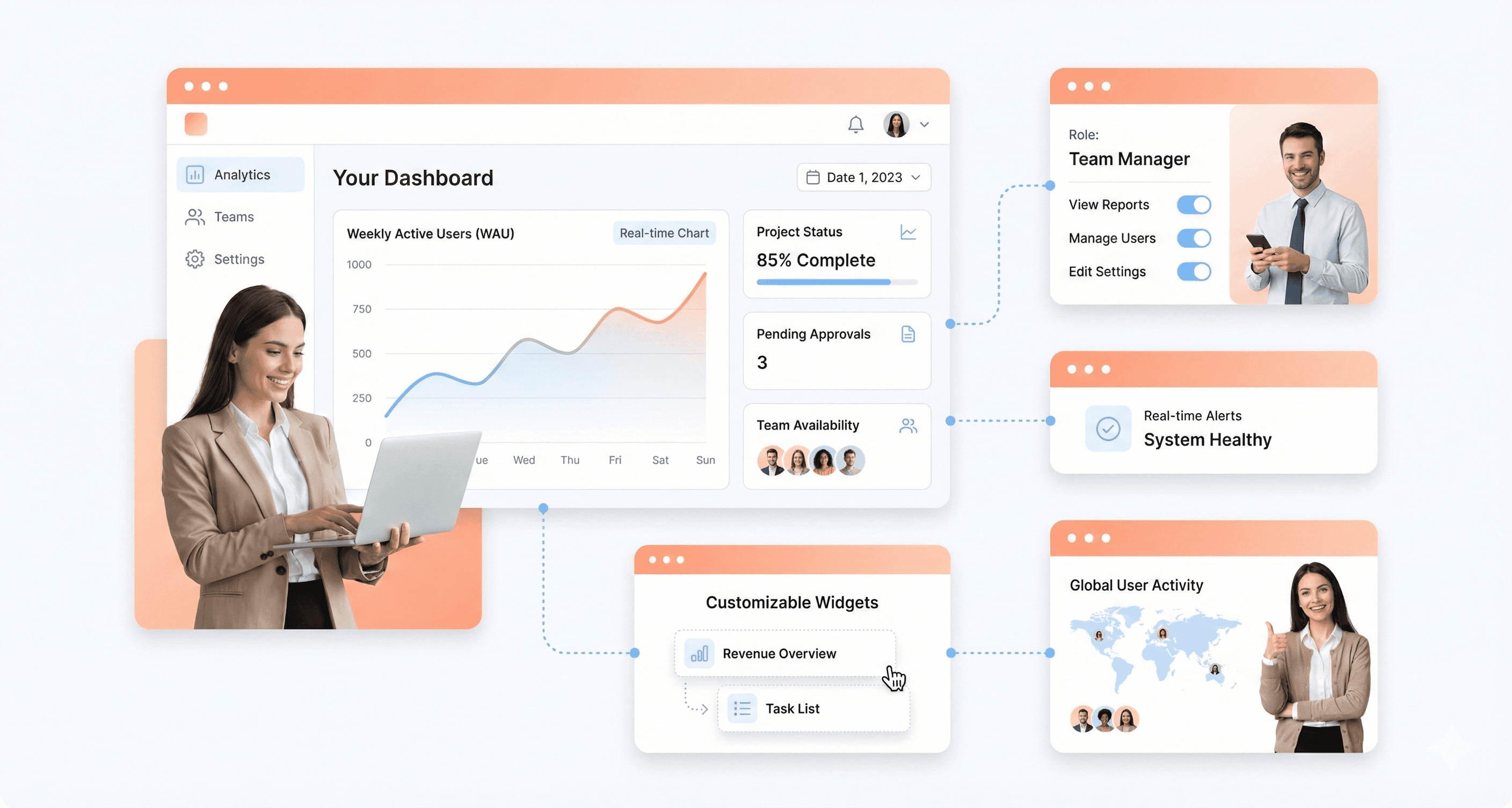
Self-service Customization and Granular Security Controls
You should empower your users with self-service customization capabilities that allow them to tailor their workspace to fit their specific roles and preferences. Your modern interface needs to support drag-and-drop personalization tools and dashboard customization options, enabling each user to create a workspace that aligns precisely with their workflow requirements.
Your customization features should include the ability to personalize dashboards, modify interface layouts, and adjust functional elements according to individual user needs. This flexibility enhances user satisfaction and productivity by allowing your team members to organize their work environment in ways that make sense for their daily tasks and responsibilities.
Regarding security, you must implement granular access controls that accommodate multiple user roles with distinct needs and workflows. Your interface should seamlessly manage role-based permissions, ensuring that sensitive information remains protected while providing appropriate access levels for different team members. These security measures should operate transparently in the background, maintaining user experience quality while enforcing necessary data protection protocols.
Seamless Integration Capabilities with Third-party Systems
Your modern enterprise interface requires robust integration capabilities that connect seamlessly with existing third-party systems and legacy applications. You need to ensure your interface can communicate effectively with various business tools, from CRM platforms to accounting software, creating a unified ecosystem that supports your organization's diverse operational needs.
When you implement integration features, you should focus on minimizing disruption to existing workflows while enhancing overall system functionality. Your interface should serve as a central hub that consolidates data and processes from multiple sources, providing your users with a single point of access for all their business-critical information.
Your integration strategy should accommodate API connections, data synchronization, and workflow automation between different systems. This connectivity enables your team to work more efficiently by eliminating the need to switch between multiple applications, reducing context switching, and improving overall productivity. The seamless flow of information between systems ensures data consistency and enables your organization to maintain accurate, up-to-date records across all platforms.
Strategic Approaches to Successful Modernization
Building business-aligned modernization roadmaps over tech-driven initiatives
Your modernization journey must begin with a fundamental shift in perspective—prioritizing business goals over technological excitement. Strategic enterprise modernization requires you to tie your initiatives directly to organizational value drivers and key business objectives, ensuring everyone across your enterprise remains aligned to a shared vision.
When developing your modernization roadmap, you should start by conducting a comprehensive evaluation of your current systems while defining clear, measurable objectives. It's never enough to simply state that you need your applications to be more modern. You must identify the specific business drivers behind your modernization efforts, whether they involve cost savings, decreasing customer churn, increased system stability, enhanced innovation capabilities, or improved developer experience.
Your approach should focus on understanding both short-term and long-term business needs rather than jumping to the latest technological trends. This business-first mentality ensures that your technology assets serve a clear purpose and integrate meaningfully with your overall enterprise ecosystem. Consider the long-term total cost of ownership (TCO) when planning your modernization investments, as this helps you understand not only your initial investment but also the ongoing costs you'll incur throughout the system lifecycle.
By prioritizing business alignment, you'll create a modernization strategy that delivers tangible value and positions your organization for scalable, sustainable growth while maintaining focus on what matters most to your stakeholders.
Implementing incremental phased upgrades versus big-bang transformations
Your modernization approach should embrace an iterative, long-term mindset rather than attempting comprehensive system overhauls all at once. Strategic enterprise modernization works best when you build an iterative transformation roadmap that prioritizes the most business-critical upgrades, changes, and investments before scaling to broader initiatives.
When planning your phased approach, you should create detailed timelines with key milestones and goals that extend beyond just the implementation phase. This methodology allows you to maintain business continuity while systematically updating your technology infrastructure. Your phased rollouts should include thorough testing protocols and clear communication plans to prevent operational disruption during transitions.
Consider running legacy and modernized systems in parallel during critical transition periods. This strategy minimizes downtime and ensures smooth operations throughout your modernization process. You'll need to set realistic expectations with stakeholders about the iterative nature of this transformation, emphasizing that implementation schedules will require adjustments as requirements change and new technologies become available.
Your phased approach should also incorporate regular reassessment checkpoints where you evaluate workflows, productivity improvements, and engage finance teams to reassess costs as appropriate. This keeps all key stakeholders engaged and encourages collaboration across your organization while maintaining momentum toward your long-term modernization objectives.
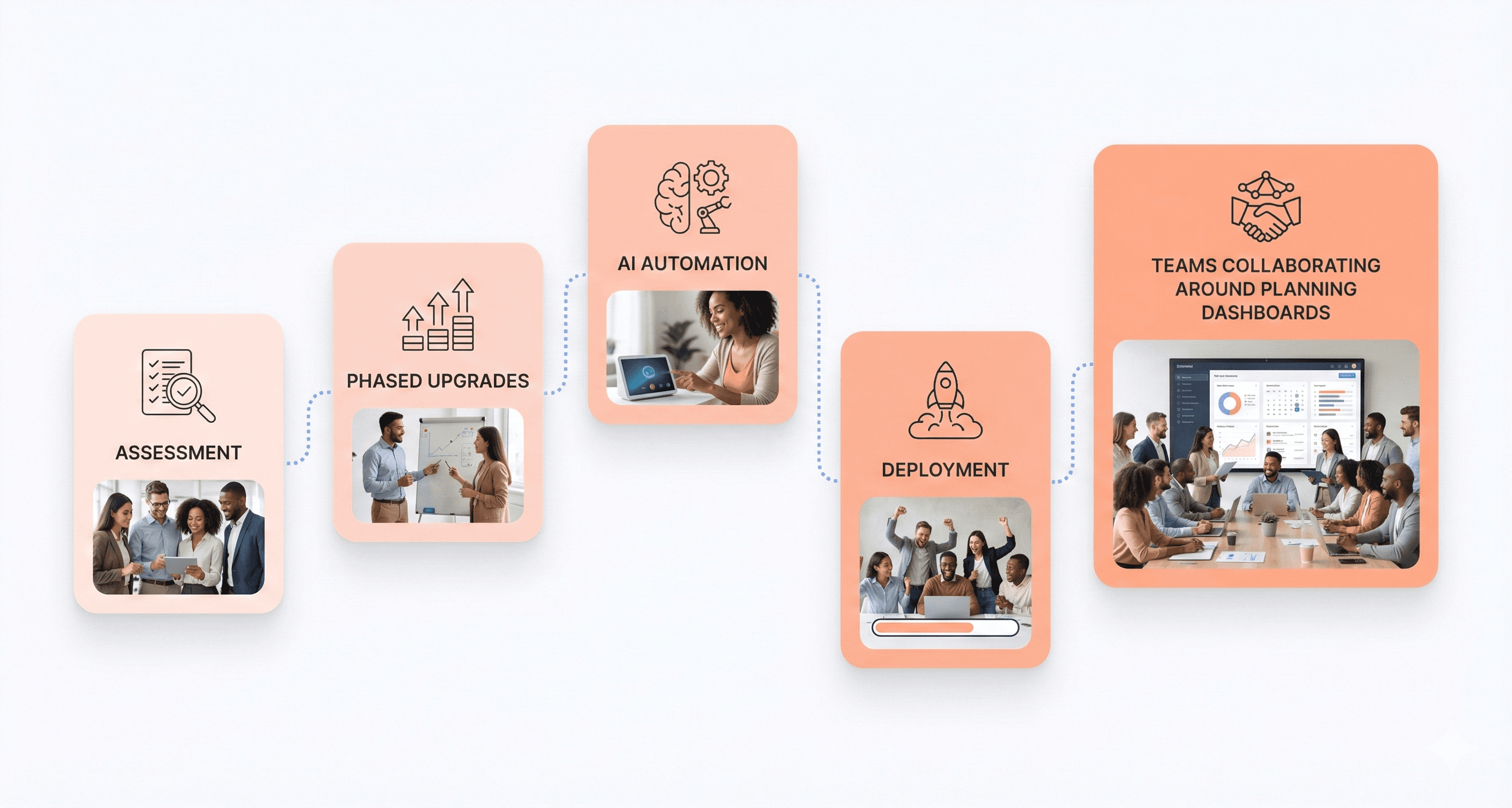
Leveraging AI and automation tools to accelerate modernization processes
Your modernization efforts can achieve significant acceleration through the strategic implementation of AI and automation technologies. These tools enable you to offset costs associated with system monitoring and maintenance while allowing your teams to respond to issues faster, bringing efficiencies in both human time and financial resources.
Automated systems maintenance should handle your day-to-day management tasks, freeing your teams to focus on higher-value strategic activities rather than time-consuming maintenance and upgrades. As your enterprise IT modernization efforts unify and standardize your overall technology stack, you'll find increased viability for automating more workloads across your organization.
You should prioritize AI-driven features such as predictive analytics and intelligent automation, which can optimize your operations and deliver personalized experiences. These technologies help you derive real-time insights from your data, enabling more informed decision-making and better strategic planning capabilities.
Your automation strategy should include automated compliance checks and streamlined reporting features, which help ensure adherence to regulatory requirements while reducing administrative burden on your compliance teams. This allows you to stay ahead of regulatory changes with minimal operational disruption.
The integration of AI and machine learning tools into your modernized applications enhances decision-making processes and automates complex workflows. By implementing these technologies strategically, you can significantly reduce the time and resources required for your modernization initiatives while improving overall system reliability and performance.
Investing in talent development and strategic partnerships
Your modernization success depends heavily on having the right people in place to support your technology transformation. Whether this involves recruiting new talent, upskilling existing team members, or combining both approaches, you must ensure your workforce can effectively manage and leverage your modernized systems.
You should create comprehensive training and upskilling processes that help your talent keep pace with emerging technologies while reducing turnover. Building documented organizational policies for new hire training ensures everyone receives consistent, equal preparation and possesses the knowledge needed to perform at their best within your modernized environment.
Your talent strategy must extend beyond technical expertise alone. Your team members need strong communication skills to effectively interact across all organizational levels, ensuring stakeholders understand directions and decisions without getting lost in technical jargon. This communication capability becomes crucial when managing the cultural and operational shifts that accompany modernization initiatives.
Consider developing strategic partnerships that complement your internal capabilities and accelerate your modernization timeline. These partnerships can provide specialized expertise, additional resources, and proven methodologies that reduce implementation risks and improve outcomes.
You should also foster a forward-thinking, collaborative culture focused on continuous improvement. This cultural transformation doesn't happen quickly, but the positive impact will be noticeable across your business as your modernization journey progresses. Building feedback mechanisms and open communication into all your processes encourages collaboration across enterprise levels while promoting innovation and identifying areas for ongoing enhancement.
Overcoming Common Modernization Challenges
Managing Risks and Documentation Gaps in Legacy Systems
Your modernization journey faces its most critical challenge when dealing with undocumented legacy systems and their hidden dependencies. When 90% of application re-write attempts fail on the first try, you're confronting a reality where poor documentation and unknown system relationships create costly setbacks.
Legacy systems often lack comprehensive documentation, making it difficult for your teams to understand actual call chains, shared modules, and database dependencies. This knowledge gap forces you to make assumptions about system behavior, leading to integration failures and unexpected downtime during transitions.
To address these risks effectively, you need to leverage modern AI-powered tools that can extract real dependency graphs from your existing systems. These intelligent assistants help you visualize actual system relationships rather than relying on outdated documentation or guesswork. This approach transforms your modernization from a high-risk venture into a well-mapped strategic initiative.
Aligning IT and Business Stakeholder Priorities Effectively
Your modernization success depends heavily on bridging the gap between IT capabilities and business objectives. According to industry research, 38% of IT decision makers identify talent and skills shortages as primary obstacles to effective modernization, creating misalignment between what business stakeholders expect and what IT teams can deliver.
Business leaders often prioritize speed and competitive advantage, while your IT teams focus on security, stability, and technical feasibility. This disconnect becomes particularly pronounced when dealing with enterprise legacy modernization projects that require careful balancing of innovation with operational continuity.
To achieve alignment, you should establish clear communication channels where business requirements translate directly into technical specifications. Your modernization strategy must demonstrate how technology investments support specific business outcomes, whether that's improved customer experience, operational efficiency, or market responsiveness.
Addressing Fear of Operational Disruption During Transitions
Security concerns and risk management represent the biggest hurdle to your IT modernization efforts, with 41% of organizations citing these as primary blockers. Your teams understandably worry about elongated downtime and potential vulnerabilities that modernization can introduce to critical business operations.
This fear is justified when you consider that modernization challenges have led to delayed timelines for 44% of organizations and reduced productivity for one-third of companies. The prospect of business disruption often paralyzes decision-making, causing your organization to delay necessary updates and fall further behind technologically.
Your approach should focus on minimizing operational impact through phased implementations and comprehensive testing protocols. Rather than attempting dramatic "rip-and-replace" strategies, you can adopt layered architectural approaches that allow systems to modernize gradually while maintaining business continuity.
Solving Talent Shortages and Skill Gaps in Modern Technologies
Your modernization efforts face significant obstacles when internal teams lack expertise in the modern technologies required for successful transitions. This skills gap affects 38% of IT decision makers and directly impacts your ability to execute complex integration strategies and manage new technology implementations.
The talent shortage extends beyond technical skills to include an understanding of modern architectural patterns, cloud-native development, and SaaS integration approaches. Your existing workforce may excel with legacy systems but struggle with contemporary frontend modernization techniques and UI/UX best practices.
To overcome these challenges, you need to invest in comprehensive upskilling programs for your current employees while partnering with experienced external providers. Nearly half of decision-makers are addressing this through employee training initiatives, while approximately 40% work with specialized partners who bring essential expertise to fill knowledge gaps in critical modernization areas.
Measuring and Maximizing Modernization ROI
Tracking productivity improvements and process streamlining
When measuring your modernization ROI, you need to focus on tangible productivity gains that directly impact your bottom line. Start by establishing clear baselines for key operational metrics before implementing your modernized interfaces. Track average task completion times, ticket resolution rates, and employee throughput across departments to understand your current performance levels.
See the full audit framework and 2025 benchmark data in our 2026 Enterprise UX Modernisation Report.
Modern enterprise software interfaces deliver productivity improvements through automation of repetitive tasks and streamlined workflows. You'll want to monitor how much time your teams save weekly from automated processes, improvements in task turnaround times, and increases in employee output without adding headcount. For example, if your team handles 50% more requests without hiring additional staff, that represents significant scalability gains that directly contribute to ROI.
Pay close attention to adoption rates and user engagement with your modernized systems. High productivity requires consistent user interaction and trust in the new interface capabilities. Track resolution rates - how often the modernized system completes tasks without escalation to human intervention. These metrics help validate whether your interface improvements are actually being utilized and delivering on their productivity promises across your organization.
Monitoring cost savings and infrastructure optimization
Your cost savings measurement should encompass both direct financial impact and cost avoidance opportunities. Calculate reductions in labor costs by comparing pre- and post-modernization expenses for routine support functions. Modern interfaces often deflect routine support requests through intelligent self-service capabilities, reducing the need for expensive support channels like live agents or managed service providers.
Infrastructure optimization represents a significant portion of modernization ROI. You should track changes in cost per transaction or support ticket, comparing historical spending on vendor services before and after your interface modernization rollout. Cloud-native architectures and modern interfaces typically reduce infrastructure costs through better resource utilization and elimination of legacy system dependencies.
Monitor your total cost of ownership reduction by measuring decreases in maintenance expenses, licensing costs, and technical debt management. Legacy systems often consume 60-80% of IT budgets just for maintenance, leaving only 20-30% for innovation. Successful interface modernization flips this equation, freeing up resources for strategic initiatives while reducing operational overhead.
Evaluating enhanced security and compliance capabilities
Modern enterprise software interfaces provide enhanced security through better access controls, audit trails, and compliance monitoring capabilities. You need to track improvements in your security posture by measuring a reduction in security incidents, faster response times to threats, and enhanced visibility into user activities across systems.
Compliance capabilities become measurable through reduced audit preparation time, automated compliance reporting, and decreased risk of regulatory violations. Your modernized interfaces should provide better governance controls and real-time monitoring that makes compliance management more efficient and reliable.
Risk mitigation represents a crucial but often intangible benefit of interface modernization. Track metrics like system availability, data integrity incidents, and business continuity improvements. These factors contribute to ROI by preventing costly downtime, data breaches, and regulatory penalties that could impact your organization's financial performance and reputation.
Assessing improved customer experience and market responsiveness
Customer experience improvements from interface modernization manifest in measurable ways that directly impact your revenue potential. Track metrics like customer satisfaction scores, support ticket reduction, and faster resolution times for customer-facing processes. Modern interfaces enable self-service capabilities that reduce customer wait times and improve overall satisfaction.
Market responsiveness becomes evident through faster time-to-market for new features, reduced development cycles, and improved agility in responding to business changes. Monitor how quickly you can implement new customer-requested features or adapt to market demands compared to your pre-modernization capabilities.
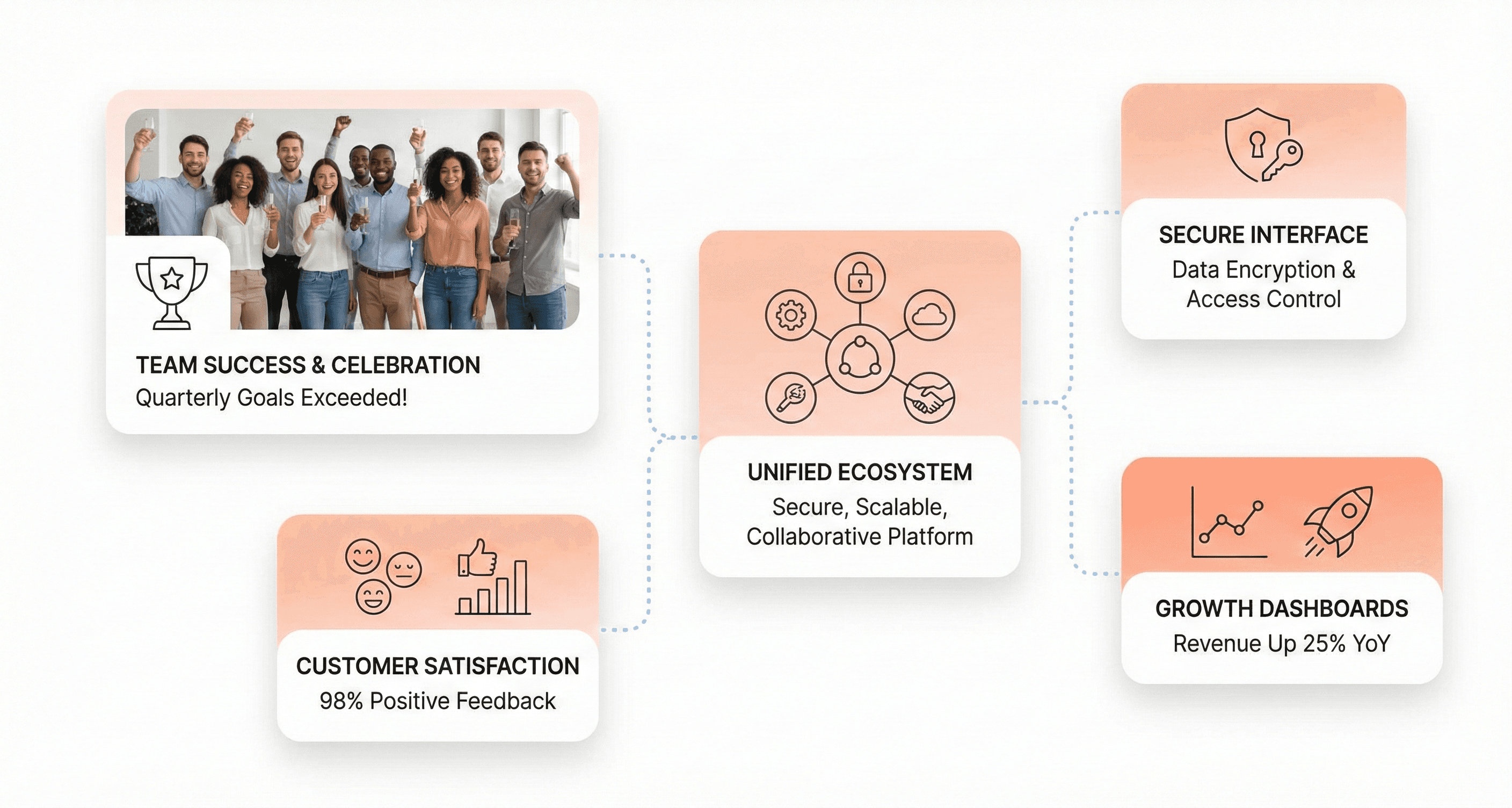
Revenue impact, while indirect, represents a critical ROI component. Track improvements in customer retention rates, upsell opportunities, and time-to-productivity for customer-facing teams. When your modernized interfaces enable faster onboarding, reduced customer churn, and improved service delivery, these factors translate directly to bottom-line impact. Monitor key performance indicators like customer lifetime value and net promoter scores to quantify how interface improvements drive business growth and competitive advantage.
Conclusion
Enterprise software interface modernization represents more than a technological upgrade, it's a strategic transformation that directly impacts your organization's competitiveness and growth potential. By implementing modern, unified interfaces with real-time data access, intuitive user experiences, and scalable cloud-based architectures, you can unlock significant productivity gains while reducing operational costs by 20-40%. The key lies in approaching modernization as a business-driven initiative rather than a purely technical exercise, ensuring alignment between your IT investments and strategic objectives.
The path forward requires careful planning and incremental implementation, yielding substantial rewards. Start by identifying high-impact areas where interface improvements can deliver immediate value to your users and business processes. Focus on building a strong business case that emphasizes growth opportunities, enhanced security, and improved employee productivity.
Remember, successful modernization isn't about replacing everything at once; it's about creating a flexible, adaptable foundation that empowers your teams to innovate and respond quickly to changing market demands, while positioning your organization for a sustained competitive advantage.




About the author
I’m the founder of Hashbyt, an AI-first frontend and UI/UX SaaS partner helping 200+ SaaS companies scale faster through intelligent, growth-driven design. My work focuses on building modern frontend systems, design frameworks, and product modernization strategies that boost revenue, improve user adoption, and help SaaS founders turn their UI into a true growth engine.
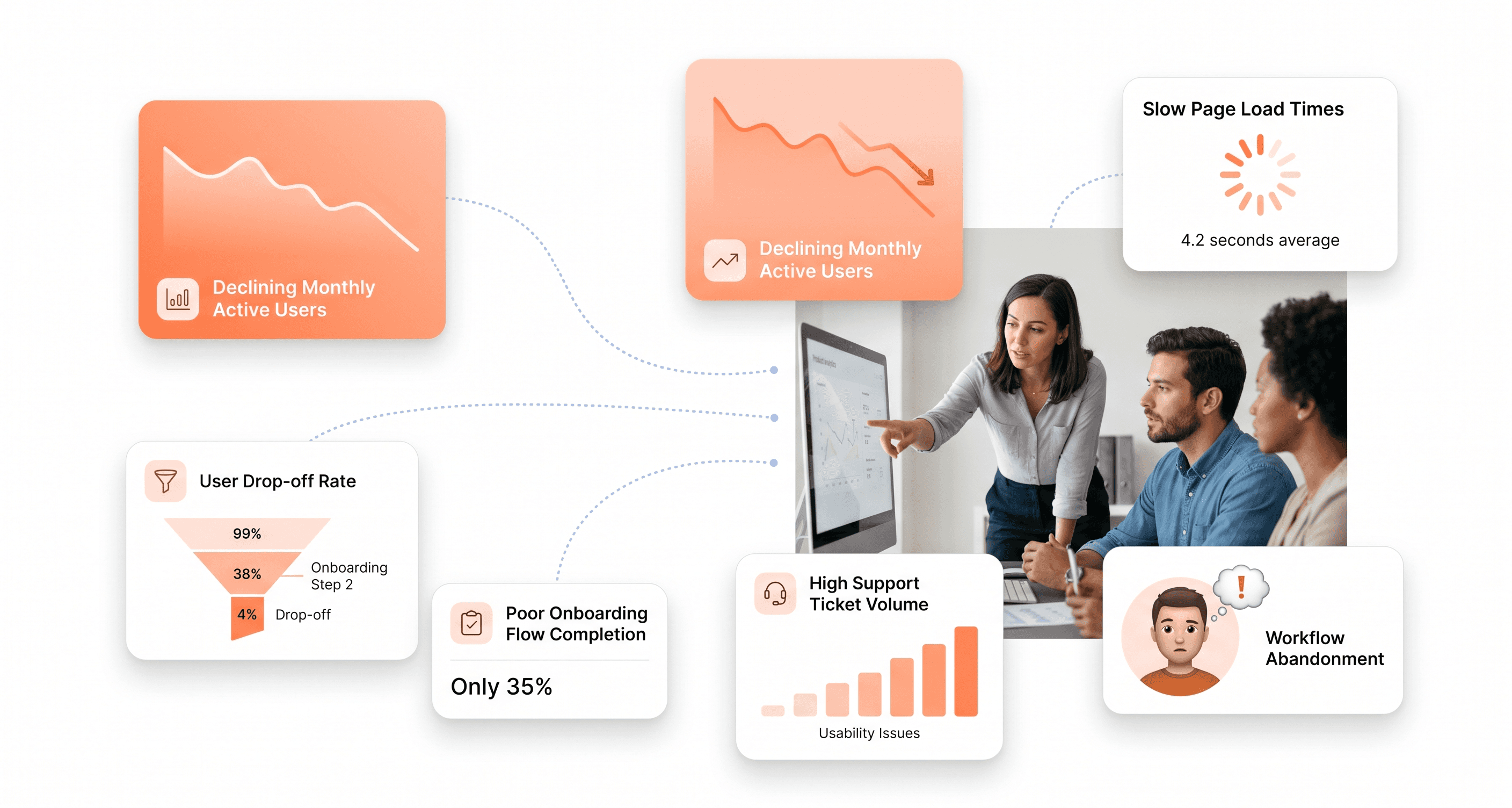
Is a clunky UI holding back your growth?
Is a clunky UI holding back your growth?
▶︎
Transform slow, frustrating dashboards into intuitive interfaces that ensure effortless user adoption.
▶︎
Transform slow, frustrating dashboards into intuitive interfaces that ensure effortless user adoption.
