

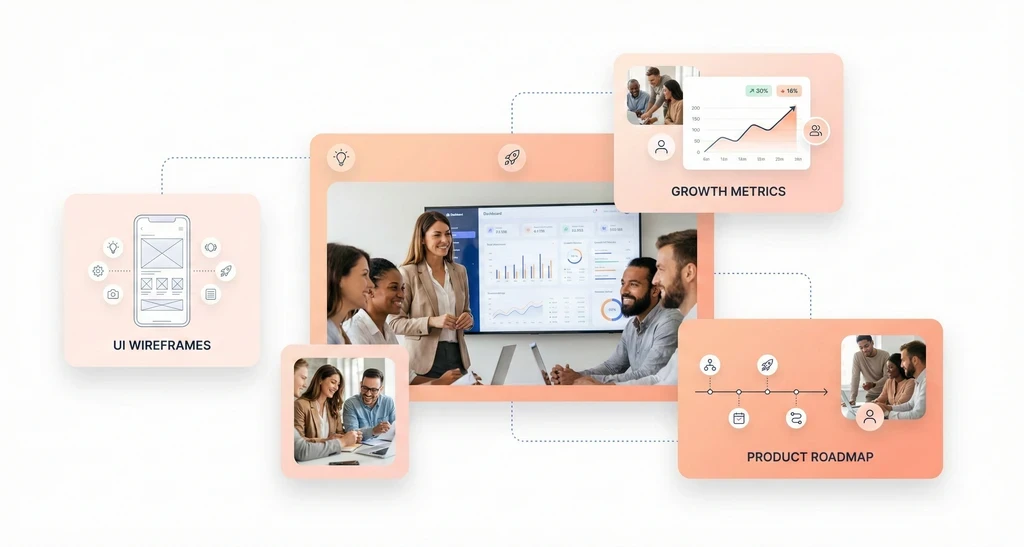
zYou're running a business and wondering if you need help turning your software idea into a profitable SaaS product. A product development services company specializes in building Software as a Service applications from concept to launch, handling everything from market research and technical planning to design, development, and deployment.
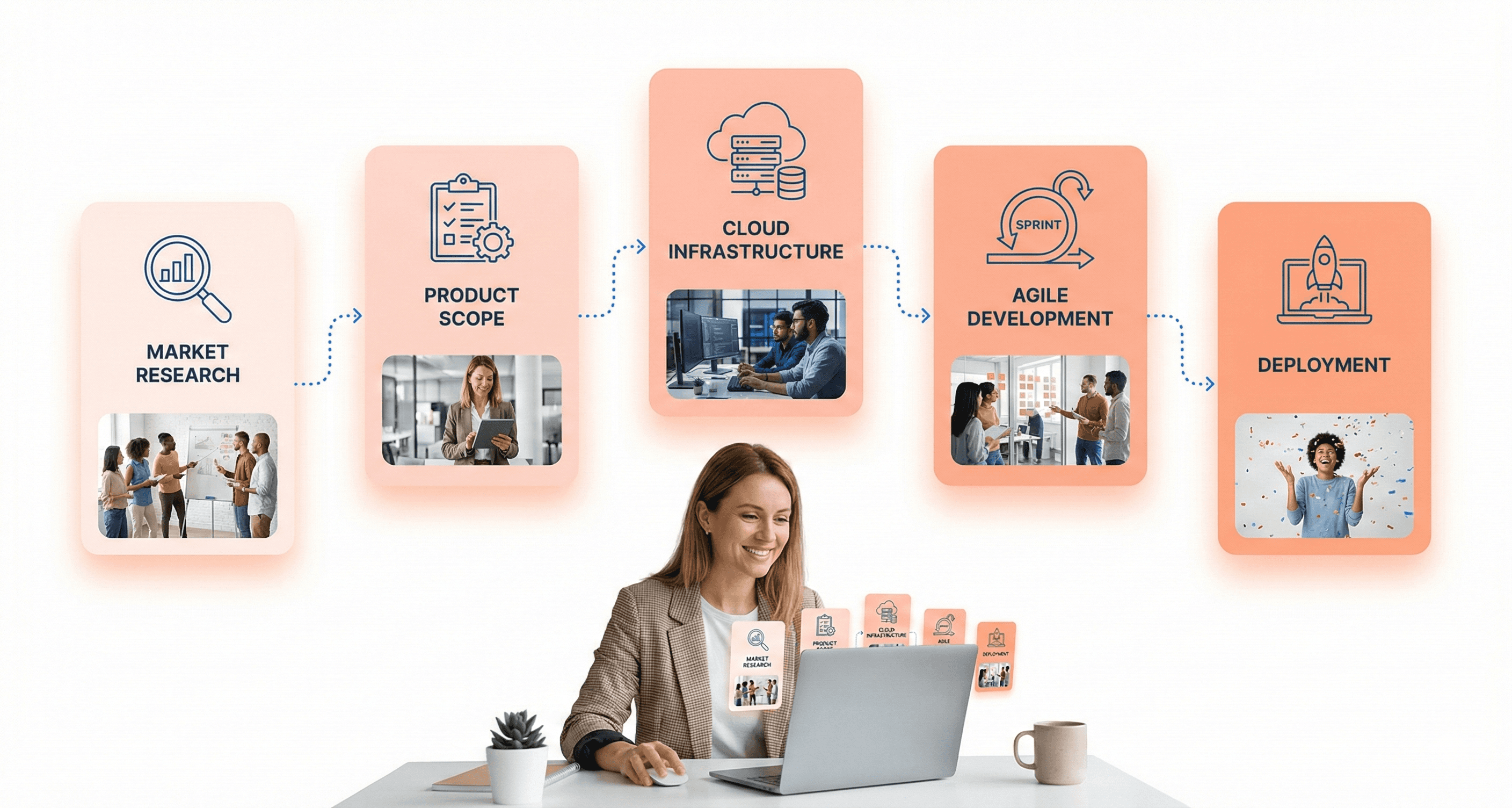
This guide explains what a product development services company really does and how SaaS businesses turn ideas into scalable, revenue-generating products. You’ll learn the complete SaaS development process, from market research to deployment, understand pricing models and investment considerations and discover why frontend-first UI/UX design plays a critical role in reducing churn, accelerating adoption, and maximizing ROI.
Whether you’re launching a new SaaS product or scaling an existing platform, this article shows how the right development partner can help you move faster, build smarter, and grow sustainably.
Understanding SaaS and Why Businesses Need It
What SaaS Is and How It Works
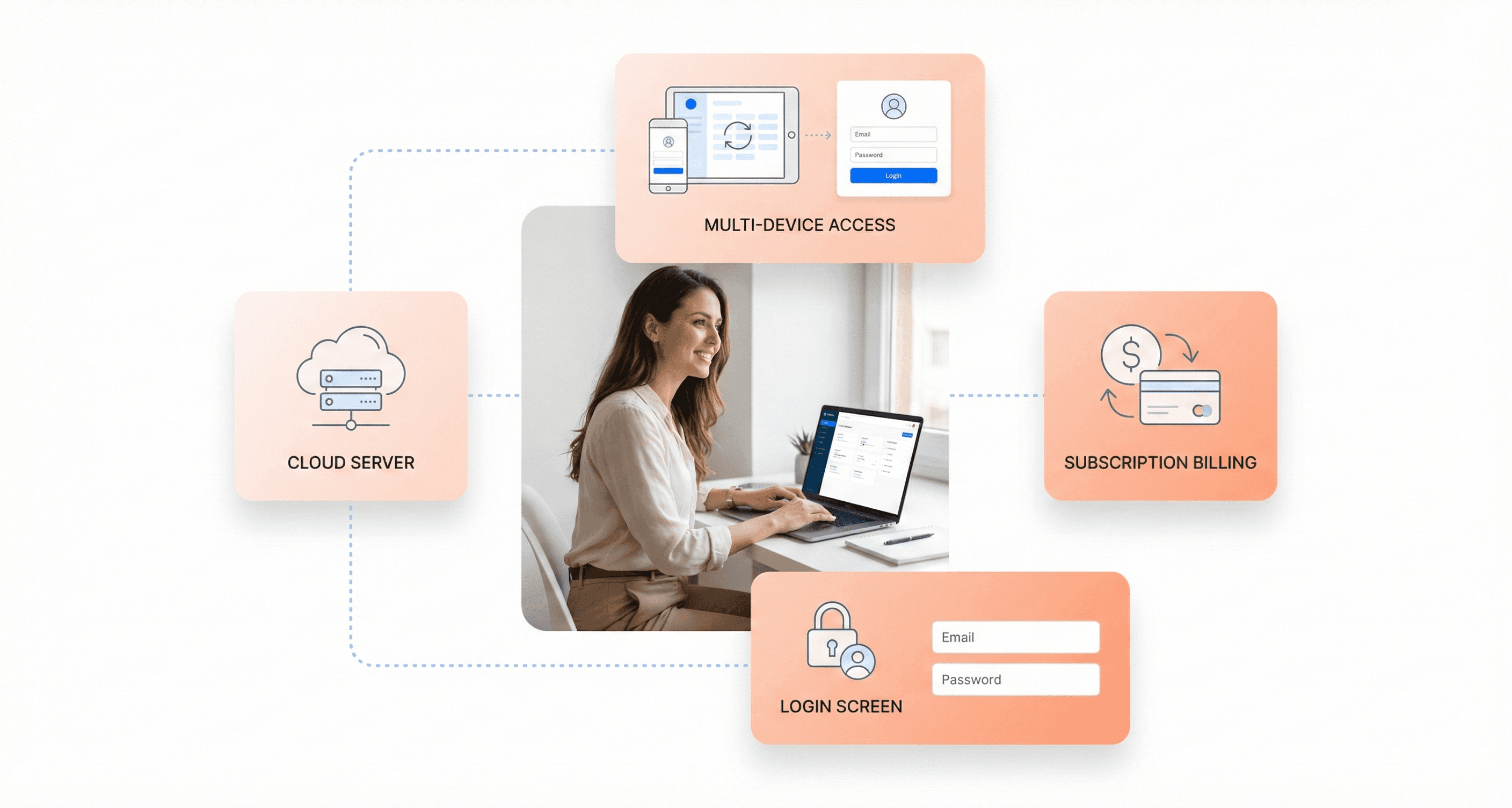
SaaS stands for Software-as-a-Service, and it represents a fundamental shift in how you access and use business software. Unlike traditional software that requires installation on your individual devices, SaaS is web-based software that runs entirely in the cloud. When you need to use a SaaS application, you simply log in through your web browser, there's no complex installation process or hardware requirements.
The cloud service provider handles all the technical heavy lifting for you. They maintain the servers, manage security, perform updates, and ensure the software runs smoothly 24/7. This means you can focus on running your business while the SaaS provider takes care of all the technical maintenance behind the scenes.
Your SaaS applications are typically subscription-based, which means you pay a monthly or annual fee to access the software. This subscription model gives you immediate access to fully functional business tools without any hefty upfront investments.
Whether you're managing customer relationships, collaborating with your team, or handling financial tasks, you can access these tools from anywhere with an internet connection, whether that's your office, home, or even your smartphone while traveling.
Key Benefits That Drive Business Adoption
The numbers clearly demonstrate why businesses are rapidly adopting SaaS solutions. According to recent data, SaaS solutions enable you to get started 70% faster than traditional on-premise software, and SaaS is expected to account for 85% of all business software by 2026.
Cost Savings That Transform Your Budget
Your biggest advantage with SaaS is the dramatic cost reduction. You eliminate expensive upfront costs for software licenses and hardware infrastructure. Instead of paying thousands upfront, you pay predictable monthly or annual subscription fees that make budgeting much easier. There are no installation costs, no licensing fees per device, and no hidden maintenance expenses that can surprise you later.
Unprecedented Flexibility and Accessibility
You can run your business from anywhere with SaaS. As long as you have an internet connection, you can access your business tools from any device, desktop, laptop, tablet, or smartphone. This flexibility has become essential, as 91% of organizations believe SaaS helps them adopt new technologies and drive revenue growth.
Automatic Updates and Maintenance
You never have to worry about software updates again. The SaaS provider handles all updates, security patches, and bug fixes automatically in the background. This means you're always working with the latest version of the software without any effort on your part.
Enhanced Security and Data Protection
SaaS platforms prioritize your data security using advanced encryption and regular backups. They comply with strict regulatory standards like GDPR and CCPA, helping you meet compliance requirements without additional effort. Your data is constantly backed up in the cloud, so even if your local devices fail, your business information remains safe and accessible.
Competitive Advantages Over Traditional Software
When you compare SaaS to traditional on-premise software, the advantages become crystal clear. Traditional software requires you to purchase expensive licenses for each user or device, install software on every machine, and manage ongoing maintenance yourself. This old model ties you down with hefty contracts that are difficult to modify or cancel.
Speed to Market and Implementation
Companies using cloud platforms report being able to bring new capabilities to market 20% to 40% faster than those using traditional software. With SaaS, you can get started immediately, no waiting for installation, no complex setup procedures, and minimal training required.
Scalability That Grows With You
Your SaaS applications can easily scale up or down based on your changing needs. Whether you're expanding to new markets, hiring more team members, or adjusting to market conditions, you can modify your subscription with just a few clicks. Traditional software often requires costly upgrades or completely new purchases to accommodate growth.
Superior Collaboration and Integration
SaaS solutions offer seamless integration capabilities through APIs, making them compatible with virtually any technology you're already using. This compatibility eliminates the common integration headaches associated with traditional software. Your team can collaborate in real time, regardless of their location, which is crucial in today's business environment.
The shift toward SaaS isn't just a trend, it's a fundamental transformation in how successful businesses operate. With more than 67% of SMBs already using CRM tools and the SaaS-driven CRM market expected to grow to $60 billion by 2025, your business can't afford to stay behind with outdated, inflexible traditional software solutions.
Frontend-First Product Development: The Hashbyt Approach
Why UI is a Growth Engine (Your Philosophy)
Your user interface isn't just a pretty facade, it's the most powerful growth engine in your SaaS arsenal. When you build with a frontend-first approach, you're fundamentally changing how your product connects with users and drives business outcomes. Your UI becomes the primary touchpoint that determines whether users will embrace your solution or abandon it for competitors.
Think of successful SaaS platforms like Slack, Stripe, or Shopify. Their growth didn't happen because they had the most features, it happened because they prioritized seamless, intuitive interfaces that made complex tasks feel effortless. When you design your interface as the foundation of your product experience, you're creating a competitive advantage that's difficult to replicate.
Your frontend serves as the bridge between powerful backend functionality and user adoption. Even the most sophisticated algorithms or robust databases won't drive growth if users can't navigate them effectively. By treating UI as your growth engine, you ensure that every feature you build translates directly into user value and business results.
How Frontend Impacts Churn, Adoption, and Funding
Your frontend design directly influences three critical business metrics that determine your SaaS success. Poor interface design creates friction that drives users away, while exceptional UI/UX accelerates adoption and reduces churn rates significantly.
Churn Reduction Through Interface Excellence
When your interface is confusing or cluttered, users struggle to find value quickly. This frustration leads to higher churn rates as customers abandon your platform before experiencing its full potential. However, when you prioritize clean, intuitive design, users can navigate your product effortlessly, leading to higher retention and reduced customer acquisition costs.
Accelerated User Adoption
Your interface design determines how quickly new users can become productive with your SaaS platform. A well-designed frontend reduces the learning curve, enabling users to achieve their first success faster. This rapid time-to-value increases user satisfaction and drives organic growth through word-of-mouth recommendations.
Funding and Investment Appeal
Investors recognize that superior user experience translates directly to market traction and revenue growth. When you present a SaaS product with exceptional frontend design, you're demonstrating your understanding of user needs and market demands. This user-centric approach makes your platform more attractive to potential investors and partners.
Why Does Hashbyt Start with the Interface, Not the Backend?
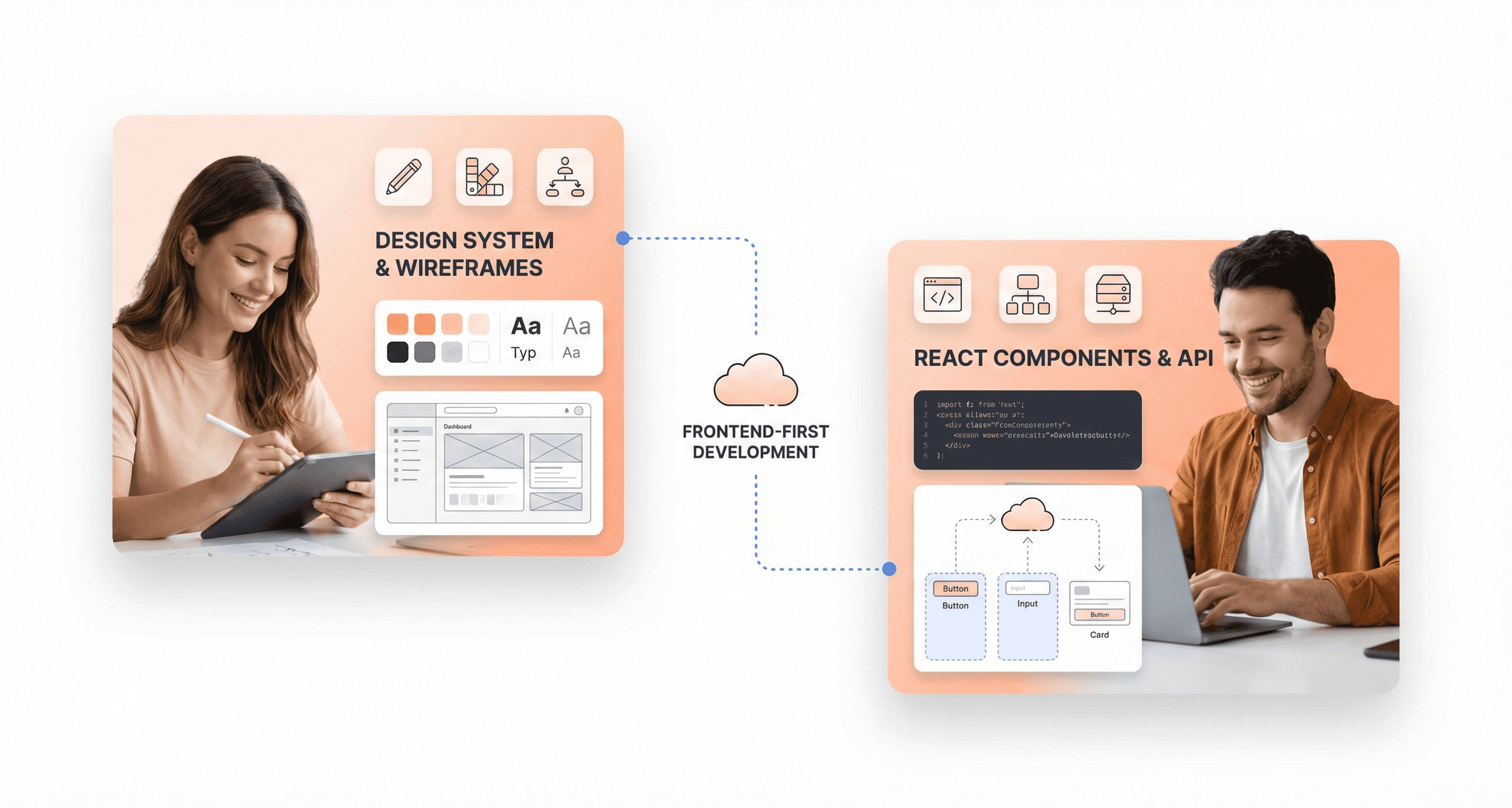
Starting with interface design fundamentally changes how you approach SaaS product development. When you begin with the frontend, you're ensuring that every technical decision supports the user experience rather than forcing users to adapt to technical constraints.
This approach allows your development teams to work more efficiently through parallel development processes. While your backend developers implement the agreed-upon API structures, your frontend team can build user interfaces using established contracts. This parallel workflow significantly reduces development time and ensures better alignment between technical implementation and user needs.
Frontend-first development also enables faster validation of your product concepts. You can create interactive prototypes and gather user feedback before investing heavily in backend infrastructure. This validation process helps you avoid building features that users don't actually need or want.
Additionally, when you start with interface design, you naturally create more integration-ready products. Your API design becomes more thoughtful and user-focused, making it easier for third-party developers and partners to build on your platform. This extensibility becomes crucial as your SaaS platform scales and requires ecosystem partnerships.
AI-First Interfaces
Modern SaaS development increasingly incorporates AI-driven interfaces that adapt to user behavior and preferences. When you build with an AI-first interface approach, you're creating products that become smarter and more valuable over time.
AI-first interfaces can personalize user experiences based on usage patterns, automatically surface relevant features, and reduce the cognitive load on users. These intelligent interfaces help users accomplish their goals more efficiently while generating valuable data insights for your product development team.
The integration of AI capabilities into your frontend design also enables more sophisticated automation and workflow optimization. Users can leverage AI-powered features directly through intuitive interface elements, making advanced functionality accessible to non-technical users. This democratization of powerful features expands your addressable market and increases user engagement across different skill levels.
Essential Steps in SaaS Product Development
Conducting Thorough Market Research
Before diving into SaaS product development, you need to conduct comprehensive market research to validate your product idea and understand your competitive landscape. This critical first step involves defining your target customers, understanding their specific pain points, and thoroughly assessing your competitors in the market.
Your market research should focus on identifying unique selling points that will differentiate your SaaS product from existing solutions. You'll want to determine the viability of your product concept by analyzing market demand, customer needs, and potential business opportunities. This research phase is essential for gaining valuable insights into your target market and understanding the fundamental characteristics that will shape your application's features.
During this stage, you should also evaluate the market landscape to identify gaps where your SaaS solution can provide value. Consider factors such as market size, growth potential, and customer willingness to pay for your proposed solution. This thorough analysis will help you make informed decisions about product positioning and pricing strategies later in the development process.
Defining Product Scope and Requirements
Once your market research is complete, you need to clearly define your SaaS product's features, functionalities, and overall user experience. This involves creating a detailed roadmap that outlines the development phases, prioritizes key features, and sets realistic timelines for your project.
During this phase, you should specify critical technical requirements such as multi-tenancy architecture, self-service provisioning capabilities, robust security measures, and comprehensive user activity monitoring systems. These elements are fundamental to any successful SaaS product and must be planned from the beginning.
Your product scope definition should also include exploring various SaaS financial models to determine the most suitable pricing strategy for your target market. Consider whether you'll implement a freemium model, per-user pricing, tiered subscriptions, or usage-based billing. This decision will significantly impact your product's architecture and feature set.
Creating a comprehensive product roadmap helps ensure all stakeholders understand the project's direction and can align their efforts accordingly. Break down your development into manageable increments, allowing for iterative improvements based on user feedback and market trends.
Selecting the Right Cloud Infrastructure
Your choice of cloud provider plays a significant role in your SaaS product's success and determines where your application will be hosted. You must evaluate several critical factors, including discoverability, scalability, accessibility, cost-effectiveness, and support capabilities, when making this decision.
To select the most suitable cloud provider for your SaaS development project, start by outlining your product's technical architecture and defining your specific proof points. Evaluate potential cloud platforms based on your technical requirements and shortlist platform vendors that align with your needs.
Several reputable cloud providers offer robust solutions for SaaS applications, including Amazon Web Services (AWS), Google Cloud Platform, and Microsoft Azure. Each platform provides different capabilities and architectural adjustments, so you'll need to assess their platform capabilities carefully.
Consider factors such as auto-scaling capabilities to handle sudden spikes in user demand, data security features, compliance certifications, and integration options with other services. Your infrastructure choice will directly impact your product's performance, scalability, and overall user experience, making this a crucial decision in your development process.
Building Your Development Team
Creating a successful SaaS application requires months of dedicated effort from a skilled, well-rounded team. Whether you choose to build an in-house team or work with remote developers, you need to ensure your team includes essential roles such as project managers, business analysts, UI/UX designers, backend and frontend developers, QA engineers, and product managers.
Your development team structure should support both the technical and business aspects of SaaS product development. Consider including cloud consultants, software architects, and specialists in areas like security and integration, depending on your product's complexity and requirements.
You have several options for building your team, including hiring full-time employees, working with freelancers, or outsourcing your entire SaaS application development to experienced service providers. Each approach has its advantages, and your choice should align with your budget, timeline, and long-term business goals.
For a more streamlined and efficient development process, many companies opt to partner with specialized SaaS development companies that bring extensive experience and proven methodologies to the project. This approach can help ensure your product launch is smooth and stress-free while providing access to expertise across all necessary technical and business domains.
How UI/UX Directly Impacts SaaS ROI
Reduced Churn via Better UX
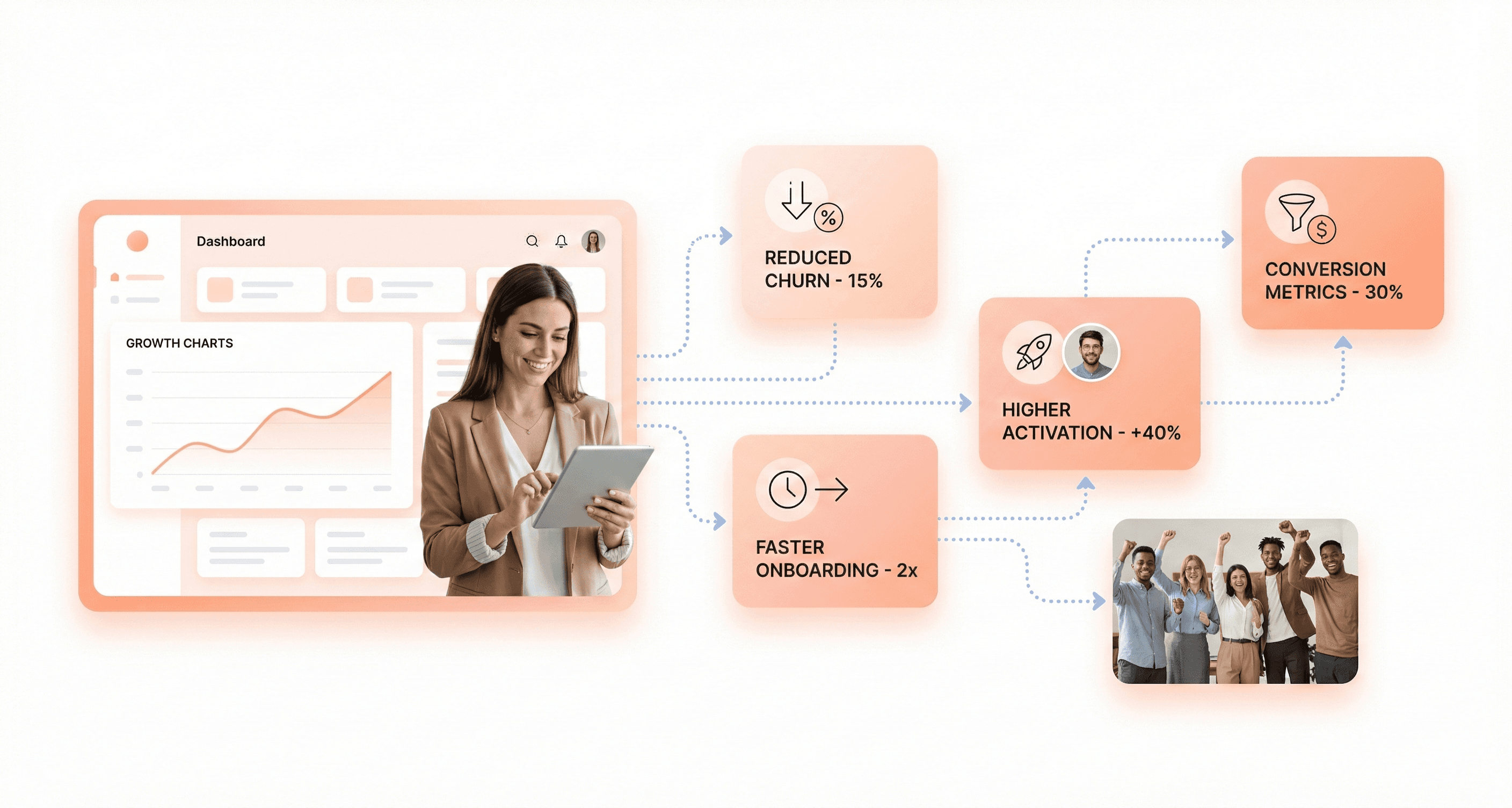
Your SaaS product's user experience directly determines whether customers stay or leave. When users navigate through intuitive interfaces, they require less assistance from support teams, creating a smoother experience that naturally reduces churn rates. Smart UX design substantially decreases support expenses while simultaneously increasing user engagement through well-designed help sections and documentation.
Effective UX design influences your conversion rates and marketing efficiency by optimizing visitor-to-customer conversion rates. Users who enjoy their product experience become brand advocates, with satisfied customers more likely to spread positive word-of-mouth recommendations that fuel organic growth.
Faster Onboarding
Your onboarding process sets the tone for the entire customer relationship. Well-crafted user interfaces streamline the initial user journey, reducing friction points that typically cause new users to abandon your platform. When you implement self-service resources effectively, you increase user engagement while reducing the burden on your customer support teams.
Professional UI/UX design ensures your new users can find answers independently through intuitive navigation and clear documentation, accelerating their path to realizing value from your SaaS product.
Higher Activation
Strategic UX investments translate directly into improved activation rates. Your interface design determines how quickly users reach their "aha moment" that critical point where they understand and experience your product's core value proposition.
Leading SaaS companies demonstrate remarkable returns through thoughtful design decisions that guide users naturally toward key features and functionalities. When you optimize your user flows and remove unnecessary complexity, you create clear pathways that help users achieve success faster.
Conversion Optimization
Your marketing ROI improves significantly when you invest in professional UI/UX design. A well-designed interface increases the likelihood that visitors will convert into paying customers by reducing cognitive load and eliminating barriers to action.
Users who encounter seamless, intuitive experiences are more likely to complete desired actions, whether that's signing up for a trial, upgrading their plan, or referring colleagues to your platform.
Real Metrics: 20% Churn Reduction and 7-Figure Funding
The impact of strategic UX investments becomes clear when you examine concrete results from successful SaaS companies. Organizations that prioritize user experience design consistently achieve measurable improvements in key business metrics.
Companies implementing comprehensive UI/UX improvements report churn reductions of 20% or more, translating directly to improved customer lifetime value and revenue retention. These improvements in user satisfaction and engagement create compelling narratives for investors, with well-designed SaaS products attracting 7-figure funding rounds more readily than their poorly-designed competitors.
The dual benefit stems from users finding value more quickly and requiring less support intervention, creating a positive feedback loop that drives sustainable growth and profitability.
SaaS Development Investment and Pricing Strategy
Development Cost Breakdown by Application Size
When you're planning your SaaS investment strategy, understanding how application size directly impacts development costs is crucial for accurate budget planning. The reference data shows clear cost tiers based on complexity and scope that you should consider.
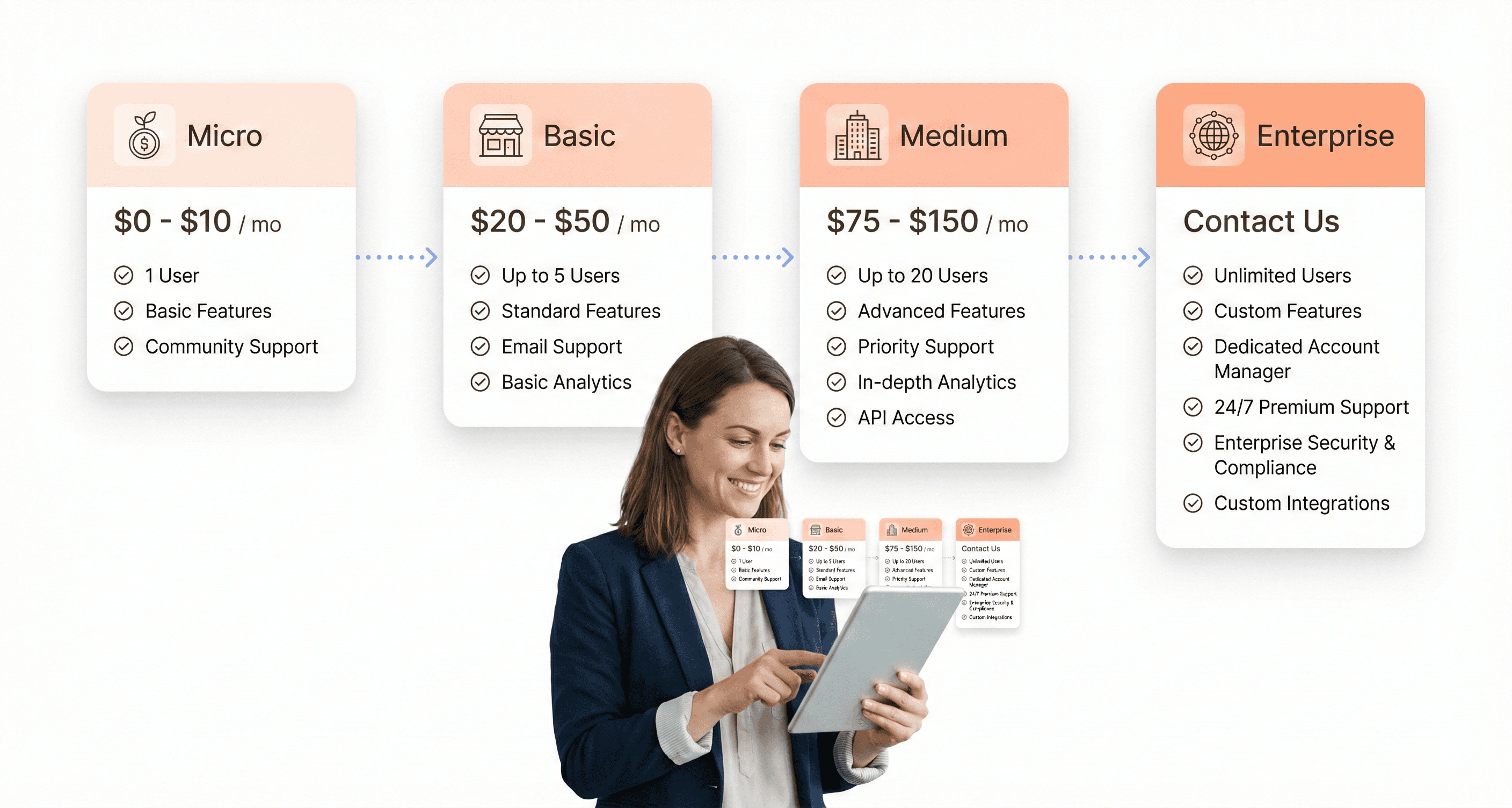
For Micro SaaS development, you can expect costs ranging from $10,000 to $25,000+. These applications typically focus on solving specific niche problems with minimal feature sets, making them ideal for testing market viability without significant financial commitment.
Basic level SaaS applications fall within the $25,000 to $50,000+ range. These solutions include standard functionality with limited customization, suitable for straightforward business processes that don't require extensive integrations or complex user workflows.
Moving to medium complexity SaaS software, your investment will likely range from $50,000 to $150,000+. These applications incorporate more sophisticated features, multiple user roles, and moderate integration capabilities that can handle growing business requirements.
Complex SaaS applications represent the highest investment tier at $150,000 to $500,000+. These enterprise-level solutions include extensive customization, advanced security measures, multiple integrations, and scalable architecture designed to support large user bases and complex business operations.
Your specific application type also significantly influences costs. Custom CRM development typically costs $30,000 to $150,000+, while e-commerce platforms range from $40,000 to $200,000+. ERP software development can cost $50,000 to $250,000+, and human resources management systems range from $25,000 to $120,000+.
Choosing the Right Pricing Model for Your Market
Now that you understand development cost structures, selecting an appropriate pricing model becomes critical for your SaaS success. Your pricing strategy should align with your target market's expectations and your product's value proposition.
The complexity of your application directly influences which pricing models will be most effective. For micro SaaS solutions, simple subscription models often work best, as they match the straightforward nature of the product. Basic applications can leverage tiered pricing to accommodate different user needs, while medium and complex solutions benefit from usage-based or enterprise pricing models.
Your market positioning also determines pricing strategy effectiveness. If you're targeting small businesses with budget constraints, competitive pricing becomes essential. However, enterprise-focused solutions can command premium pricing when they deliver substantial value and ROI to larger organizations.
Consider implementing flexible pricing structures that can evolve with your product development. Starting with simpler models allows you to gather market feedback and adjust pricing as you add features and complexity. This approach helps you optimize revenue while maintaining competitive positioning.
Balancing Value Delivery with Fair Compensation
With pricing models established, you must ensure your compensation structure reflects the value your SaaS product delivers to users. This balance requires careful consideration of development investments against user benefits and market expectations.
Your development costs provide the foundation for minimum pricing requirements, but value delivery determines maximum pricing potential. When your SaaS solution saves users significant time or money, you can justify higher pricing tiers that still deliver positive ROI for customers.
Market research becomes essential for understanding perceived value in your target segment. Users in different industries and company sizes have varying budget allocations and value expectations for SaaS solutions. Aligning your pricing with these expectations while covering your development and operational costs ensures sustainable business growth.
Regular pricing evaluation helps maintain this balance as your product evolves. As you add features and improve functionality, your value proposition strengthens, potentially supporting price increases. However, you must monitor competitive landscape changes and customer feedback to avoid pricing yourself out of your target market.
Consider implementing value-based pricing metrics that tie costs to user outcomes. This approach demonstrates clear ROI for customers while ensuring your compensation reflects the actual value delivered through your SaaS solution.
Common Challenges and How to Overcome Them
Solving Integration Issues with Existing Systems
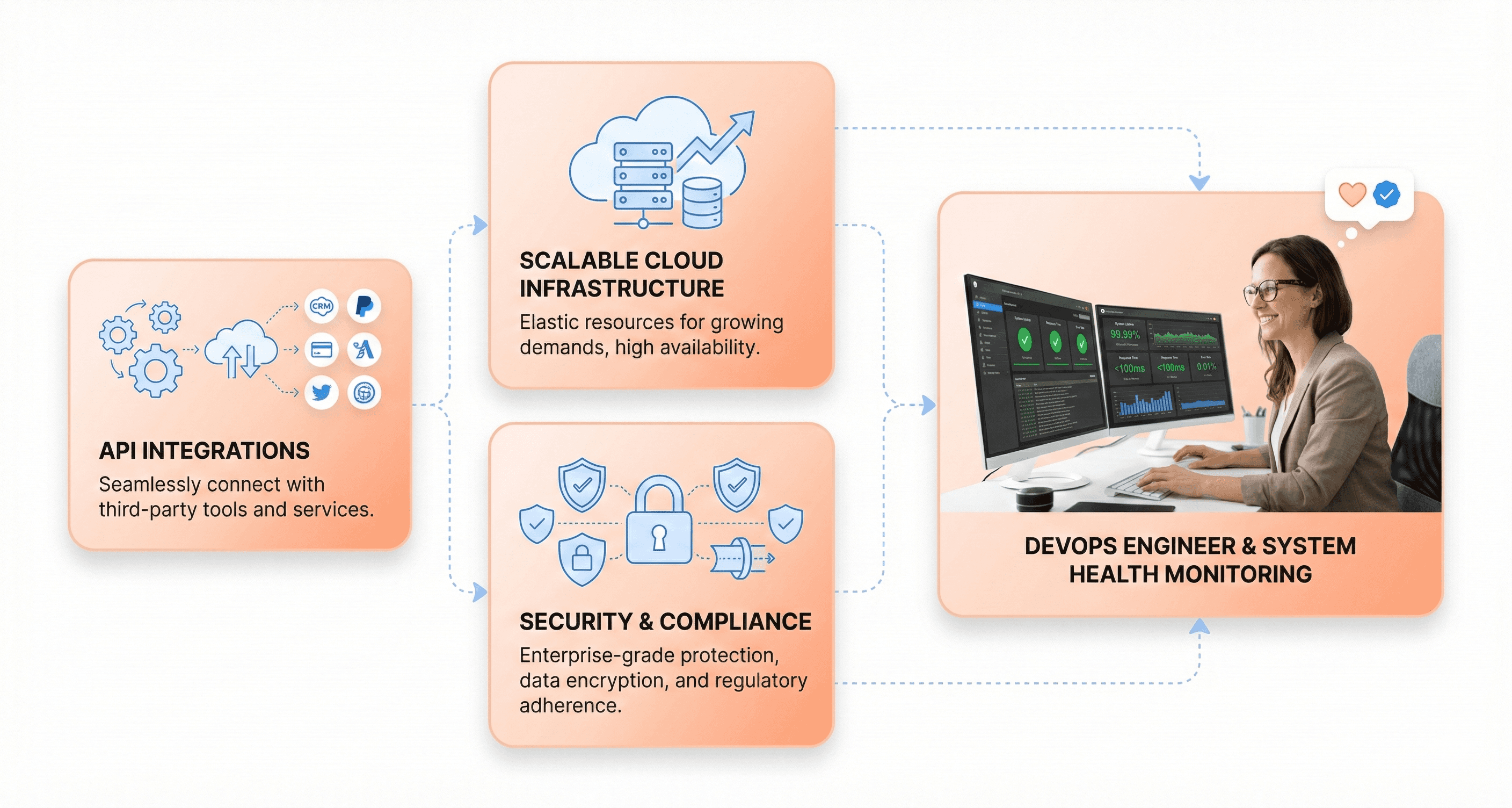
When developing your SaaS product, you'll likely encounter complex integration challenges with existing enterprise systems, third-party APIs, and legacy platforms. These integration issues can lead to inefficiencies, data inconsistencies, and system failures that compromise your product's value proposition.
The solution lies in adopting open standards and providing well-documented APIs. You should focus on building RESTful APIs, as they've become the standard for creating scalable and easily integrable applications. By designing your SaaS application with integration in mind from the start, you ensure that external systems can connect effortlessly.
You'll want to implement standardized data formats like JSON or XML to facilitate smooth data exchange between your platform and third-party systems. This approach reduces complexity when handling various data formats and streamlines your integration processes. Additionally, when integrating with third-party services, ensure they provide reliable and well-documented APIs while keeping track of API versioning to avoid compatibility issues.
Consider using middleware solutions when direct API integration isn't feasible. These platforms can bridge gaps between different systems by handling data transformation and ensuring smooth communication between disparate systems, making your SaaS development process more efficient.
Addressing Scalability Demands
Scalability represents one of your most critical considerations in SaaS product development. As your user base grows, demand on your system increases exponentially. Without proper planning, you'll face performance bottlenecks, slow response times, and potentially devastating system crashes.
Your key strategy should focus on building for horizontal scaling rather than vertical scaling. Instead of upgrading a single server to handle increased traffic, you should deploy additional servers or instances to distribute the load effectively. Leveraging cloud infrastructure providers like AWS, Google Cloud, or Microsoft Azure allows you to scale resources dynamically as your application grows.
You should adopt containerization technologies like Docker and orchestration tools such as Kubernetes to manage your scaling process effectively. These technologies enable you to handle growing user demands without compromising performance.
Implementing a micro-services architecture provides additional benefits for your SaaS development process. With microservices, different components of your application can scale independently, allowing you to allocate resources specifically to areas experiencing the highest demand, optimizing both performance and cost-effectiveness.
Implementing Robust Security Measures
Security remains one of your most significant challenges in SaaS development. Your application handles sensitive user data, from personal information to payment details, making it a prime target for cyberattacks. A security breach can harm your users and severely damage your brand's reputation.
You must adopt a multi-layered security approach to protect your SaaS product effectively. Start by implementing data encryption both in transit and at rest using industry-standard encryption algorithms like AES-256. This ensures that sensitive information remains secure even if attackers gain access to your database.
Your authentication strategy should include multi-factor authentication (MFA) for user logins, adding an extra security layer. OAuth 2.0 is a popular authentication protocol that enables secure authorization without exposing user credentials, making it ideal for your SaaS development project.
You should perform regular security audits and penetration testing to identify vulnerabilities before attackers discover them. Engaging third-party security experts to test your system rigorously provides an objective assessment of your security posture. Additionally, ensure your SaaS platform includes automatic backup and disaster recovery plans, allowing you to quickly restore service without significant downtime in case of data loss or security breaches.
Managing Complex Pricing Decisions
Cost management represents one of your most difficult aspects in SaaS development. Initial development costs, ongoing maintenance, infrastructure expenses, and investments in new features can accumulate quickly. Without proper management, financial strain can overwhelm your resources and affect your business profitability.
You should optimize resource allocation and adopt cost-efficient practices to maintain financial sustainability. Cloud cost optimization becomes crucial since cloud services can become expensive without careful management. Regularly monitor your cloud usage and leverage features like auto-scaling, reserved instances, and spot instances to reduce expenses. Consider serverless computing solutions like AWS Lambda to pay only for the compute resources you actually use.
Adopt lean development practices to minimize unnecessary spending. Focus on building core features that users genuinely want and need, avoiding feature bloat that inflates development costs. Prioritize features based on customer feedback and data rather than assumptions, ensuring your SaaS product design investments generate maximum ROI.
You should consider outsourcing non-core tasks such as marketing or customer support to reduce overhead costs. This approach allows your development team to concentrate on building and enhancing your product while maintaining cost efficiency. Additionally, use financial management tools to monitor cash flow and adjust your budget accordingly, preventing overspending while ensuring your custom SaaS development remains profitable and scalable.
Best Practices for Successful SaaS Development
Following Industry-Tested Development Standards
When building your SaaS product, adhering to industry-tested development standards forms the foundation of a successful application. You should implement agile development methodologies like Scrum or Kanban, which emphasize iterative development, frequent releases, and responsiveness to change. These methodologies allow you to adapt quickly to evolving user needs and market demands.
Your development process should include strategic feature prioritization and product roadmapping. Start by identifying core features for your earliest version, only the functions essential for launching your product and getting customer feedback. This approach helps you build a SaaS MVP (Minimum Viable Product) to test market grounds before full-force development.
You'll want to establish consistent coding standards, implement comprehensive testing protocols, and maintain thorough documentation throughout your development cycle. Regular security audits, code reviews, and quality assurance processes ensure your application meets enterprise-grade standards while maintaining scalability and reliability.
Implementing Microservices Over Monolithic Architecture
Now that we've covered development standards, you should consider your architectural approach carefully. While monolithic applications can be fast and cost-effective to build, test, and deploy for MVP projects, they become increasingly difficult to scale and support as your application grows in complexity.
Your architecture strategy should evolve with your product's maturity. Many successful SaaS companies start with a monolithic approach for their initial release, then migrate to microservices architecture as their application becomes too large and complex to manage effectively.
Microservices architecture breaks down your application into smaller, independent services that you can deploy, test, and scale individually. This modular approach provides several key advantages:
Better flexibility and scalability: You can scale individual services based on demand without affecting the entire system
Enhanced reliability: If one service fails, it doesn't bring down your entire application
Improved development speed: Different teams can work on separate services simultaneously
Cost-effective scaling: You only scale the services that need additional resources
The microservices approach works particularly well with cloud infrastructure and supports effective deployment practices. Each service can be updated independently, reducing deployment risks and enabling faster feature releases.
Starting with Minimum Viable Product Approach
With your architecture decisions in mind, you should embrace the MVP methodology to validate your product concept efficiently. Your MVP should focus exclusively on core features that solve your target users' primary problems, allowing you to gather valuable customer feedback before investing in comprehensive feature development.
Feature prioritization becomes critical during this phase. You need to identify which functionalities are absolutely essential for your product's launch and which can be developed in subsequent iterations. This strategic approach enables you to:
Test market demand with minimal investment
Gather real user feedback early in the development process
Reduce time-to-market significantly
Minimize development costs and risks
Validate your product-market fit assumptions
Your MVP should demonstrate clear value to users while maintaining high quality standards. Even though you're building with minimal features, the user experience must remain intuitive and engaging. Focus on creating a simple onboarding process, clean interface design, and reliable core functionality that showcases your product's primary value proposition.
Partnering with Experienced SaaS Development Companies
Previously, we've discussed internal development practices, but you should also consider the strategic value of partnering with experienced SaaS development companies. These partnerships can accelerate your development timeline while ensuring industry best practices are implemented from the start.
When evaluating potential development partners, look for companies with proven track records in SaaS product development. Your ideal partner should demonstrate expertise in:
Multi-tenant architecture implementation: Experience building scalable, secure applications that serve multiple customers efficiently
Cloud-native development: Deep understanding of modern cloud technologies and deployment practices
User experience design: Ability to create intuitive, engaging interfaces that drive user adoption and retention
Security and compliance: Knowledge of industry regulations and data protection requirements
A reliable development partner should offer comprehensive services, including business analysis, software architecture design, development, testing, and ongoing support. They should understand your specific industry requirements and be able to implement integrations with existing tools and systems your customers use.
Your development partner should also provide team augmentation capabilities, allowing you to scale your development resources based on project demands. This flexibility enables you to meet growing workloads, implement complex integrations, and migrate to more sophisticated architectures like microservices when your product reaches that level of maturity.
The right partnership can help you implement scalable design systems, maintain consistent user experiences across your platform, and ensure your SaaS solution meets enterprise-grade standards for reliability, security, and performance.
Conclusion
The SaaS market is projected to reach $247 billion by 2024, making now the perfect time to invest in SaaS product development. Throughout this guide, you've learnt the essential steps from market research to deployment, understanding that successful SaaS development requires careful planning, the right technology stack, and a focus on scalability and security.
Whether you're considering a micro SaaS application starting at $10,000 or a large-scale solution requiring up to $450,000, the key lies in understanding your audience, choosing appropriate pricing models, and implementing best practices like multi-tenancy architecture and MVP approaches.
By partnering with an experienced product development services company, you can navigate the complexities of SaaS development while focusing on your core business strategy. The benefits are clear: faster time-to-market, reduced costs, enhanced scalability, and improved security. As businesses increasingly adopt cloud-based solutions, your SaaS product can provide the competitive advantage needed to succeed in today's digital landscape.




About the author
I’m the founder of Hashbyt, an AI-first frontend and UI/UX SaaS partner helping 200+ SaaS companies scale faster through intelligent, growth-driven design. My work focuses on building modern frontend systems, design frameworks, and product modernization strategies that boost revenue, improve user adoption, and help SaaS founders turn their UI into a true growth engine.
Is a clunky UI holding back your growth?
Is a clunky UI holding back your growth?
▶︎
Transform slow, frustrating dashboards into intuitive interfaces that ensure effortless user adoption.
▶︎
Transform slow, frustrating dashboards into intuitive interfaces that ensure effortless user adoption.
