


1
Next.js and Micro Frontends
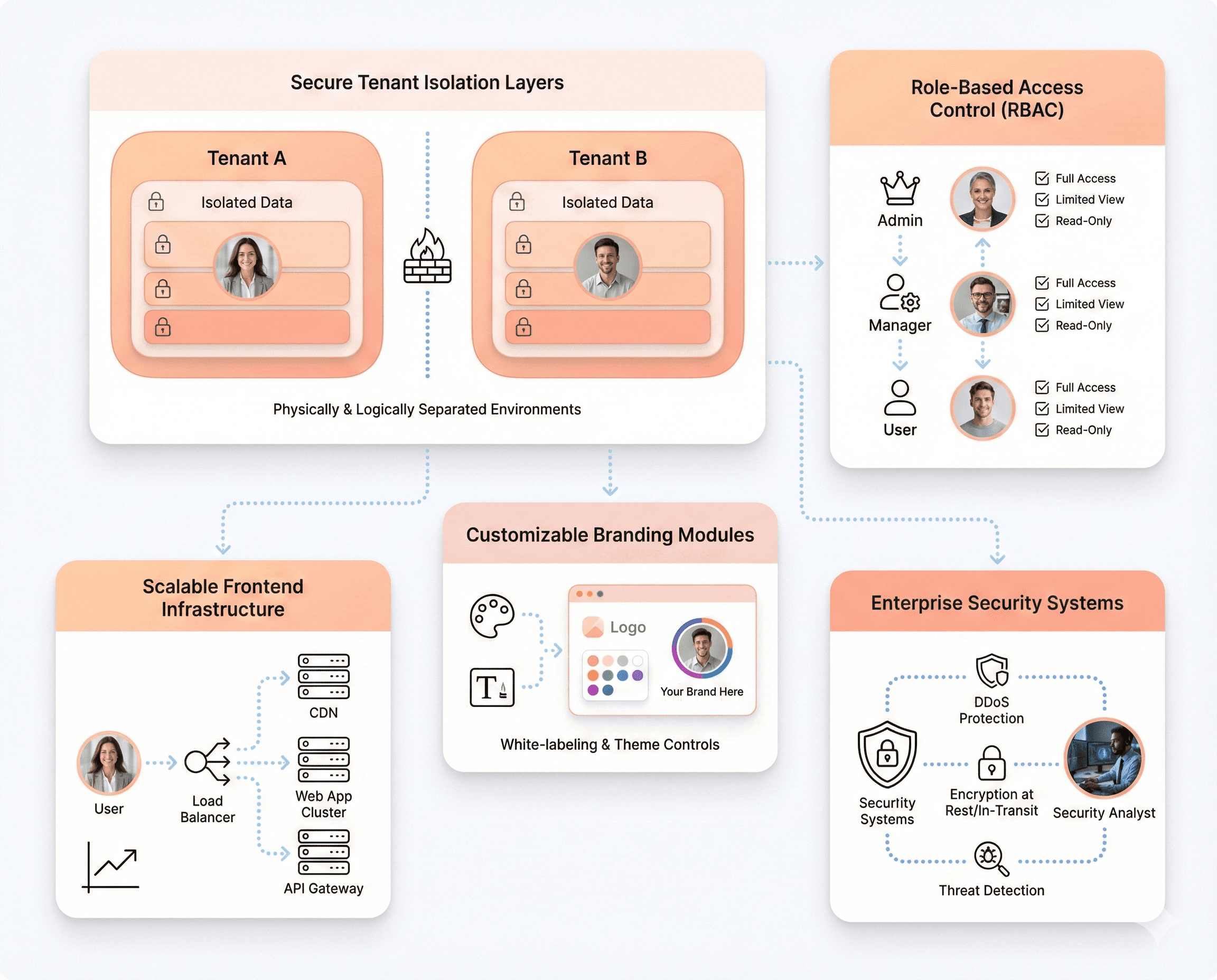
A scalable frontend foundation was built using Next.js and React with Micro Frontend readiness to keep modules independent. This improved maintainability and reduced regression risk during frequent releases. The architecture supported long-term growth by allowing parts of the system to evolve without rewriting the entire platform.
2
Redux Toolkit and TanStack Query
State and data workflows were stabilized using Redux Toolkit and TanStack Query to standardize UI behavior across dashboards. This created predictable loading states, error handling, and caching behavior across tenants. The result was stronger consistency in data-heavy experiences and fewer workflow breaks.
3
Storybook and Design Tokens
A reusable component system was structured using Storybook supported by Design Tokens and CSS Variables. This ensured consistent UI patterns across modules and prevented design drift as the platform expanded. The design system also supported tenant branding safely through scalable styling foundations.
4
OWASP and RBAC UI
Security-first UX was implemented using OWASP-aligned patterns across the application surface. RBAC Permission UI rules were applied to navigation, routes, and actions to ensure users only saw allowed functionality. Audit logs UI patterns supported governance needs and improved enterprise confidence during evaluations.
5
Sentry and New Relic monitoring
Observability was strengthened using Web Vitals, Sentry, and New Relic to track errors, performance issues, and workflow bottlenecks. This improved post-launch stability and reduced resolution time for production issues. Monitoring ensured reliability stayed consistent even as usage scaled across tenants.

1
99.99% uptime
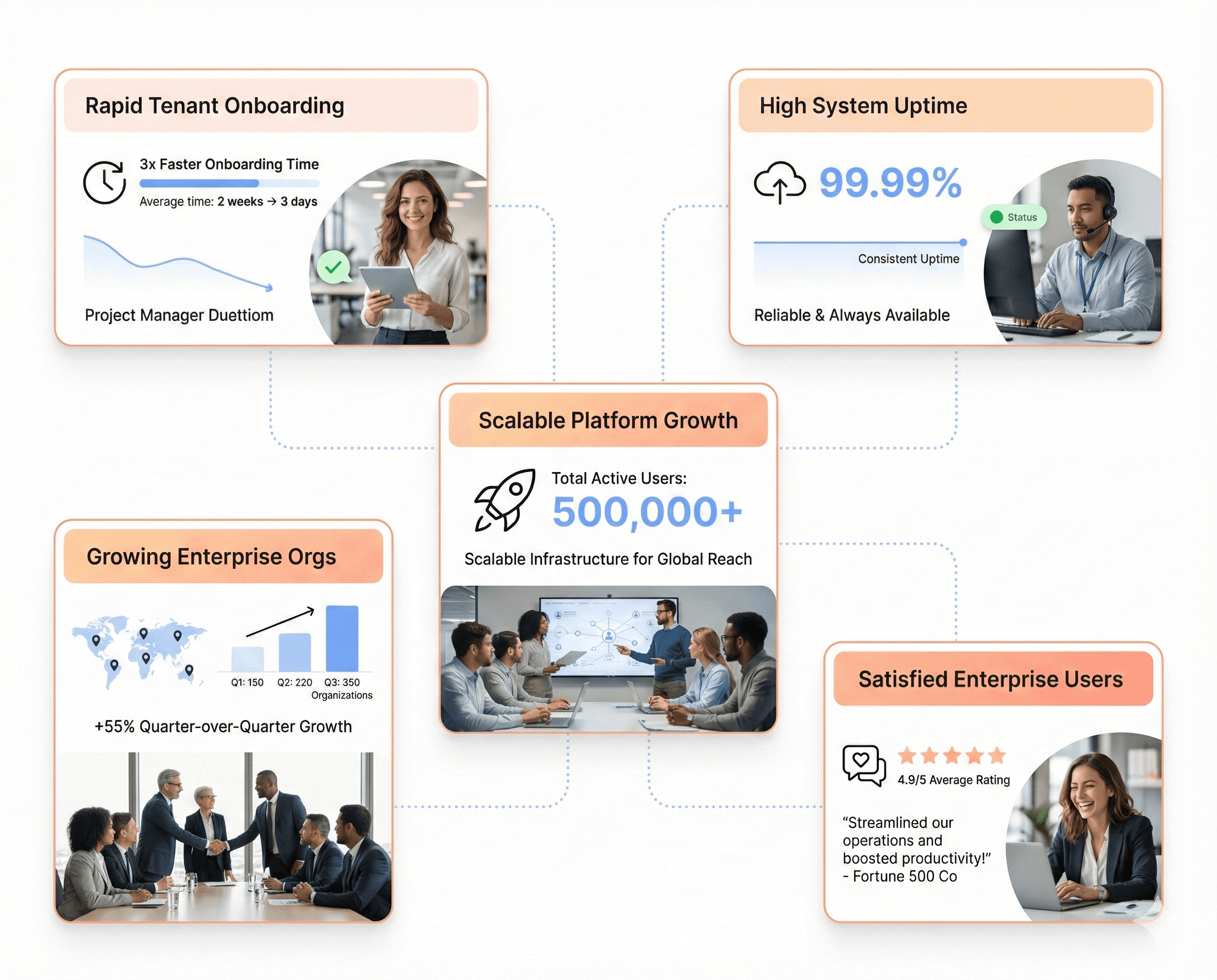
The platform delivered 99.99% uptime supported by monitoring through Sentry and New Relic. Enterprise users experienced reliable workflows and consistent availability. This improved confidence for both internal teams and customers.
2
Faster tenant scaling
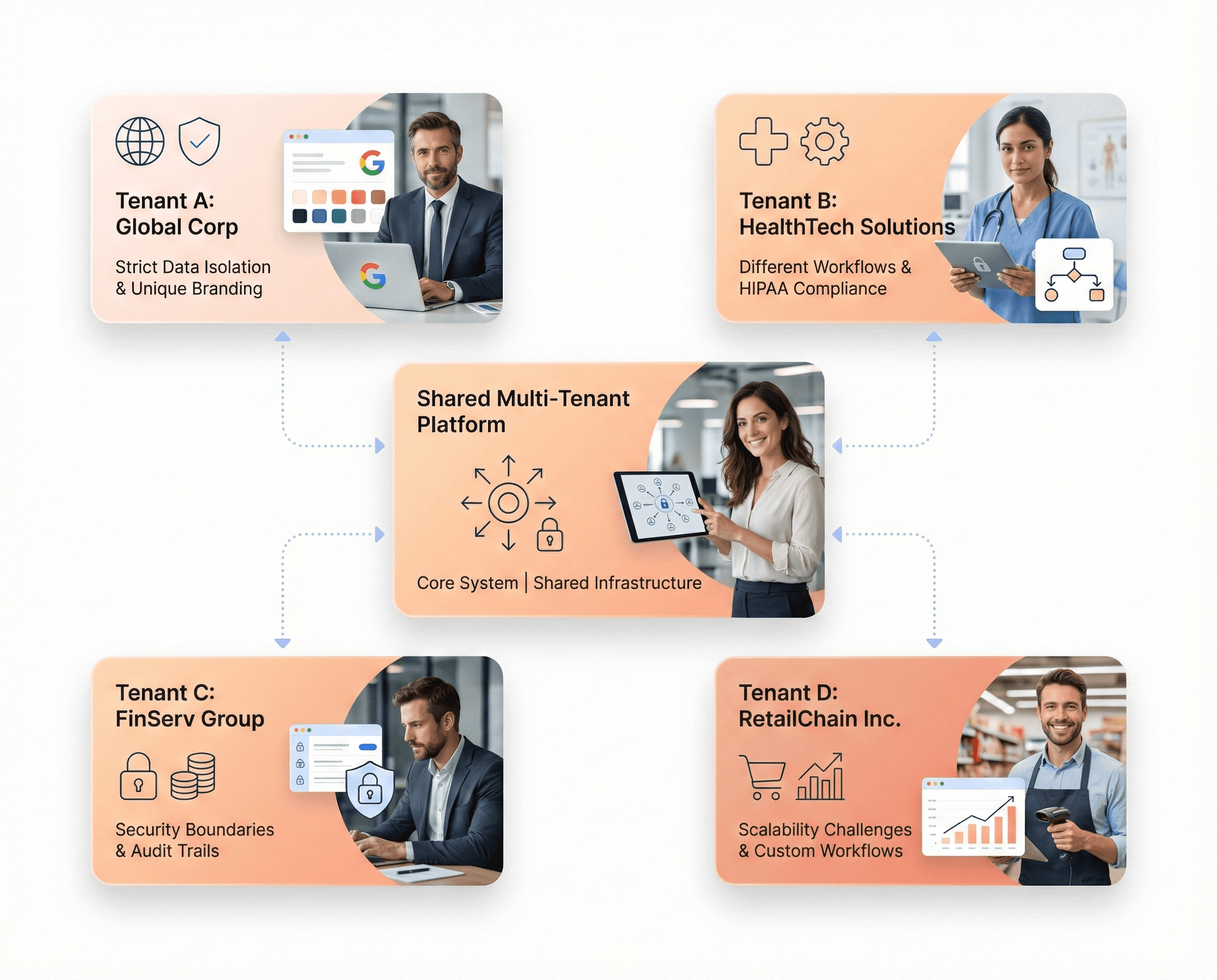
Multi-tenant architecture stability allowed continuous growth without major rebuild cycles. New tenants could be added without breaking existing experiences. The system supported expansion with predictable behavior and scalable structure.
3
4.8 out of 5 customer satisfaction
Stable data workflows powered by Redux Toolkit and TanStack Query reduced UI inconsistencies and improved product trust. Users experienced smoother dashboards and fewer disruptions. This contributed to a 4.8 out of 5 customer satisfaction score.
4
Stronger enterprise trust
Storybook-driven components and a design token system improved UI consistency and development velocity. New modules could be shipped faster without UI fragmentation. Long-term maintainability improved while keeping enterprise-level UX consistency intact.
5
Stronger enterprise trust
OWASP-aligned security patterns increased trust during enterprise evaluations. RBAC UI and audit-ready workflows reduced procurement friction. Sales teams gained higher confidence in client conversations.
Our Services