


1
Angular upgrade
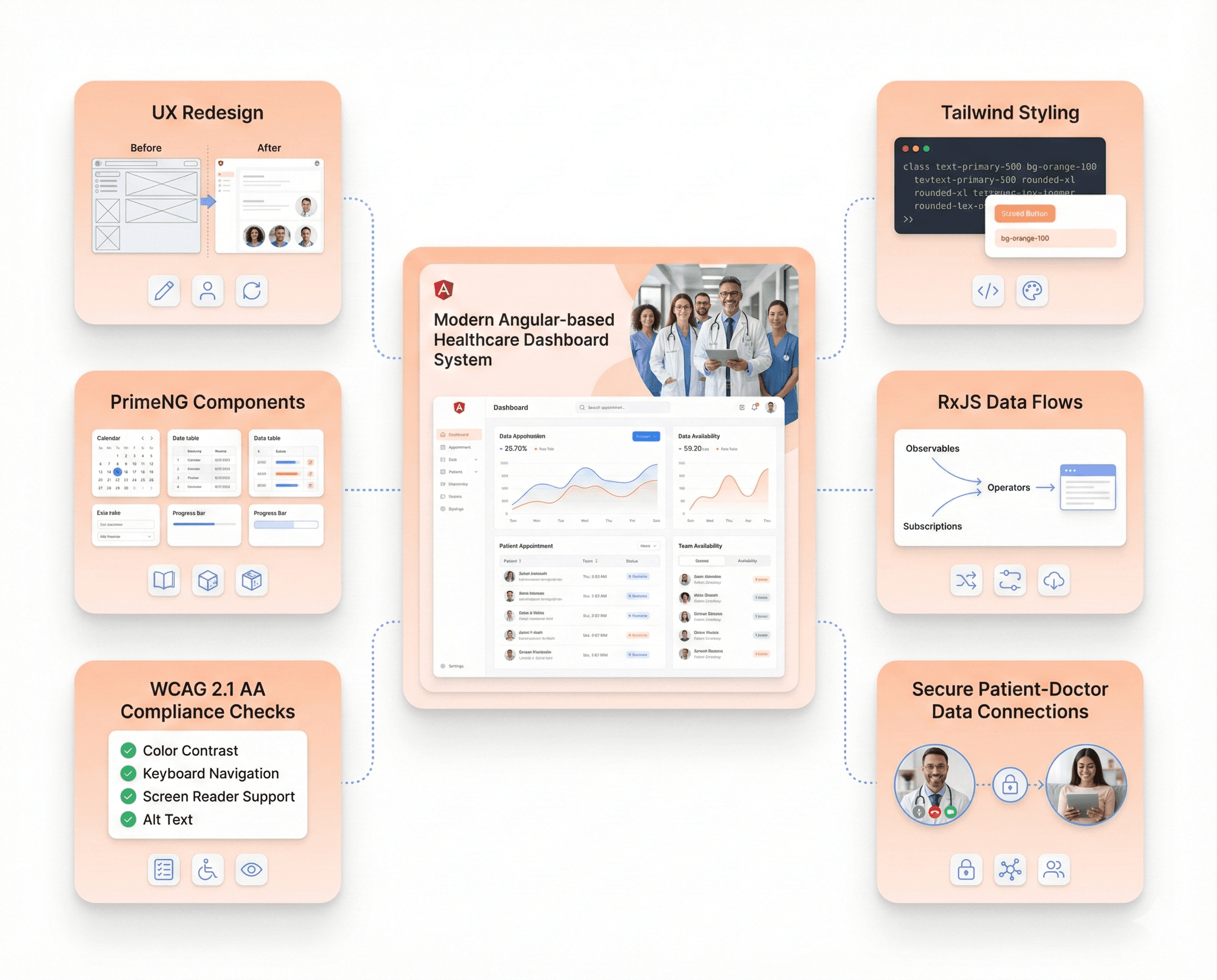
The frontend was modernized by upgrading from Angular.js to the latest Angular version. This improved long-term scalability, maintainability, and upgrade readiness for future enhancements. The new foundation supported cleaner component architecture and a more modern development workflow.
2
RxJS reactive flows
RxJS was used to standardize reactive patterns across the portal for async data handling and UI state updates. Loading states, error handling, and event-driven UI behavior became more predictable across modules. This improved reliability in complex portal workflows where multiple API calls happen in sequence.
3
PrimeNG components
PrimeNG was introduced as the UI component foundation to bring consistent patterns and reusable components across the product. This helped standardize inputs, tables, modals, and navigation behavior. The result was a cleaner, more uniform UI that improved usability and reduced inconsistency across modules.
4
Tailwind styling
Tailwind CSS was applied to improve layout consistency, spacing rhythm, and responsive behavior across the portal. Styling conflicts were reduced, and UI updates became faster to implement. This strengthened design consistency while supporting scalable UI iteration.
5
API improvements
Backend behavior was improved and new APIs were introduced to better match portal workflow needs. This reduced workaround-heavy frontend logic and improved the reliability of frontend-data synchronization. The portal became easier to extend and maintain through cleaner API structures and integration flows.

1
Modern system upgrade
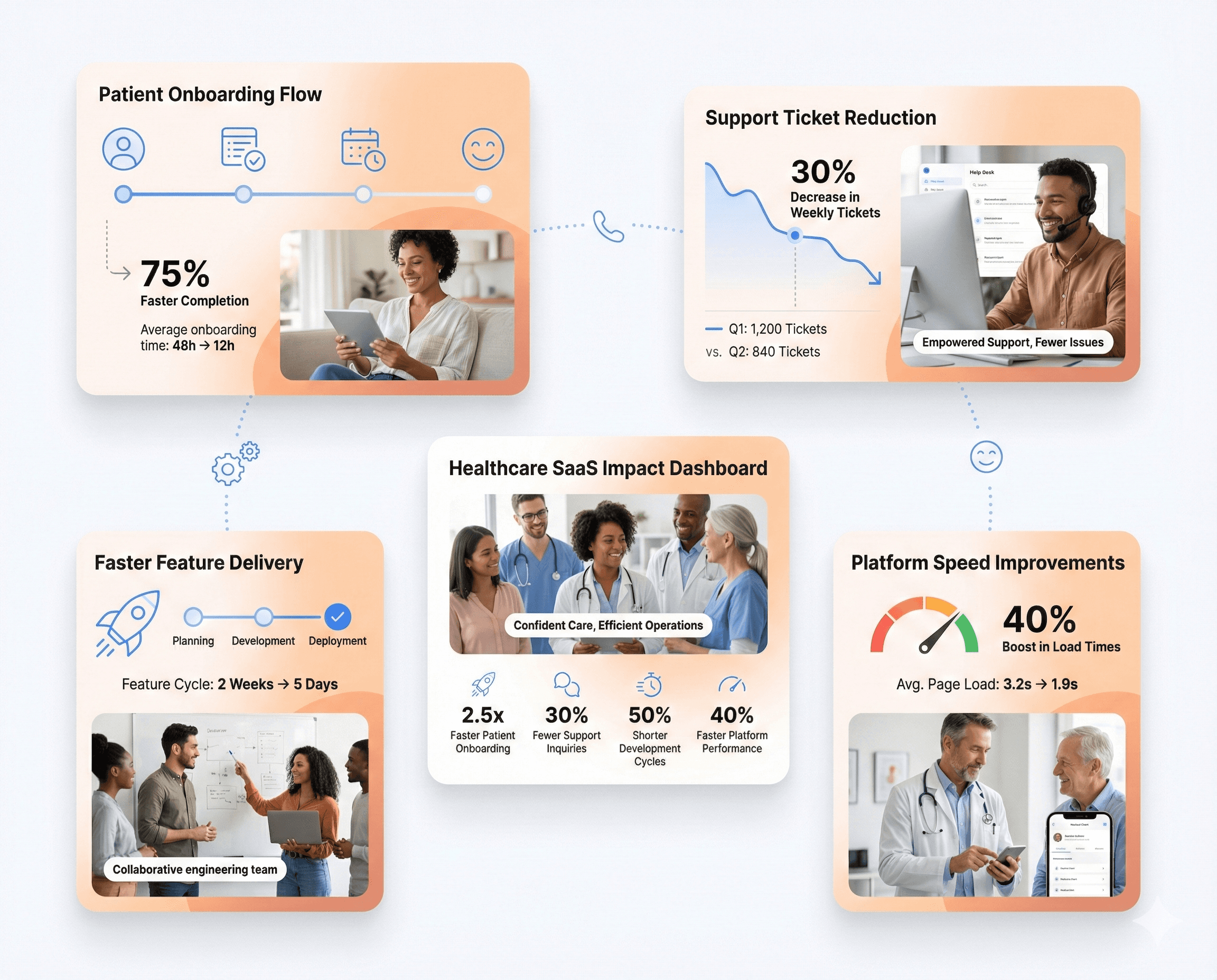
The portal successfully transitioned from a legacy UI setup into a modern Angular-based frontend system. This created a cleaner foundation for future development and continuous improvement. Teams can now build faster with fewer regression risks.
2
Improved healthcare UX flows
Patient and doctor journeys became clearer, more structured, and easier to complete. Navigation patterns improved, and key actions became easier to find. This reduced friction in real usage and strengthened portal usability.
3
Faster, smoother UI
Performance improvements reduced lag across navigation and interaction-heavy screens. Page loads became smoother, and UI behavior improved under real workflows. This created a faster and more responsive portal experience across devices.
4
Consistent UI at scale
PrimeNG + Tailwind helped unify UI patterns across modules with reusable components and predictable layouts. The portal experience became more cohesive and professional. This improved both user trust and long-term maintainability.
5
More reliable API integration
Backend and new API improvements reduced edge-case UI failures and improved data consistency. Integration flows became more stable across portal workflows. This increased production reliability and reduced operational friction.
Our Services