

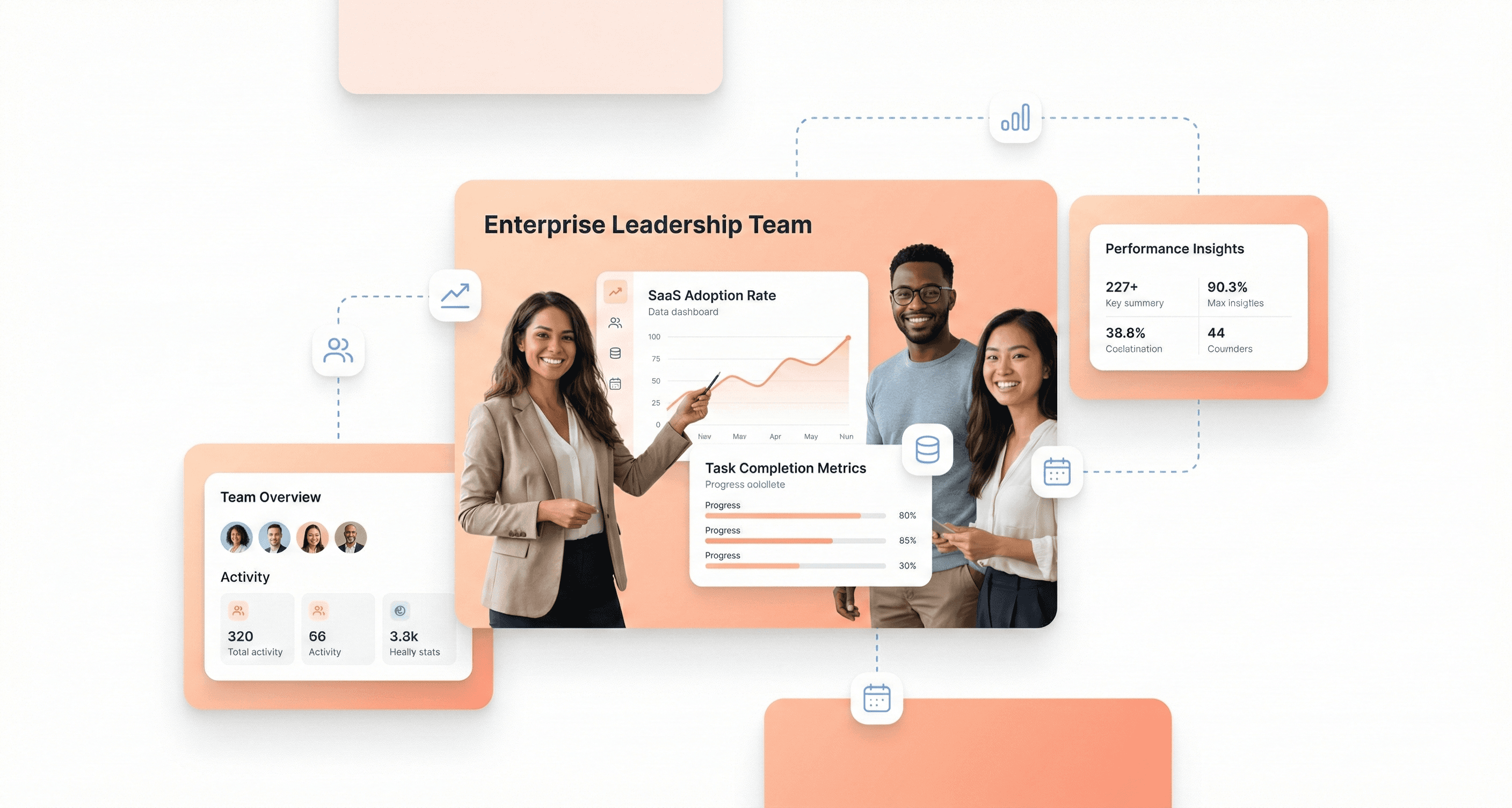
Poor UX design is quietly sabotaging your enterprise SaaS growth, while your competitors race ahead with intuitive systems that employees actually want to use.
This guide is for SaaS founders, product leaders, and growth teams who need to understand why UX governance can make or break their enterprise expansion plans. Remote work has exposed the hidden costs of clunky interfaces, while employee expectations now mirror consumer app experiences. Meanwhile, your biggest growth opportunity lies in systems that users adopt enthusiastically rather than reluctantly.
We'll explore the real financial impact of poor enterprise UX design and reveal how friction in your user experience translates directly to churn, longer sales cycles, and reduced customer lifetime value. You'll also discover proven UX strategies that create sustainable competitive advantages through operational efficiency and faster user adoption. Finally, we'll walk through building a compelling ROI case for UX investment that gets budget approval from finance teams and executive stakeholders.
The companies winning enterprise deals today aren't just building better features—they're creating experiences that make complex workflows feel effortless.
Why Enterprise UX Has Become a Business-Critical Investment
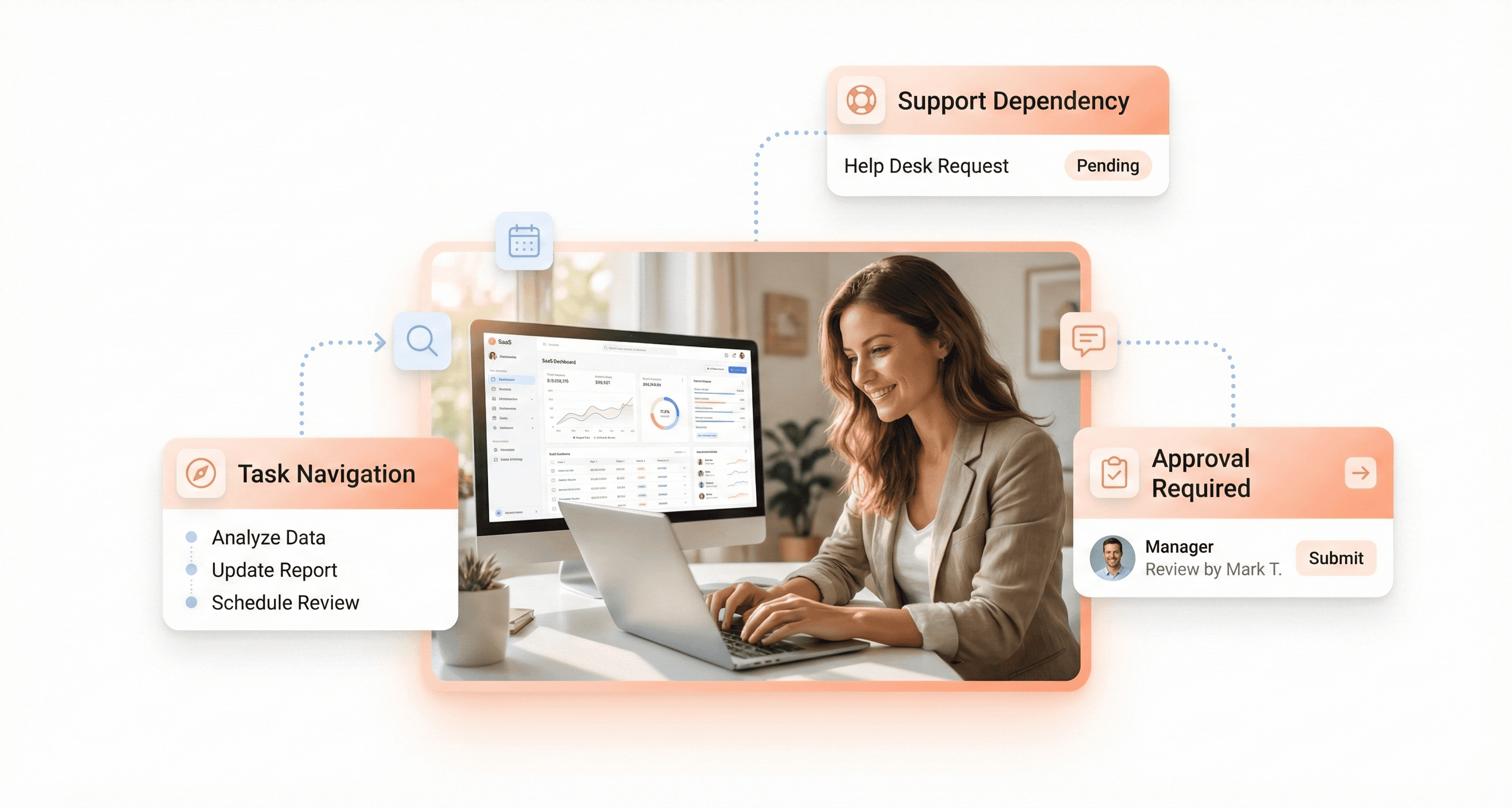
Remote Work Eliminated Informal Support Systems
The shift to remote work fundamentally transformed how employees interact with enterprise software, creating new challenges for enterprise SaaS UX that organizations couldn't have anticipated. Previously, when colleagues sat side-by-side, informal support systems naturally emerged. An experienced user could quickly help a struggling teammate navigate complex workflows, explain unclear interface elements, or share shortcuts that made daily tasks more efficient.
These organic knowledge-sharing networks disappeared overnight with distributed teams. Employees now face software challenges in isolation, without the luxury of simply turning to ask a colleague for help. This isolation amplifies every UX friction point, turning minor usability issues into productivity blockers that can derail entire workflows.
The impact on UX governance became immediately apparent. Organizations discovered that support ticket volumes increased dramatically, with many issues stemming directly from usability problems that were previously resolved through peer assistance. What once took a 30-second conversation between colleagues now requires formal support channels, documentation searches, or lengthy email exchanges.
This transformation elevated the importance of enterprise UX investment from a nice-to-have to a business-critical necessity. Software interfaces that seemed "good enough" in collaborative office environments suddenly became significant barriers to productivity when users couldn't rely on informal help networks.
Employee Expectations Now Mirror Consumer App Standards
Modern enterprise users bring dramatically different expectations to workplace software, shaped by years of interaction with consumer applications that prioritize intuitive design and seamless experiences. This shift represents a fundamental change in how enterprise UX design must approach user needs and interface standards.
The consumer app revolution established new baselines for what users consider acceptable interaction patterns. Employees who effortlessly navigate social media platforms, streaming services, and mobile apps expect similar ease-of-use from their work tools. They anticipate interfaces that require minimal learning curves, provide clear visual feedback, and offer logical workflow progression.
This expectation gap creates significant challenges for SaaS user experience strategy. Enterprise software traditionally prioritized functionality over usability, assuming that extensive training would bridge any UX deficiencies. However, modern users reject this premise, expecting workplace tools to be as intuitive as their personal apps.
Organizations that fail to meet these evolved expectations face measurable consequences. The reference content highlights how poor user experiences directly impact employee morale, with workers becoming less engaged with products that feel outdated or cumbersome compared to consumer alternatives. This dissatisfaction translates into reduced productivity, increased training costs, and higher employee turnover.
The business value of UX design becomes evident when considering recruitment and retention. Top talent increasingly evaluates potential employers based on the quality of their technology stack, including how well-designed and user-friendly their daily tools are.
Digital Transformation Success Depends on User Adoption Rates
Digital transformation initiatives live or die by user adoption rates, making UX governance framework implementation critical for enterprise success. Organizations can invest millions in cutting-edge software solutions, but without proper user adoption, these investments deliver minimal return on investment.
The reference content emphasizes that UX design ROI calculations must account for adoption rates as a primary success metric. When enterprise software creates friction through poor interface design, confusing navigation, or complex workflows, employees naturally resist using new systems. This resistance undermines digital transformation objectives and can render expensive technology implementations virtually worthless.
User adoption challenges compound over time. Initial resistance to poorly designed systems often solidifies into permanent workarounds, with employees developing shadow IT solutions or reverting to legacy processes. These patterns become increasingly difficult to change, requiring additional change management resources and potentially necessitating costly system redesigns.
SaaS growth through UX depends heavily on demonstrating value quickly to new users. The reference content notes that onboarding experiences significantly impact long-term retention rates. Organizations discovered that simplifying onboarding flows resulted in substantial increases in user retention after the first month, directly translating to recurring revenue growth.
Successful digital transformation requires measuring adoption through specific UX metrics aligned with business KPIs. Task completion rates, time-to-value measurements, and user engagement levels provide concrete indicators of whether enterprise UX investment delivers expected returns. Organizations that establish these measurement frameworks can identify adoption barriers early and implement targeted UX improvements to drive transformation success.
The Hidden Costs of Poor Enterprise UX Design
Expensive Training Requirements and Extended Onboarding
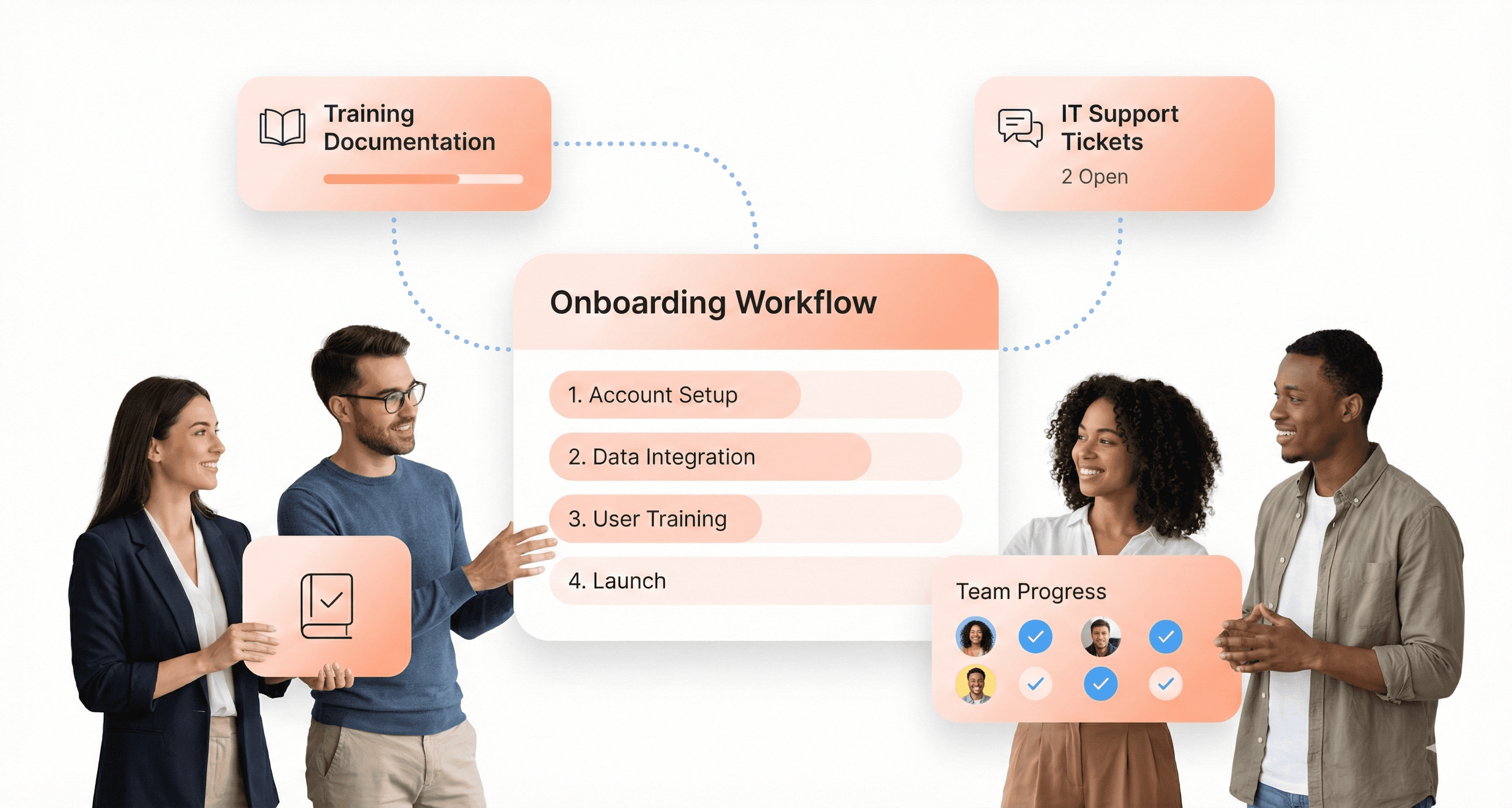
Poor enterprise UX design creates a cascade of training costs that organizations often fail to recognize until they compound into significant operational expenses. When internal systems impose high cognitive load through dense interfaces and overcomplicated layouts, employees require extensive training cycles just to perform routine tasks. What should be intuitive workflows become complex procedures that demand detailed documentation and hands-on instruction.
The cognitive strain imposed by information-overloaded interfaces forces organizations to invest in longer onboarding periods. New hires spend weeks learning to navigate systems that should enable productivity from day one. Training teams must develop comprehensive materials to help employees interpret crowded screens, understand competing visual cues, and memorize multi-step processes for basic functions. This extended learning curve directly translates to delayed productivity and increased training costs per employee.
Moreover, the complexity doesn't end after initial training. Poor UX governance in enterprise SaaS platforms leads to frequent system updates that require retraining sessions. When interfaces lack clear information hierarchy and intuitive design patterns, even experienced users struggle to adapt to changes, necessitating ongoing training investments that drain resources from strategic initiatives.
Overwhelming IT Support Overhead from Design Issues
Enterprise systems with poor UX design consistently generate higher support volumes, creating an operational tax that impacts IT departments across organizations. When interfaces are unclear or mentally demanding, employees rely heavily on internal support teams to complete routine tasks that should be self-service. This dependency transforms IT support from strategic technology enablement into reactive troubleshooting of preventable UX issues.
The operational cost of poor usability appears directly in support ticket volumes. A significant portion of help desk requests can be traced back to unclear layouts, hidden actions, and overloaded screens that confuse users during daily workflows. Each support interaction not only costs the organization in terms of IT staff time but also interrupts the employee's productivity, creating a double impact on operational efficiency.
Support teams find themselves repeatedly addressing the same interface-related questions, indicating systemic UX problems rather than user competency issues. This pattern forces organizations to maintain larger support staffs than necessary, diverting resources from innovation and strategic technology initiatives to address design-related friction that could be prevented through better UX governance frameworks.
Productivity Erosion Through Decision Delays and Process Bottlenecks
The most insidious cost of poor enterprise UX lies in the gradual erosion of productivity through accumulated micro-inefficiencies. When systems attempt to show everything at once, they create information overload that forces users to expend mental effort on decisions that should be automatic. Employees must scan crowded layouts, interpret overlapping visual cues, and retain multiple details in working memory just to identify their next action.
This cognitive strain leads to decision fatigue, where routine workflows become sources of friction rather than enablers of efficiency. What should take seconds stretches into longer interactions as users navigate through poorly organized information architecture. Over time, these delays compound across departments, quietly undermining organizational performance without leadership connecting the problem back to system design.
Process bottlenecks emerge when poor UX governance allows enterprise SaaS platforms to develop inconsistent interaction patterns and unclear task flows. Teams spend valuable time confirming whether tasks are complete, searching for required information, or recovering from errors caused by confusing interfaces. The cumulative effect transforms efficient operations into friction-heavy processes that constrain growth and competitive advantage.
Research indicates that businesses can lose significant revenue annually due to slow-loading interfaces and frustrating user experiences. When enterprise systems reduce rather than enhance cognitive ease, every department pays the price through lost time, increased error rates, and diminished employee satisfaction that ultimately impacts retention and organizational performance.
How Strategic UX Design Creates Competitive Advantages
Operational Efficiency Drives Superior Customer Experiences
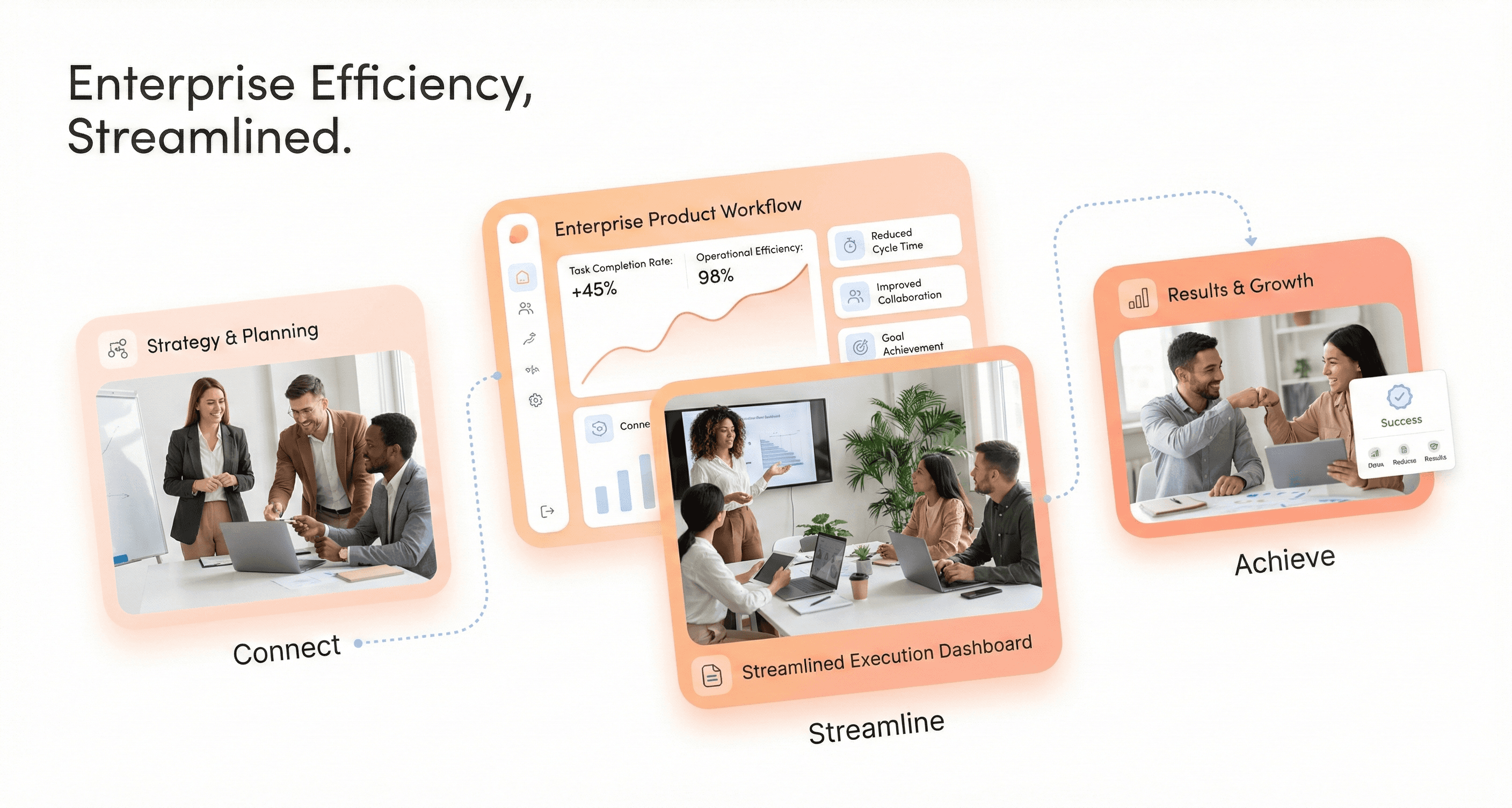
When UX governance is properly implemented across enterprise SaaS platforms, it directly transforms operational efficiency into competitive advantages that customers can immediately experience. Strategic UX design creates streamlined workflows that reduce cognitive load and eliminate unnecessary friction throughout the user journey.
Research demonstrates that strategic UX can improve user retention by up to 30 percent, fundamentally changing how enterprises compete in crowded markets. This improvement stems from the systematic approach UX governance brings to understanding and addressing real user pain points rather than assumptions about what users need.
Enterprise UX governance ensures that every design decision aligns with broader organizational objectives while maintaining focus on user satisfaction. By treating UX as a strategic discipline rather than a superficial design layer, organizations create meaningful experiences that solve genuine problems and deliver tangible value. This approach transforms complex enterprise functionality into intuitive interactions that users can navigate with confidence and efficiency.
The operational benefits manifest in reduced support tickets, decreased training requirements, and faster user onboarding. When users can accomplish their goals without confusion or repeated attempts, it creates a ripple effect of efficiency that extends throughout the entire organization.
Faster Decision-Making Through Intuitive Data Interfaces
Now that we understand how operational efficiency creates customer value, the next critical advantage emerges in how UX governance enables faster decision-making through thoughtfully designed data interfaces. Enterprise SaaS platforms typically handle vast amounts of complex information, and the way this data is presented directly impacts business velocity.
UX governance frameworks emphasize the importance of presenting similar information consistently, which reduces cognitive load and creates intuitive interaction patterns that users can quickly learn and navigate. This consistency becomes particularly crucial when dealing with enterprise data dashboards, analytics interfaces, and reporting tools where decision-makers need rapid access to actionable insights.
Strategic UX design transforms abstract data into compelling visual narratives that guide users toward informed decisions. By implementing comprehensive user research and defined performance metrics within the UX governance framework, organizations can design interfaces that anticipate user needs and present information in the most accessible format.
The competitive advantage becomes evident when executives and analysts can extract insights in minutes rather than hours, when complex datasets become immediately comprehensible, and when critical business decisions can be made with confidence based on clear, well-presented information. This acceleration in decision-making velocity often translates directly into market responsiveness and competitive positioning.
Reduced Employee Turnover and Improved Talent Acquisition
With faster decision-making established as a competitive advantage, UX governance delivers another critical benefit through its impact on human resources and talent management. Poor user experience design creates daily frustration for employees who must navigate clunky interfaces, struggle with inconsistent design patterns, and waste time on unnecessarily complex workflows.
Enterprise UX governance addresses these pain points systematically by ensuring cross-functional collaboration across design, product, engineering, and marketing teams. This collaborative approach creates cohesive experiences that employees actually want to use, reducing the stress and frustration associated with poorly designed enterprise tools.
When employees can perform their work efficiently through well-designed interfaces, job satisfaction increases significantly. Users don't abandon applications because of missing features - they abandon them because of friction. This principle applies equally to internal users and external customers, making employee experience a crucial component of overall business success.
The talent acquisition advantage emerges when organizations can demonstrate modern, intuitive tooling during the recruitment process. Top talent increasingly evaluates potential employers based on the quality of their technical infrastructure and user experience. Companies with strong UX governance can showcase sophisticated, user-centric platforms that signal organizational maturity and investment in employee productivity.
Furthermore, reduced training time for new hires and decreased support burden create measurable cost savings that contribute directly to the ROI of UX governance investment. When enterprise software feels intuitive rather than burdensome, it becomes a competitive advantage in both customer acquisition and talent retention.
Proven UX Strategies That Drive SaaS Growth
Cognitive Load Mitigation for Increased User Adoption
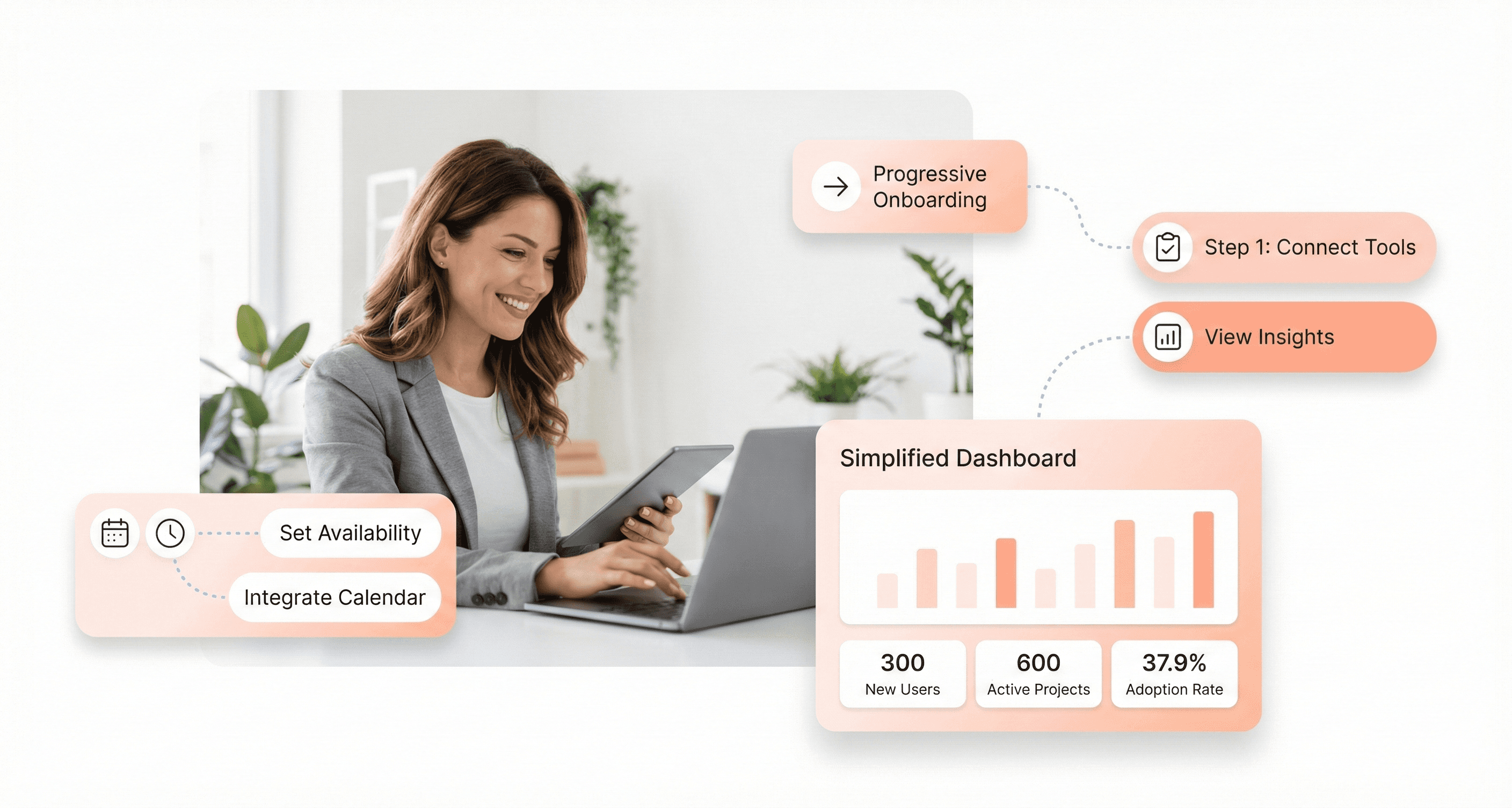
Cognitive load represents one of the most significant barriers to SaaS adoption in enterprise environments. When users encounter overwhelming interfaces that demand excessive mental effort to navigate, adoption rates plummet and productivity suffers. Progressive disclosure emerges as a critical strategy, with data showing it can reduce onboarding time by 45% when implemented effectively.
The key lies in controlling information flow rather than simply hiding features. Advanced configurations and edge-case options should remain accessible through "Show more" toggles or contextual reveals, allowing users to start with essential functions before exploring deeper capabilities. This approach reduces initial confusion while maintaining full functionality for power users.
Clear labeling and chunked information presentation further reduce cognitive burden. Instead of presenting all settings simultaneously, enterprise SaaS platforms should organize options into logical groups with descriptive headers that match user mental models. Helpful microcopy at decision points guides users through complex workflows without overwhelming them with unnecessary details.
The Law of Proximity plays a crucial role here—related elements must be visually grouped together to maintain clear hierarchical relationships. When filters are positioned close to their corresponding tables, or when form labels maintain proper spacing from their inputs, users instantly understand functional relationships without expending mental energy to decode the interface structure.
Frictionless Data Onboarding and System Integration
Enterprise users expect seamless integration capabilities that don't require extensive technical knowledge or lengthy setup processes. Data onboarding represents a critical make-or-break moment where users either experience immediate value or abandon the platform due to complexity.
Successful SaaS platforms minimize initial data requirements, collecting only essential information needed for core functionality. Additional data points should be gathered progressively as users engage more deeply with the platform. This approach reduces initial friction while building comprehensive user profiles over time.
Template-driven workflows significantly accelerate the integration process. By providing pre-configured setups for common use cases, platforms can eliminate the blank-slate problem that often overwhelms new enterprise users. Drag-and-drop builders and automation flows should be intuitive enough for non-technical team members to configure without IT involvement.
Import wizards and data mapping tools must prioritize error prevention and clear guidance. Visual progress indicators help users understand their position in complex setup processes, while intelligent field mapping reduces manual configuration time. When integration complexity is unavoidable, contextual help and step-by-step guidance ensure users maintain momentum toward successful implementation.
Invisible UI Design for Complex Enterprise Workflows
The most effective enterprise SaaS interfaces become invisible during actual work, allowing users to focus entirely on their tasks rather than navigating the interface itself. This requires careful attention to interaction patterns that feel natural and predictable across different workflow contexts.
Consistent navigation models across all views and devices eliminate the need for users to relearn interface patterns as they move between features. When users can predict where functions will be located based on established patterns, they spend less time hunting for tools and more time accomplishing objectives.
Micro-interactions provide crucial feedback without interrupting workflow momentum. Loading states, button animations, and transition effects should communicate system status while maintaining the illusion of immediate response. These subtle cues build confidence in system reliability without drawing attention to the interface mechanics.
Search functionality must be robust and forgiving, handling partial terms and delivering instant results that support task discovery. Faceted search with intelligent filtering allows users to navigate complex data sets without memorizing navigation hierarchies. The interface should anticipate user needs and surface relevant options before explicit requests are made.
Strategic Friction to Protect User Value and Prevent Errors
While most UX efforts focus on reducing friction, strategic friction serves as a powerful tool for protecting users from costly mistakes and maintaining data integrity in enterprise environments. This approach requires careful balance between usability and safety.
Confirmation dialogs for destructive actions prevent accidental data loss without significantly impeding normal workflows. These interruptions should be contextually appropriate—more prominent for irreversible actions like data deletion, lighter for easily reversible changes. The friction level must match the potential impact of the action.
Multi-step processes for critical configurations ensure users understand the implications of their choices. Rather than presenting all options simultaneously, breaking complex setups into logical phases allows for better decision-making and reduces the likelihood of configuration errors that could affect entire teams or organizations.
Validation feedback should be immediate and constructive, catching errors before they propagate through systems. Real-time field validation with helpful error messages guides users toward correct inputs without forcing them to submit forms to discover problems. This proactive approach maintains forward momentum while ensuring data quality standards are met.
Building the ROI Case for Enterprise UX Investment
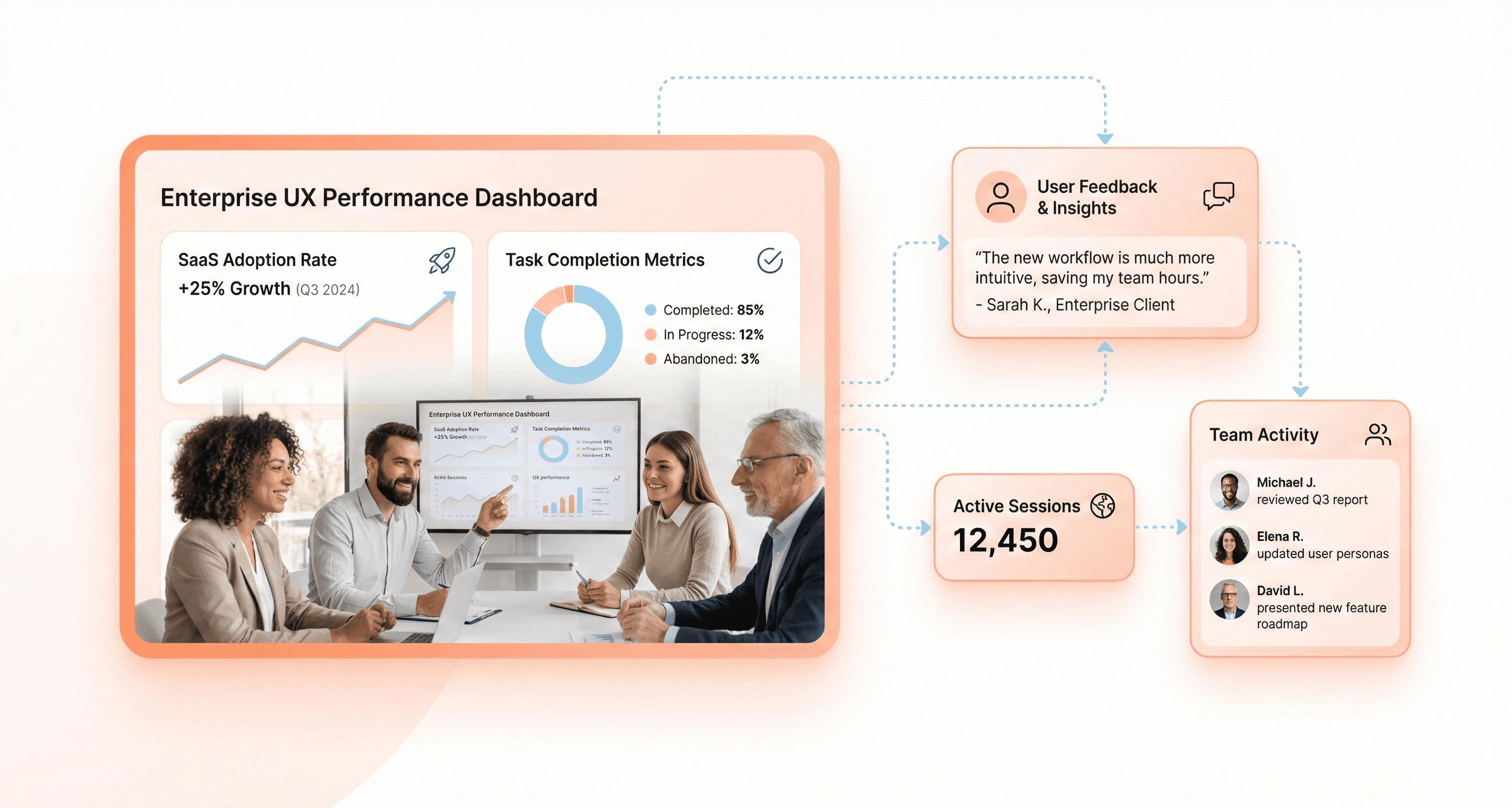
Measurable Impact Framework for Stakeholder Buy-In
To secure enterprise UX investment, establishing a robust measurement framework is essential for demonstrating tangible business value. The foundation begins with a systematic 5-step ROI calculation process that connects UX improvements directly to financial outcomes.
Step 1: Problem Identification and Baseline Establishment
Start by identifying specific UX pain points that impact business operations. Key questions include: What are the current inefficiencies in user workflows? How do these issues affect support teams and operational costs? Establish clear benchmarks using metrics like task completion times, error rates, support call volumes, and conversion rates to create a measurable starting point.
Step 2: Goal Setting and Expected Outcomes
Define clear, quantifiable objectives that align UX improvements with business goals. Focus on outcomes that either drive revenue or reduce costs - the two primary areas executives care about. For example, target increasing conversion rates from 5% to 10% or reducing support calls by 15%.
Step 3: Data Collection for ROI Estimation
Gather comprehensive data including current baseline metrics, projected improvements based on research and industry benchmarks, and total project costs including team hours, development, and implementation expenses. This data forms the foundation for calculating both the Return (financial benefit) and Investment (project costs).
Step 4: ROI Calculation and Monetary Conversion
Apply the standard ROI formula: ROI = (Return - Investment) / Investment × 100. Break this into manageable components by calculating user time savings, operational cost reductions, and revenue increases separately. Convert the ROI percentage to actual monetary value using: Monetary Benefit = (ROI ÷ 100) × Investment.
Step 5: Strategic Communication
Present findings in stakeholder-friendly language, focusing on financial outcomes rather than UX jargon. Start with the problem context, highlight key metrics like time saved and cost reductions, and maintain transparency about assumptions and calculations. For example: "By redesigning this workflow, we're projected to save 5,000 user hours and 320 support hours monthly, resulting in an annual ROI of 882.7% and net benefits of $660,000."
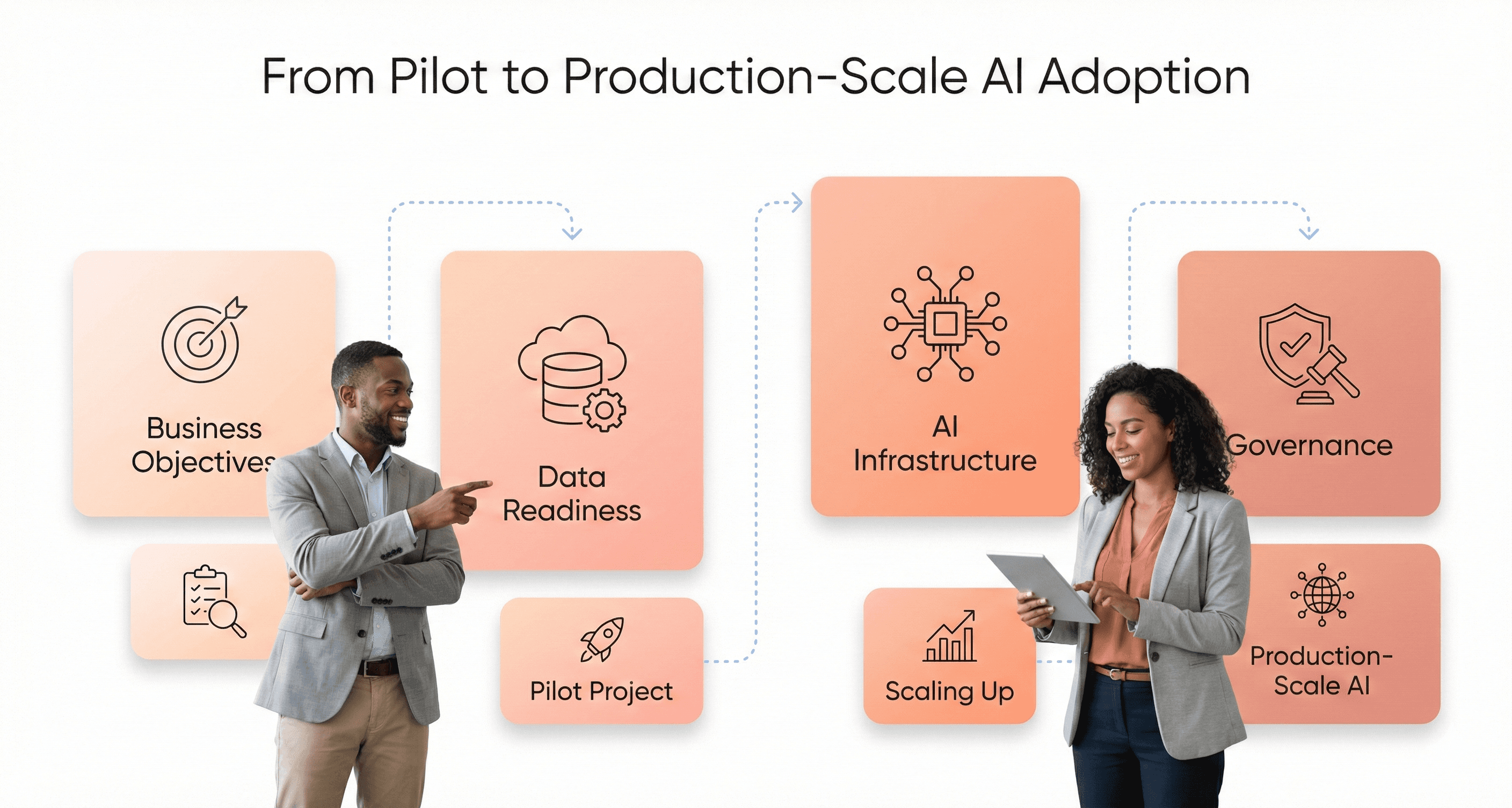
Pilot Project Approach to Demonstrate Value Quickly
Implementing a strategic pilot project approach allows UX teams to prove value rapidly while minimizing organizational risk and resource commitment. This method leverages focused efforts on high-impact workflows to generate compelling initial results.
Selecting the Right Pilot Scope
Choose workflows that represent significant user pain points with measurable business impact. Focus on processes that occur frequently and affect large user populations, such as file export workflows or registration processes. The ideal pilot targets tasks that currently generate substantial support costs or operational inefficiencies.
Rapid Implementation Strategy
Execute pilot projects within compressed timeframes - typically 10-12 weeks - to maintain stakeholder attention and momentum. This approach requires careful coordination between UX research, design, and development teams to establish baselines, implement changes, and measure outcomes quickly.
Controlled Environment Testing
Create controlled research conditions that allow for accurate before-and-after comparisons. While perfect control may not always be possible in enterprise environments, establish consistent testing parameters and account for variables in your measurement approach. Document any environmental constraints that might affect results.
Quick Wins Documentation
Track immediate improvements that demonstrate UX impact, such as reduced task completion times, decreased error rates, or lower support call volumes. Even marginal improvements in the desired direction can provide evidence of UX value and justify continued investment.
Long-Term Benefits of User-Centered Design Implementation
Enterprise UX investment delivers compound value over time, creating sustained competitive advantages that extend far beyond initial implementation costs. Understanding these long-term benefits is crucial for building comprehensive ROI cases.
Cumulative Financial Impact
User-centered design improvements generate compounding returns through reduced operational costs, increased user efficiency, and decreased support requirements. Annual benefits often multiply as improved workflows reduce training time for new users, minimize onboarding costs, and create more efficient daily operations across the enterprise.
Cultural Transformation and Innovation Metrics
UX governance implementation drives broader organizational change by advancing design-thinking methodologies and user-centered approaches across teams. Measure innovation impact through design-thinking training sessions conducted, patent filings related to user experience innovations, conference presentations, and published thought leadership articles.
Scalable Process Improvements
Well-designed UX governance frameworks create reusable processes and standards that amplify impact across multiple products and user workflows. Initial investments in user research methodologies, design systems, and measurement frameworks provide ongoing value for future development cycles.
Competitive Positioning and Brand Influence
Long-term UX investment enhances brand perception and market positioning through improved user satisfaction and reduced customer churn. Track social media mentions, customer testimonials, and market recognition as indicators of brand influence resulting from superior user experience design.
Predictive Value and Future Planning
Established UX measurement programs enable predictive modeling and forecasting capabilities, allowing organizations to anticipate the impact of future design investments and make data-driven decisions about resource allocation and strategic priorities.
Conclusion
The evidence is clear: enterprise UX has evolved from a nice-to-have feature to a business-critical investment that directly impacts SaaS growth and competitive positioning. Organizations that prioritize user-centered design for their enterprise applications see measurable improvements in productivity, employee satisfaction, and operational efficiency. With remote work permanently changing how employees interact with software and digital natives raising expectations for intuitive interfaces, the companies that invest strategically in enterprise UX create sustainable competitive advantages that extend far beyond internal operations.
The choice facing enterprise leaders isn't whether to invest in UX governance, but how quickly they can transform their digital workplace into a strategic asset. Companies that continue relying on legacy systems with poor user experiences will find themselves at an increasing disadvantage as competitors leverage superior internal tools to move faster, serve customers better, and attract top talent. The time to build a compelling business case for enterprise UX investment is now—before poor user experiences compound into operational burdens that become increasingly expensive to address.

About the author
Author Name:
Parth G
|
Founder of
Hashbyt
I’m the founder of Hashbyt, an AI-first frontend and UI/UX SaaS partner helping 200+ SaaS companies scale faster through intelligent, growth-driven design. My work focuses on building modern frontend systems, design frameworks, and product modernization strategies that boost revenue, improve user adoption, and help SaaS founders turn their UI into a true growth engine.
Follow the expert:

Is a clunky UI holding back your growth?
Is a clunky UI holding back your growth?
▶︎
Transform slow, frustrating dashboards into intuitive interfaces that ensure effortless user adoption.
▶︎
Transform slow, frustrating dashboards into intuitive interfaces that ensure effortless user adoption.
