
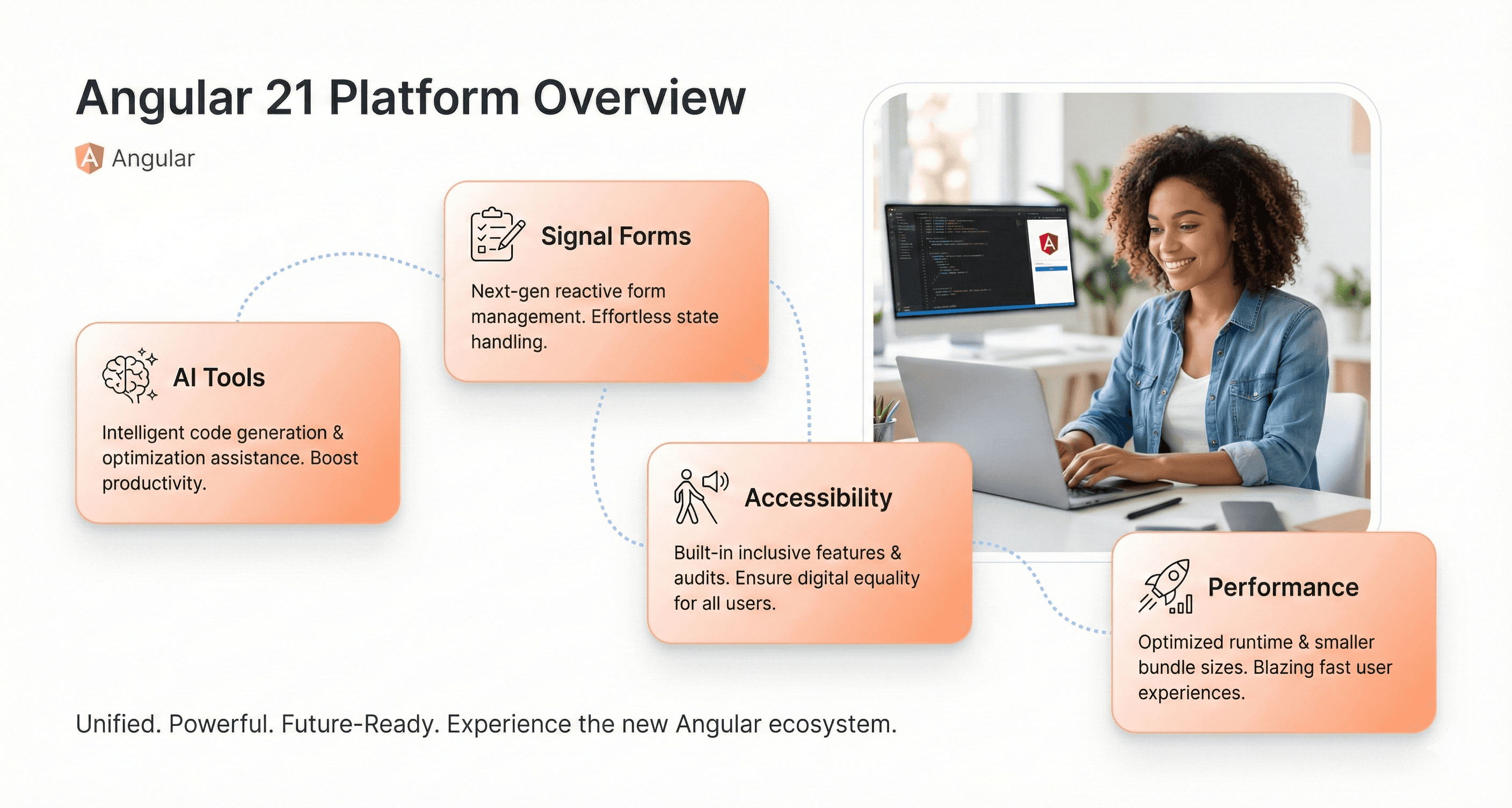
Angular 21 overview showing AI-powered developer tools, Signal Forms, accessibility improvements, and performance optimizations visualized through clean UI cards and a professional frontend developer working confidently.
Summary

Angular 21, releasing on November 20, 2025, delivers major upgrades focused on AI-driven development, Signal Forms, accessibility, and build performance. The new Angular MCP Server enables automated code generation and AI workflows, while Signal Forms replace traditional reactive forms with fine-grained reactivity for better performance and simpler validation. The Angular ARIA package strengthens accessibility with built-in screen-reader and focus management tools. Build optimizations reduce bundle sizes by up to 40% and accelerate compilation with smarter caching and tree-shaking. HttpClient is now included by default, and the new control-flow syntax improves template readability. Angular 21 targets faster development, zoneless rendering readiness, and scalable architecture for SaaS and enterprise applications.

Building Security Tools SOC Analysts Can

Navigate Under Pressure?

Summary

Angular 21, releasing on November 20, 2025, delivers major upgrades focused on AI-driven development, Signal Forms, accessibility, and build performance. The new Angular MCP Server enables automated code generation and AI workflows, while Signal Forms replace traditional reactive forms with fine-grained reactivity for better performance and simpler validation. The Angular ARIA package strengthens accessibility with built-in screen-reader and focus management tools. Build optimizations reduce bundle sizes by up to 40% and accelerate compilation with smarter caching and tree-shaking. HttpClient is now included by default, and the new control-flow syntax improves template readability. Angular 21 targets faster development, zoneless rendering readiness, and scalable architecture for SaaS and enterprise applications.

Building Security Tools SOC Analysts Can Navigate Under Pressure?

Summary

Angular 21, releasing on November 20, 2025, delivers major upgrades focused on AI-driven development, Signal Forms, accessibility, and build performance. The new Angular MCP Server enables automated code generation and AI workflows, while Signal Forms replace traditional reactive forms with fine-grained reactivity for better performance and simpler validation. The Angular ARIA package strengthens accessibility with built-in screen-reader and focus management tools. Build optimizations reduce bundle sizes by up to 40% and accelerate compilation with smarter caching and tree-shaking. HttpClient is now included by default, and the new control-flow syntax improves template readability. Angular 21 targets faster development, zoneless rendering readiness, and scalable architecture for SaaS and enterprise applications.

Building Security Tools SOC Analysts Can

Navigate Under Pressure?

Angular 21 drops on November 20, 2025, and it’s packed with features that directly impact how modern web applications are built. This complete Angular 21 developer guide breaks down everything you need to know, from AI-powered development tools and automated code generation to Signal Forms, accessibility upgrades, and major performance optimizations.


Designed for frontend developers, Angular enthusiasts, and engineering teams, this guide explains how Angular 21 improves development speed, reduces bundle sizes, and delivers a smoother developer experience. You’ll explore the new Angular MCP Server for AI workflows, learn how Signal Forms simplify reactive form management, and understand how the Angular ARIA package enhances accessibility compliance.


We’ll also walk through build system upgrades that enable faster compilation times, smaller bundles, and better scalability for SaaS and enterprise applications. If you’re evaluating whether Angular 21 is worth the upgrade, this guide gives you a clear, practical answer.

Angular 21 Release Overview and Key Highlights

Official Angular 21 Release Date and Announcement

Angular 21 has been officially scheduled for release on November 20, 2025, marking a significant milestone in the framework's evolution. The Angular team has announced a brand new release adventure event to showcase the comprehensive features and improvements that Angular 21 brings to developers worldwide.


The release event will provide developers with their first comprehensive look at the groundbreaking features that define Angular 21. This major release represents more than just incremental updates, it's a transformative leap forward that addresses modern development challenges with AI-powered solutions, enhanced accessibility, and streamlined developer workflows.

Why Angular 21 Is a Major Framework Upgrade

Angular 21 represents a pivotal moment in the framework's journey, moving decisively beyond the Ivy era into a new phase of modern web development. This release introduces revolutionary changes that fundamentally reshape how developers approach Angular applications, particularly in the realm of AI-powered development workflows.


The framework now includes Angular MCP Server tools designed specifically to improve AI-powered workflows and code generation capabilities. These tools represent a paradigm shift, enabling developers to leverage artificial intelligence directly within their Angular development process, making code generation more intuitive and efficient than ever before.


A major architectural advancement comes with Signal Forms, Angular's new streamlined, signal-based approach to forms. This represents a complete reimagining of reactive forms architecture, moving away from traditional form handling methods toward a more modern, signal-driven approach that aligns with contemporary development patterns and performance expectations.
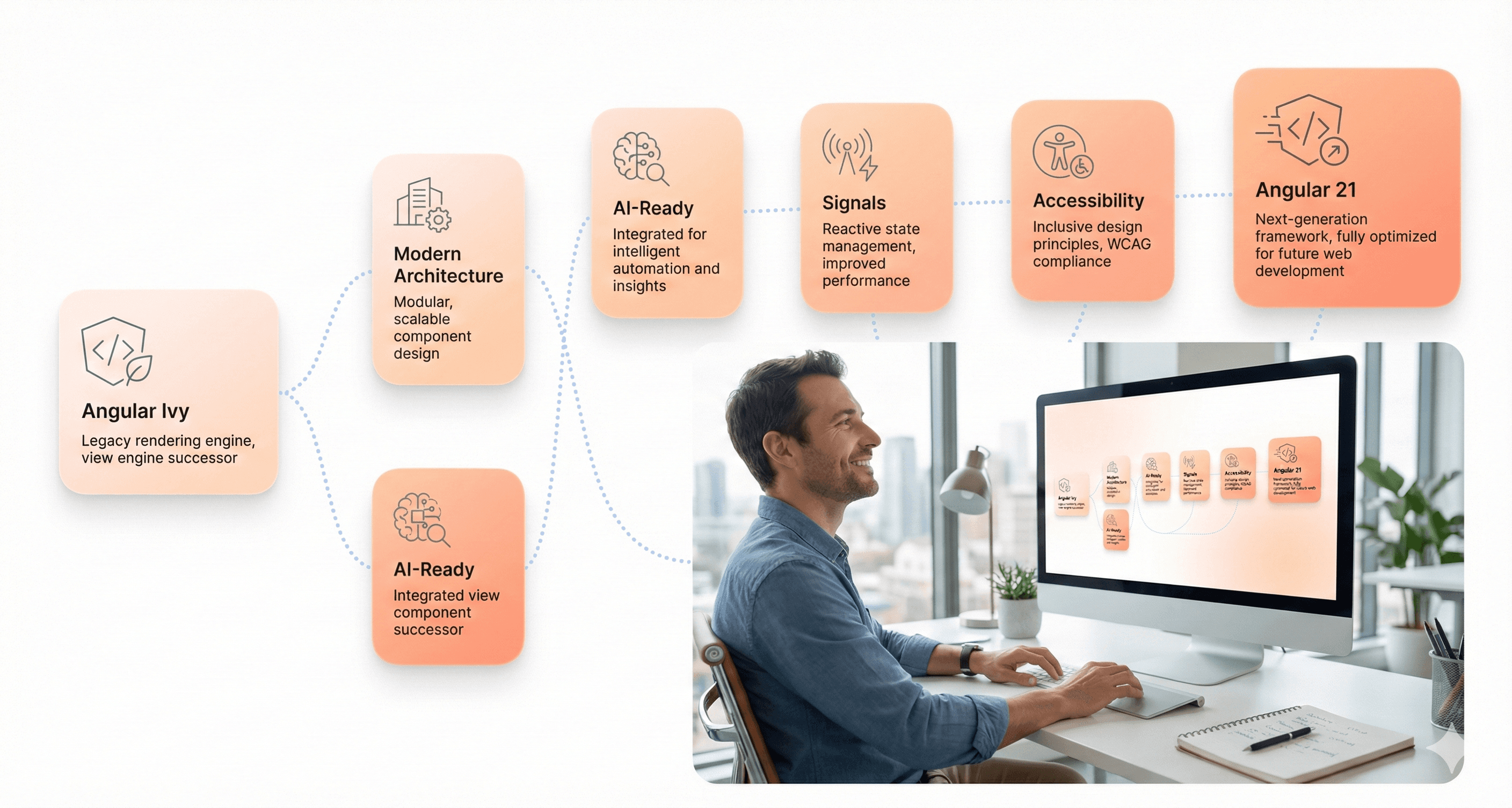
Angular 21 framework evolution beyond Ivy, illustrated through a modern timeline highlighting AI readiness, signal-based architecture, improved accessibility, and next-generation Angular development.


The introduction of the Angular ARIA package demonstrates the team's commitment to accessibility-first development, providing developers with comprehensive tools and utilities to build inclusive applications that meet modern accessibility standards without compromising on performance or developer experience.

Performance Improvements and Modern Developer Experience

Angular 21 delivers substantial enhancements to the developer experience through practical, everyday improvements that reduce friction in development workflows. One of the most significant changes is that HttpClient is now included by default, eliminating the need for developers to manually import HttpClientModule in their applications.


Previously, developers had to configure HttpClient manually:

import { HttpClientModule } from '@angular/common/http';
bootstrapApplication(AppComponent, {
  providers: [provideHttpClient()]
});
import { HttpClientModule } from '@angular/common/http';
bootstrapApplication(AppComponent, {
  providers: [provideHttpClient()]
});
import { HttpClientModule } from '@angular/common/http';
bootstrapApplication(AppComponent, {
  providers: [provideHttpClient()]
});

With Angular 21, HttpClient integration is seamless and automatic, allowing developers to inject and use HttpClient services without additional configuration steps. This streamlined approach reduces boilerplate code and accelerates development velocity.


The framework also introduces enhanced compatibility between NgStyle and the new control flow template syntax, enabling cleaner dynamic styling patterns. Developers can now use conditional styling more effectively with the modern @if and @for control flow syntax, creating more readable and maintainable template code.


These improvements collectively focus on removing development friction while maintaining Angular's enterprise-grade reliability. Whether developers are creating AI-powered applications or building scalable enterprise solutions, Angular 21 provides the modern tooling and performance optimizations necessary for contemporary web development challenges.

AI-Powered Development in Angular 21

Angular MCP Server for AI-Driven Workflows

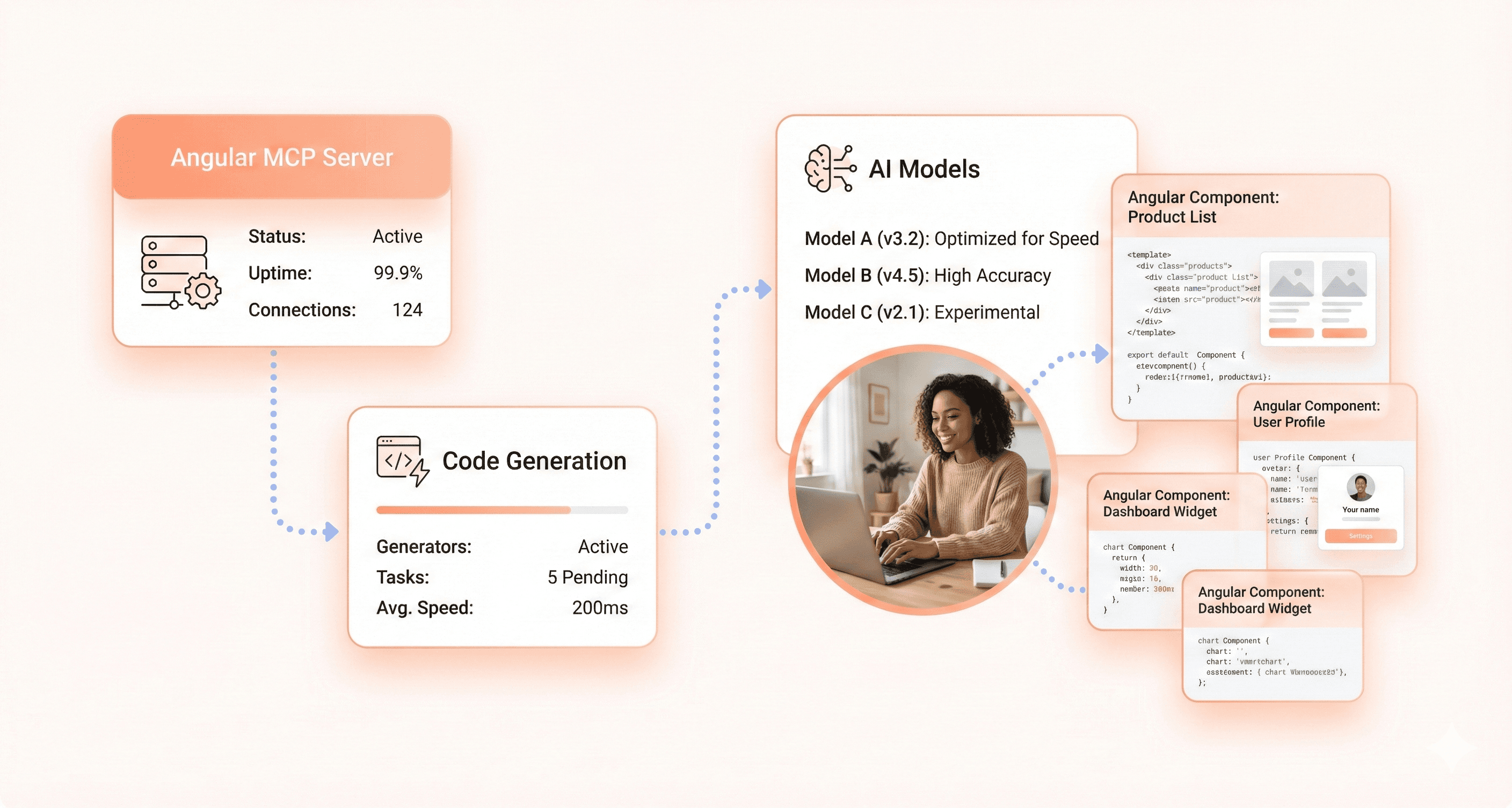
Angular 21 introduces a groundbreaking MCP (Model Context Protocol) Server that revolutionizes how developers integrate AI capabilities into their Angular applications. This powerful server architecture provides a unified interface for connecting with multiple AI model providers including Google's Gemini API, OpenAI, and Anthropic, enabling developers to choose the best models for their specific use cases.


The MCP Server acts as a secure intermediary between your Angular application and various AI services, ensuring API credentials remain protected while maintaining high-performance connections. This server-side solution integrates seamlessly with Angular's SSR capabilities, making it ideal for full-stack applications that require sophisticated back-end AI logic.

Angular MCP Server enabling AI-powered development workflows, showing code generation, multi-model AI integration, and secure backend architecture for modern Angular applications.

Key features of the Angular MCP Server include:

  • Multi-model Support: Connect to various AI providers through a single, consistent API

  • Secure Authentication: Built-in credential management that keeps API keys safe from client exposure

  • Optimized Performance: Intelligent caching and connection pooling for enhanced response times

  • TypeScript Integration: Full type safety with Angular's robust typing system

Automated Code Generation for Angular Apps

Angular 21's AI-powered development tools now include sophisticated automated code generation capabilities that understand Angular's component architecture and modern development patterns. These intelligent systems can generate complete Angular components, services, and modules while following best practices and the Angular style guide.


The automated code generation supports Angular 14+ features including standalone components, typed forms with FormControl<T>, and the modern inject() function syntax for cleaner dependency injection. This AI assistance extends beyond basic component scaffolding to include:

Component Generation Features:

  • Complete TypeScript classes with proper @Component decorators

  • HTML templates with Angular data binding syntax

  • CSS/SCSS styling with component-specific styles

  • Lifecycle hooks implementation (ngOnInit, ngOnDestroy, etc.)

  • Standalone component configuration for modern Angular architecture

Service and Dependency Injection:

  • Angular services with proper dependency injection patterns

  • HTTP client implementations with error handling

  • Clean inject() function syntax replacing constructor injection

  • Type-safe service interfaces and implementations
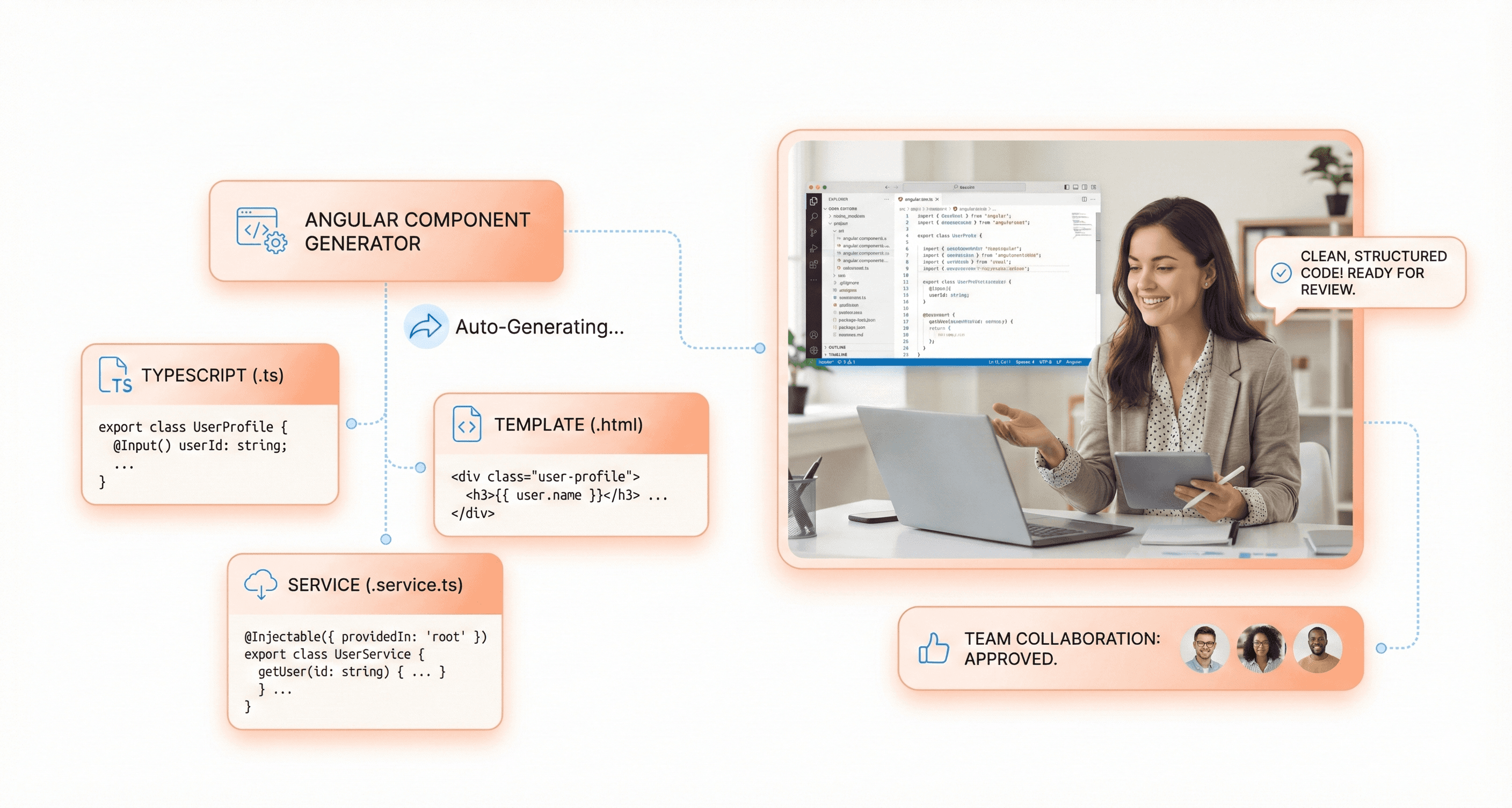
AI-assisted Angular code generation displaying automatically created components, services, and TypeScript structures that follow Angular best practices and modern development patterns.

Reactive Programming Support:

  • RxJS observables with appropriate operators (map, filter, switchMap, combineLatest)

  • Async pipe implementations for template subscription management

  • BehaviorSubject and ReplaySubject patterns for state management

  • Proper subscription handling with takeUntil patterns

Enterprise-Grade AI Integration in Angular 21

With the rise of enterprise-scale Angular applications, Angular 21's AI integration provides robust solutions for large-scale business applications with complex requirements. The framework now offers specialized tools for building AI-powered Progressive Web Apps, admin dashboards, SaaS platforms, and industry-specific applications including financial and healthcare systems.


Enterprise AI Architecture:

Angular 21's AI tools support scalable architecture design with feature module organization, shared component libraries, and multi-repository workspaces using Nx. The AI assistance includes generating appropriate patterns for micro-frontend architectures and complex state management solutions using NgRx.


Tool Calling and Agentic Workflows:

The framework now supports advanced tool calling capabilities, enabling developers to build agentic workflows where AI agents can act and use tools to solve complex problems. This functionality allows LLMs to make requests back to the application, expanding AI integration beyond simple question-and-answer chatbots.


Production-Ready State Management:

Angular 21's AI tools generate complete NgRx implementations including store setup, actions with createAction, reducers with createReducer, effects with createEffect for async operations, and selectors with createSelector. The AI understands advanced NgRx patterns like entity adapters and router store integration, ensuring enterprise-grade state management solutions.


Security and Best Practices:

The AI integration emphasizes security best practices, particularly around API credential management. The system provides secure client-side APIs for AI model access while ensuring sensitive information never ships to client bundles, making it suitable for enterprise applications with strict security requirements.

Signal Forms: The Future of Angular Reactive Forms

Signal-Based Form Architecture Explained

Angular's new Signal Forms represent a revolutionary shift from traditional reactive forms architecture, leveraging Angular's fine-grained reactivity model to create more efficient form management. The form() function serves as the core builder, accepting a signal containing the initial form state and a configuration function for validators and form logic.


import { form, Control, required } from '@angular/forms/signals';

f = form(signal({ name: '', email: '' }), p => {
  required(p.name, { message: 'Name is required' });
  required(p.email, { message: 'Email is required' });
});
import { form, Control, required } from '@angular/forms/signals';

f = form(signal({ name: '', email: '' }), p => {
  required(p.name, { message: 'Name is required' });
  required(p.email, { message: 'Email is required' });
});
import { form, Control, required } from '@angular/forms/signals';

f = form(signal({ name: '', email: '' }), p => {
  required(p.name, { message: 'Name is required' });
  required(p.email, { message: 'Email is required' });
});


The signal-based approach transforms form controls into reactive signals, eliminating the need for manual subscriptions to valueChanges or explicit calls to updateValueAndValidity(). Each control becomes a signal that automatically tracks its state, value, and validation status. Template binding utilizes the new [control] directive, replacing traditional formControl bindings:


<input type="text" [control]="f.name" placeholder="Name" />
@if (f.name().invalid()) {
  <div> f.name().errors()[0].message }}</div>
}
<input type="text" [control]="f.name" placeholder="Name" />
@if (f.name().invalid()) {
  <div> f.name().errors()[0].message }}</div>
}
<input type="text" [control]="f.name" placeholder="Name" />
@if (f.name().invalid()) {
  <div> f.name().errors()[0].message }}</div>
}


This architecture enables powerful conditional logic through functions like disabled(), required(), and validate() that accept predicates or signals to dynamically control form behavior. Cross-field validation becomes declarative, with validators accessing the entire form state through the context parameter.
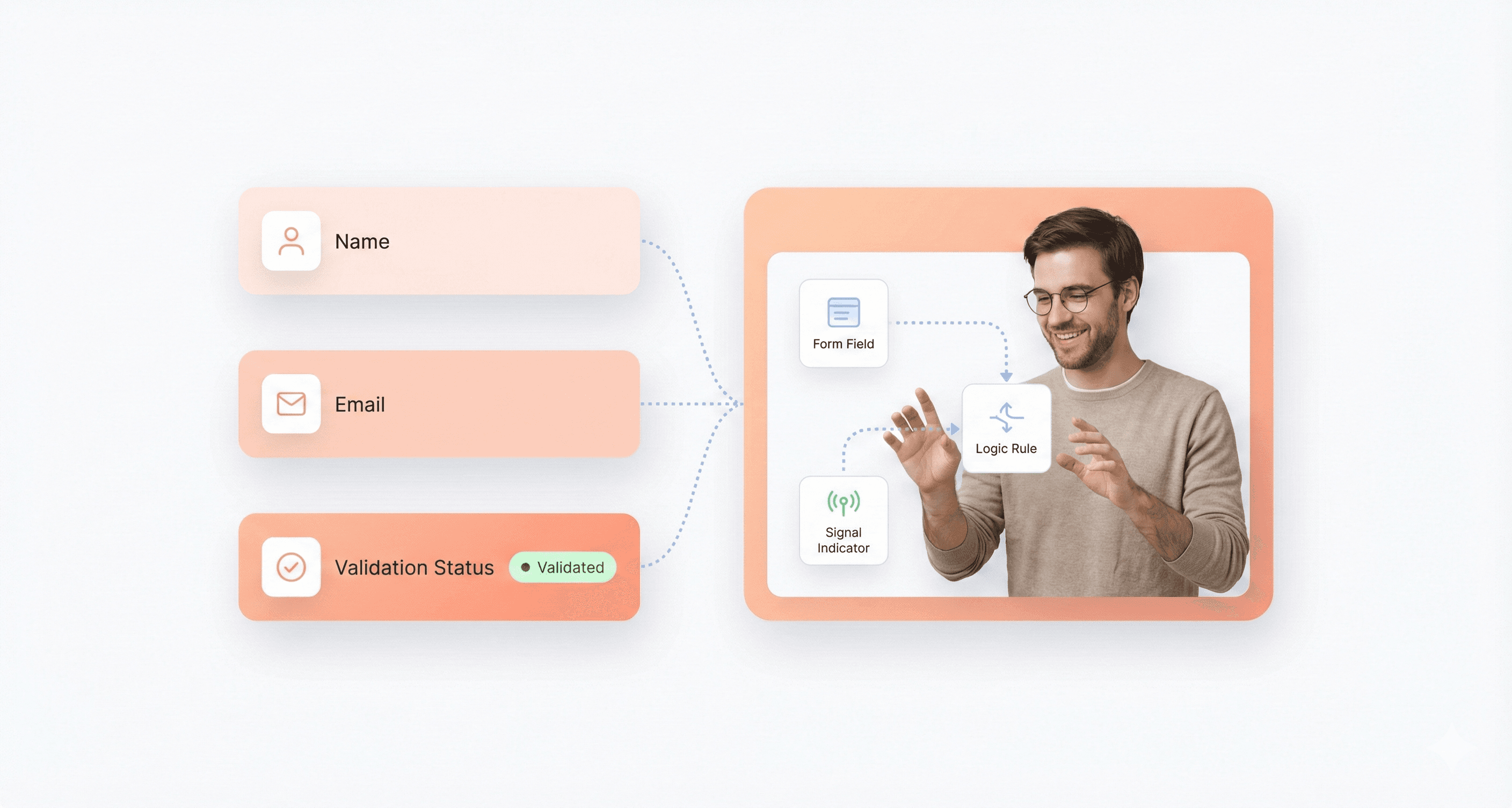
Angular Signal Forms architecture demonstrating simplified reactive form handling, signal-based validation, and improved performance compared to traditional Angular reactive forms.

How Signal Forms Improve Developer Productivity

Previously, developers working with reactive forms had to manage extensive boilerplate code, creating FormControl and FormGroup instances, wiring them to templates through directives, and handling observable subscriptions. Signal Forms dramatically reduce this complexity by eliminating the need for explicit FormGroup instantiation and manual subscription management.


The declarative nature of Signal Forms allows form state to be defined as plain objects within signal({ ... }), avoiding the verbose new FormGroup() construction patterns. Validation rules are specified in a single location within the form builder function, creating a more organized and maintainable codebase.

// Traditional reactive forms approach
userForm = new FormGroup({
  name: new FormControl('', [Validators.required]),
  email: new FormControl('', [Validators.required, Validators.email])
});

// Signal Forms approach
f = form(signal({ name: '', email: '' }), p => {
  required(p.name, { message: 'Name is required' });
  email(p.email, { message: 'Email must be valid' });
});
// Traditional reactive forms approach
userForm = new FormGroup({
  name: new FormControl('', [Validators.required]),
  email: new FormControl('', [Validators.required, Validators.email])
});

// Signal Forms approach
f = form(signal({ name: '', email: '' }), p => {
  required(p.name, { message: 'Name is required' });
  email(p.email, { message: 'Email must be valid' });
});
// Traditional reactive forms approach
userForm = new FormGroup({
  name: new FormControl('', [Validators.required]),
  email: new FormControl('', [Validators.required, Validators.email])
});

// Signal Forms approach
f = form(signal({ name: '', email: '' }), p => {
  required(p.name, { message: 'Name is required' });
  email(p.email, { message: 'Email must be valid' });
});

Conditional validation becomes remarkably straightforward with the when property and predicate functions. For example, making an email field required only when a newsletter subscription is selected:

required(p.email, {
  when: ({ valueOf }) => valueOf(p.subscribe),
  message: 'Email is required to subscribe'
});
required(p.email, {
  when: ({ valueOf }) => valueOf(p.subscribe),
  message: 'Email is required to subscribe'
});
required(p.email, {
  when: ({ valueOf }) => valueOf(p.subscribe),
  message: 'Email is required to subscribe'
});

This eliminates the need for custom validator functions and complex logic to handle dynamic validation requirements, significantly reducing development time and maintenance overhead.

Performance Benefits Over Traditional Reactive Forms

Signal Forms deliver substantial performance improvements through Angular's fine-grained reactivity system. Unlike traditional forms that rely on Angular's broad change detection cycles, signals track exactly which components and bindings depend on specific form state changes. When a user modifies a single field, only the directly affected parts of the UI update, rather than triggering a full component tree evaluation.


This targeted update mechanism proves especially powerful in OnPush change detection mode and Angular's emerging zoneless applications. Signal Forms automatically work without ZoneJS dependency, resulting in smaller bundle sizes and more predictable rendering behavior. The Angular team's move toward zoneless mode by v20 makes Signal Forms a future-proof choice for form management.


Asynchronous validation showcases these performance benefits through built-in validateHttp() and validateAsync() functions that integrate seamlessly with Angular's resource system. These validators automatically handle loading states through the pending() signal property and provide efficient request management:

validateHttp(p.username, {
  request: ({ value }) => ({
    url: `https://api.example.com/check/${value()}`,
  }),
  errors: (result) => result.unique ? [] : [customError({
    kind: 'notUnique',
    message: 'Username already taken'
  })]
});
validateHttp(p.username, {
  request: ({ value }) => ({
    url: `https://api.example.com/check/${value()}`,
  }),
  errors: (result) => result.unique ? [] : [customError({
    kind: 'notUnique',
    message: 'Username already taken'
  })]
});
validateHttp(p.username, {
  request: ({ value }) => ({
    url: `https://api.example.com/check/${value()}`,
  }),
  errors: (result) => result.unique ? [] : [customError({
    kind: 'notUnique',
    message: 'Username already taken'
  })]
});


The reactive nature of Signal Forms ensures that validation requests are optimized, with synchronous validators preventing unnecessary async calls when basic validation fails, reducing server load and improving user experience.

Accessibility Improvements with Angular ARIA

Built-In ARIA Support and Accessibility Tools

Angular 21 introduces powerful built-in accessibility features through its comprehensive ARIA package, designed to streamline the development of accessible web applications. The framework now provides enhanced attribute binding capabilities for ARIA attributes, requiring developers to use the attr. prefix when dynamically binding to accessibility-related attributes. This approach ensures proper semantic meaning delivery to assistive technologies.


<!-- Dynamic ARIA attribute binding -->
<button [attr.aria-label]="myActionLabel">Submit</button>

<!-- Static ARIA attributes require no prefix -->
<button aria-label="Save document">Save</button>
<!-- Dynamic ARIA attribute binding -->
<button [attr.aria-label]="myActionLabel">Submit</button>

<!-- Static ARIA attributes require no prefix -->
<button aria-label="Save document">Save</button>
<!-- Dynamic ARIA attribute binding -->
<button [attr.aria-label]="myActionLabel">Submit</button>

<!-- Static ARIA attributes require no prefix -->
<button aria-label="Save document">Save</button>


The Angular Component Development Kit (CDK) includes the a11y package with essential accessibility tools. The LiveAnnouncer service utilizes aria-live regions to announce messages to screen-reader users, while the cdkTrapFocus directive constrains Tab-key focus within elements, crucial for creating accessible modal dialogs and similar components.
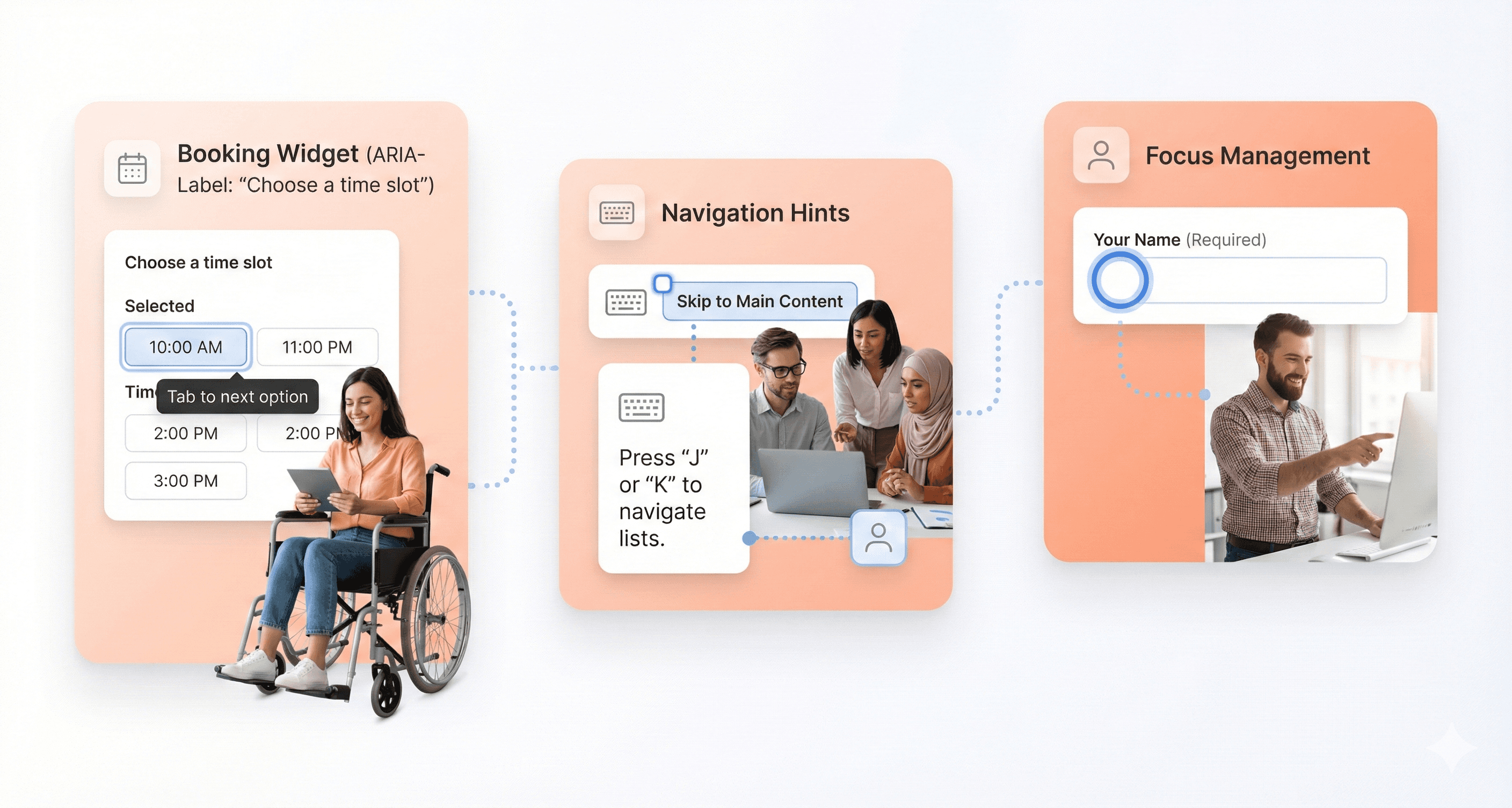
Angular 21 accessibility features using the Angular ARIA package, showing accessible UI components, screen reader support, focus management, and inclusive design best practices.


Angular 21 emphasizes augmenting native HTML elements rather than creating custom accessibility implementations. This approach leverages well-supported browser behaviors for elements like <button> and <a>, ensuring robust accessibility compliance. For components requiring container elements, the framework supports content projection patterns that maintain native control accessibility while enabling component customization.

Screen Reader and Focus Management Enhancements

With Angular 21, screen reader support receives significant enhancements through improved ARIA implementation and focus management strategies. The framework now provides better handling of dynamic content changes, particularly important when using @defer blocks for lazy loading. Developers must wrap deferred content in elements with appropriate ARIA live regions to ensure screen readers announce content changes effectively.


The routing system includes enhanced focus management capabilities after navigation events. Angular 21's NavigationEnd event integration allows developers to programmatically control focus placement after route changes, preventing users from losing their position in the application flow:

router.events.pipe(filter(e => e instanceof NavigationEnd)).subscribe(() => {
  const mainHeader = document.querySelector('#main-content-header');
  if (mainHeader) {
    mainHeader.focus();
  }
});
router.events.pipe(filter(e => e instanceof NavigationEnd)).subscribe(() => {
  const mainHeader = document.querySelector('#main-content-header');
  if (mainHeader) {
    mainHeader.focus();
  }
});
router.events.pipe(filter(e => e instanceof NavigationEnd)).subscribe(() => {
  const mainHeader = document.querySelector('#main-content-header');
  if (mainHeader) {
    mainHeader.focus();
  }
});


Active link identification receives improved support through the RouterLinkActive directive's ariaCurrentWhenActive input, which automatically sets the aria-current attribute to specified values when links become active. This enhancement provides crucial navigation context for screen reader users beyond visual cues.

Accessibility Best Practices in Angular 21

Angular 21 provides comprehensive implementation guidelines that simplify accessibility integration into development workflows. The framework emphasizes using host binding to control accessibility-related attributes, demonstrated through practical examples like custom progress bar components:


@Component({
  selector: 'app-example-progressbar',
  template: '<div class="bar" [style.width.%]="value()"></div>',
  host: {
    role: 'progressbar',
    'aria-valuemin': '0',
    'aria-valuemax': '100',
    '[attr.aria-valuenow]': 'value',
  },
})
export class ExampleProgressbarComponent {
  value = input(0);
}
@Component({
  selector: 'app-example-progressbar',
  template: '<div class="bar" [style.width.%]="value()"></div>',
  host: {
    role: 'progressbar',
    'aria-valuemin': '0',
    'aria-valuemax': '100',
    '[attr.aria-valuenow]': 'value',
  },
})
export class ExampleProgressbarComponent {
  value = input(0);
}
@Component({
  selector: 'app-example-progressbar',
  template: '<div class="bar" [style.width.%]="value()"></div>',
  host: {
    role: 'progressbar',
    'aria-valuemin': '0',
    'aria-valuemax': '100',
    '[attr.aria-valuenow]': 'value',
  },
})
export class ExampleProgressbarComponent {
  value = input(0);
}


The implementation approach focuses on leveraging native HTML semantics whenever possible, reducing the complexity of accessibility implementations while maintaining compliance standards. Angular Material components serve as reference implementations, demonstrating patterns like MatButton, MatTabNav, and MatTable that properly utilize native element behaviors.


Container patterns for elements requiring wrapper components, such as form fields, utilize content projection to maintain accessibility while providing enhanced functionality. This approach ensures that developers can create complex components without sacrificing the accessibility benefits of native HTML elements, making Angular 21 accessibility features both powerful and developer-friendly.

Angular 21 Performance and Build Optimizations

Faster Compilation and Reduced Bundle Sizes

Angular 21's build system introduces significant improvements to bundle size reduction and compilation speed. The framework now leverages advanced optimization techniques that can reduce application bundles by 25% to 40% compared to previous versions. These improvements are particularly noticeable in applications with heavy dependencies, where developers previously struggled with bundle sizes ranging from 4-5 MB.


The new build system includes enhanced tree-shaking capabilities that more effectively identify and eliminate unused code. This systematic approach ensures that only the necessary components, services, and dependencies are included in the final bundle. Additionally, Angular 21 introduces improved dead code elimination that works at the component level, automatically removing unused methods and properties during the build process.


Compilation times have been dramatically reduced through optimized caching mechanisms and parallel processing. The build system now creates more efficient intermediate representations of your code, leading to faster subsequent builds. These improvements are especially beneficial for large-scale applications with multiple modules and extensive codebases.

Improved Development Server Performance

The development server in Angular 21 delivers substantially improved performance through architectural enhancements and intelligent caching strategies. Hot module replacement (HMR) has been optimized to provide near-instantaneous updates during development, significantly reducing the time between code changes and browser updates.


Memory usage optimization ensures that the development server maintains consistent performance even during extended development sessions. The server now includes better memory management for large applications, preventing the slowdowns that developers often experienced with previous versions when working on complex projects.


Real-time compilation has been streamlined to process only the changed files and their direct dependencies, rather than recompiling entire modules. This targeted approach results in faster feedback loops and improved developer productivity, particularly beneficial when working with applications that have numerous interconnected components.

Simplified Build Configuration and Deployment

Angular 21 introduces a simplified build configuration system that reduces the complexity of deployment processes. The new configuration approach automatically optimizes build settings based on the application structure and dependencies, eliminating the need for manual fine-tuning in most cases.


Budget configuration for bundle sizes is now more intuitive and automatically configured for new applications. The system provides clear warnings and error messages when bundle sizes exceed recommended thresholds, helping developers maintain optimal application performance from the start. These budgets can be easily customized in the angular.json file with both warning and error size limits.


The deployment process has been streamlined with improved build artifacts organization. The new system generates more efficient output structures that are optimized for various hosting platforms and CDN configurations. Source map generation has been enhanced to provide better debugging capabilities while maintaining smaller file sizes in production builds.
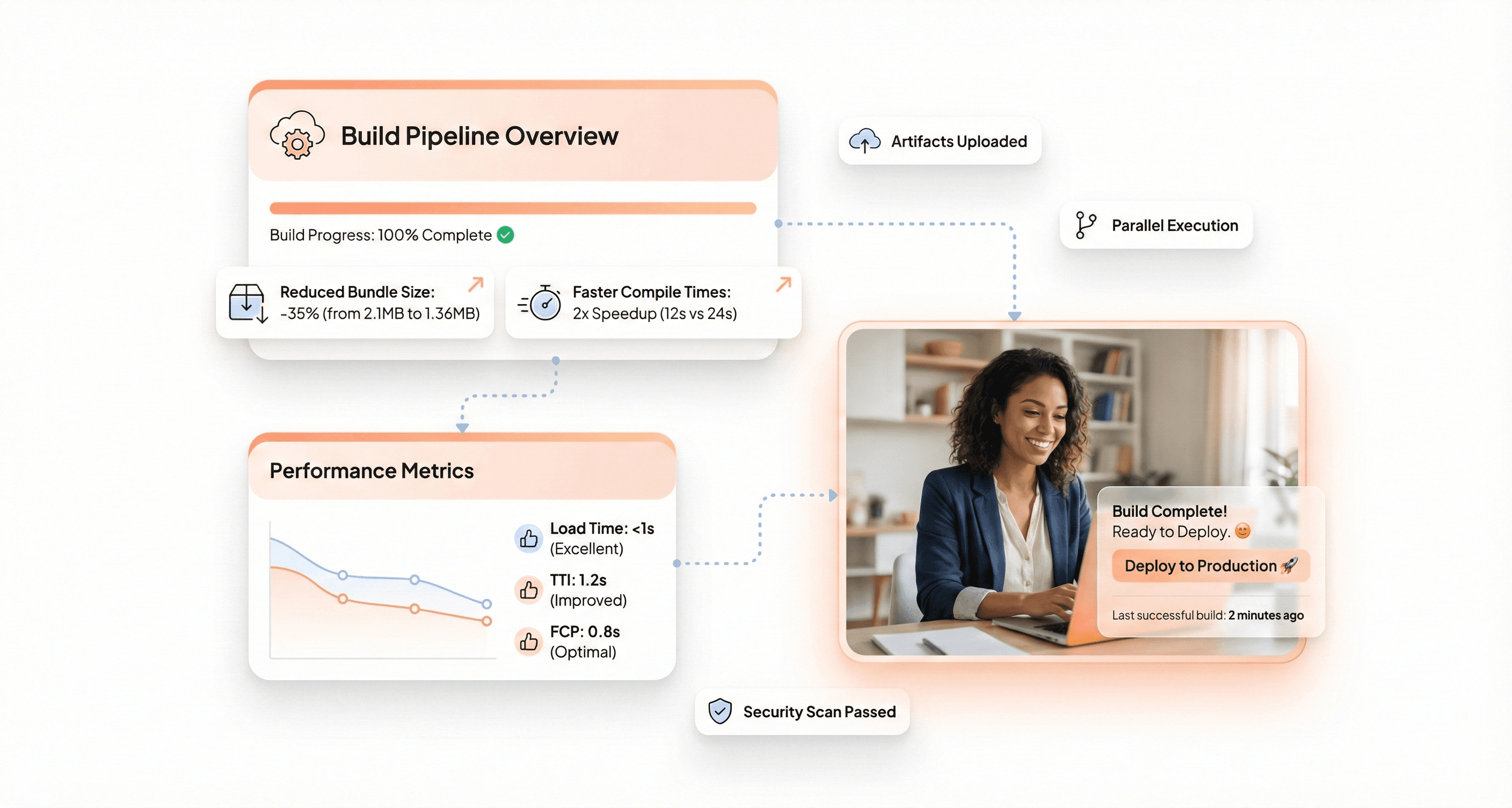
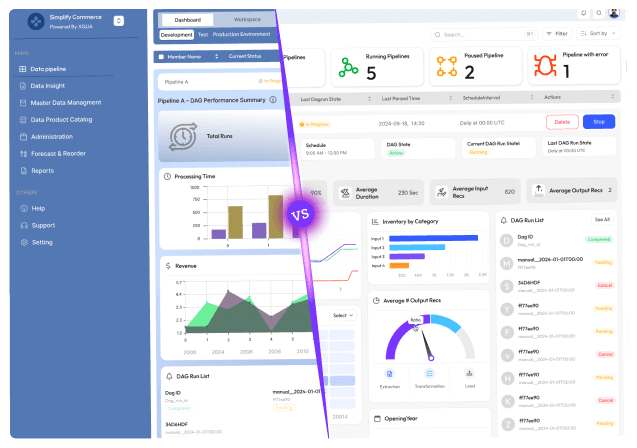
Angular 21 build system improvements highlighting faster compilation, reduced bundle sizes, optimized performance, and a smoother developer experience for large-scale Angular apps.


Production builds now include automatic optimization for different deployment scenarios, including progressive web app configurations and server-side rendering setups. These improvements ensure that developers can deploy optimized applications with minimal configuration overhead while maintaining full control over advanced optimization settings when needed.

Conclusion: Why Angular 21 Sets the Standard for 2026

Angular 21 represents a pivotal moment for the framework, delivering on long-standing developer requests with practical, performance-focused improvements. From AI-powered development tools through the new Angular MCP Server to the revolutionary Signal Forms architecture, this release addresses real pain points developers face daily.


The enhanced Angular ARIA package demonstrates the team's commitment to accessibility, while build system optimizations ensure your applications run faster and leaner than ever before.


Whether you're building AI-powered applications or scaling enterprise solutions, Angular 21 provides the modern tooling and streamlined workflows that make development genuinely enjoyable again. The framework has shed its reputation for complexity and emerged as a competitive, sharp tool that respects both developer time and user experience. Mark November 20, 2026 on your calendar, this is the Angular release that finally delivers on the promise of simplified, powerful web development.

Share:

Stuck with slow releases and high IT costs?

▶︎

Launch 2.5x faster with our AI-driven frontend workflows, specialized for SaaS.

▶︎

Cut IT costs by up to 50% and boost user adoption by 2x with our proprietary frameworks.

Stuck with slow releases and high IT costs?

▶︎

Launch 2.5x faster with our AI-driven frontend workflows, specialized for SaaS.

▶︎

Cut IT costs by up to 50% and boost user adoption by 2x with our proprietary frameworks.

Frequently Asked Questions

We're ready to answer your questions

Slow releases, clunky dashboards, and frustrated users? You've got questions about how to fix them. We have the Frontend-First answers that unlock growth. Let's talk solutions.

Stuck with slow releases and high IT costs?

▶︎

Launch 2.5x faster with our AI-driven frontend workflows, specialized for SaaS.

▶︎

Cut IT costs by up to 50% and boost user adoption by 2x with our proprietary frameworks.

Yes, according to the official Angular team, zoneless change detection is now stable and production-ready as of Angular v20.2, which means it is fully supported in Angular 21. You can enable it in your application by using provideZonelessChangeDetection() in your app configuration. This can lead to significant bundle size reductions and performance improvements

Answer

Is Angular 21's zoneless change detection stable for production use?

Question

Signal Forms are a major new feature in Angular 21, but they are still in developer preview and should not be used in production yet. The API is available for experimentation and feedback. You should continue using traditional Reactive Forms for mission-critical applications while exploring Signal Forms in side projects to prepare for the future.

Answer

What is the status of Signal Forms in Angular 21? Can I use them in production?

Question

No, you do not need to rewrite your forms. The Angular team designed the new Signal Forms to be an incremental adoption. You can start by using them for new forms or refactoring complex forms where their benefits shine, while your existing Reactive Forms will continue to work without any changes

Answer

Do I need to rewrite all my existing forms to use Signal Forms?

Question

The Angular MCP (Model Context Protocol) Server acts as a secure bridge between your development tools and various AI models (like Gemini, OpenAI, and Anthropic). It provides AI assistants with deep context about your Angular project, enabling more accurate code generation, refactoring suggestions, and scaffolding that follows Angular's latest best practices, all while keeping your API keys secure on the server-side

Answer

How does the Angular MCP Server enhance AI-powered development?

Question

The Angular ARIA package provides built-in tools and patterns to make building accessible applications easier and more consistent. It includes features like simplified dynamic ARIA attribute bindings (using attr.), better focus management after navigation, and utilities like LiveAnnouncer to help screen readers announce dynamic content changes.

Answer

How does the new Angular ARIA package help with accessibility?

Question

Frequently Asked Questions

We're ready to answer your questions

Slow releases, clunky dashboards, and frustrated users? You've got questions about how to fix them. We have the Frontend-First answers that unlock growth. Let's talk solutions.

Yes, according to the official Angular team, zoneless change detection is now stable and production-ready as of Angular v20.2, which means it is fully supported in Angular 21. You can enable it in your application by using provideZonelessChangeDetection() in your app configuration. This can lead to significant bundle size reductions and performance improvements

Answer

Is Angular 21's zoneless change detection stable for production use?

Question

Signal Forms are a major new feature in Angular 21, but they are still in developer preview and should not be used in production yet. The API is available for experimentation and feedback. You should continue using traditional Reactive Forms for mission-critical applications while exploring Signal Forms in side projects to prepare for the future.

Answer

What is the status of Signal Forms in Angular 21? Can I use them in production?

Question

No, you do not need to rewrite your forms. The Angular team designed the new Signal Forms to be an incremental adoption. You can start by using them for new forms or refactoring complex forms where their benefits shine, while your existing Reactive Forms will continue to work without any changes

Answer

Do I need to rewrite all my existing forms to use Signal Forms?

Question

The Angular MCP (Model Context Protocol) Server acts as a secure bridge between your development tools and various AI models (like Gemini, OpenAI, and Anthropic). It provides AI assistants with deep context about your Angular project, enabling more accurate code generation, refactoring suggestions, and scaffolding that follows Angular's latest best practices, all while keeping your API keys secure on the server-side

Answer

How does the Angular MCP Server enhance AI-powered development?

Question

The Angular ARIA package provides built-in tools and patterns to make building accessible applications easier and more consistent. It includes features like simplified dynamic ARIA attribute bindings (using attr.), better focus management after navigation, and utilities like LiveAnnouncer to help screen readers announce dynamic content changes.

Answer

How does the new Angular ARIA package help with accessibility?

Question

Stuck with slow releases and high IT costs?

▶︎

Launch 2.5x faster with our AI-driven frontend workflows, specialized for SaaS.

▶︎

Cut IT costs by up to 50% and boost user adoption by 2x with our proprietary frameworks.

Frequently Asked Questions

We're ready to answer your questions

Slow releases, clunky dashboards, and frustrated users? You've got questions about how to fix them. We have the Frontend-First answers that unlock growth. Let's talk solutions.

Yes, according to the official Angular team, zoneless change detection is now stable and production-ready as of Angular v20.2, which means it is fully supported in Angular 21. You can enable it in your application by using provideZonelessChangeDetection() in your app configuration. This can lead to significant bundle size reductions and performance improvements

Answer

Is Angular 21's zoneless change detection stable for production use?

Question

Signal Forms are a major new feature in Angular 21, but they are still in developer preview and should not be used in production yet. The API is available for experimentation and feedback. You should continue using traditional Reactive Forms for mission-critical applications while exploring Signal Forms in side projects to prepare for the future.

Answer

What is the status of Signal Forms in Angular 21? Can I use them in production?

Question

No, you do not need to rewrite your forms. The Angular team designed the new Signal Forms to be an incremental adoption. You can start by using them for new forms or refactoring complex forms where their benefits shine, while your existing Reactive Forms will continue to work without any changes

Answer

Do I need to rewrite all my existing forms to use Signal Forms?

Question

The Angular MCP (Model Context Protocol) Server acts as a secure bridge between your development tools and various AI models (like Gemini, OpenAI, and Anthropic). It provides AI assistants with deep context about your Angular project, enabling more accurate code generation, refactoring suggestions, and scaffolding that follows Angular's latest best practices, all while keeping your API keys secure on the server-side

Answer

How does the Angular MCP Server enhance AI-powered development?

Question

The Angular ARIA package provides built-in tools and patterns to make building accessible applications easier and more consistent. It includes features like simplified dynamic ARIA attribute bindings (using attr.), better focus management after navigation, and utilities like LiveAnnouncer to help screen readers announce dynamic content changes.

Answer

How does the new Angular ARIA package help with accessibility?

Question

Stuck with slow releases and high IT costs?

▶︎

Launch 2.5x faster with our AI-driven frontend workflows, specialized for SaaS.

▶︎

Cut IT costs by up to 50% and boost user adoption by 2x with our proprietary frameworks.

Frequently Asked Questions

We're ready to answer your questions

Slow releases, clunky dashboards, and frustrated users? You've got questions about how to fix them. We have the Frontend-First answers that unlock growth. Let's talk solutions.

Yes, according to the official Angular team, zoneless change detection is now stable and production-ready as of Angular v20.2, which means it is fully supported in Angular 21. You can enable it in your application by using provideZonelessChangeDetection() in your app configuration. This can lead to significant bundle size reductions and performance improvements

Answer

Is Angular 21's zoneless change detection stable for production use?

Question

Yes, according to the official Angular team, zoneless change detection is now stable and production-ready as of Angular v20.2, which means it is fully supported in Angular 21. You can enable it in your application by using provideZonelessChangeDetection() in your app configuration. This can lead to significant bundle size reductions and performance improvements

Answer

Is Angular 21's zoneless change detection stable for production use?

Question

Signal Forms are a major new feature in Angular 21, but they are still in developer preview and should not be used in production yet. The API is available for experimentation and feedback. You should continue using traditional Reactive Forms for mission-critical applications while exploring Signal Forms in side projects to prepare for the future.

Answer

What is the status of Signal Forms in Angular 21? Can I use them in production?

Question

Signal Forms are a major new feature in Angular 21, but they are still in developer preview and should not be used in production yet. The API is available for experimentation and feedback. You should continue using traditional Reactive Forms for mission-critical applications while exploring Signal Forms in side projects to prepare for the future.

Answer

What is the status of Signal Forms in Angular 21? Can I use them in production?

Question

No, you do not need to rewrite your forms. The Angular team designed the new Signal Forms to be an incremental adoption. You can start by using them for new forms or refactoring complex forms where their benefits shine, while your existing Reactive Forms will continue to work without any changes

Answer

Do I need to rewrite all my existing forms to use Signal Forms?

Question

No, you do not need to rewrite your forms. The Angular team designed the new Signal Forms to be an incremental adoption. You can start by using them for new forms or refactoring complex forms where their benefits shine, while your existing Reactive Forms will continue to work without any changes

Answer

Do I need to rewrite all my existing forms to use Signal Forms?

Question

The Angular MCP (Model Context Protocol) Server acts as a secure bridge between your development tools and various AI models (like Gemini, OpenAI, and Anthropic). It provides AI assistants with deep context about your Angular project, enabling more accurate code generation, refactoring suggestions, and scaffolding that follows Angular's latest best practices, all while keeping your API keys secure on the server-side

Answer

How does the Angular MCP Server enhance AI-powered development?

Question

The Angular MCP (Model Context Protocol) Server acts as a secure bridge between your development tools and various AI models (like Gemini, OpenAI, and Anthropic). It provides AI assistants with deep context about your Angular project, enabling more accurate code generation, refactoring suggestions, and scaffolding that follows Angular's latest best practices, all while keeping your API keys secure on the server-side

Answer

How does the Angular MCP Server enhance AI-powered development?

Question

The Angular ARIA package provides built-in tools and patterns to make building accessible applications easier and more consistent. It includes features like simplified dynamic ARIA attribute bindings (using attr.), better focus management after navigation, and utilities like LiveAnnouncer to help screen readers announce dynamic content changes.

Answer

How does the new Angular ARIA package help with accessibility?

Question

The Angular ARIA package provides built-in tools and patterns to make building accessible applications easier and more consistent. It includes features like simplified dynamic ARIA attribute bindings (using attr.), better focus management after navigation, and utilities like LiveAnnouncer to help screen readers announce dynamic content changes.

Answer

How does the new Angular ARIA package help with accessibility?

Question

About the author

Author Name:

Parth G

|


Founder of

Hashbyt

I’m the founder of Hashbyt, an AI-first frontend and UI/UX SaaS partner helping 200+ SaaS companies scale faster through intelligent, growth-driven design. My work focuses on building modern frontend systems, design frameworks, and product modernization strategies that boost revenue, improve user adoption, and help SaaS founders turn their UI into a true growth engine.
Follow the expert:

Related Blogs

Related Blogs

Is a clunky UI holding back your growth?

Is a clunky UI holding back your growth?

▶︎

Transform slow, frustrating dashboards into intuitive interfaces that ensure effortless user adoption.

▶︎

Transform slow, frustrating dashboards into intuitive interfaces that ensure effortless user adoption.

Is a clunky UI holding back your growth?

Is a clunky UI holding back your growth?

▶︎

Transform slow, frustrating dashboards into intuitive interfaces that ensure effortless user adoption.

▶︎

Transform slow, frustrating dashboards into intuitive interfaces that ensure effortless user adoption.

Is a clunky UI holding back your growth?

Is a clunky UI holding back your growth?

▶︎

Transform slow, frustrating dashboards into intuitive interfaces that ensure effortless user adoption.

▶︎

Transform slow, frustrating dashboards into intuitive interfaces that ensure effortless user adoption.